
7 SEGMENT 0.56-inch Common Anode
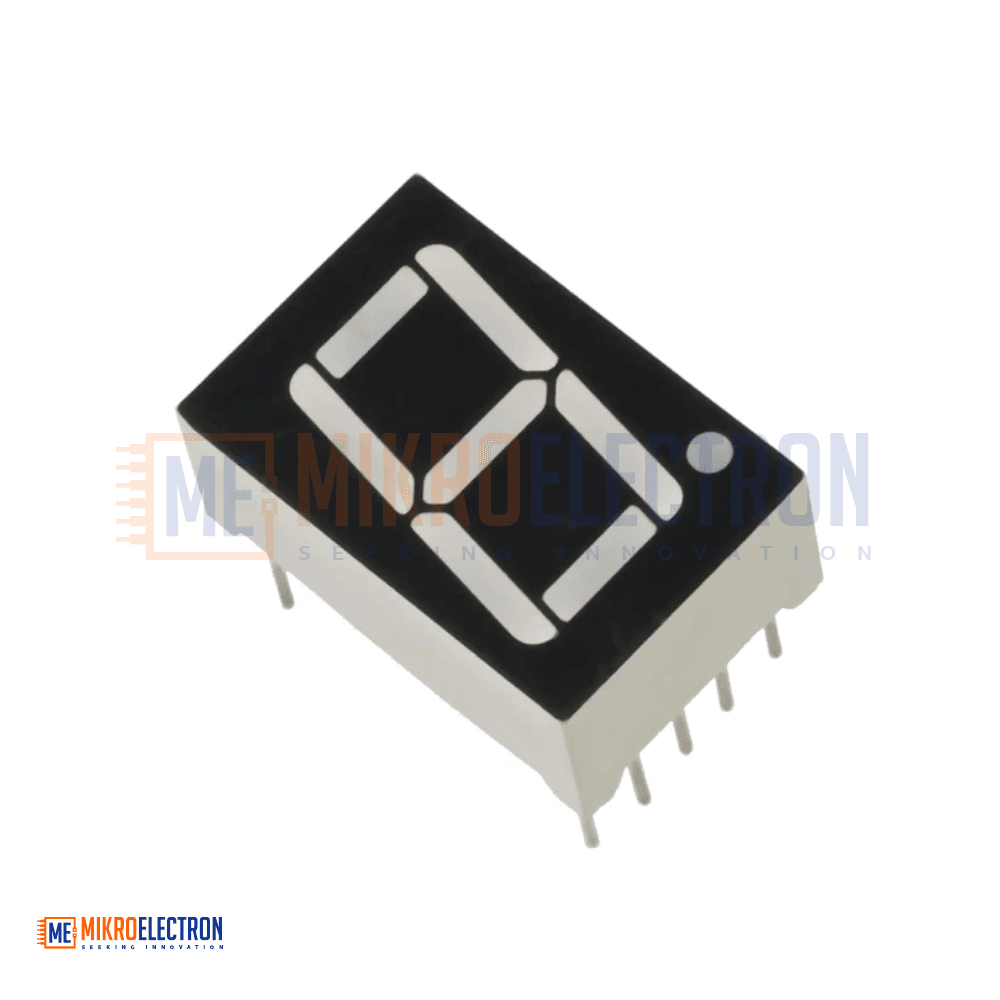
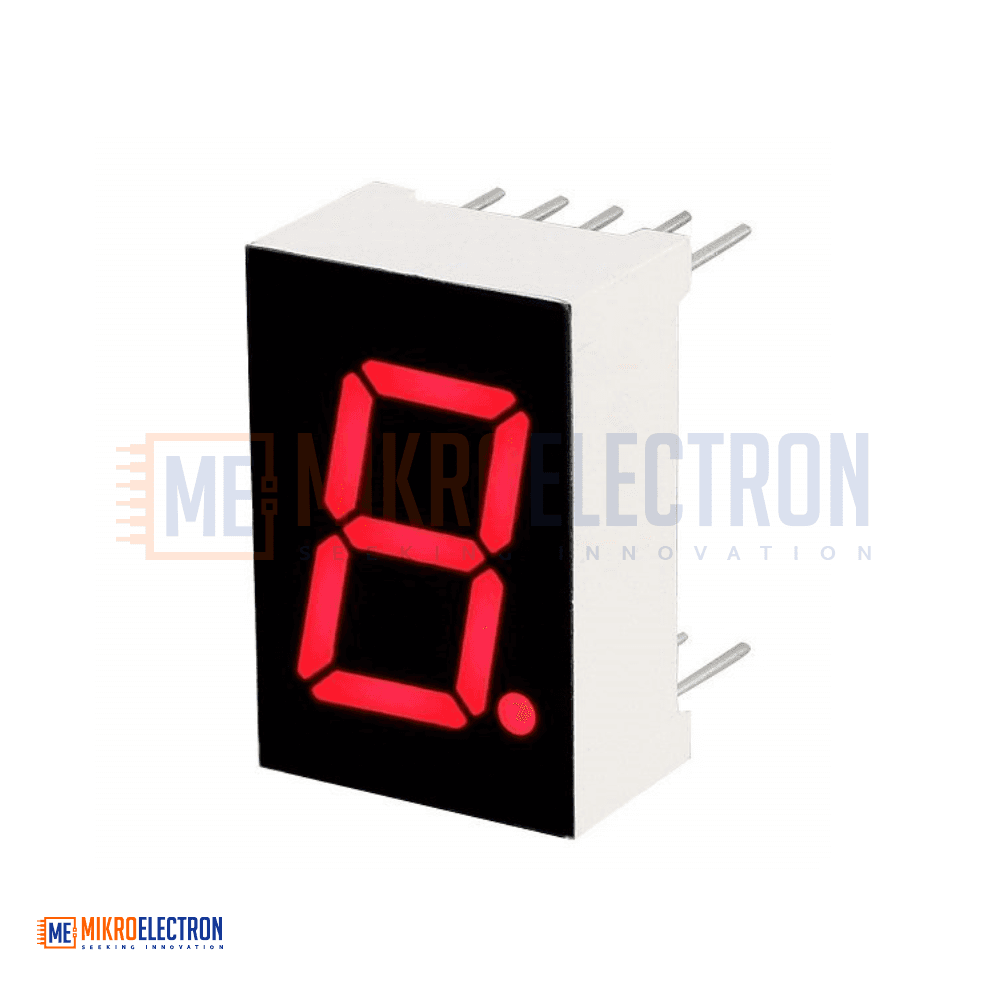
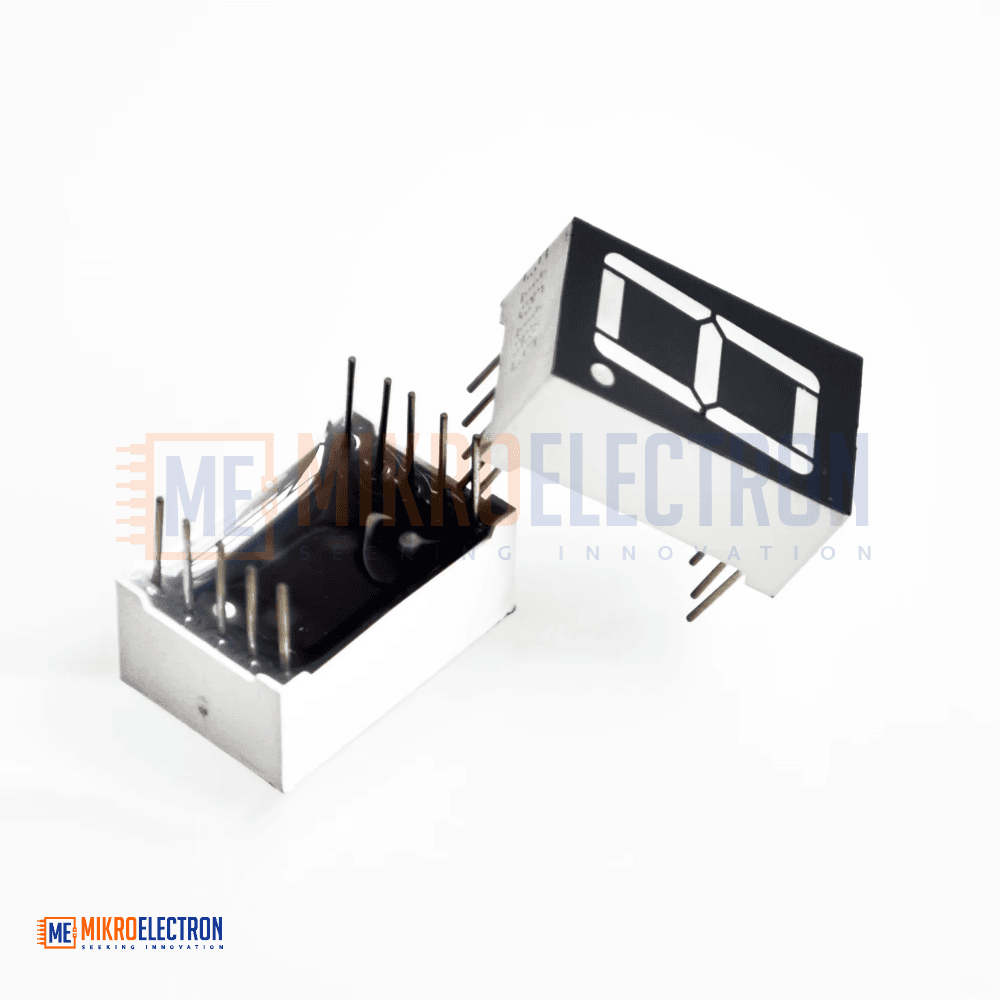
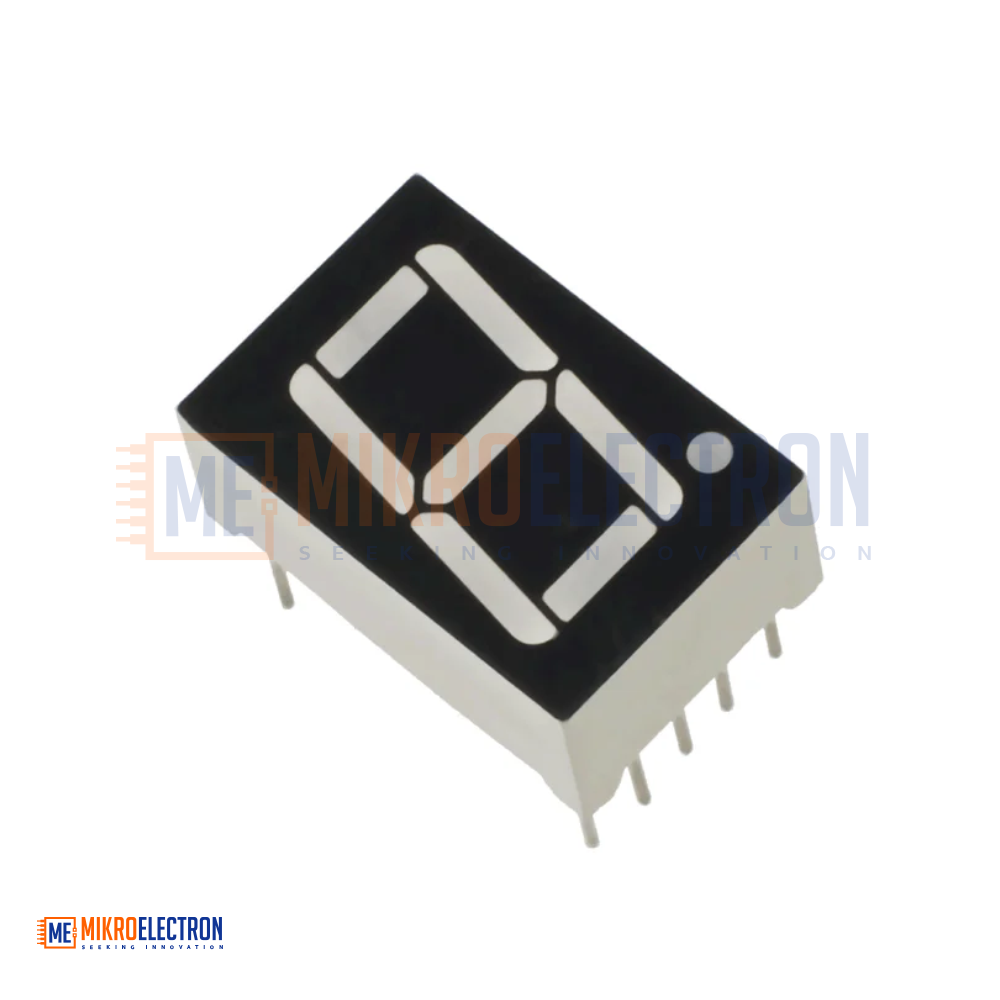
The 0.56-inch 7 Segment LED Display (Common Anode) is a single-digit numeric display designed to show digits 0–9 and basic characters using seven independently controlled LED segments plus a decimal point. In the common anode configuration, all anodes share a single positive voltage source, while each cathode is controlled individually. With its bright red display, 0.56-inch digit height, and easy microcontroller interfacing, it's perfect for digital clocks, calculators, voltmeters, counters, Arduino projects, and electronic scoreboards.
شاشة LED السباعية مقاس 0.56 بوصة (أنود مشترك) هي شاشة رقمية أحادية الخانة مصممة لعرض الأرقام من 0 إلى 9 وبعض الحروف الأساسية باستخدام سبع مقاطع LED مستقلة بالإضافة إلى نقطة عشرية. في تكوين الأنود المشترك، تشترك جميع الأنودات في مصدر جهد موجب واحد، بينما يتم التحكم بكل كاثود بشكل فردي. بفضل عرضها الأحمر الساطع، وارتفاع رقم 0.56 بوصة، وسهولة توصيلها بالمتحكمات الدقيقة، هي مثالية لـالساعات الرقمية والآلات الحاسبة والفولت ميتر والعدادات ومشاريع الأردوينو ولوحات النتائج.
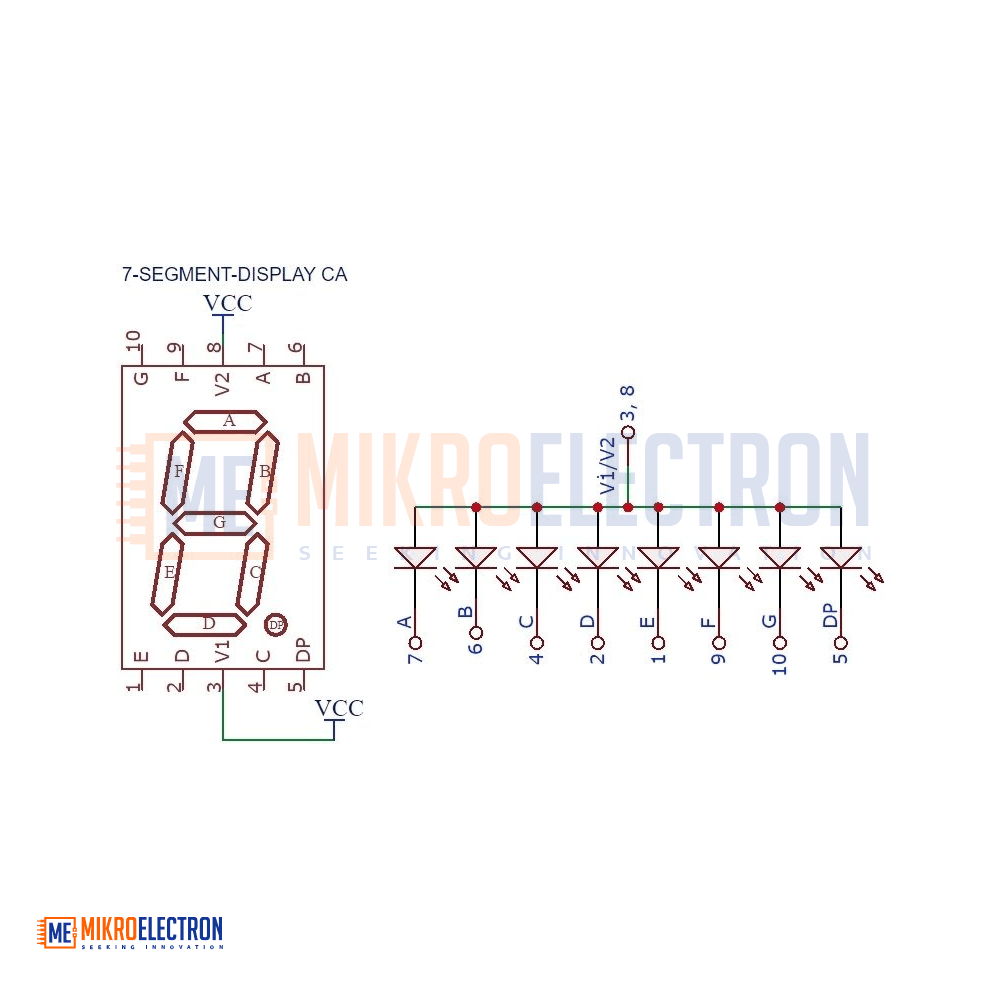
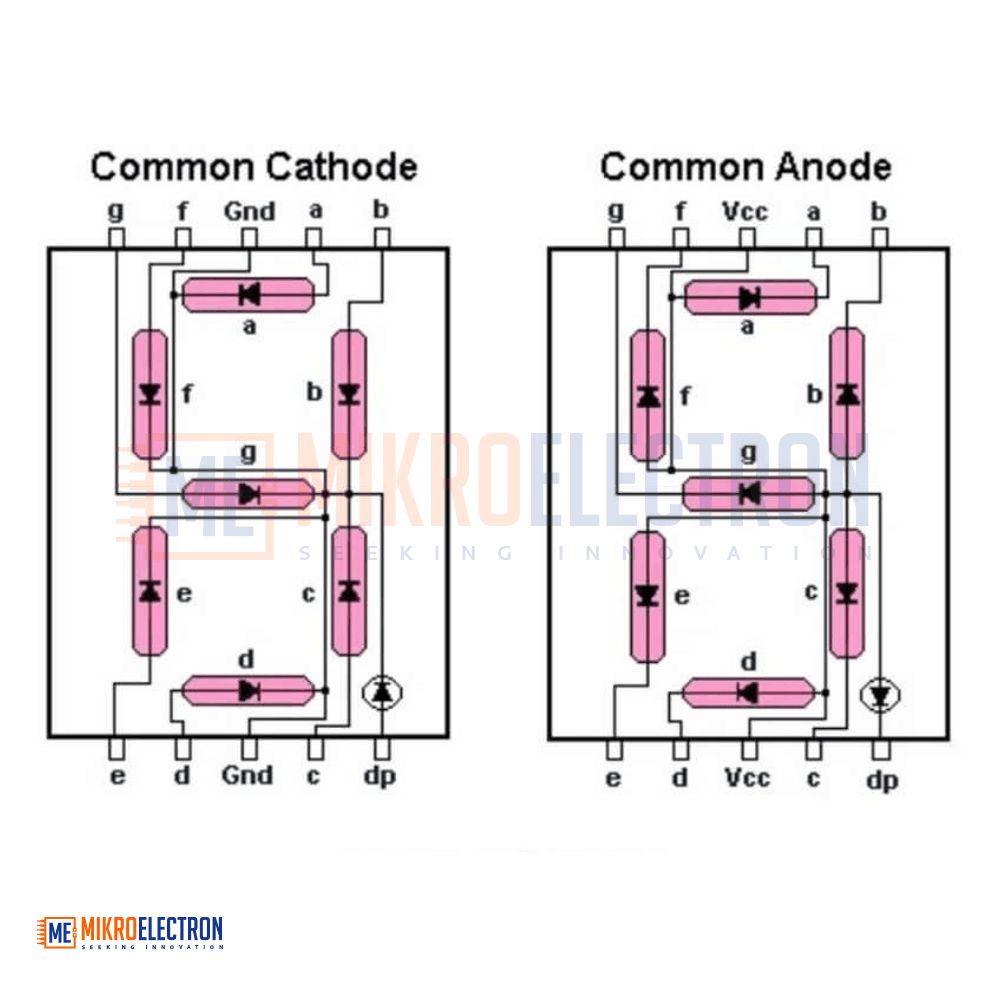
The 0.56-inch 7 Segment LED Display (Common Anode) is one of the most fundamental and widely used display components in electronics, providing a simple, reliable, and cost-effective way to visually represent numeric digits (0–9) and a limited set of alphabetic characters (A, b, C, d, E, F) in projects of all sizes. The display consists of seven individual LED segments arranged in the classic figure-eight pattern—labeled a through g—plus an additional decimal point (DP) LED, making a total of eight individually controllable segments. By selectively illuminating different combinations of these segments, the display can show any digit from 0 to 9 or several letters. In the common anode configuration, all the anodes (positive terminals) of the LEDs are internally connected together to one or two common pins that are tied to a positive voltage source (typically VCC, 5V), while each cathode (negative terminal) is individually accessible. To light up a specific segment, the corresponding cathode pin must be pulled LOW (to ground) through a current-limiting resistor. This makes the common anode display particularly useful when working with microcontrollers that have stronger sinking capability than sourcing capability, or when interfacing with decoder ICs like the 7447 BCD-to-7-segment decoder that use active-low outputs. The 0.56-inch (~14mm) digit height is large enough to be easily read at moderate distances, making this size a popular choice for panel meters, digital clocks, counters, and indicator displays. The bright red color (most common variant) provides excellent contrast in both indoor and outdoor lighting conditions, while the low forward voltage and current per segment ensure the display can be easily driven by standard microcontroller GPIO pins or shift registers like the 74HC595.
Specifications
- Display Type: Single-Digit 7 Segment LED Display
- Configuration: Common Anode (CA)
- Digit Height: 0.56 inch (~14 mm)
- Color: Red (default; also available in green, blue, yellow, white)
- Number of Segments: 7 + Decimal Point (DP) = 8 LEDs
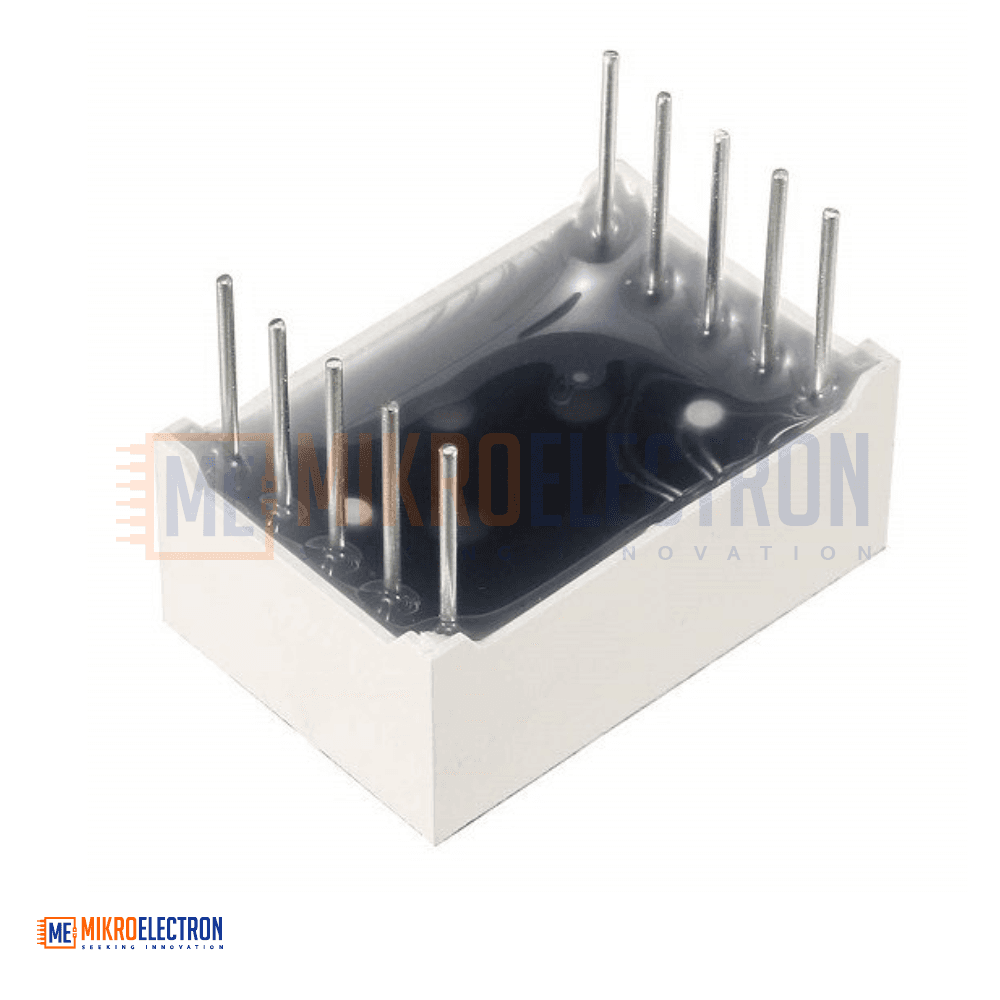
- Pin Count: Typically 10 pins (8 for segments + 2 for common anode)
- Forward Voltage per Segment: 1.8V – 2.5V
- Forward Current per Segment: 10 mA – 20 mA (typical)
- Peak Forward Current: 60 mA (maximum)
- Power Consumption per Segment: 30 – 40 mW
- Common Anode Voltage: 2.5V – 5V
- Reverse Voltage: 5V
- Viewing Angle: 60° – 120° (typical)
- Wavelength (Red): 620 – 630 nm
- Operating Temperature: -40°C to +85°C
- Storage Temperature: -40°C to +100°C
- Package Type: Through-hole DIP or surface mount (SMD)
- Lifespan: 50,000 – 100,000 hours (typical)
- Luminous Intensity: Bright enough for indoor and most outdoor use
Segment Layout
- Segment a: Top horizontal bar
- Segment b: Upper right vertical bar
- Segment c: Lower right vertical bar
- Segment d: Bottom horizontal bar
- Segment e: Lower left vertical bar
- Segment f: Upper left vertical bar
- Segment g: Middle horizontal bar
- DP: Decimal point (typically bottom right)
Key Difference: Common Anode vs Common Cathode
In a Common Anode (CA) display, all the positive terminals (anodes) of the LEDs are tied together and connected to VCC (positive supply). To light a segment, the corresponding cathode pin must be driven LOW (to ground). This is opposite to the Common Cathode (CC) type, where all cathodes are tied to GND and segments are activated by driving anodes HIGH.
Common anode displays are often preferred when:
- Using active-low driver ICs (like 7447, 74LS47).
- The microcontroller has stronger current sinking than sourcing capability.
- Multiplexing with PNP transistor-driven digit selection.
Wiring Tip for Arduino (Common Anode)
For each segment, connect the cathode pin through a 220Ω – 470Ω current-limiting resistor to a digital output pin on the microcontroller. Connect the common anode pin(s) to +5V (VCC). To turn a segment ON, set the corresponding pin to LOW; to turn it OFF, set the pin to HIGH. (This is the opposite of common cathode displays, so make sure your code accounts for the inverted logic.)
Applications
- Used in digital clocks and time display devices.
- Essential in digital counters for events, products, and visitors.
- Employed in electronic scoreboards for sports and games.
- Used in digital thermometers to show temperature readings.
- Applied in digital voltmeters and ammeters in measurement instruments.
- Common in Arduino, PIC, and microcontroller projects for numeric output.
- Used in countdown timers and stopwatches.
- Found in home appliance displays (microwaves, washing machines).
- Employed in industrial control panels for status indication.
- Used in price displays in retail and vending machines.
- Applied in elevator floor indicators.
- Common in calculator displays.
- Used in DIY electronic games and educational kits.
- Found in parking meters and ticket machines.
- Employed in weight scales and measurement devices.
- Used in car dashboards for digital readouts.
- Applied in currency counters and banking equipment.
- Common in RPM meters and speed indicators.
- Used in frequency counters and signal generators.
- Found in ATMs and POS systems.
- Employed in charging stations and battery indicators.
- Used in temperature controllers and thermostats.
- Applied in traffic monitoring systems.