
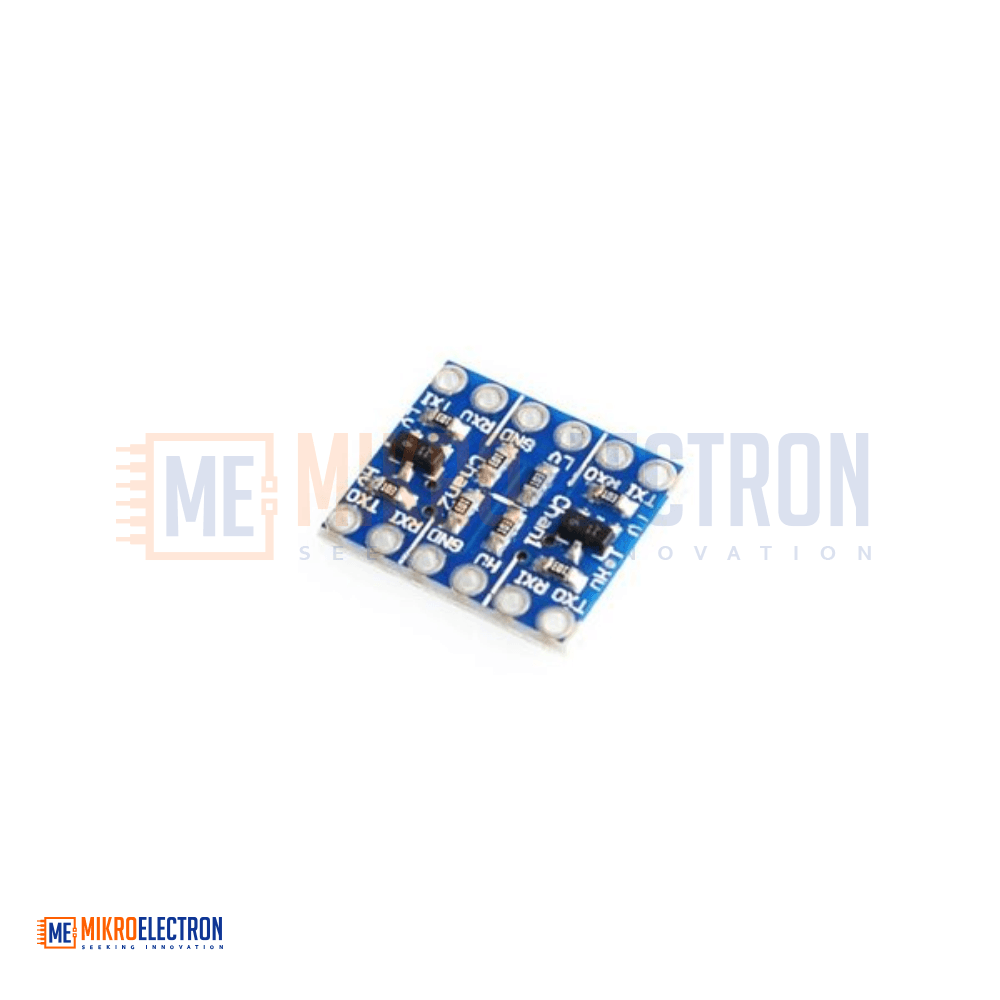
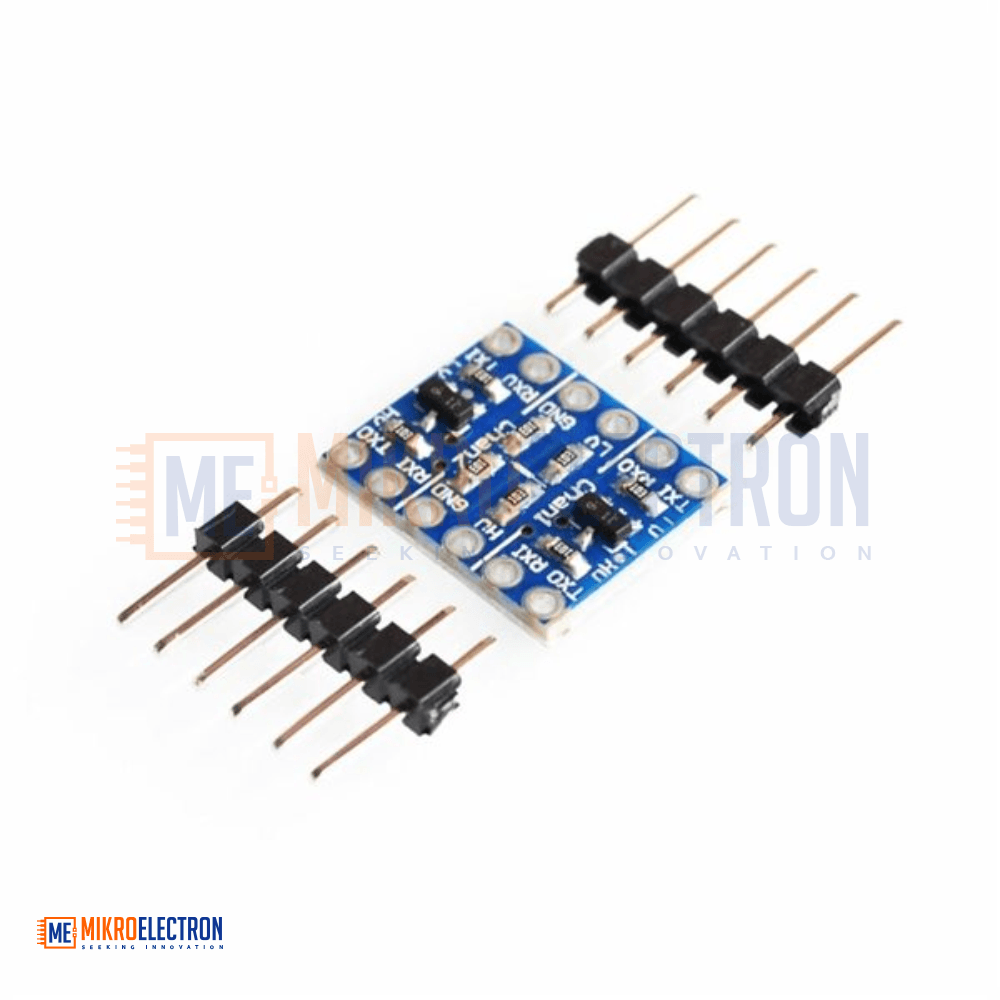
Logic Level Converter module 3.3V 5V TTL Unidirectional
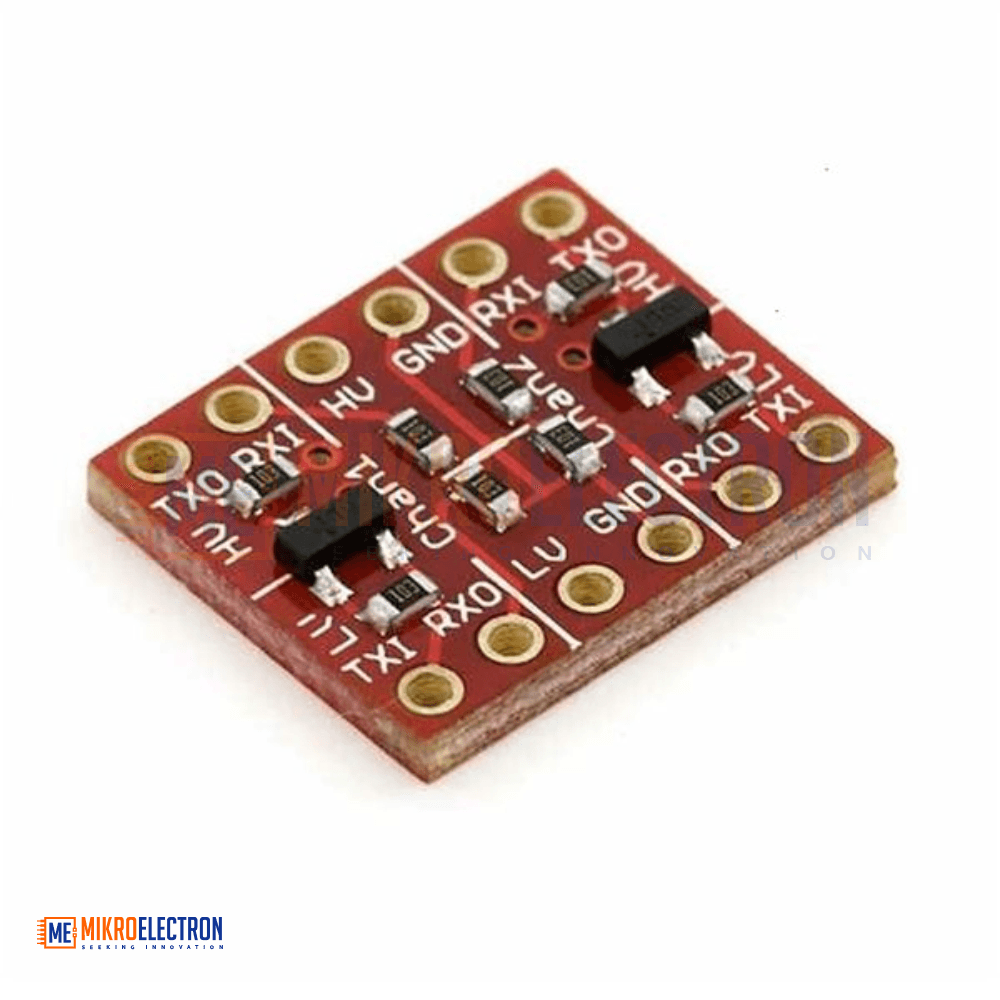
The Logic Level Converter Module is a compact bidirectional adapter that safely converts signals between 3.3V and 5V devices. It supports TTL signals including UART, I2C, and SPI, and works with 2.8V, 3.3V, and 5V logic levels. With 4 channels (2 inputs and 2 outputs per side), it's essential for connecting Arduino (5V) to 3.3V sensors and modules like the ESP8266, MPU6050, and SD cards — preventing damage to sensitive electronics.
مودول محول مستوى المنطق Logic Level Converter هو محول مضغوط ثنائي الاتجاه يحول الإشارات بأمان بين أجهزة 3.3 فولت و5 فولت. يدعم إشارات TTL بما في ذلك UART وI2C وSPI، ويعمل مع مستويات منطق 2.8 و3.3 و5 فولت. يحتوي على 4 قنوات (مدخلين ومخرجين لكل جانب)، وهو أساسي لربط الأردوينو (5 فولت) مع حساسات ومودولات 3.3 فولت مثل ESP8266 وMPU6050 وبطاقات SD، ويمنع تلف الإلكترونيات الحساسة.
The Logic Level Converter Module is an essential component for any electronics workshop, designed to safely interface devices that operate at different logic voltages. Many modern microcontrollers, sensors, and modules — like the ESP8266, ESP32 (3.3V tolerant), MPU6050, BMP280, SD card modules, and various display drivers — operate at 3.3V logic, while popular boards like the Arduino Uno, Mega, and Nano run at 5V logic. Connecting them directly can permanently damage the 3.3V device.
This level converter solves the problem by providing a clean, reliable bidirectional voltage translation between two logic voltage levels. It can step down 5V signals to 3.3V and step up 3.3V signals to 5V with no signal distortion, making it perfectly suited for digital communication protocols including UART (serial), I2C, SPI, and other standard TTL signals.
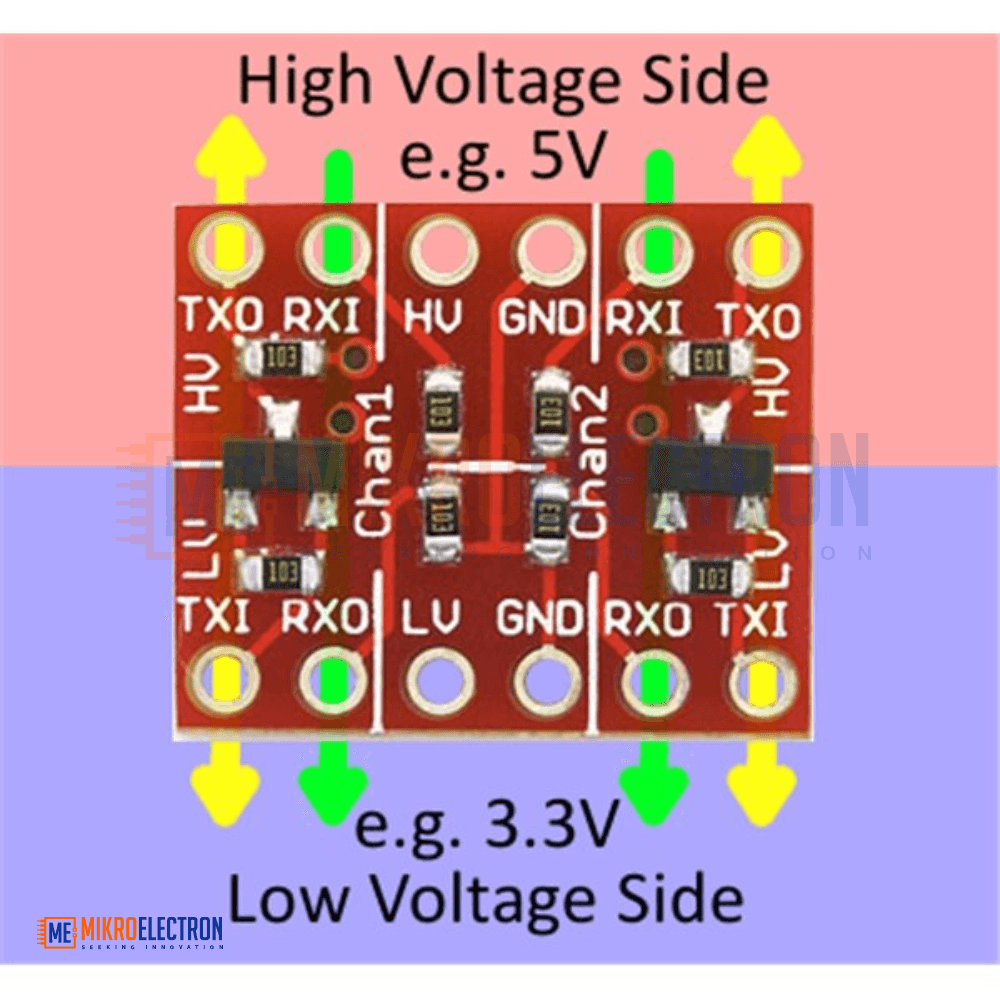
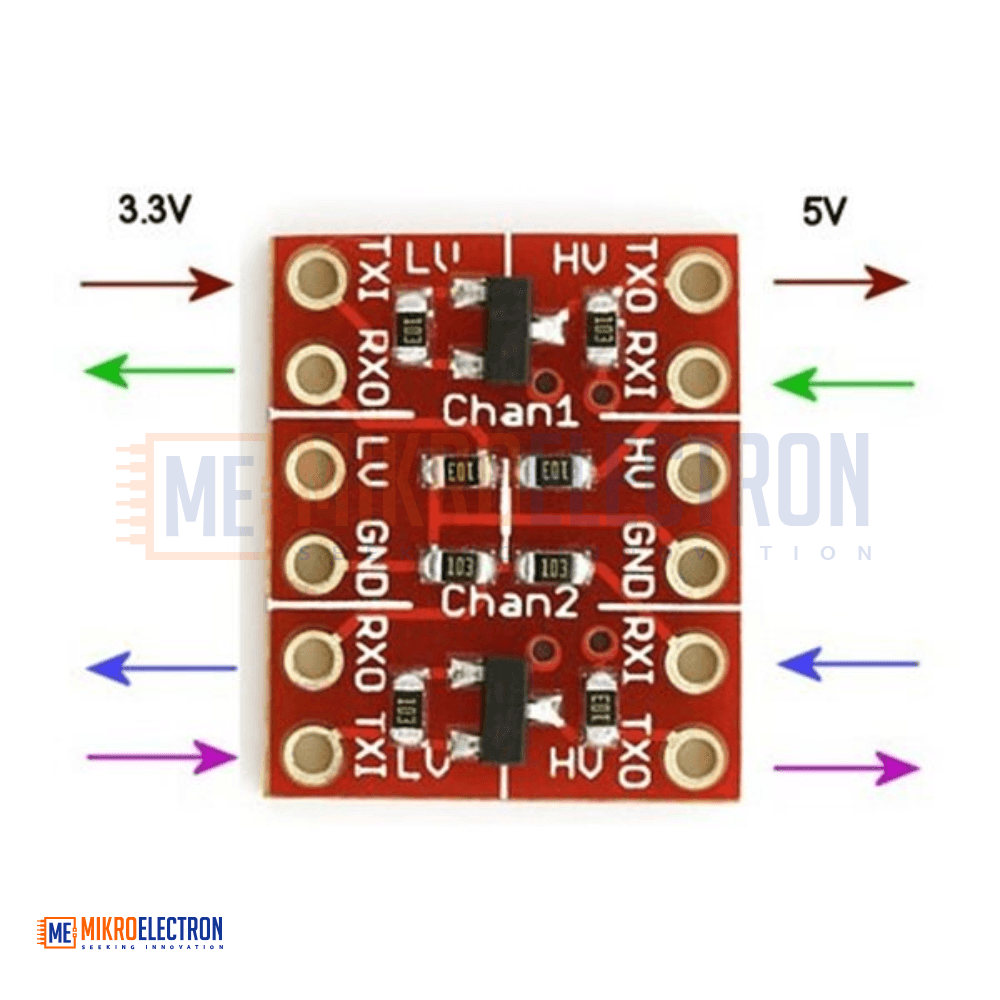
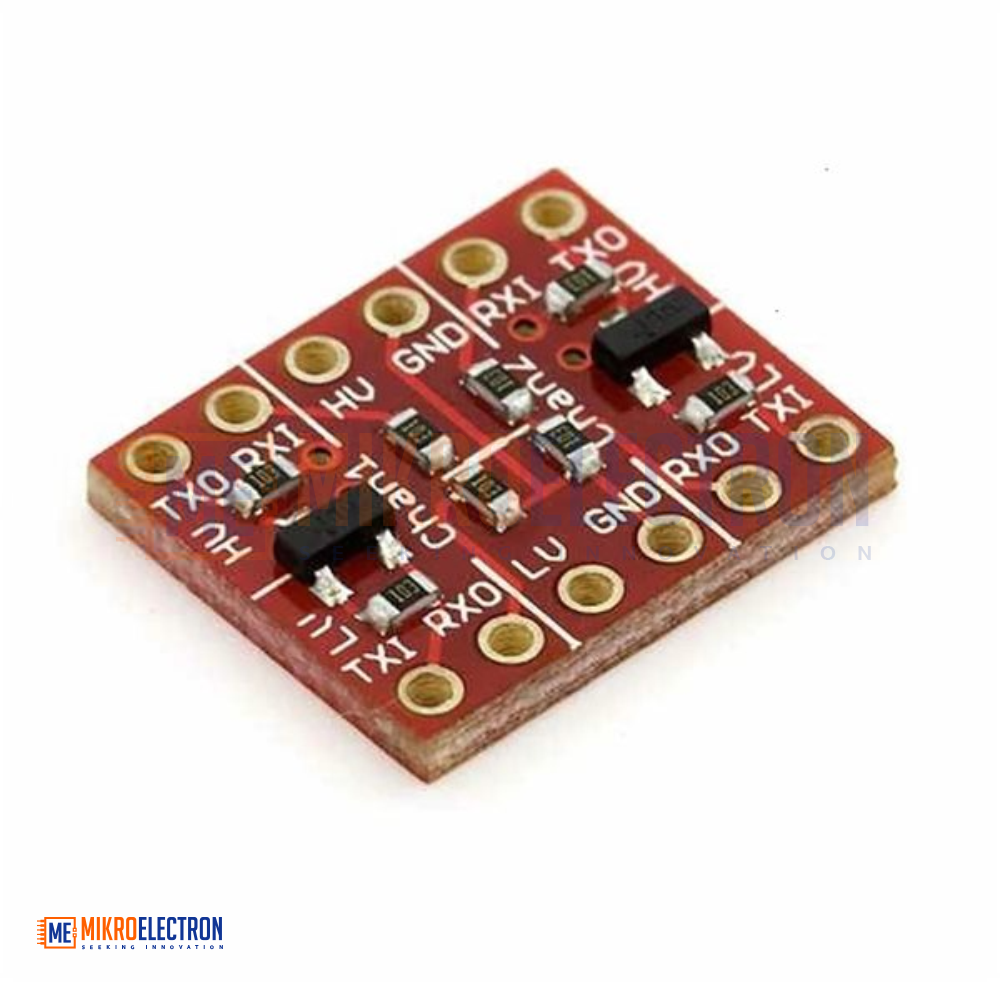
The board features 4 independent channels — with 2 inputs and 2 outputs on each side — labeled clearly as HV (High Voltage) side and LV (Low Voltage) side. This allows you to convert up to four signals simultaneously, which is enough for most common connections (such as an SPI interface needing MOSI, MISO, SCK, and CS). The module also works with 2.8V and 1.8V devices on the low-voltage side, providing additional flexibility for advanced projects.
The module uses MOSFET-based bidirectional level shifting, which is a proven and reliable design widely used in commercial products. It requires no external components — just connect both voltage rails (HV and LV) and a common ground, and you're ready to go.
Important: This module is designed for digital signals only. It does not work with analog signals (such as analog sensor outputs), nor with PWM signals at very high frequencies.
How to Connect:
- Connect your 5V supply to the HV pin
- Connect your 3.3V supply to the LV pin
- Connect a common ground to both GND pins
- Wire signals through the TXI/TXO or RXI/RXO channels as needed
Specifications
- Module Type: Bidirectional Logic Level Converter
- Conversion: 5V ↔ 3.3V (also works with 2.8V and 1.8V)
- Channels: 4 (2 inputs + 2 outputs per side)
- Direction: Bidirectional on each channel
- Compatible Signals:
- UART (Serial)
- I2C (SDA / SCL)
- SPI (MOSI / MISO / SCK / CS)
- General Digital TTL signals
- Not Compatible With: Analog signals
- Logic Technology: MOSFET-based bidirectional translation
- Pinout:
- HV side: HV, GND, TXO, RXI, TXI, RXO
- LV side: LV, GND, TXO, RXI, TXI, RXO
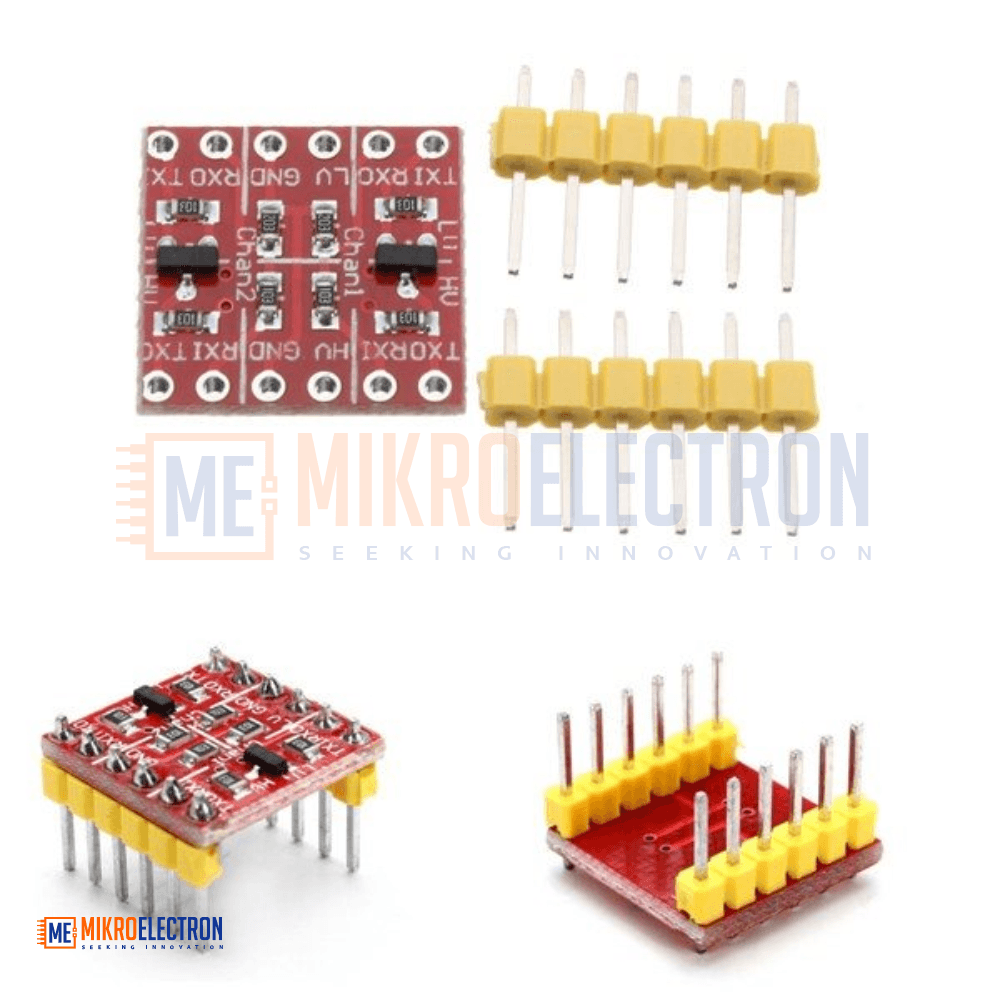
- Pin Pitch: 0.1" (2.54mm) — breadboard friendly
- Pull-Up Resistors: Onboard (typically 10kΩ)
- Operating Voltage Range: 1.8V – 5V (LV side); up to 5V (HV side)
Applications
- Connecting Arduino (5V) to ESP8266 / ESP32 / Raspberry Pi (3.3V)
- Interfacing 3.3V sensors with 5V microcontrollers — MPU6050, BMP280, BME280, MPU9250
- SD card modules with 5V Arduino boards
- Display modules — OLED, TFT, ILI9341 with 5V MCUs
- Bluetooth modules — HC-05, HC-06 with 5V systems
- GPS modules with mixed-voltage systems
- GSM / GPRS modules like SIM800, SIM900
- Logic translation between Raspberry Pi and 5V devices
- I2C bus mixing between 3.3V and 5V devices
- SPI communication between mixed-voltage modules
- Serial (UART) communication between MCUs of different voltages
- Educational STEM and electronics labs
- Industrial prototyping with mixed-logic systems