
Force Sensitive Resistor - Square
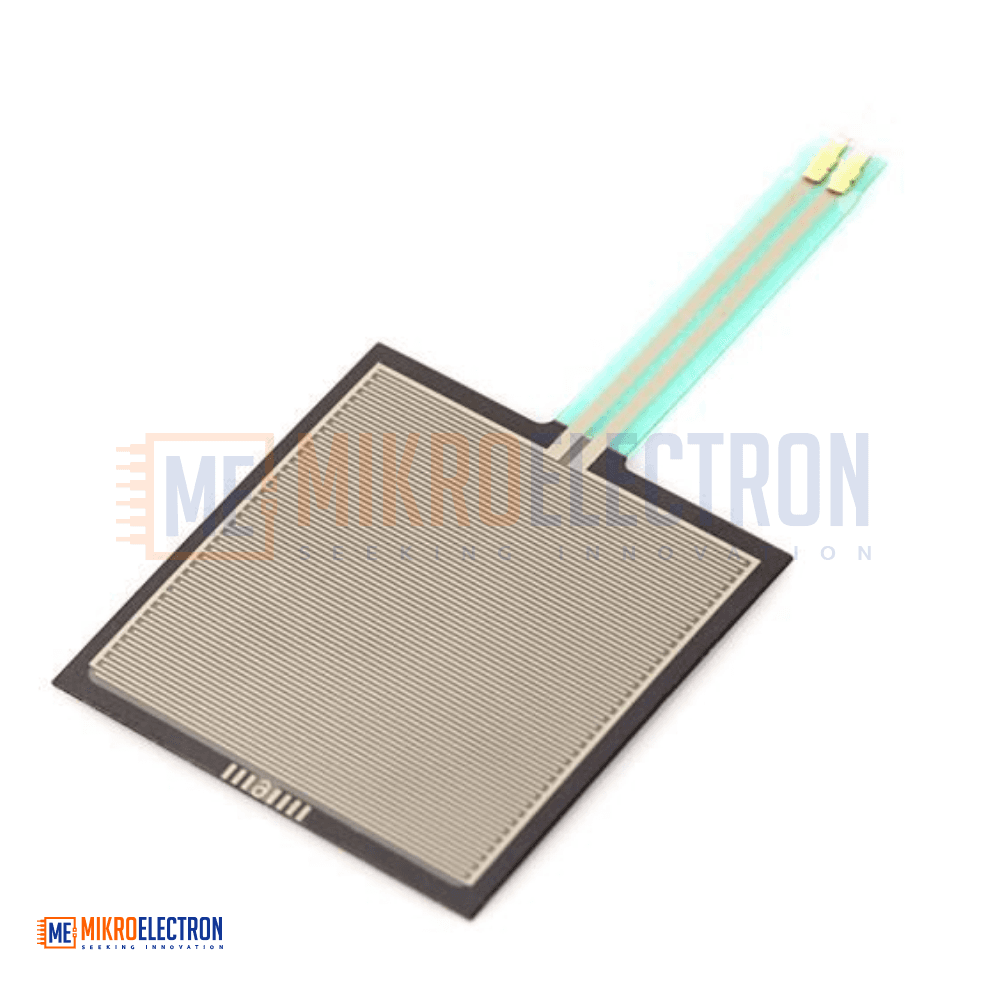
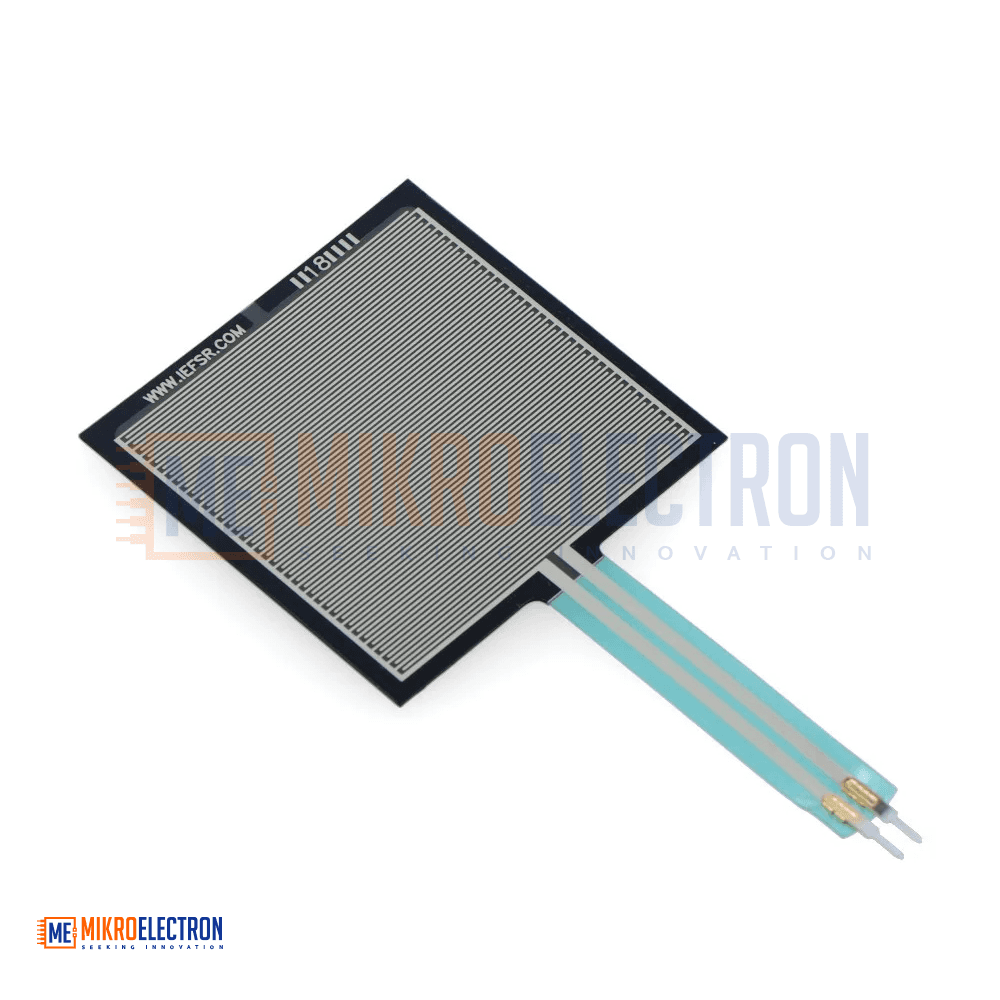
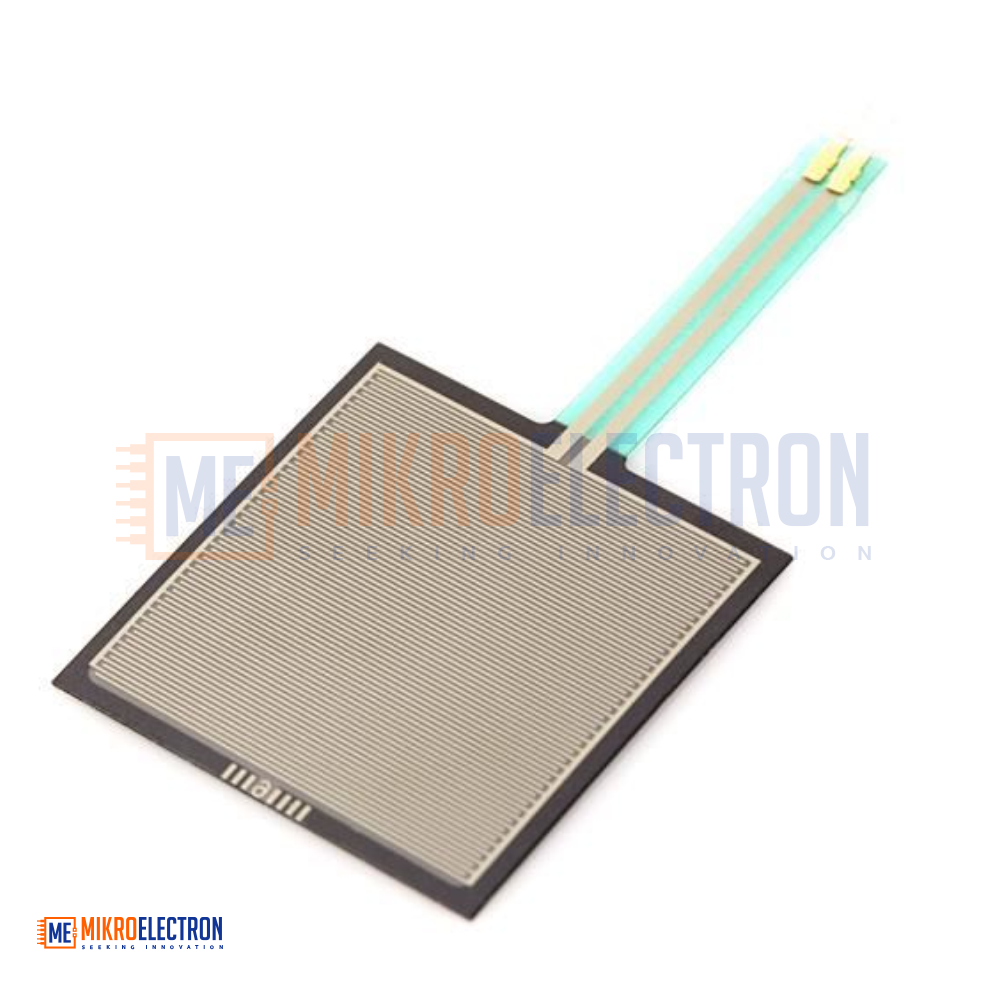
The Square Force Sensitive Resistor (FSR) is a pressure-sensing component that changes resistance based on the force applied to its 1.75" x 1.5" square sensing area. As pressure increases, resistance drops — detecting forces from 100g to 10kg. With breadboard-friendly 0.1" pitch pins and a peel-and-stick rubber backing, it's perfect for Arduino projects, touch interfaces, smart cushions, robotic grippers, musical controllers, and pressure-activated DIY electronics.
حساس الضغط FSR المربع هو مكون حساس للضغط يغير مقاومته بناءً على القوة المطبقة على منطقة الاستشعار المربعة 1.75 × 1.5 إنش. كلما زاد الضغط انخفضت المقاومة، ويكتشف القوى من 100 غرام إلى 10 كغ. بأطراف توصيل بمسافة 0.1 إنش متوافقة مع البريدبورد وظهر لاصق مطاطي، يعتبر مثالياً لـ مشاريع الأردوينو، الواجهات اللمسية، الوسائد الذكية، قبضات الروبوتات، أدوات التحكم الموسيقية، والإلكترونيات التي تعمل بالضغط.
The Square Force Sensitive Resistor (FSR) is a flexible, thin-film pressure sensor that varies its electrical resistance in response to mechanical force applied to its sensing area. With a generous 1.75" x 1.5" square active surface, it provides a large detection zone — making it ideal for sensing presses, squeezes, footsteps, weight, or any application where pressure or contact needs to be detected.
When no pressure is applied, the FSR has a very high resistance (greater than 1MΩ, essentially open-circuit). As force is applied, the resistance drops dramatically — the harder the press, the lower the resistance. This behavior makes the sensor extremely easy to read using a simple voltage divider circuit connected to the analog input of an Arduino, ESP32, ESP8266, or any microcontroller with an ADC.
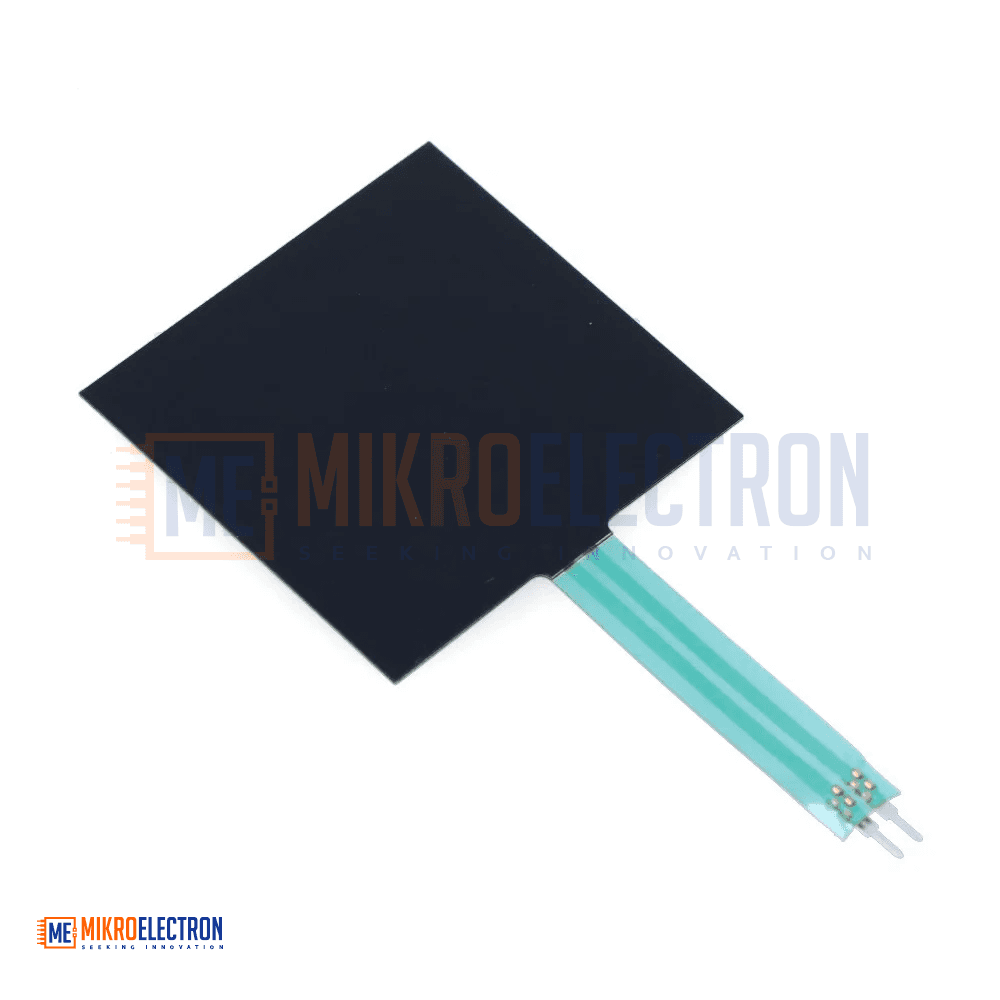
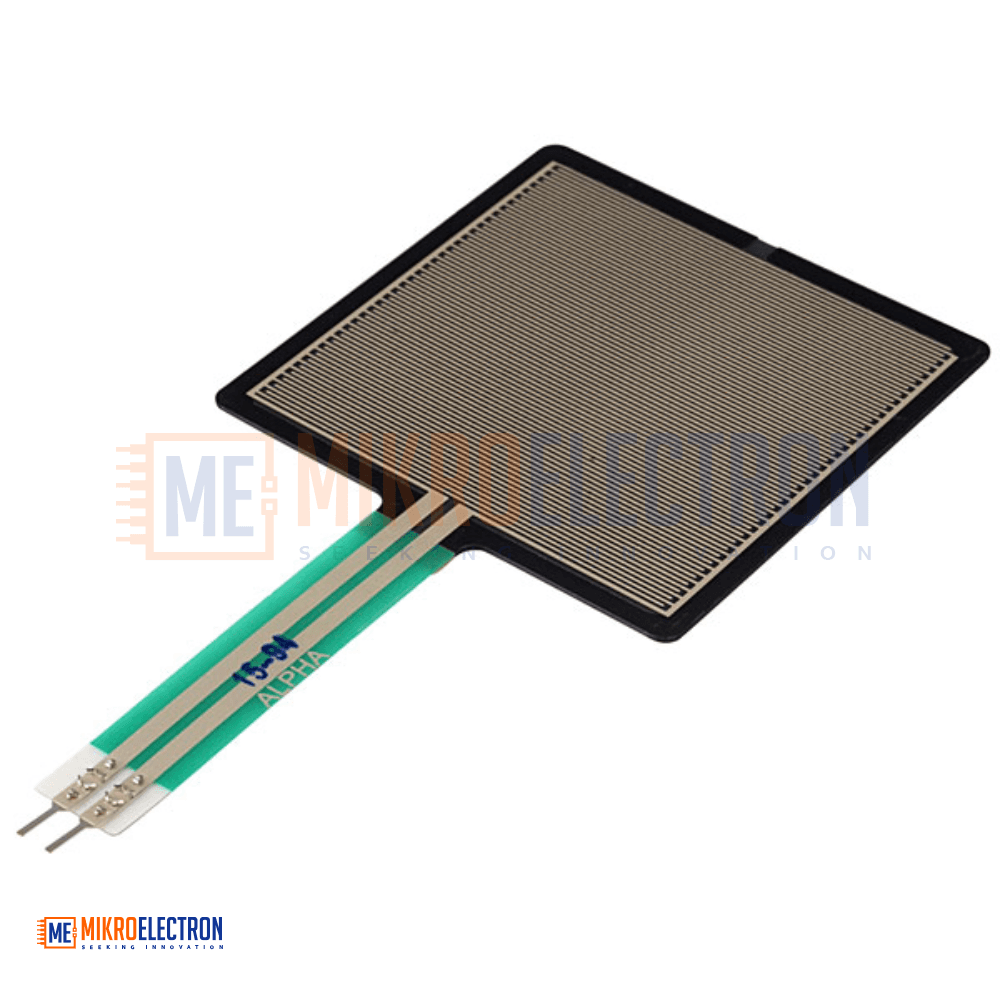
The sensor can detect applied force in the range of 100g to 10kg, covering everything from a light finger touch to a firm hand squeeze. The two output pins extend from the base of the sensor with a standard 0.1" (2.54mm) pitch, making it directly compatible with breadboards, perfboards, and most prototyping platforms. A convenient peel-and-stick rubber backing on the underside lets you mount the FSR neatly under cushions, mats, robotic fingers, or interactive panels.
While FSRs are excellent for detecting pressure and rough force levels, they are not precision load cells — readings can vary slightly between presses, and they're not recommended for applications requiring lab-grade weight measurement. However, for projects that need to know whether something is being pressed and roughly how hard, the FSR is one of the most popular and beginner-friendly sensors available.
Basic Wiring (Voltage Divider):
- Connect one pin of the FSR to 5V
- Connect the other pin to an analog input pin (e.g., A0)
- Add a 10 kΩ resistor from the analog pin to GND
- Read the analog value with analogRead(A0) — higher readings = more pressure
Specifications
- Sensor Type: Force Sensitive Resistor (FSR) — Resistive
- Shape: Square sensing pad
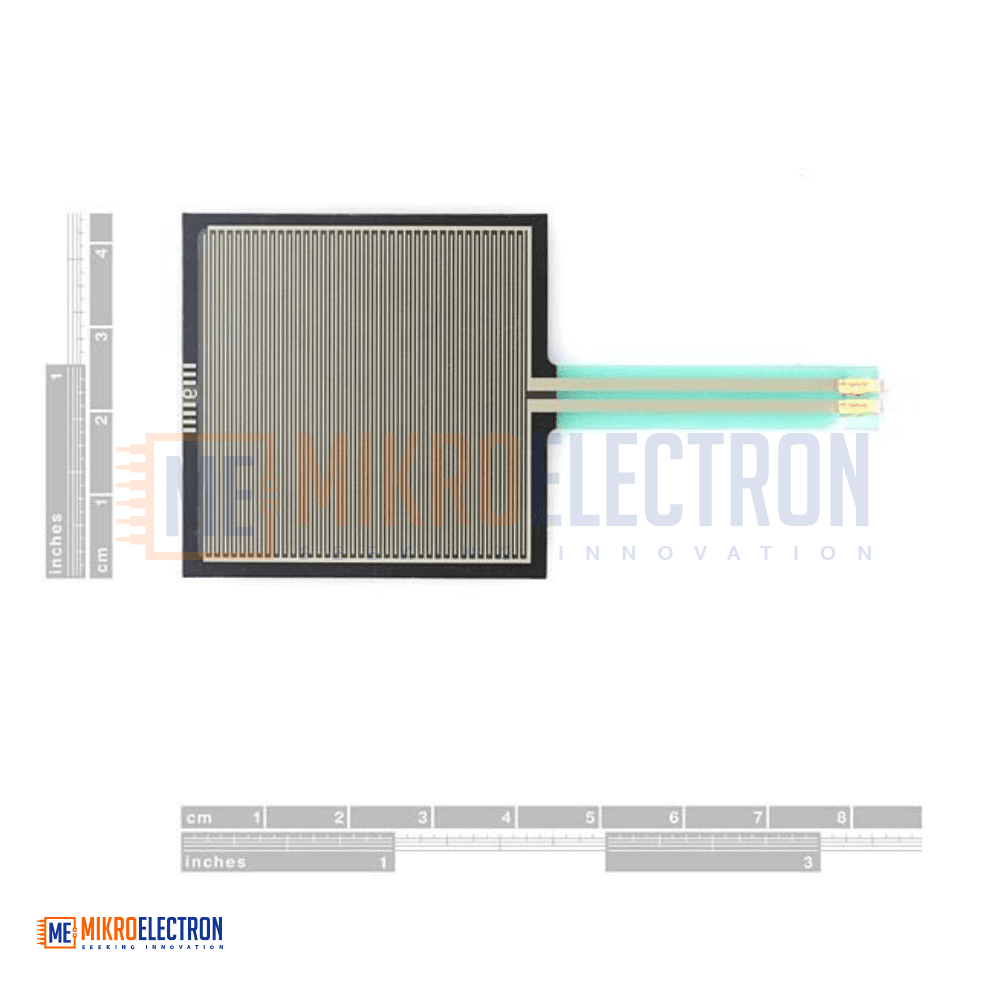
- Sensing Area: 1.75" x 1.5" (~44.5 x 38.1 mm)
- Overall Length: 3.5" (~88.9 mm)
- Overall Width: 1.75" (~44.5 mm)
- Force Sensitivity Range: 100 g – 10 kg
- Resistance (No Force): > 1 MΩ (essentially infinite)
- Resistance (Maximum Force): Decreases as pressure increases
- Output Type: Variable Resistance (Analog)
- Pin Pitch: 0.1" (2.54 mm) — breadboard friendly
- Mounting: Peel-and-stick adhesive rubber backing
- Operating Voltage: Compatible with 3.3V and 5V systems (in voltage divider)
Applications
- Pressure-sensitive touch interfaces and control panels
- Smart cushions and seats — detecting occupancy
- Robotic grippers and prosthetic fingers — sensing grasp force
- Musical instruments and MIDI controllers — pressure-responsive pads
- Wearable technology — detecting clenching or squeezing
- Floor mats and step sensors for installations and games
- Smart packaging and tamper detection
- Squeeze-activated switches for accessibility devices
- Game controllers and interactive toys
- Educational STEM and Arduino projects
- Health and rehabilitation devices (grip strength training)
- Human-Computer Interaction (HCI) prototypes
- DIY weight estimation projects (rough estimates only)
- Industrial impact and contact detection
Documents: