
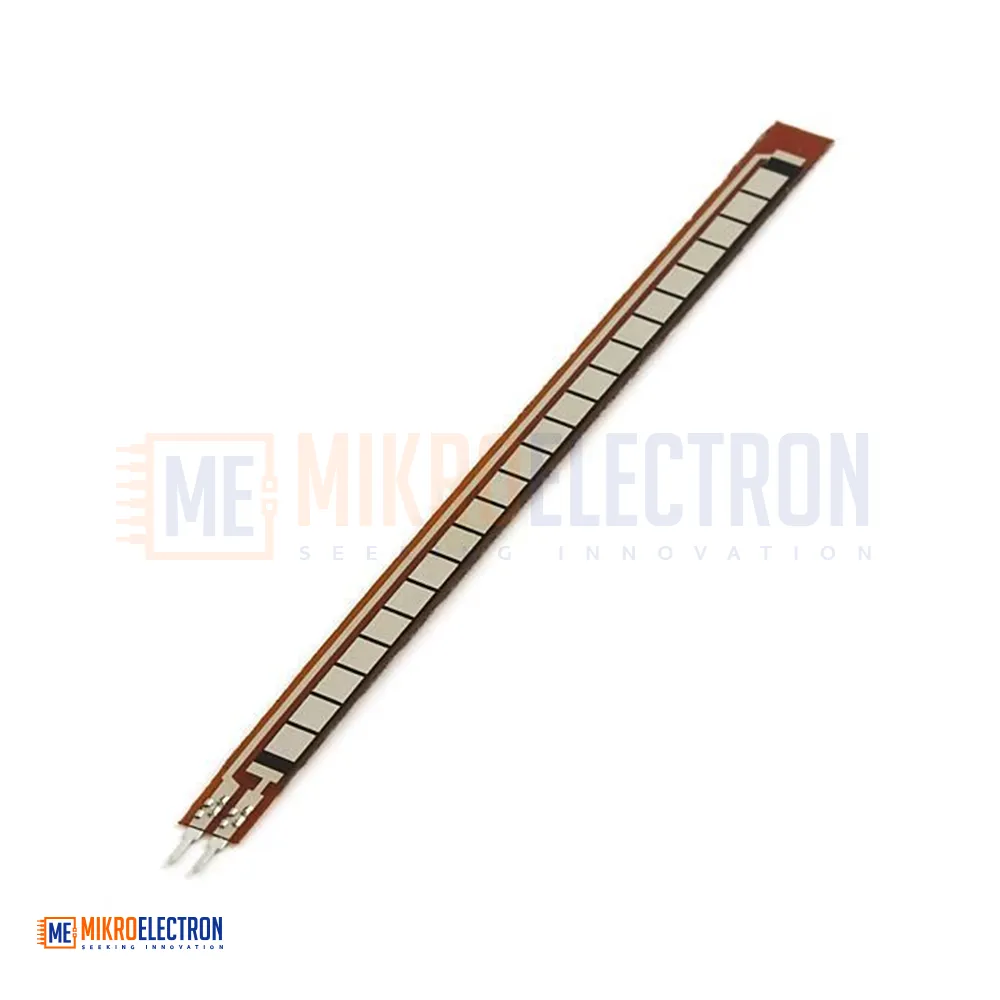
Flex Sensor 4.5 Inch
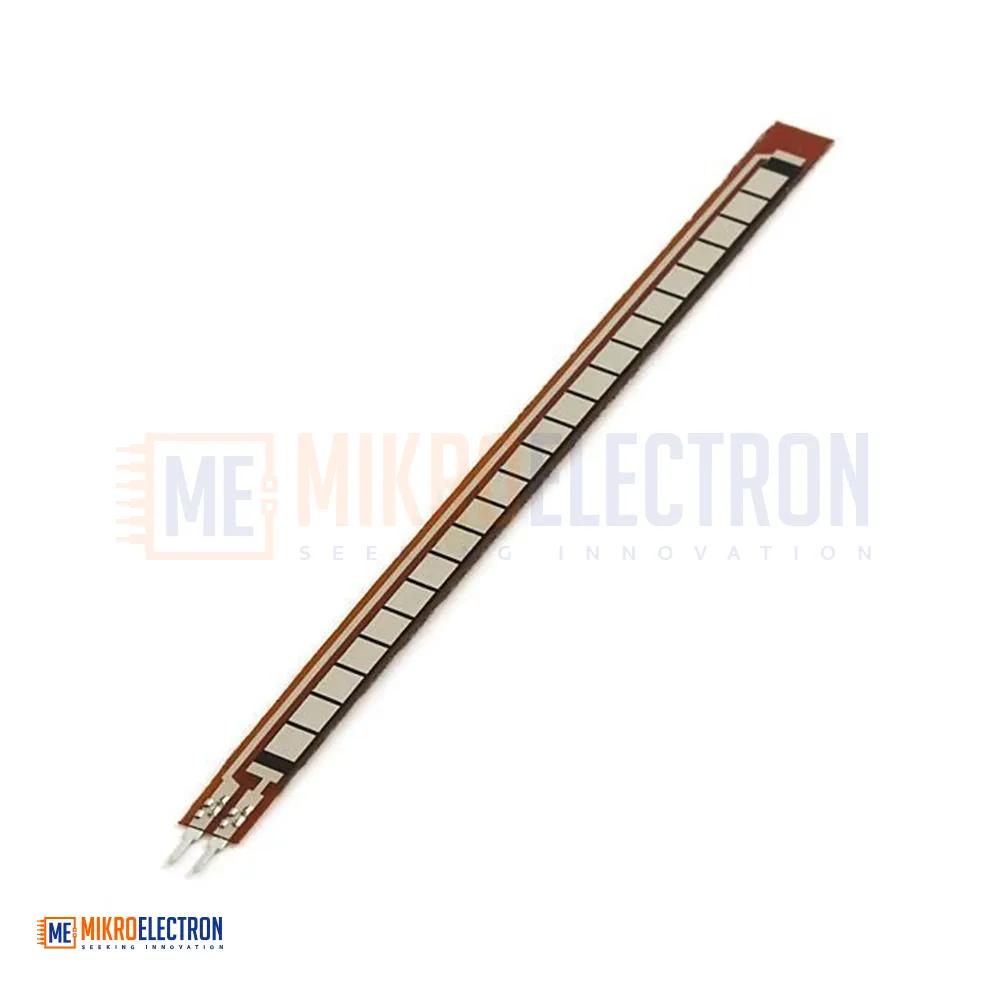
The 4.5-Inch Flex Sensor is a bend-sensitive resistive sensor that changes its resistance based on how much it's flexed. It outputs an analog signal that can be easily read by Arduino, ESP32, or any microcontroller with an ADC. With its slim, flexible design, it's ideal for gesture recognition, smart gloves, wearable technology, robotic joints, and interactive projects. A favorite component for makers building VR controllers, prosthetics, and motion-tracking systems.
حساس الانحناء Flex Sensor مقاس 4.5 إنش هو حساس مقاومة حساس للانحناء يغير مقاومته حسب درجة ثنيه. يوفر إشارة تماثلية يمكن قراءتها بسهولة بواسطة الأردوينو وESP32 أو أي متحكم دقيق يحتوي على ADC. بتصميمه الرفيع والمرن، يعتبر مثالياً لـ التعرف على الإيماءات، القفازات الذكية، التكنولوجيا القابلة للارتداء، مفاصل الروبوتات، والمشاريع التفاعلية. خيار مفضل لصانعي أجهزة التحكم بالواقع الافتراضي والأطراف الصناعية وأنظمة تتبع الحركة.
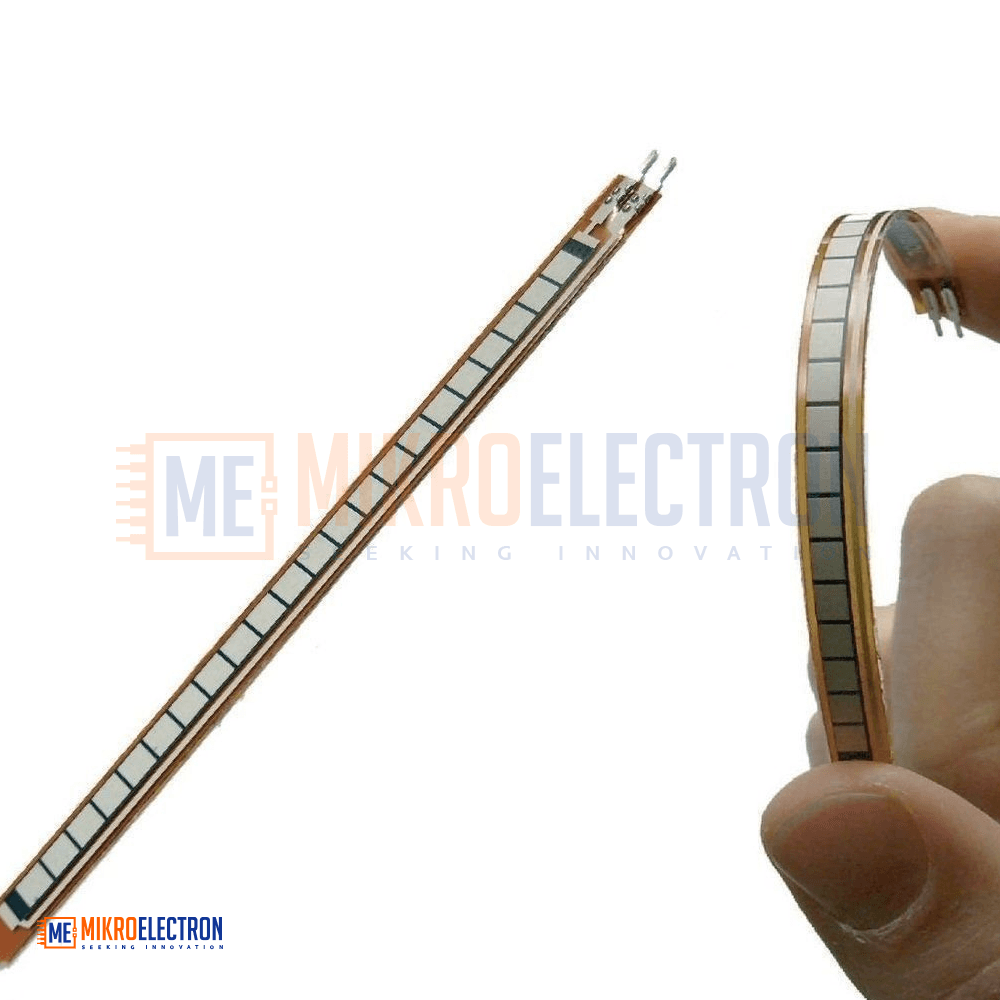
The 4.5-Inch Flex Sensor is a thin, flexible resistive sensor that changes its electrical resistance based on how much it is bent. When the sensor is straight, it has a relatively low resistance (around 10kΩ–25kΩ depending on the unit), and as it is flexed or curved, the resistance increases significantly. This simple but powerful behavior allows the sensor to act as a mechanical-to-electrical converter for motion and bending.
By placing the flex sensor in a voltage divider circuit with a fixed resistor, the changing resistance produces a changing analog voltage, which can then be read directly by the ADC of an Arduino, ESP32, ESP8266, Raspberry Pi (with ADC module), or any other microcontroller. This makes the sensor extremely easy to integrate into both beginner and advanced electronics projects.
The flex sensor is a key component in wearable technology projects such as smart gloves, gesture-controlled robots, VR/AR controllers, and rehabilitation devices. It is also widely used in robotic prosthetics and exoskeletons, where it provides feedback on joint angles and finger positions. In educational settings, it is one of the most popular sensors for teaching analog signal processing, sensor calibration, and human-computer interaction.
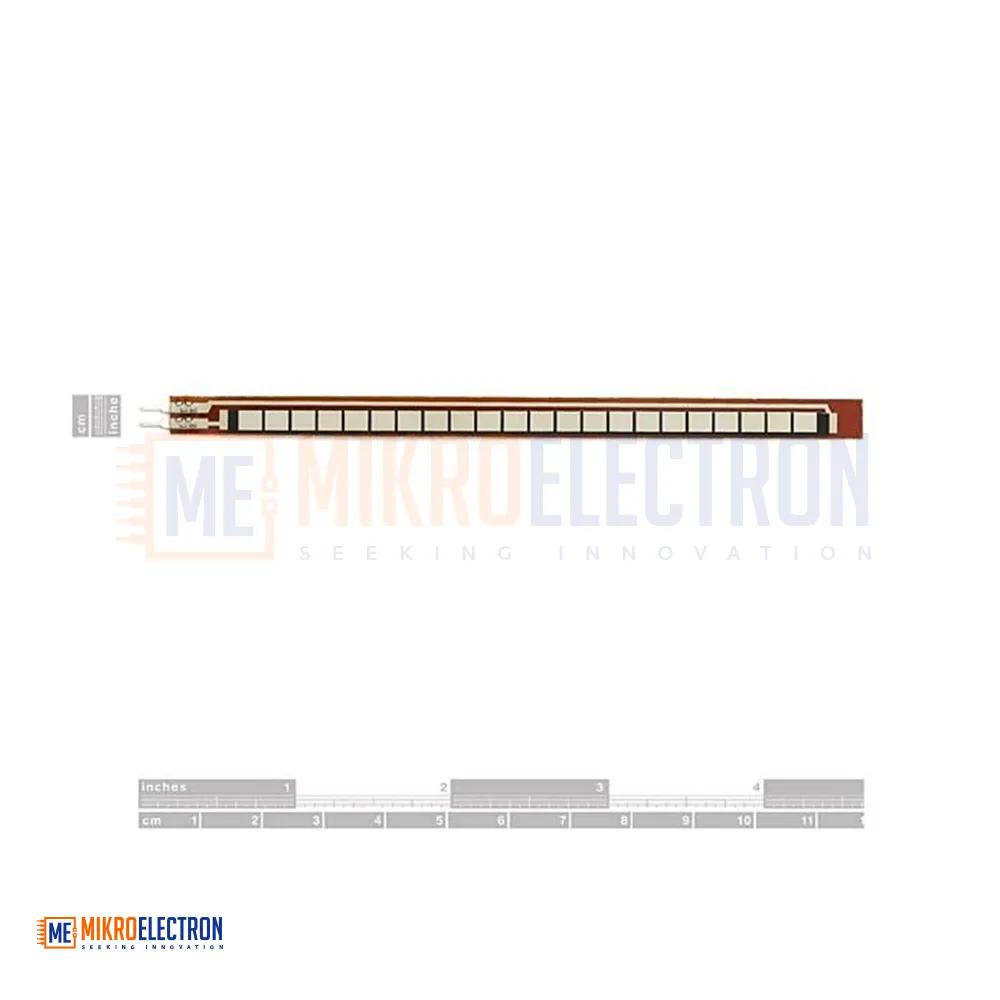
With a length of 4.5 inches (~11.43 cm), this is the most popular size of flex sensor — long enough to track a finger, wrist, or robotic joint comfortably while remaining light, thin, and unobtrusive.
How It Works (Wiring Example):
- Connect one end of the flex sensor to 5V
- Connect the other end to an Arduino analog pin (e.g., A0)
- Add a 10kΩ pull-down resistor from the analog pin to GND
- Read the analog value with analogRead(A0) to detect bending
Specifications
- Sensor Type: Resistive Flex / Bend Sensor
- Length: 4.5 inches (~11.43 cm)
- Output Type: Variable Resistance (Analog)
- Resistance (Flat): ~10 kΩ – 25 kΩ (typical)
- Resistance (Bent 90°): Up to ~60 kΩ – 110 kΩ (typical)
- Operating Voltage: Typically used at 3.3V or 5V (in voltage divider)
- Power Rating: Low power — milliwatt range
- Output Signal: Analog (requires ADC)
- Bend Direction: Sensitive in one direction (resistance increases when bent away from sensor side)
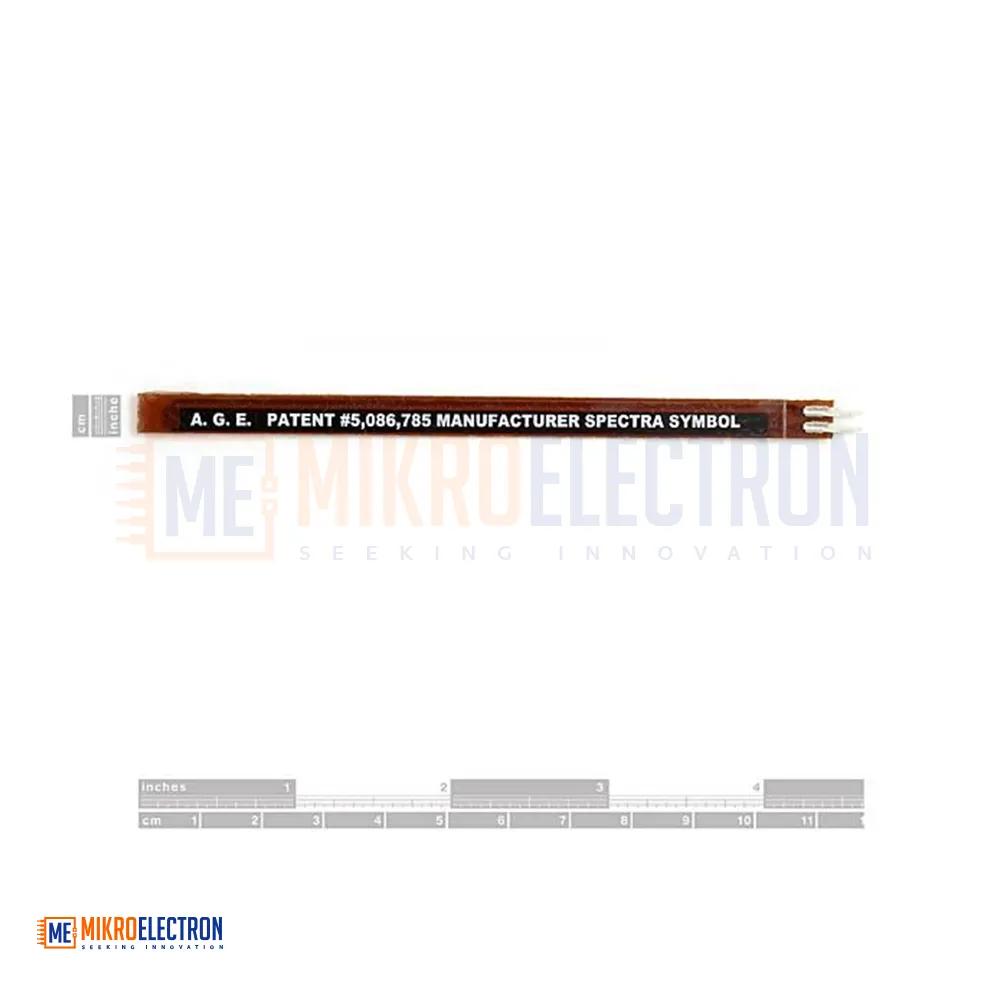
- Connection: 2 solderable terminals (standard 0.1" / 2.54mm pitch)
- Lifecycle: Rated for many thousands of bend cycles
- Operating Temperature: Typical electronics range (-35°C to +80°C)
Required External Component (for analog reading):
- 10 kΩ resistor for voltage divider configuration
Applications
- Smart gloves and gesture-controlled devices
- VR / AR controllers and motion tracking
- Robotic prosthetics and exoskeletons
- Robotic finger and joint feedback
- Wearable technology and fitness trackers
- Sign language translators and assistive devices
- Interactive art installations and games
- Human-Computer Interaction (HCI) projects
- Physical therapy and rehabilitation devices
- Door and lid open/close detection (when bent)
- Posture monitoring systems
- Bend-sensitive musical instruments and MIDI controllers
- Educational STEM and Arduino projects
- Research and prototyping in biomechanics
Tips for Best Results:
- Always bend the sensor in one consistent direction for accurate readings
- Avoid creasing or sharp folds — these can permanently damage the sensor
- For more precise measurements, calibrate the sensor in your code by recording its values at known bend angles
- Use a stable 5V or 3.3V supply for the voltage divider to ensure consistent readings