
CC3000 WiFi Shield
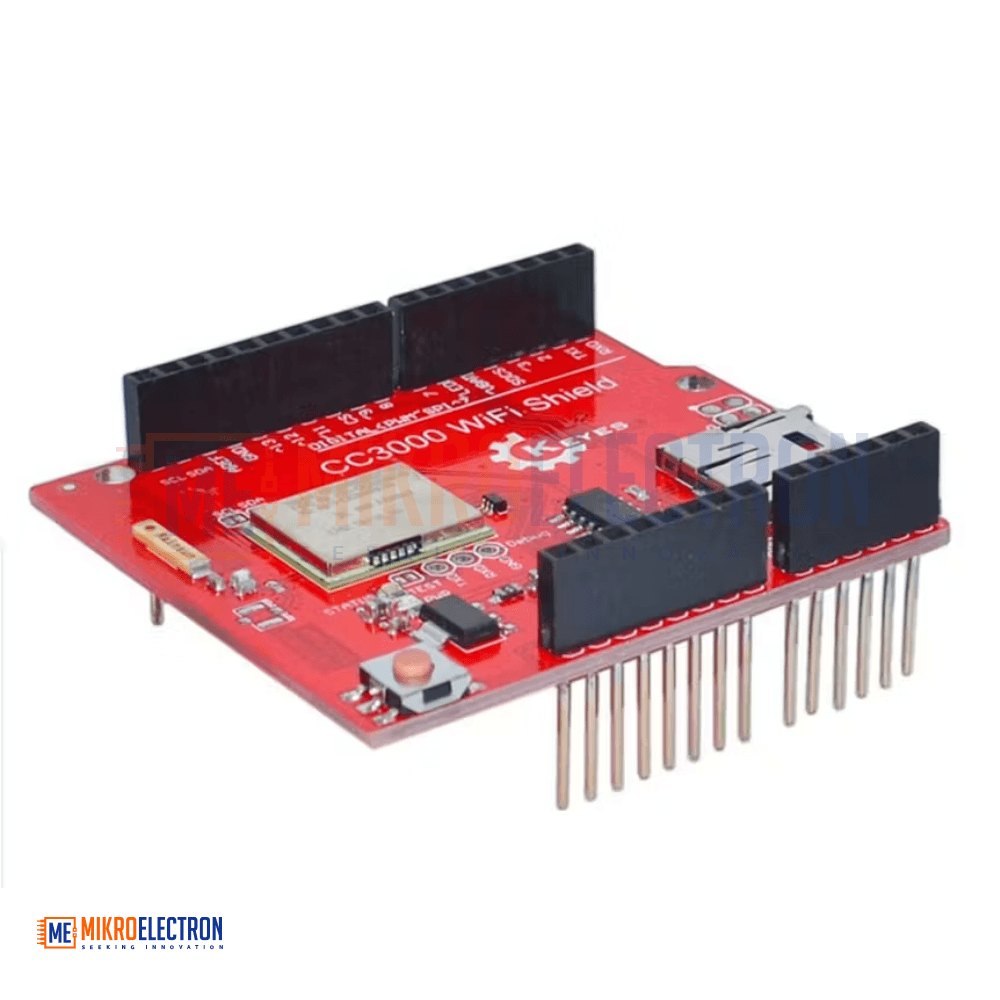
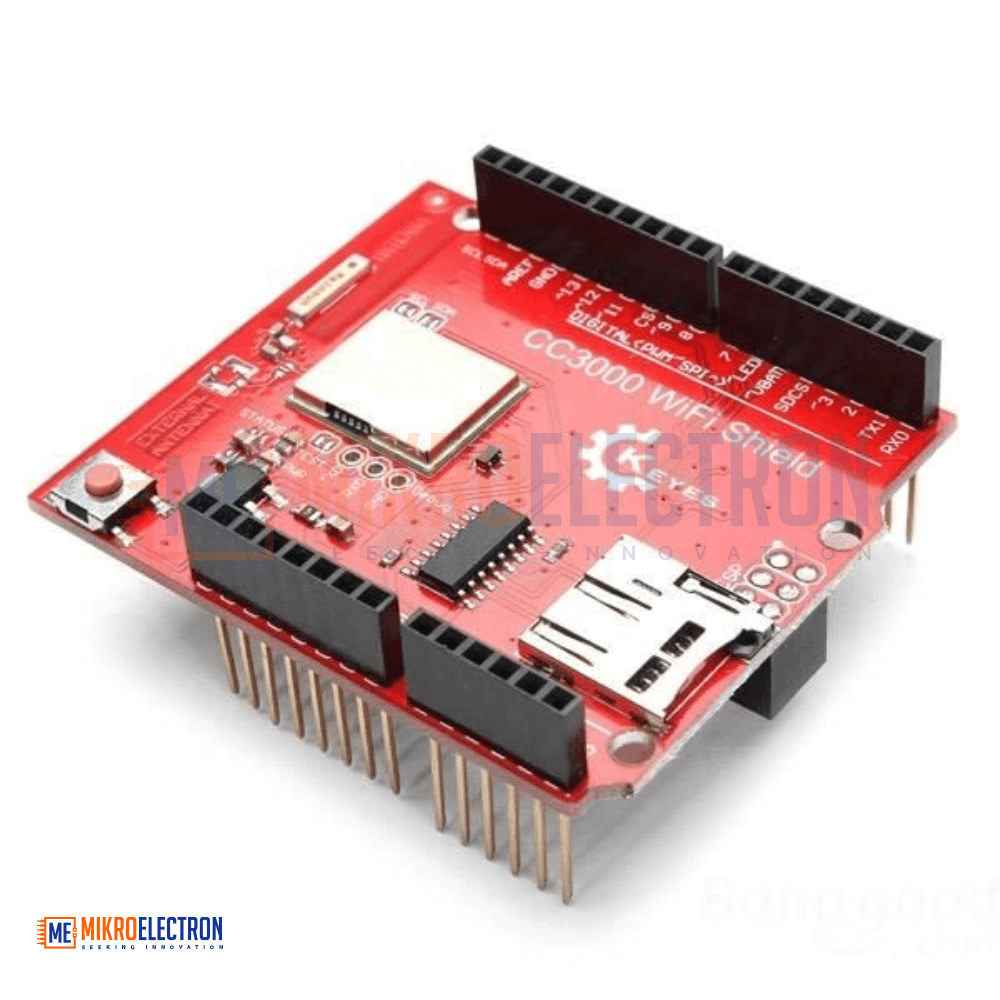
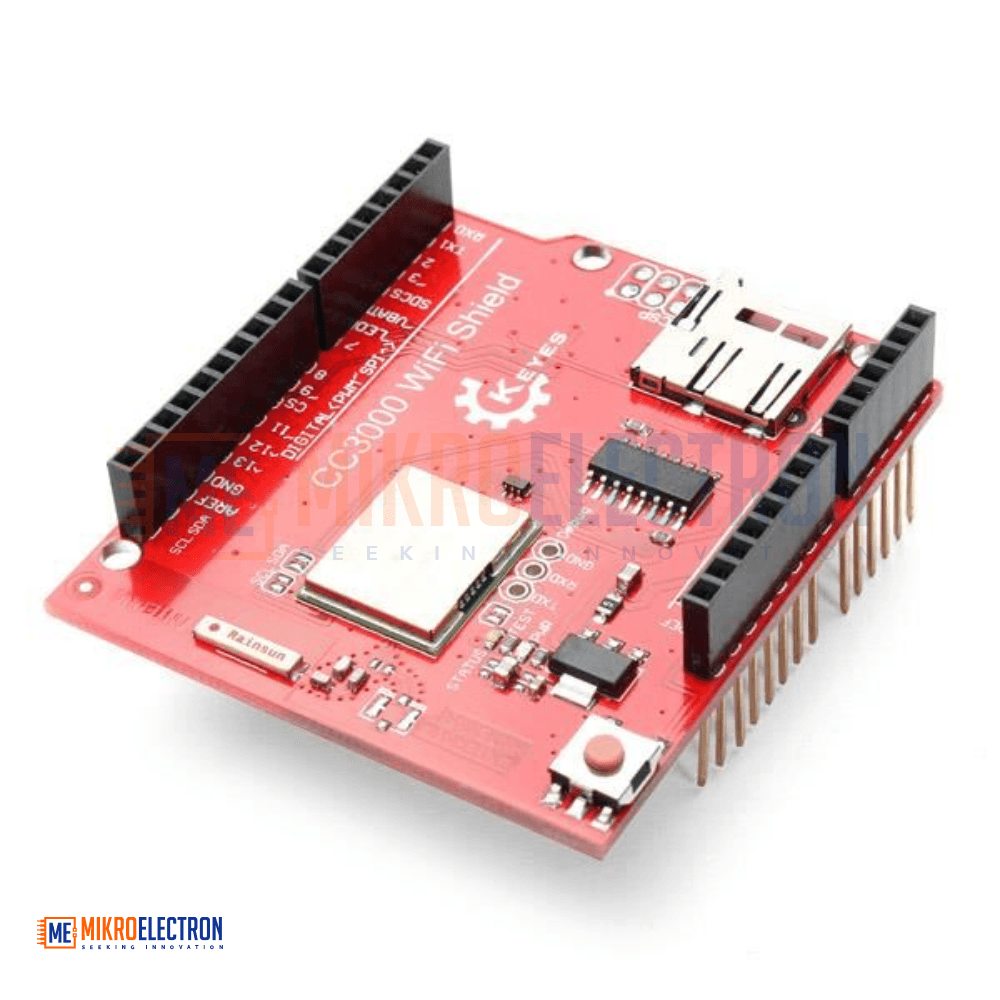
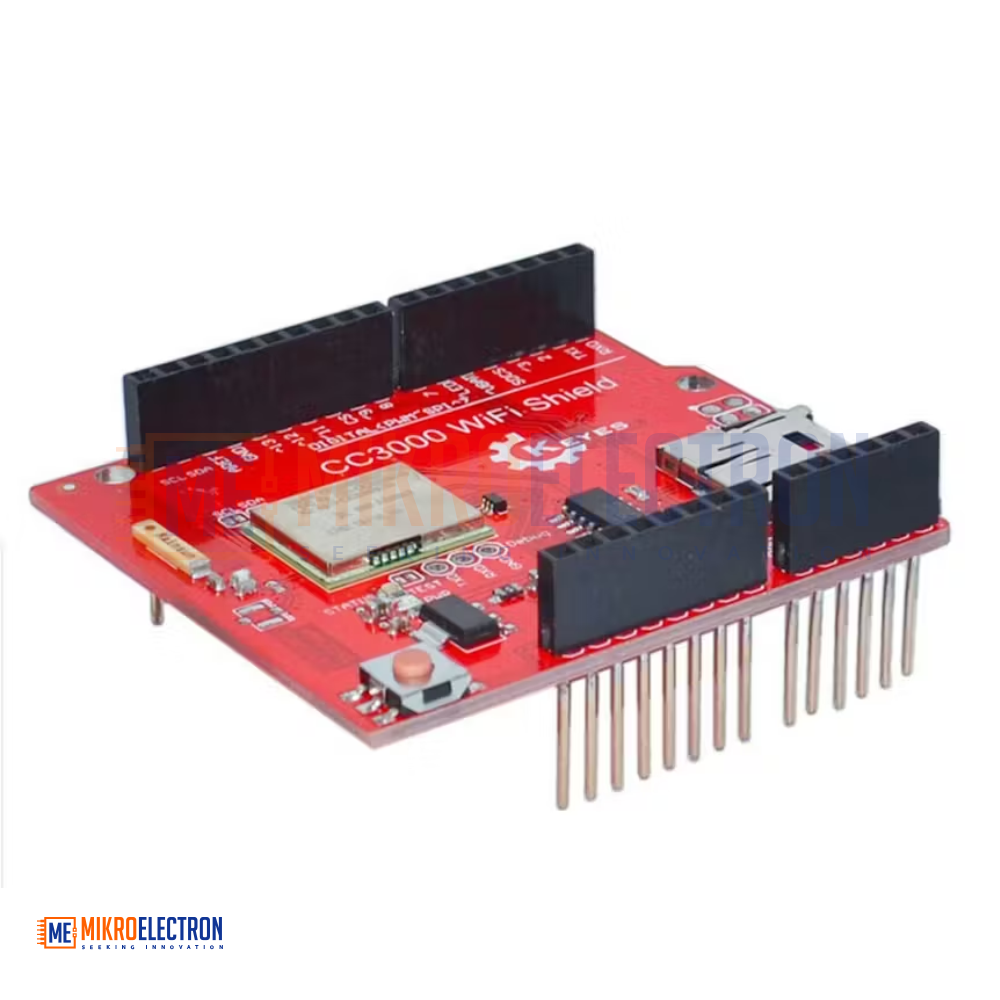
The CC3000 WiFi Shield for Arduino is a powerful 802.11 b/g WiFi shield that adds reliable wireless internet connectivity to your Arduino projects. Featuring a fast SPI interface, built-in TCP/IP stack, support for WEP/WPA/WPA2 security, and up to 4 concurrent sockets, it's perfect for IoT projects, web clients, and remote sensors. The shield includes a microSD card slot, reset button, onboard antenna, and supports TCP/UDP communication in client and server modes.
شيلد CC3000 للواي فاي للأردوينو هو شيلد واي فاي 802.11 b/g قوي يضيف اتصال إنترنت لاسلكي موثوق لمشاريع الأردوينو. يتميز بواجهة SPI سريعة، حزمة TCP/IP مدمجة، دعم تشفير WEP/WPA/WPA2، وحتى 4 منافذ سوكت متزامنة، وهو مثالي لـ مشاريع IoT، عملاء الويب، والحساسات عن بُعد. يتضمن الشيلد مقبس بطاقة microSD، زر إعادة تشغيل، هوائي مدمج، ويدعم اتصالات TCP/UDP في وضعَي العميل والخادم.
The Adafruit CC3000 WiFi Shield is a professional-grade WiFi solution designed specifically for Arduino projects, built around the popular Texas Instruments CC3000 WiFi chip. After years of evaluating microcontroller-friendly WiFi modules — most of which were too slow, too expensive, too complicated, or required signing an NDA — Adafruit selected the CC3000 for its excellent balance of usability, price, and capability, and packaged it into a beautifully designed Arduino shield that's ready for serious IoT and connected projects.
The CC3000 communicates with the Arduino over fast SPI (not slow UART), allowing you to push data at high speeds while keeping the host microcontroller free for other tasks. It also features a proper interrupt system with an IRQ pin, enabling asynchronous, event-driven networking — essential for responsive IoT applications. The chip supports the full 802.11 b/g standard with open networks, WEP, WPA, and WPA2 security, and handles both TKIP and AES encryption.
A major advantage of the CC3000 is its built-in TCP/IP stack with a familiar BSD socket interface. This dramatically simplifies networking code and eliminates the need to implement low-level protocols on the Arduino. The shield supports TCP and UDP in both client and server modes, with up to 4 concurrent sockets — enough to run a small web server, push sensor data to the cloud, or maintain multiple network connections at once.
The shield is built on a high-quality PCB with:
- An onboard 3.3V regulator capable of handling the CC3000's 350mA peak current
- A logic level shifter for safe operation with both 3.3V and 5V Arduinos
- A microSD card slot for storing web pages, logs, or sensor data
- An onboard reset button for quick resets without unplugging the shield
- The TI-recommended antenna layout for FCC emitter compliance (you'll still need to certify your final product, but the WiFi section is pre-validated)
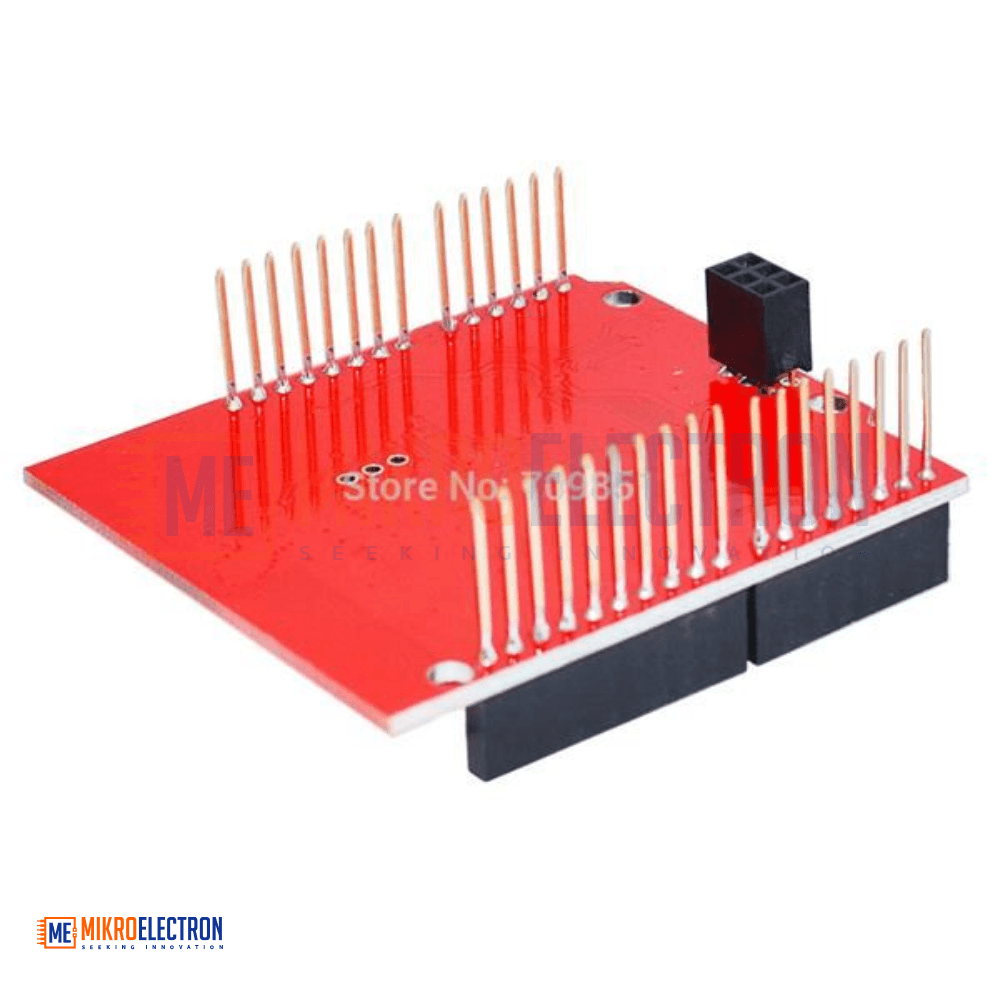
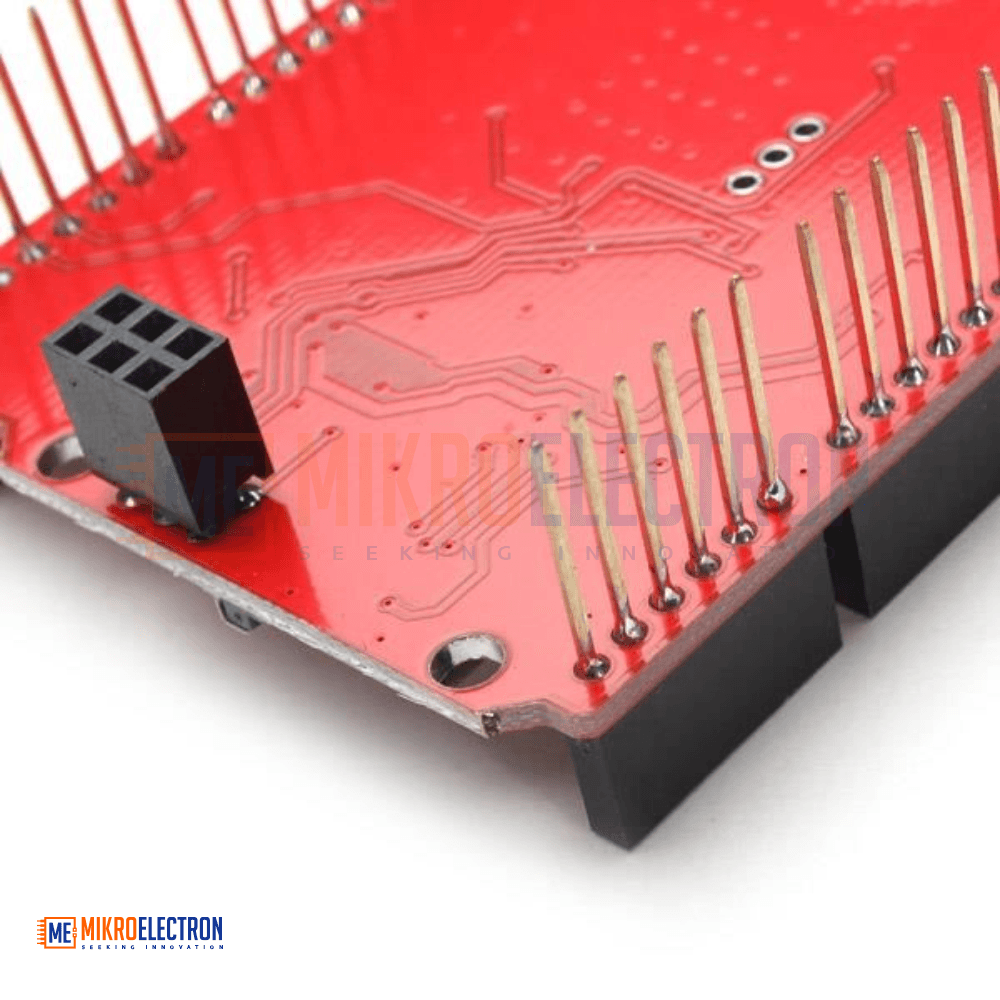
Despite its compact onboard antenna, the shield offers smartphone-class wireless range, performing reliably across typical home and office WiFi networks. Each order includes the fully assembled and tested shield, male headers for stacking onto an Arduino Uno/Mega, and a 2x3 female header for plugging into the ICSP port of a Mega.
The shield is supported by a fully working Arduino library, originally based on TI's official codebase and adapted for the AVR architecture. Example code is included for:
- WiFi network scanning (SSID listing)
- Connecting to access points (with WPA/WPA2 security)
- DHCP IP address acquisition
- DNS lookups (resolving hostnames to IP addresses)
- Pinging remote servers
- TCP client connections (e.g., connecting to a website and downloading content)
- UDP client/server messaging
- Hosting a small TCP server (e.g., a basic web server)
Important Compatibility Note: This shield is officially supported for use with Arduino Uno and Arduino Mega only. Library support for Leonardo, Due, and other boards is not guaranteed at this time. The CC3000 also does not support "AP mode" — it can connect to an access point as a client, but cannot act as a WiFi hotspot.
Specifications
Wireless
- WiFi Standard: IEEE 802.11 b/g
- WiFi Chip: Texas Instruments CC3000
- Security Modes: Open, WEP, WPA, WPA2
- Encryption: TKIP and AES
- Antenna: Onboard PCB antenna (TI reference layout, FCC compliant)
- AP Mode (Hotspot): Not supported (client / station mode only)
Networking
- Protocol Stack: Built-in TCP/IP (BSD socket interface)
- Supported Protocols: TCP, UDP, DNS, DHCP
- Operating Modes: TCP/UDP client and TCP server
- Concurrent Sockets: Up to 4
Interface
- MCU Interface: SPI (with IRQ for asynchronous events)
- Logic Levels: 3.3V and 5V tolerant (onboard level shifter)
- Onboard Voltage Regulator: 3.3V, 350mA peak capability
Hardware Features
- microSD Card Slot: Onboard
- Reset Button: Onboard
- Form Factor: Arduino shield (Uno / Mega compatible)
- Mega ICSP Connector: Includes 2x3 female header for ICSP connection
Compatibility
- Arduino Uno ✅ (Officially supported)
- Arduino Mega ✅ (Officially supported, with ICSP header)
- Arduino Leonardo / Due / Other Boards: ⚠️ Not officially supported
Applications
- Internet of Things (IoT) projects — connect Arduino to the cloud
- Wireless sensor networks — temperature, humidity, motion, air quality
- Smart home automation — controllable lights, fans, appliances
- Remote monitoring systems — security, energy, environmental
- Web-based dashboards for live sensor data
- Twitter / social media notifiers
- Email-sending devices triggered by sensors
- Cloud data logging to Google Sheets, ThingSpeak, AWS, etc.
- Wireless weather stations
- Connected garden / plant watering systems
- Wireless robotics control over WiFi
- DIY smart doorbells and alerts
- Network-connected displays (stock tickers, weather, news)
- Educational STEM and IoT projects
- Prototype development for connected product