
PH Electrode + Module Board
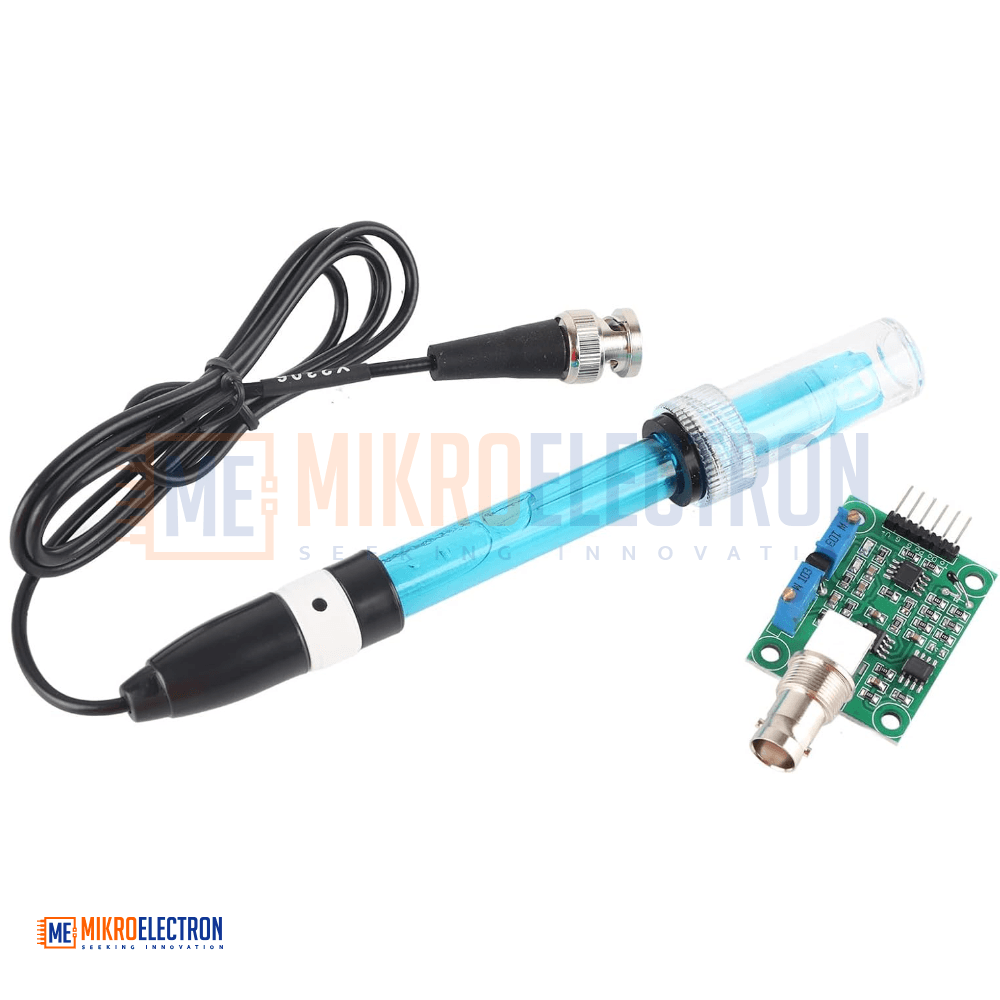
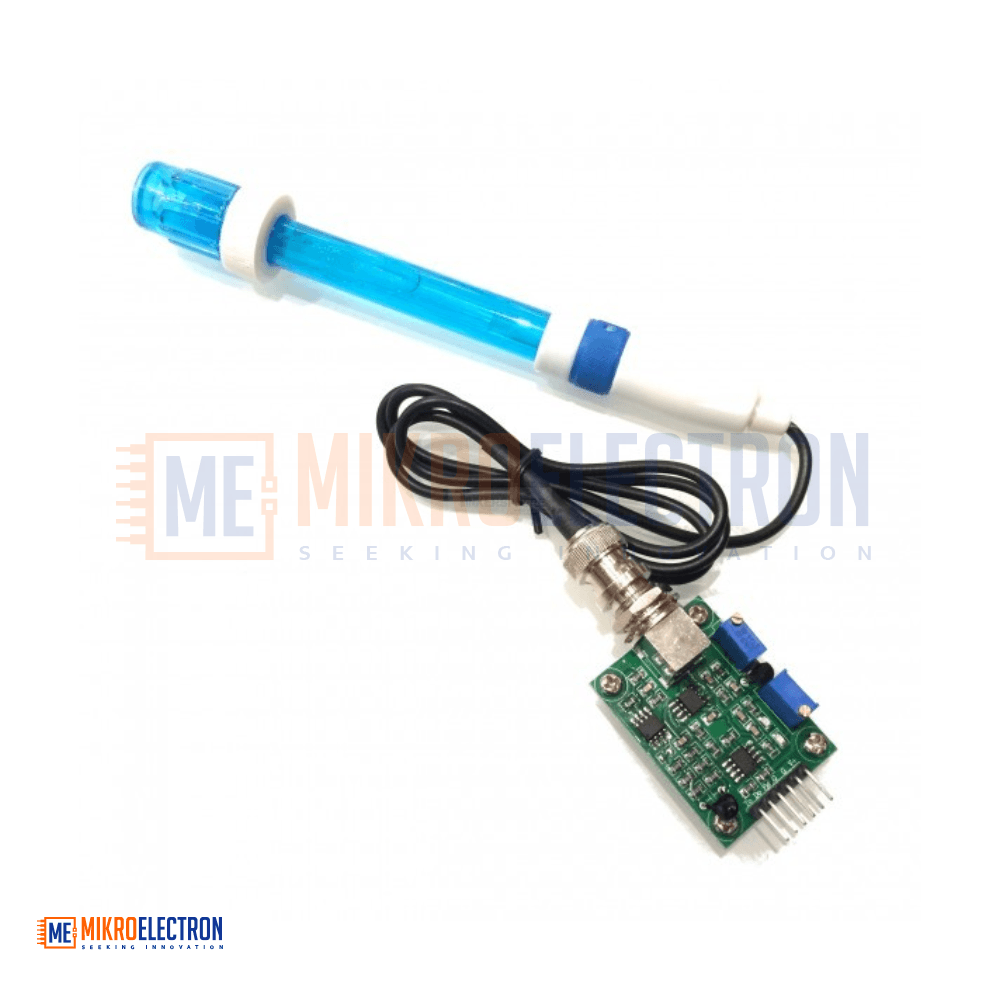
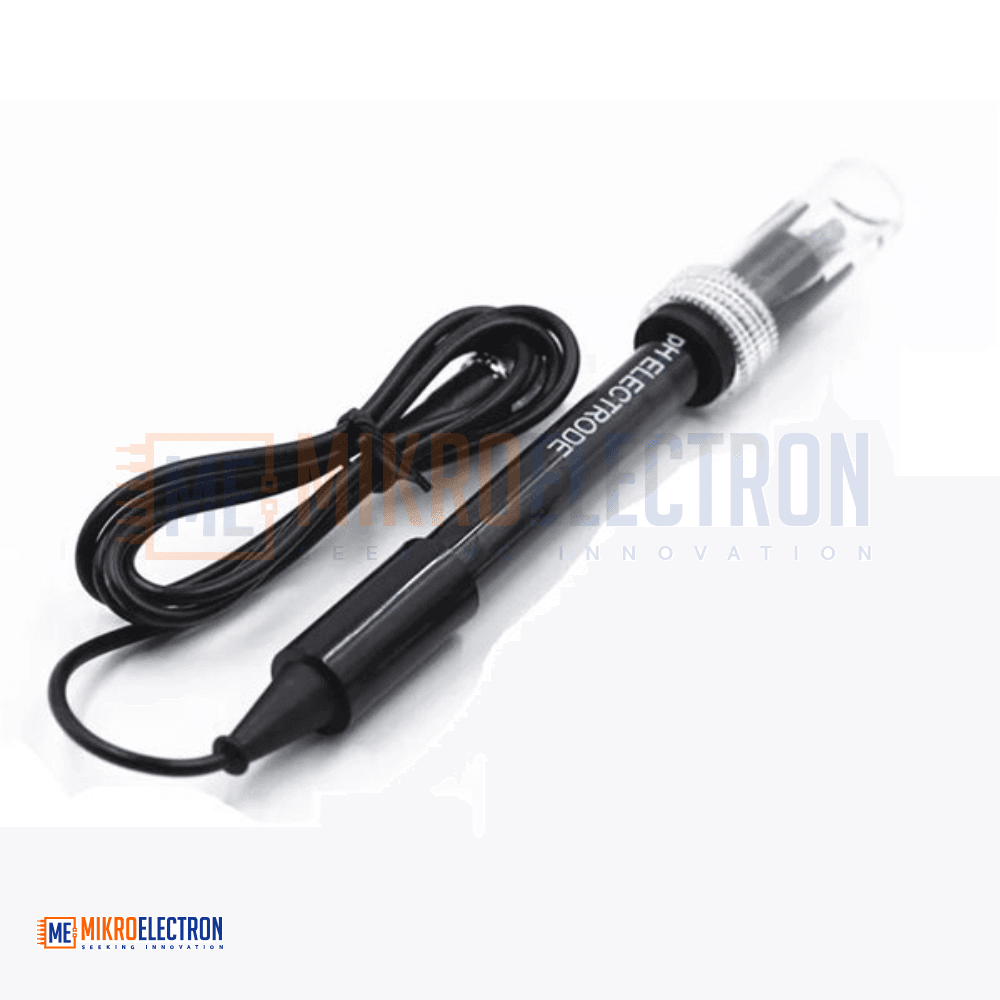
The PH Electrode + Module Board (PH-4502C) is a complete pH measuring solution for Arduino, Raspberry Pi, and ESP32 projects. It includes a BNC pH probe and a signal-conditioning board that outputs an analog voltage proportional to pH. Measuring 0–14 pH with a response time under 1 minute, it's ideal for aquariums, hydroponics, water quality monitoring, and laboratory applications. Includes onboard calibration potentiometers and pH limit trigger output.
حساس قياس درجة الحموضة PH-4502C مع الإلكترود هو حل متكامل لقياس الـ pH في مشاريع Arduino وRaspberry Pi وESP32. يتضمّن مجس pH بموصل BNC ولوحة تكييف إشارة تُخرج جهداً تناظرياً يتناسب مع قيمة الـ pH. يقيس من 0 إلى 14 pH بزمن استجابة أقل من دقيقة، وهو مثالي لتطبيقات أحواض الأسماك، الزراعة المائية، مراقبة جودة المياه، والمختبرات. يحتوي على مقاومات معايرة ومخرج إنذار لحدّ الـ pH.
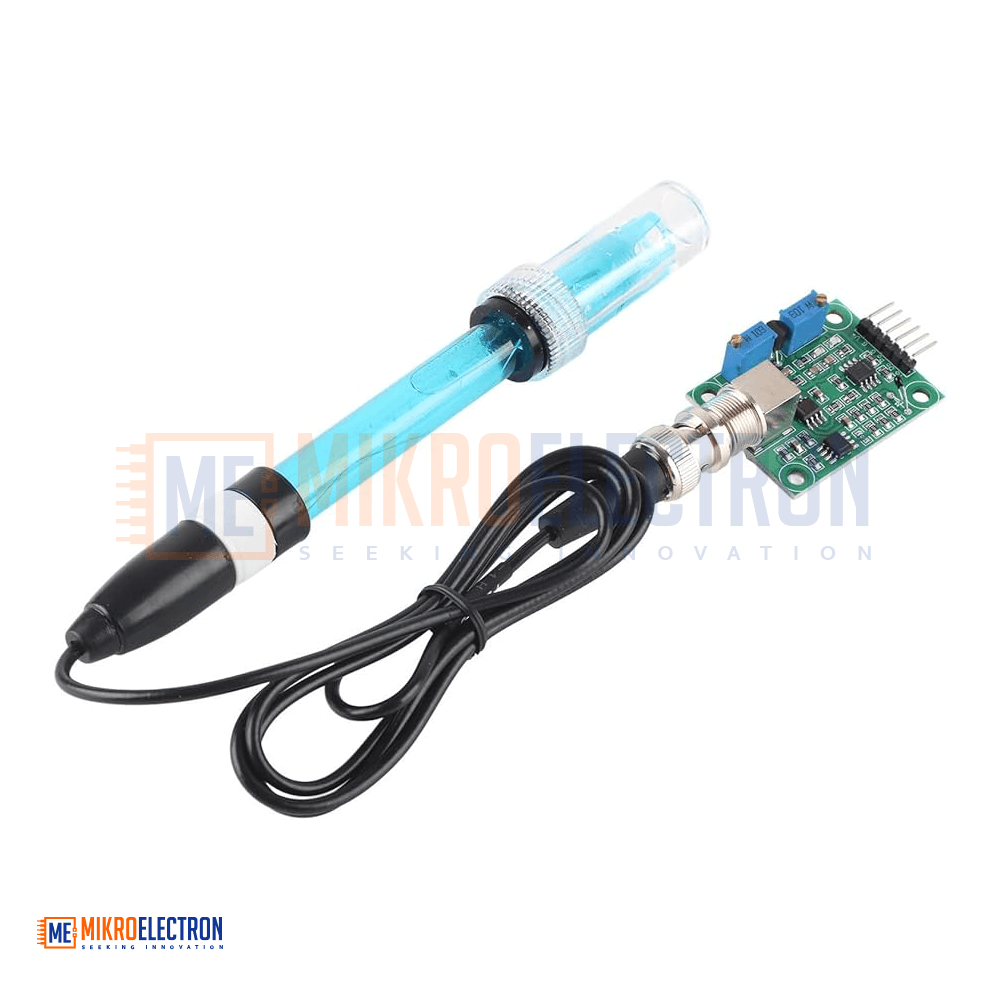
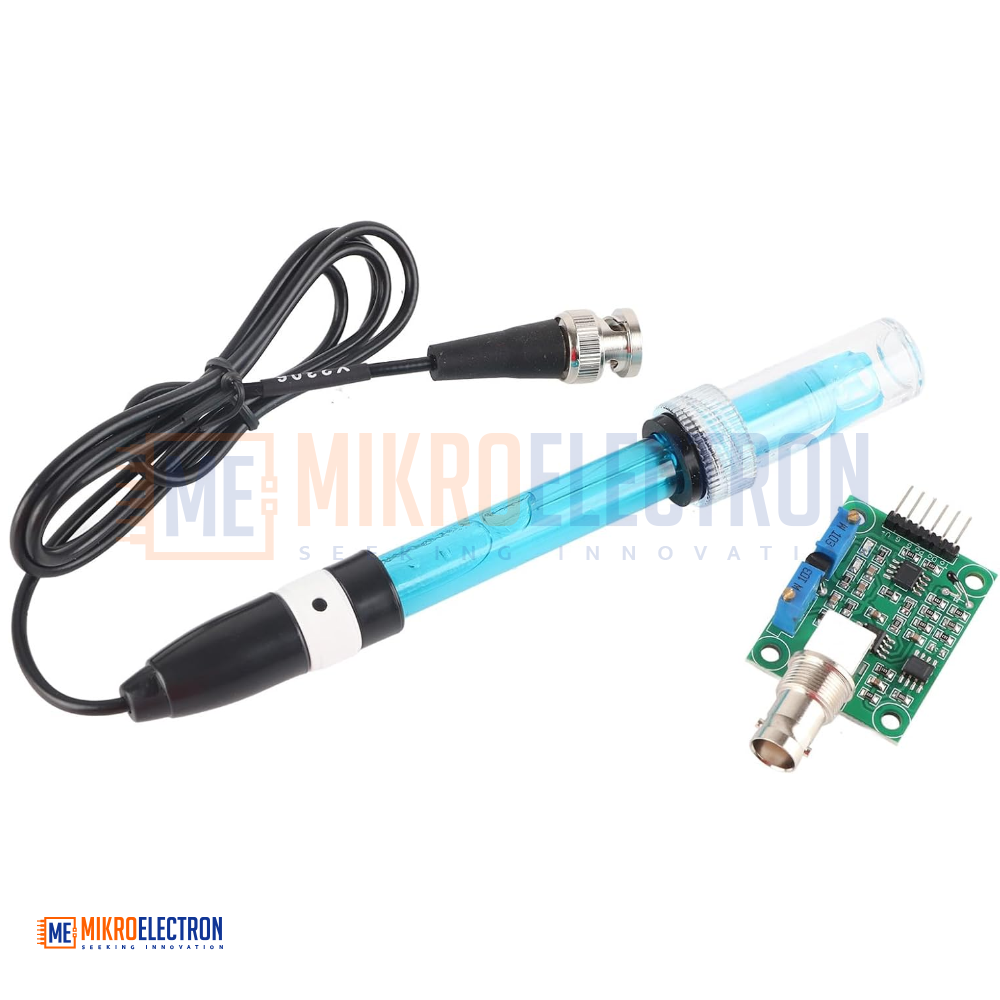
The PH-4502C pH Electrode + Module Board is a precision analog pH measurement kit designed to work seamlessly with microcontrollers such as Arduino, Raspberry Pi, ESP32, and ESP8266. The kit includes a high-quality glass pH electrode with BNC connector and a signal-conditioning board that converts the probe's millivolt output into a standard analog voltage that any microcontroller's ADC can read.
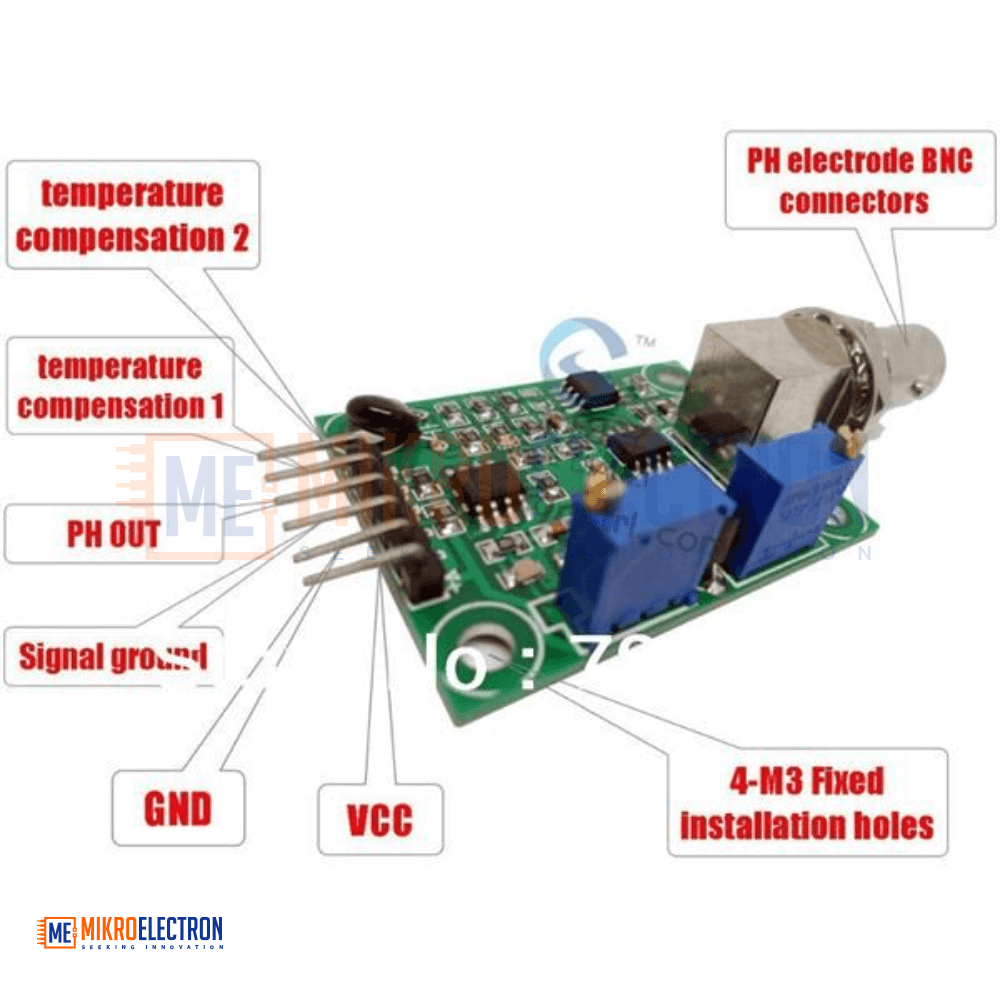
The probe measures the full pH range of 0 to 14, making it suitable for aquariums, hydroponics, swimming pools, water treatment, soil testing, and laboratory experiments. The board provides three useful outputs: an analog pH output (PO), a 3.3V pH limit trigger (DO) for threshold-based alarms, and a temperature output (TO) for compensation circuits.
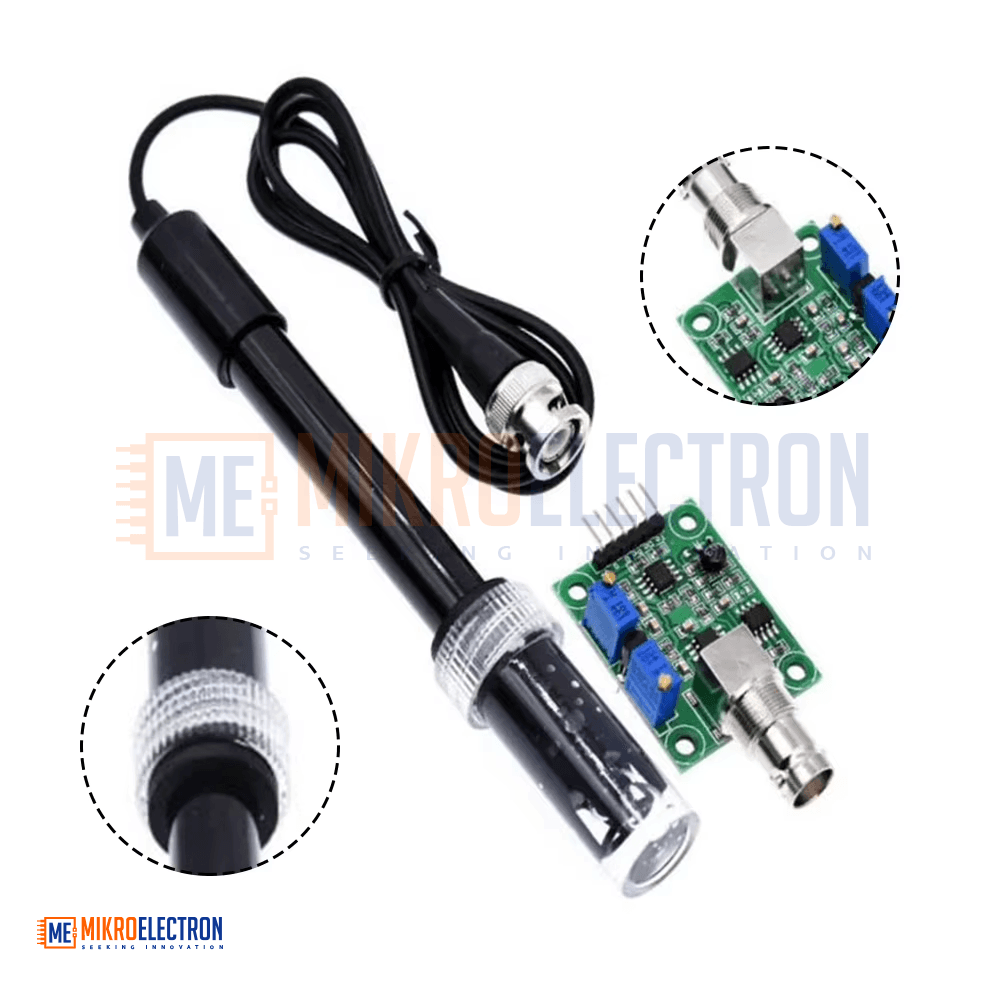
Two onboard potentiometers allow easy calibration: one to set the analog offset (so that pH 7 reads 2.5V at the Arduino input), and another to set the pH alarm threshold. The probe connects through a standard BNC connector, making it compatible with most professional pH meters and replacement probes.
Quick Calibration Guide
To set the offset so that pH 7 = 2.5V at the analog pin:
- Disconnect the probe and short-circuit the BNC connector.
- Use a multimeter to adjust the offset potentiometer (closest to the BNC connector) until PO reads 2.5V.
- Reconnect the probe — calibration done.
Wiring to Arduino
- PO → Arduino A0 (analog pH reading)
- GND → Arduino GND
- VCC → Arduino 5V
Specifications
pH Probe (Electrode)
- Measurement Range: 0.00 – 14.00 pH
- Zero Point: 7 ± 0.5 pH
- Alkali Error: 0.2 pH
- Theoretical Percentage Slope: ≥ 98.5%
- Internal Resistance: ≤ 250 MΩ
- Response Time: ≤ 1 minute
- Operating Temperature: 0 – 60 °C
- Connector: BNC plug
- Cable Length: Approx. 70 cm
PH-4502C Module Board
- Heating Voltage: 5 ± 0.2V (AC / DC)
- Working Current: 5 – 10 mA
- Detection Range: pH 0 – 14
- Temperature Detection Range: 0 – 80 °C
- Response Time: ≤ 5 seconds
- Stability Time: ≤ 60 seconds
- Power Consumption: ≤ 0.5W
- Working Temperature: −10 to +50 °C (nominal 20 °C)
- Working Humidity: ≤ 95% RH (nominal 65% RH)
- Service Life: ~3 years
- Output: Analog voltage signal
- Dimensions: 42 × 32 × 20 mm
- Weight: 25 g
Module Pinout
- TO – Temperature output
- DO – 3.3V pH limit trigger (digital alarm output)
- PO – pH analog output
- GND – Ground for pH probe
- GND – Ground for board
- VCC – 5V DC
- POT 1 – Analog reading offset (closest to BNC connector)
- POT 2 – pH limit threshold setting
Applications
- Aquariums and fish tank water monitoring
- Hydroponics and smart agriculture systems
- Swimming pool and spa water quality control
- Laboratory experiments and chemistry projects
- Water treatment and filtration monitoring
- Soil pH testing for gardening and farming
- Educational STEM and Arduino-based science kits
- IoT water quality monitoring with ESP32 / ESP8266
- Industrial process control for liquids