
Soil Humidity Sensor Module
The Soil Moisture Sensor Module is a simple, low-cost sensor for detecting soil humidity levels in plants, gardens, and farms. It provides both analog (AO) and digital (DO) outputs based on a comparator using the LM393 IC, with an adjustable digital threshold via onboard potentiometer. Operating on 3.3V–5V, it's perfect for automatic watering systems, smart plant pots, IoT agriculture, and Arduino, Raspberry Pi, and ESP32 garden-automation projects.
حساس رطوبة التربة هو حساس بسيط واقتصادي للكشف عن مستوى الرطوبة في التربة للنباتات والحدائق والمزارع. يوفّر مخرجين: تناظري (AO) ورقمي (DO) يعتمدان على مقارن بشريحة LM393، مع حد رقمي قابل للضبط عبر مقاومة متغيّرة على اللوحة. يعمل بجهد 3.3 إلى 5 فولت، وهو مثالي لـ أنظمة الري التلقائي، أصص النباتات الذكية، الزراعة الذكية (IoT)، ومشاريع Arduino وRaspberry Pi وESP32 لأتمتة الحدائق.
The Soil Moisture Sensor Module is a simple, beginner-friendly sensor designed to detect the water content of soil, helping you build automatic watering systems, smart plant pots, and IoT agriculture projects without needing to constantly monitor your plants by hand.
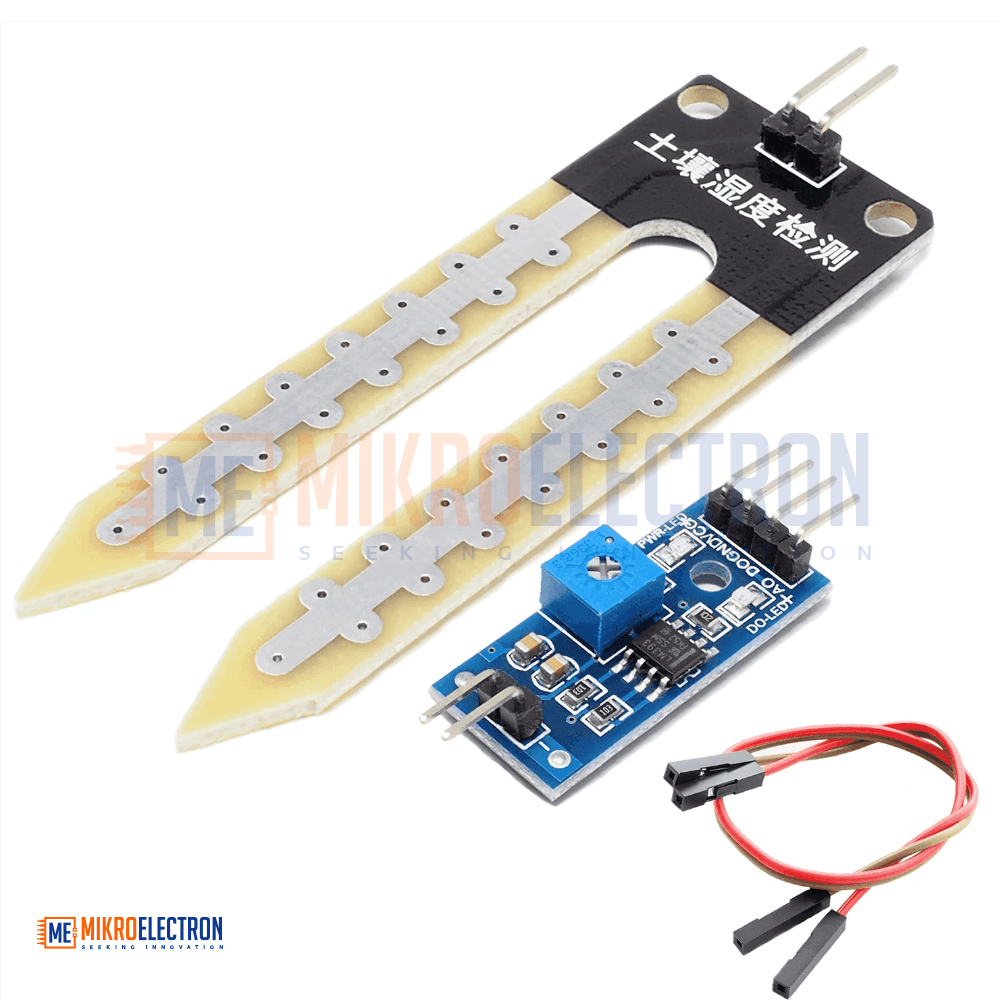
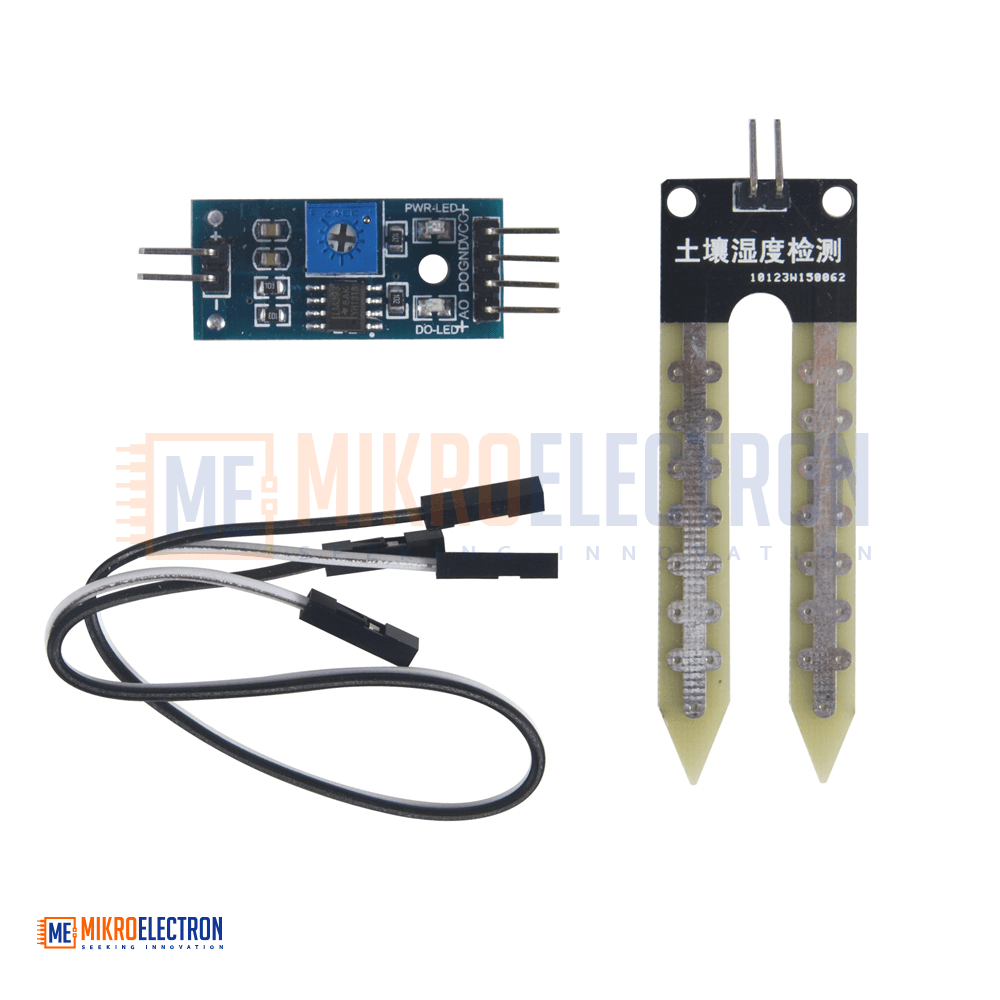
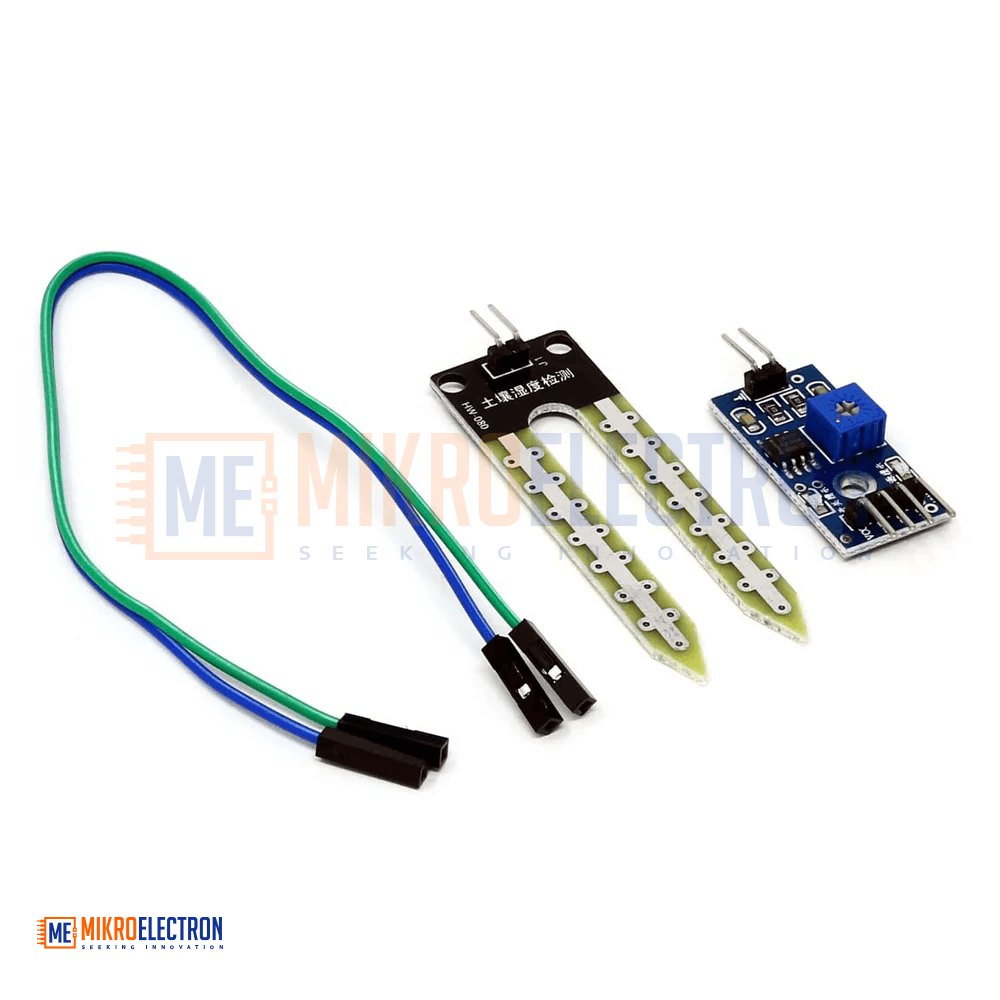
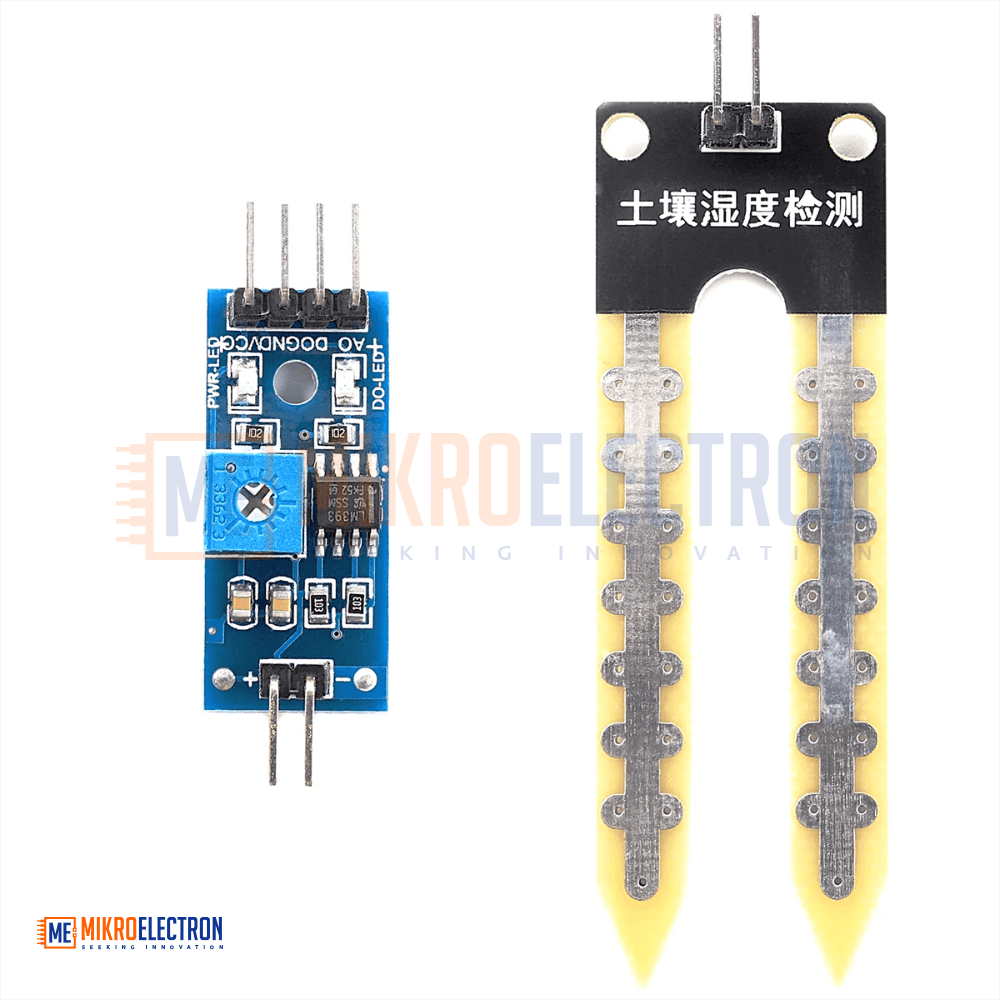
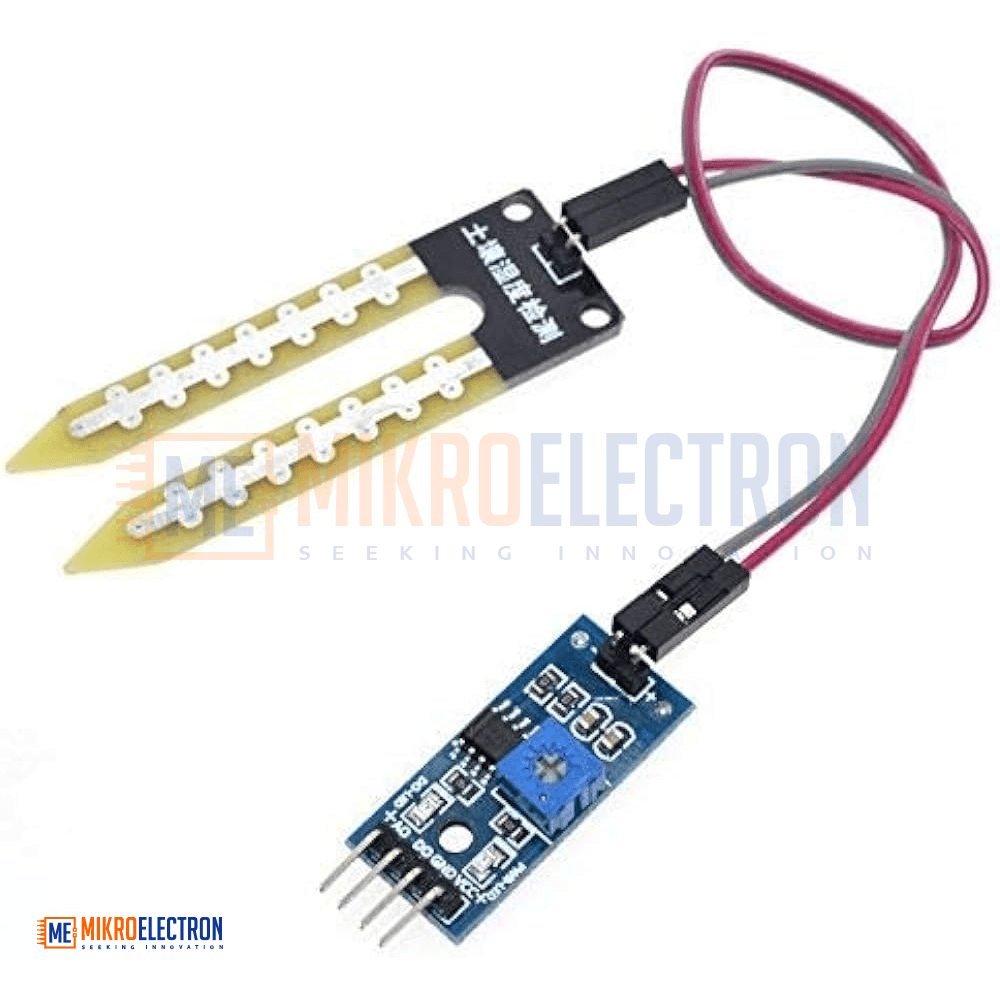
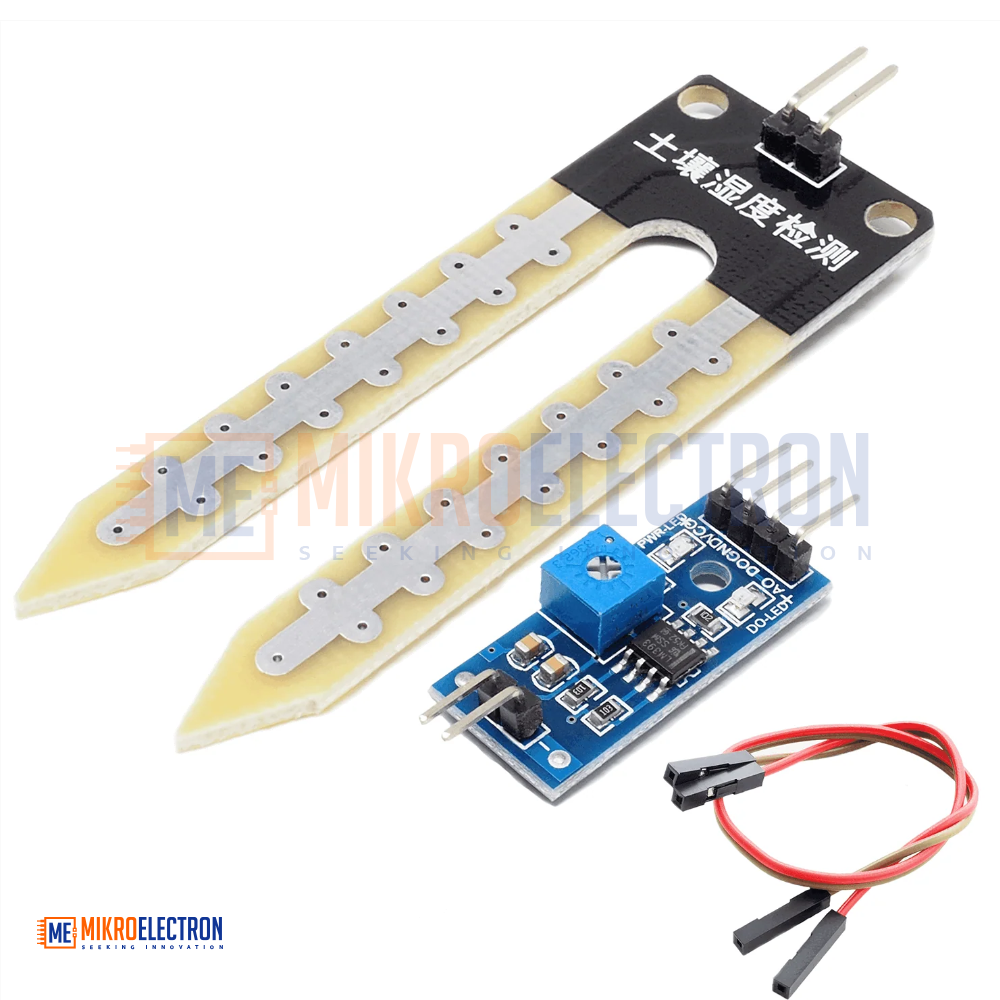
The system consists of two parts: a soil probe (the fork-shaped electrode) that is inserted directly into the soil, and a small comparator PCB that conditions the probe signal and produces a clean digital output. As the moisture content around the probe changes, the electrical resistance between its two prongs changes — wetter soil conducts better, while dry soil has much higher resistance.
The onboard comparator is built around the well-known LM393 IC, which provides reliable, stable digital switching behavior. A blue trimmer potentiometer lets you adjust the moisture threshold (sensitivity) at which the digital output changes state — making it easy to set a custom "dry / wet" decision point for your specific plant or soil type. When the soil is dry (below the threshold), the module outputs a HIGH signal; when the soil is wet (above the threshold), the output goes LOW, which can be used to directly trigger a relay, water pump, or microcontroller interrupt.
The board also exposes an analog output (AO), which provides a continuously varying voltage proportional to soil moisture — useful for projects that need precise moisture readings (for example, plotting moisture trends over time, or controlling watering with PID-like logic).
Two onboard LEDs provide quick visual feedback: a red power indicator confirms the module is energized, and a green output indicator lights up when the digital output is active. A mounting hole simplifies installation in plant pots, garden beds, or enclosures.
Operating from 3.3V to 5V, the sensor is fully compatible with Arduino, Raspberry Pi, ESP32, ESP8266, and most other microcontroller platforms — making it a perfect building block for smart irrigation, hydroponics monitoring, greenhouse automation, and IoT agriculture projects.
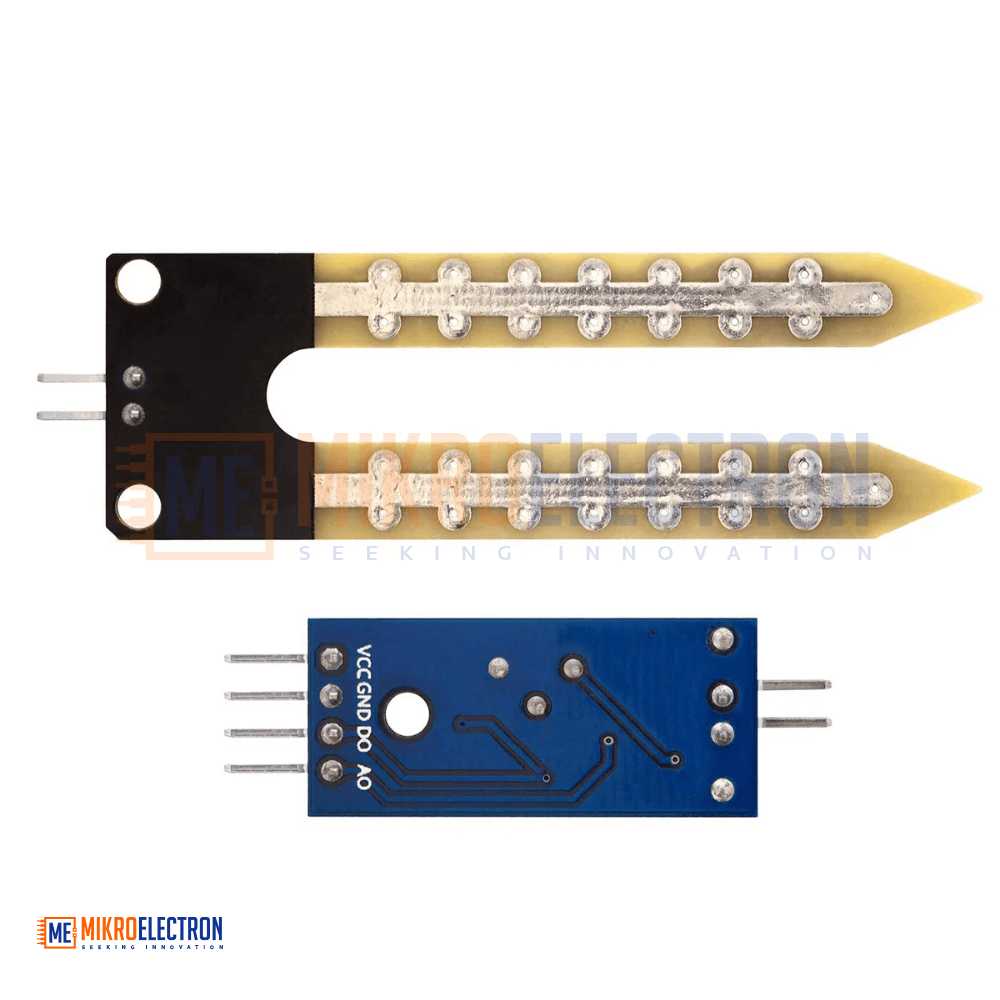
Pinout
- VCC → 3.3V to 5V
- GND → Ground
- DO → Digital output (0 / 1, threshold-based)
- AO → Analog output (continuous moisture level)
Tip for Long-Term Use
For long-term outdoor installations, the bare-electrode probe can suffer from corrosion and electrolysis. To extend life, consider:
- Powering the sensor only briefly during measurement (via a transistor or microcontroller pin) instead of continuously.
- Or upgrading to a capacitive soil moisture sensor, which avoids direct electrical contact with the soil.
Specifications
- Sensor Type: Resistive soil moisture probe + comparator board
- Comparator IC: LM393
- Operating Voltage: 3.3V – 5V DC
- Outputs: Digital (DO) + Analog (AO)
- Threshold Adjustment: Onboard blue trimmer potentiometer
- Indicators: Red power LED + Green digital output LED
- Mounting: Fixed bolt hole on the PCB
- Control Board PCB Size: 3 cm × 1.6 cm
- Soil Probe Size: 6 cm × 2 cm
- Compatible With: Arduino, Raspberry Pi, ESP32, ESP8266, PIC, AVR, STM32
Applications
- Automatic plant watering systems
- Smart plant pots with moisture-triggered irrigation
- Home garden and balcony watering automation
- Greenhouse and farm soil monitoring
- Hydroponics moisture detection (with appropriate probe modification)
- Smart agriculture (IoT) with ESP32 / ESP8266 cloud uploads
- Lawn sprinkler automation
- Educational STEM projects in biology and environmental science
- Arduino, Raspberry Pi, and microcontroller garden projects
- Rain and water-leak detection (in modified setups)
- DIY weather stations with soil moisture data
- Drought detection and environmental research