
Heart Rate Monitor - AD8232
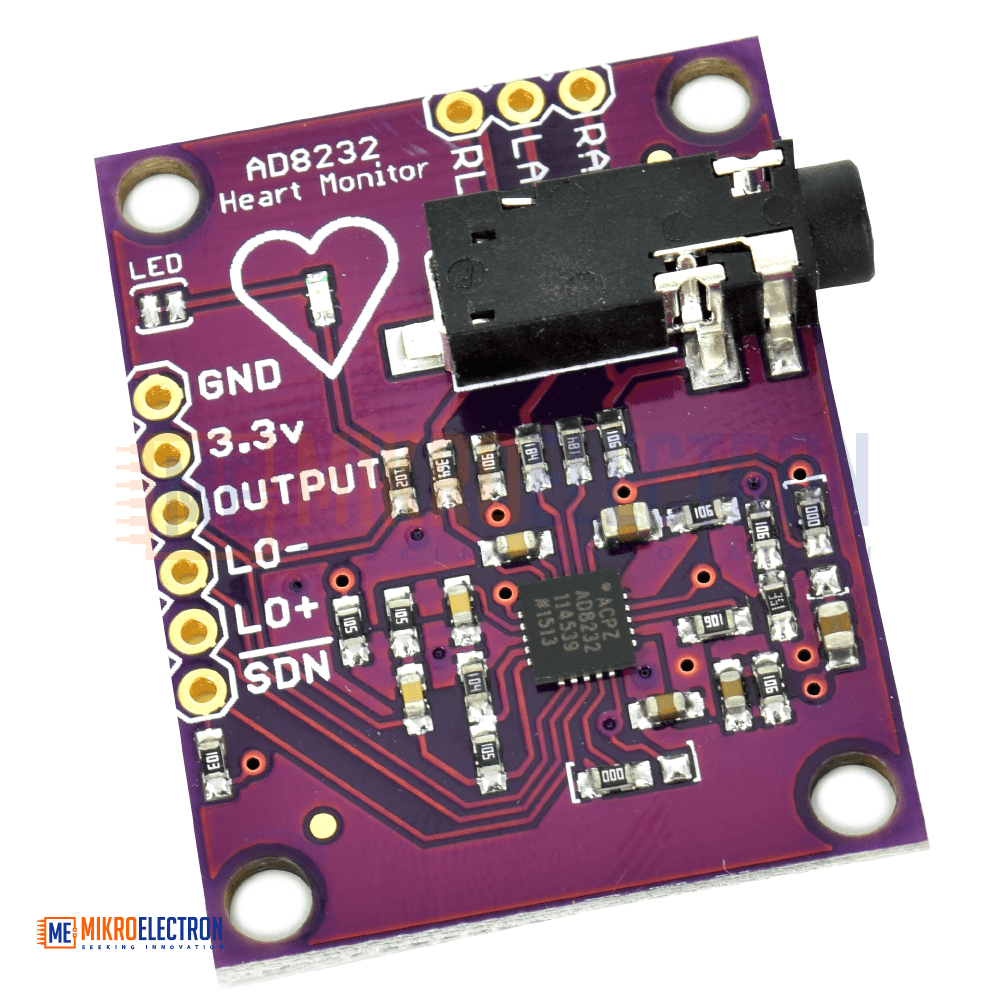
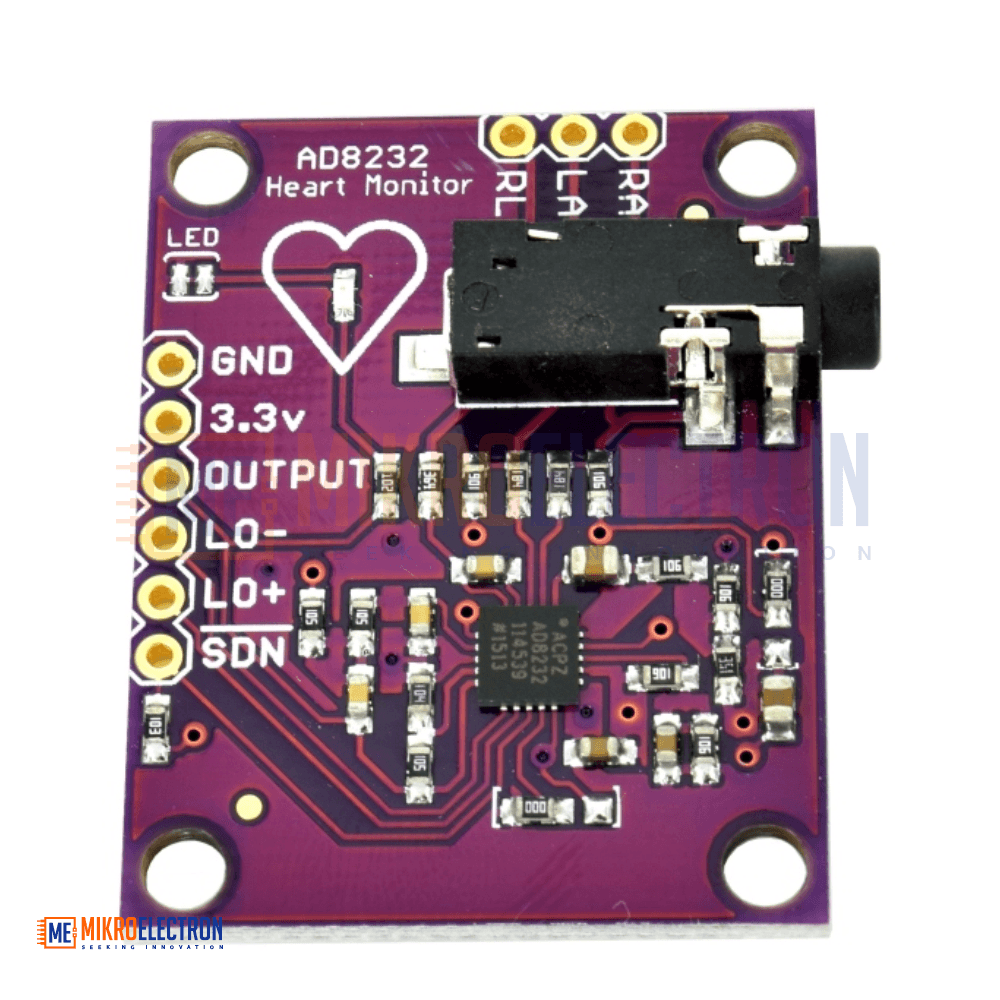
The AD8232 Single Lead Heart Rate Monitor is a compact, cost-effective ECG sensor module that measures the electrical activity of the heart and outputs it as a clean analog signal. Featuring built-in op-amp signal conditioning, leads-off detection, shutdown pin, and an LED heartbeat indicator, it operates on 3.3V and includes a 3.5mm jack for standard biomedical electrode cables. Perfect for Arduino, Raspberry Pi, and ESP32 ECG projects, biofeedback, and wearable health monitoring.
حساس مراقبة نبضات القلب AD8232 (قطب واحد) هو وحدة ECG مدمجة واقتصادية تقيس النشاط الكهربائي للقلب وتُخرج إشارة تناظرية نظيفة. يتميّز بـ مضخّم عمليات مدمج لتكييف الإشارة، وكشف انفصال الأقطاب (Leads-Off)، وPin إيقاف التشغيل، ومؤشر LED يخفق مع نبض القلب. يعمل بجهد 3.3 فولت ويتضمّن مدخل 3.5 ملم لكابلات الأقطاب الطبية القياسية. مثالي لمشاريع ECG مع Arduino وRaspberry Pi وESP32 والأجهزة القابلة للارتداء.
The AD8232 Single Lead Heart Rate Monitor is a compact, cost-effective ECG (electrocardiogram) sensor module designed to measure the electrical activity of the heart in real time. By detecting the small bio-electrical signals generated by each heartbeat, the module produces a clear analog ECG waveform that can be read by any microcontroller's ADC — making it ideal for Arduino, Raspberry Pi, ESP32, and other DIY biomedical projects.
ECG signals are notoriously small and noisy, often corrupted by motion artifacts, muscle activity (EMG), and 50/60 Hz mains interference. The board is built around the Analog Devices AD8232 IC, which is purpose-designed for ECG and biopotential measurement. Internally, the AD8232 acts as a complete signal conditioning chain — amplifying, filtering, and processing the tiny biopotential signals so that the PR and QT intervals of the heart waveform are clearly visible at the output, even under typical real-world noise conditions.
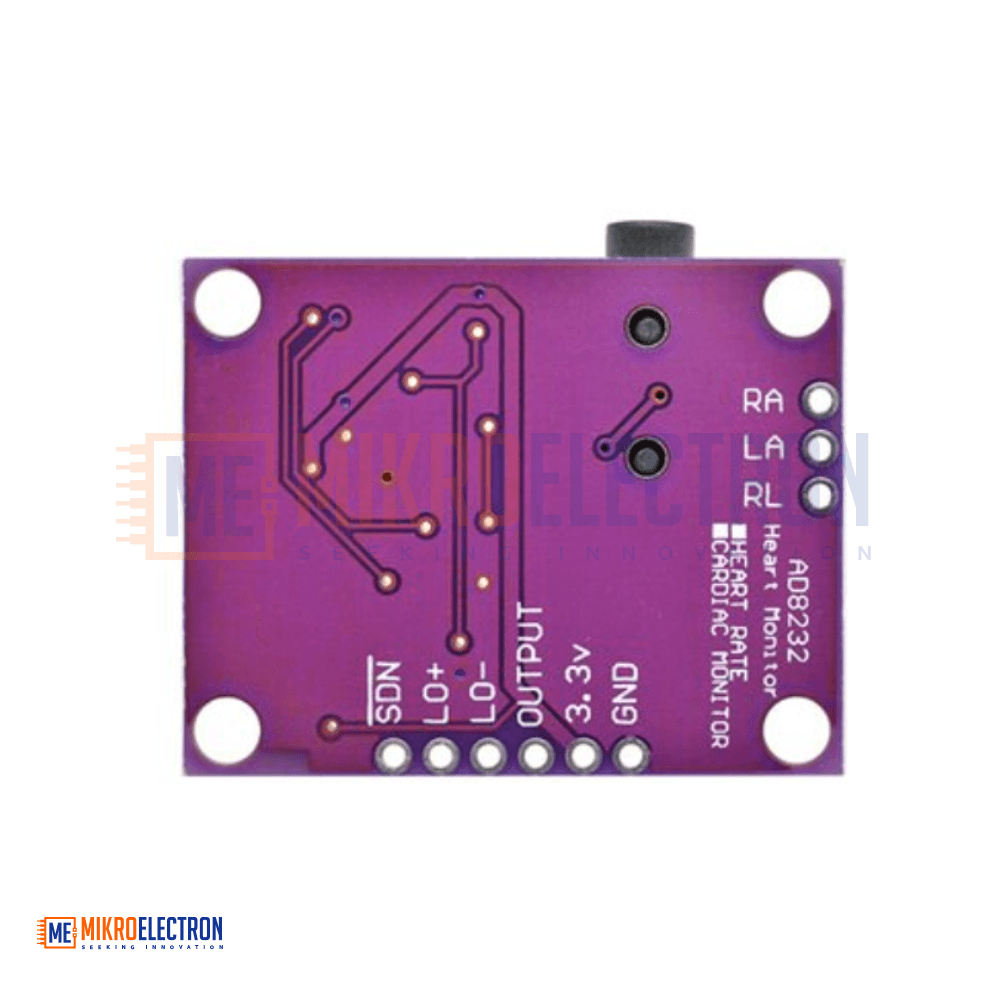
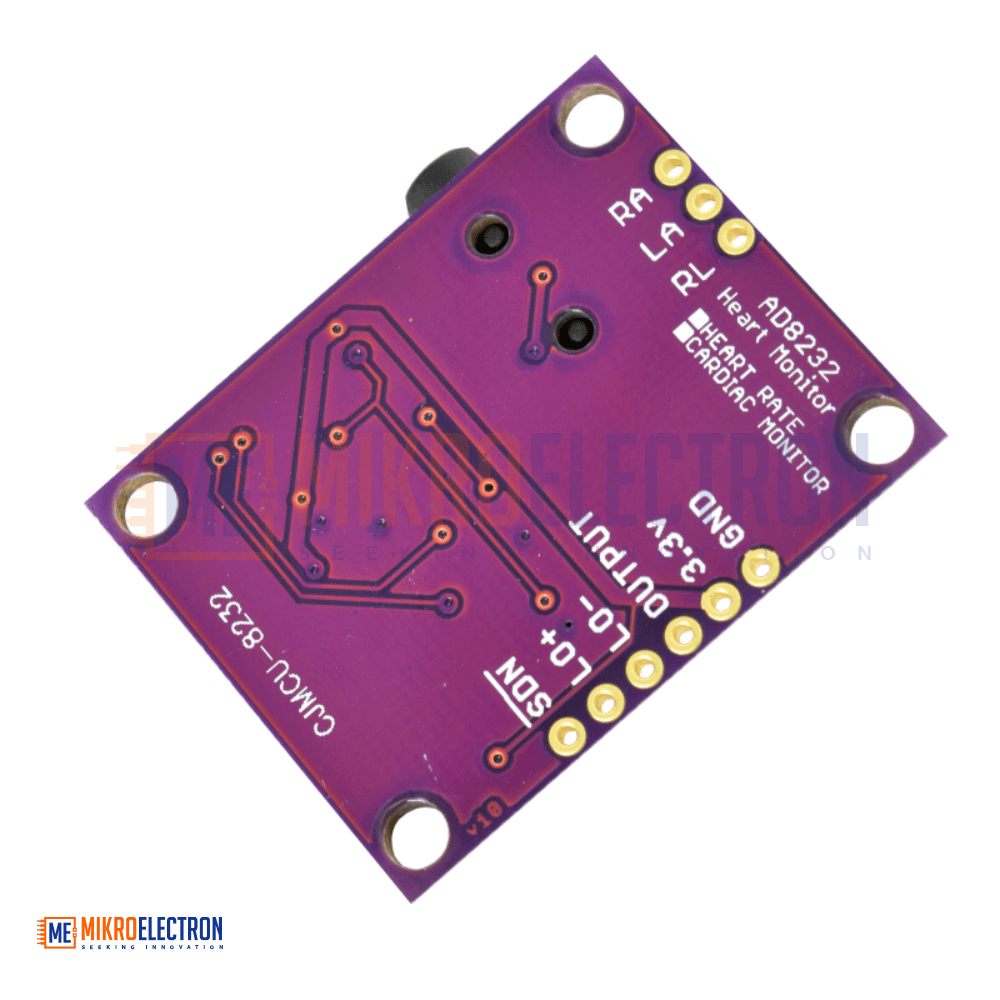
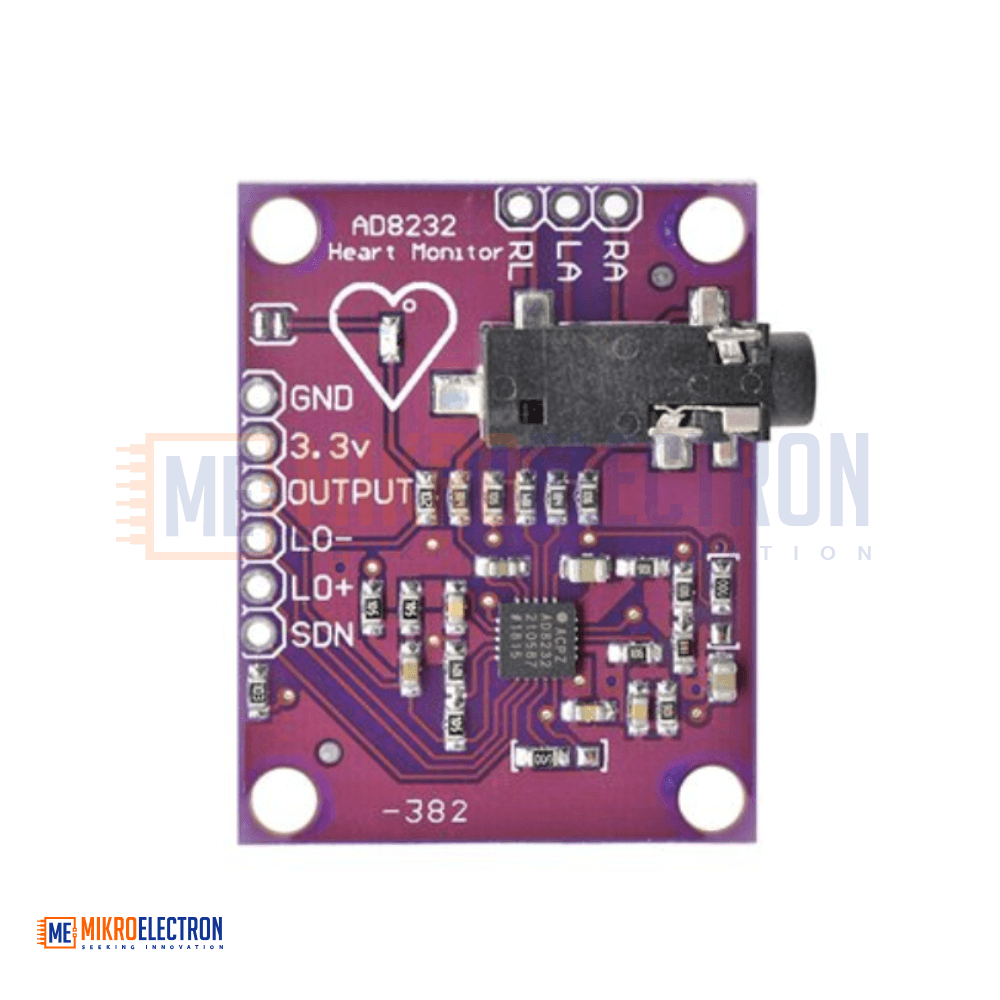
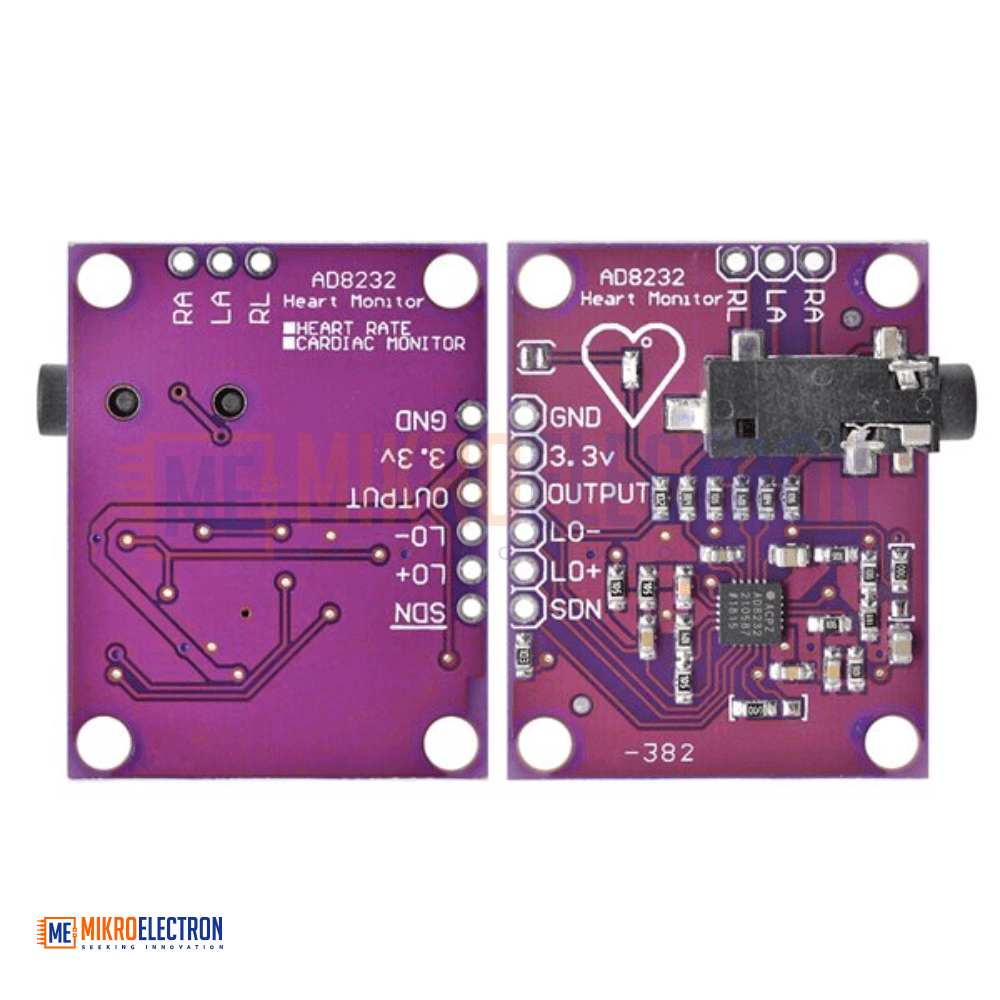
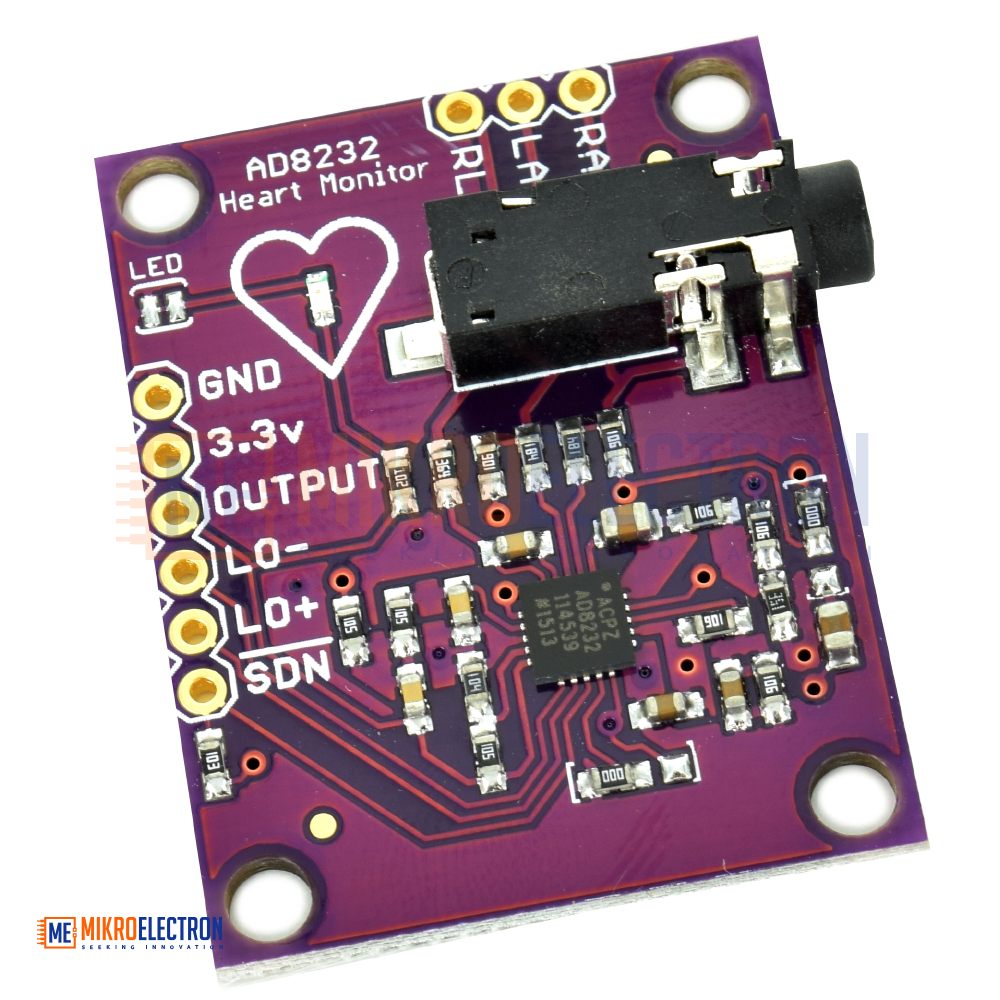
The breakout exposes nine connections for maximum flexibility: SDN, LO+, LO−, OUTPUT, 3.3V, GND, plus RA (Right Arm), LA (Left Arm), and RL (Right Leg) for users who prefer to attach their own custom electrodes or sensor cables instead of using the onboard 3.5mm jack. The module also includes a leads-off detection circuit, which can flag when an electrode loses contact with the skin — useful for triggering alerts in monitoring applications.
A built-in LED indicator pulsates with each detected heartbeat, giving immediate visual feedback that the system is working correctly — perfect for demos, debugging, and educational labs.
To use the AD8232, you'll also need:
- Biomedical Sensor Pads (disposable, pre-gelled electrodes), and
- A 3-lead Sensor Cable with snap-on connectors and a 3.5mm jack.
These accessories are typically sold separately and can be found in the Recommended Products section.
Standard Electrode Placement (3-Lead)
- RA (Right Arm) → upper right chest, just below the collarbone
- LA (Left Arm) → upper left chest, just below the collarbone
- RL (Right Leg) → lower right side of the torso (reference)
This placement gives a clean Lead I-style ECG waveform suitable for heart rate detection and basic rhythm analysis.
Important Notes:
- The AD8232 module is intended for educational, hobbyist, and research use — it is not a certified medical device and must not be used for clinical diagnosis.
- Always operate the module from a safe, low-voltage source (3.3V) — never connect a subject directly to mains-powered equipment.
- Keep the subject still during recording for the cleanest waveform.
Wiring to Arduino
- VCC → 3.3V
- GND → GND
- OUTPUT → A0 (analog input)
- LO+ → D11 (leads-off detect, optional)
- LO− → D10 (leads-off detect, optional)
- SDN → D9 (shutdown control, optional)
Specifications
- Sensor IC: Analog Devices AD8232 ECG / biopotential front-end
- Operating Voltage: 3.3V
- Output Type: Analog ECG signal
- Leads: 3-lead (RA, LA, RL)
- Onboard Connector: 3.5mm jack for standard biomedical sensor cable
- Indicator: LED heartbeat indicator
- Leads-Off Detection: Yes (LO+ and LO− pins)
- Shutdown Pin (SDN): Yes
- Breakout Pins: SDN, LO+, LO−, OUTPUT, 3.3V, GND, RA, LA, RL
- Required Accessories: Biomedical electrode pads + 3-lead sensor cable (sold separately)
Applications
- Heart rate (BPM) monitoring and ECG waveform display
- Biofeedback and stress monitoring systems
- Wearable health and fitness devices
- Sleep monitoring and HRV (heart rate variability) analysis
- Telemedicine and remote health prototypes
- Educational STEM projects in biology and biomedical engineering
- DIY cardiology and physiology experiments
- Sports performance monitoring
- Arduino, Raspberry Pi, and ESP32 health-monitoring projects
- IoT health dashboards with cloud-based ECG logging
- Research labs and academic biopotential experiments
- Smart wearables for heart-rate-based notifications and alerts