
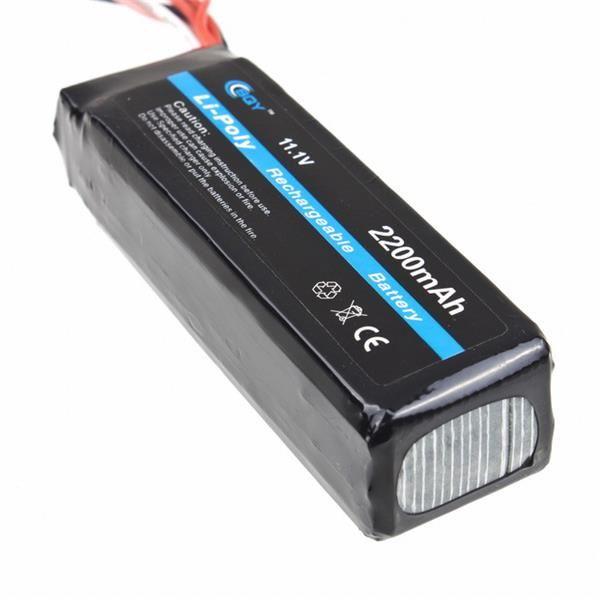
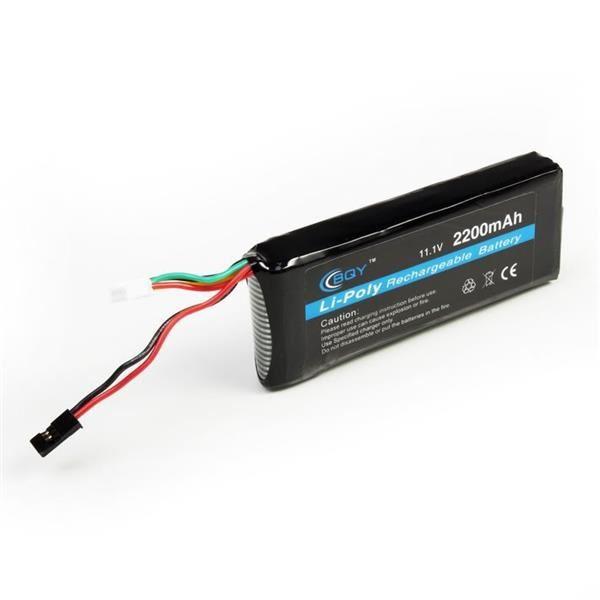
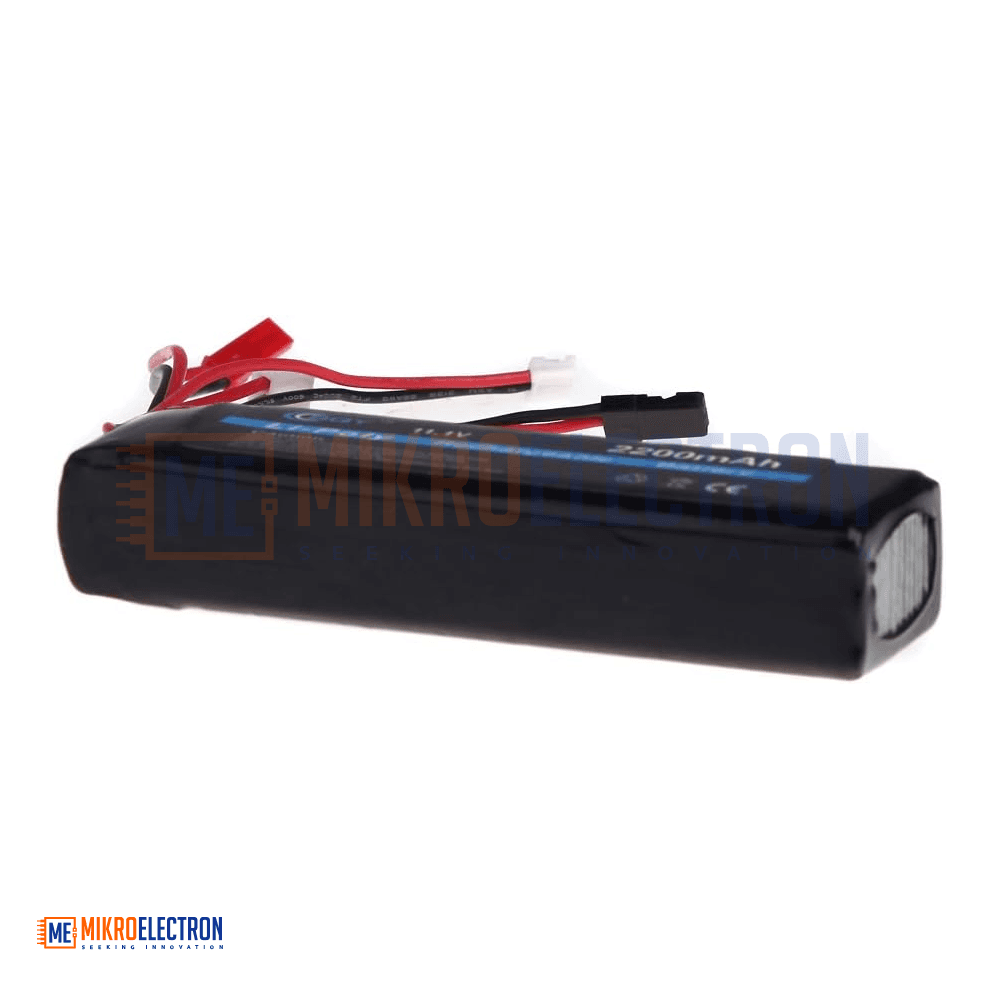
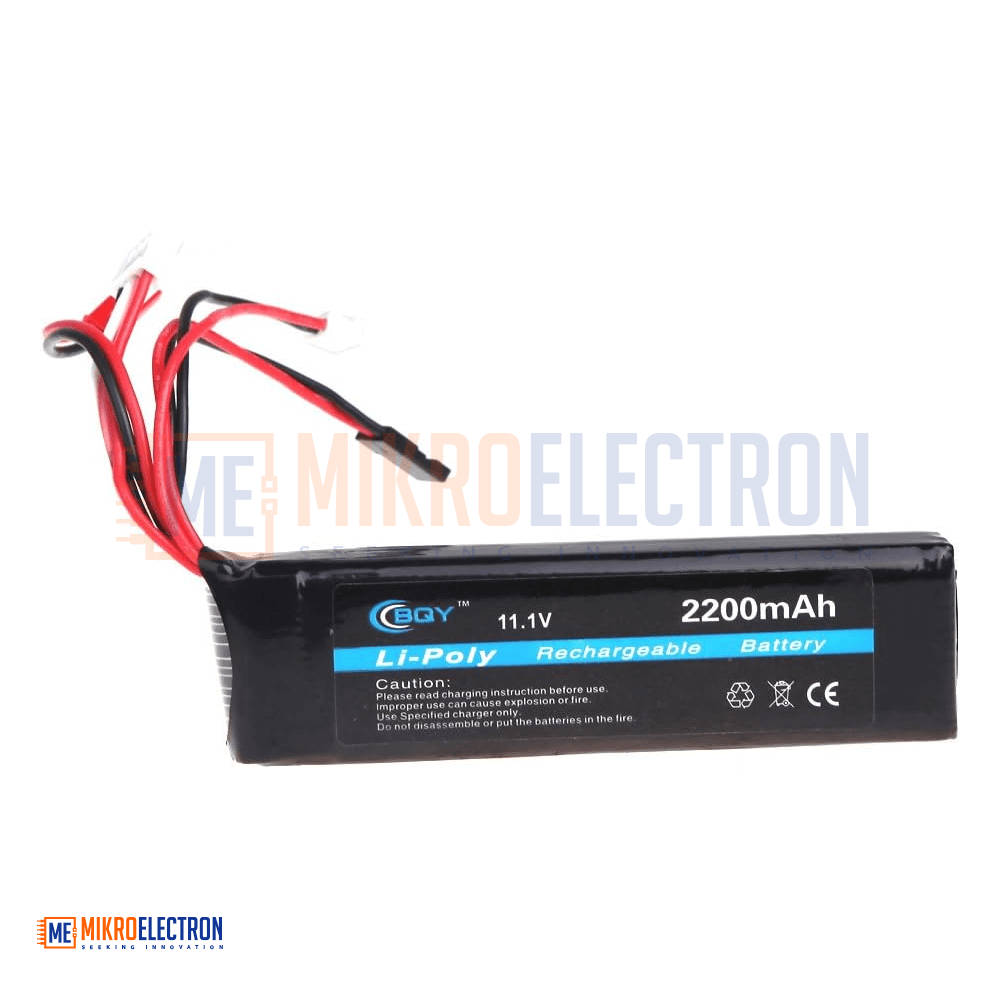
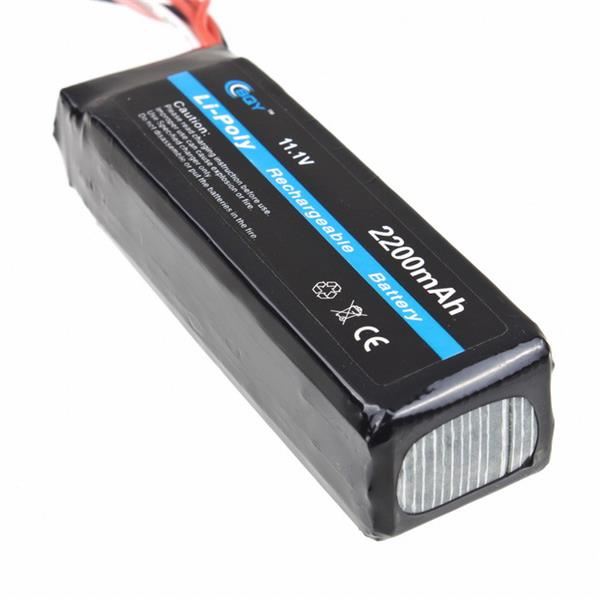
LiPo Battery 11.1V 2200mAh 3 Connector
The 11.1V 2200mAh 3S LiPo Battery is a high-capacity rechargeable battery pack designed for RC transmitters and remote controllers. Compatible with popular brands like JR, Futaba, Walkera, WFLY, and FlySky (FS), it provides reliable, long-lasting power for RC helicopters, quadcopters, planes, and drones. Featuring a 3-cell (3S) lithium polymer chemistry and a standard 3-pin connector, it's an excellent OEM-grade replacement battery for hobbyists and pilots.
بطارية ليثيوم بوليمر LiPo بجهد 11.1 فولت وسعة 2200 مللي أمبير 3 خلايا هي بطارية قابلة للشحن عالية السعة مصمّمة لـ أجهزة التحكم عن بعد (Transmitters) في طائرات RC. متوافقة مع علامات شهيرة مثل JR وFutaba وWalkera وWFLY وFlySky (FS)، توفّر طاقة موثوقة وطويلة الأمد لـ مروحيات وكوادكوبتر وطائرات RC والدرونز. تتميّز بتقنية 3 خلايا (3S) ليثيوم بوليمر وموصل 3 أطراف قياسي، وهي بديل ممتاز للهواة والمحترفين.
The BQY 11.1V 2200mAh 3S LiPo Battery is a high-quality rechargeable lithium polymer battery pack engineered to power RC transmitters and remote controllers used by hobbyists, pilots, and drone operators. With a nominal voltage of 11.1V (3 cells in series) and a 2200mAh capacity, it delivers extended operating time between charges — ensuring you stay in control during long flying sessions and competitions.
This battery is compatible with a wide range of popular RC transmitter brands, including JR, Futaba, Walkera, WFLY, and FlySky (FS), making it an ideal upgrade or replacement for the original transmitter battery. It uses a standard 3-pin connector that plugs directly into supported transmitter battery bays without modification.
Lithium polymer (LiPo) chemistry offers significant advantages over older NiCd and NiMH packs: higher energy density, lighter weight, lower self-discharge, and a stable voltage curve throughout the discharge cycle. This means more flight time, less weight, and more consistent transmitter performance.
The pack is well suited for RC helicopters, quadcopters, multi-rotor drones, airplanes, gliders, and ground vehicle transmitters, providing the reliable power you need for safe and predictable flight control.
Important safety notes:
- Always charge LiPo batteries with a proper LiPo balance charger that matches the 3S configuration.
- Never overcharge or over-discharge the battery. Recommended cut-off voltage is around 3.0V per cell (9.0V total).
- Store LiPo batteries at storage voltage (≈3.8V per cell) in a fireproof LiPo bag when not in use.
- Inspect the pack for any swelling, damage, or punctures before each use.
Specifications
- Battery Chemistry: Lithium Polymer (LiPo)
- Nominal Voltage: 11.1V (3 cells / 3S)
- Capacity: 2200 mAh
- Configuration: 3S (3 cells in series)
- Connector Type: 3-pin connector (transmitter compatible)
- Brand: BQY
- Model Number: RM1097
- Compatibility: JR, Futaba, Walkera, WFLY, FlySky (FS) RC transmitters
- Application: RC helicopters, quadcopters, airplanes, drones (transmitter use)
- Package Size: 12.0 × 10.0 × 2.0 cm
- Gross Weight: ~150 g
- Quantity: 1 piece
- Customizable: Yes
Applications
- RC transmitter / remote controller power source
- JR, Futaba, Walkera, WFLY, FlySky (FS) transmitters
- RC helicopter controllers
- Quadcopter and multi-rotor drone transmitters
- RC airplane and glider transmitters
- RC car and boat controllers (compatible models)
- Hobby-grade RC vehicles and remote-controlled toys
- OEM battery replacement in older RC transmitters
- Backup battery for long flying sessions and competitions
- DIY robotics and Arduino projects requiring a portable 11.1V power supply (with appropriate protection circuit)