
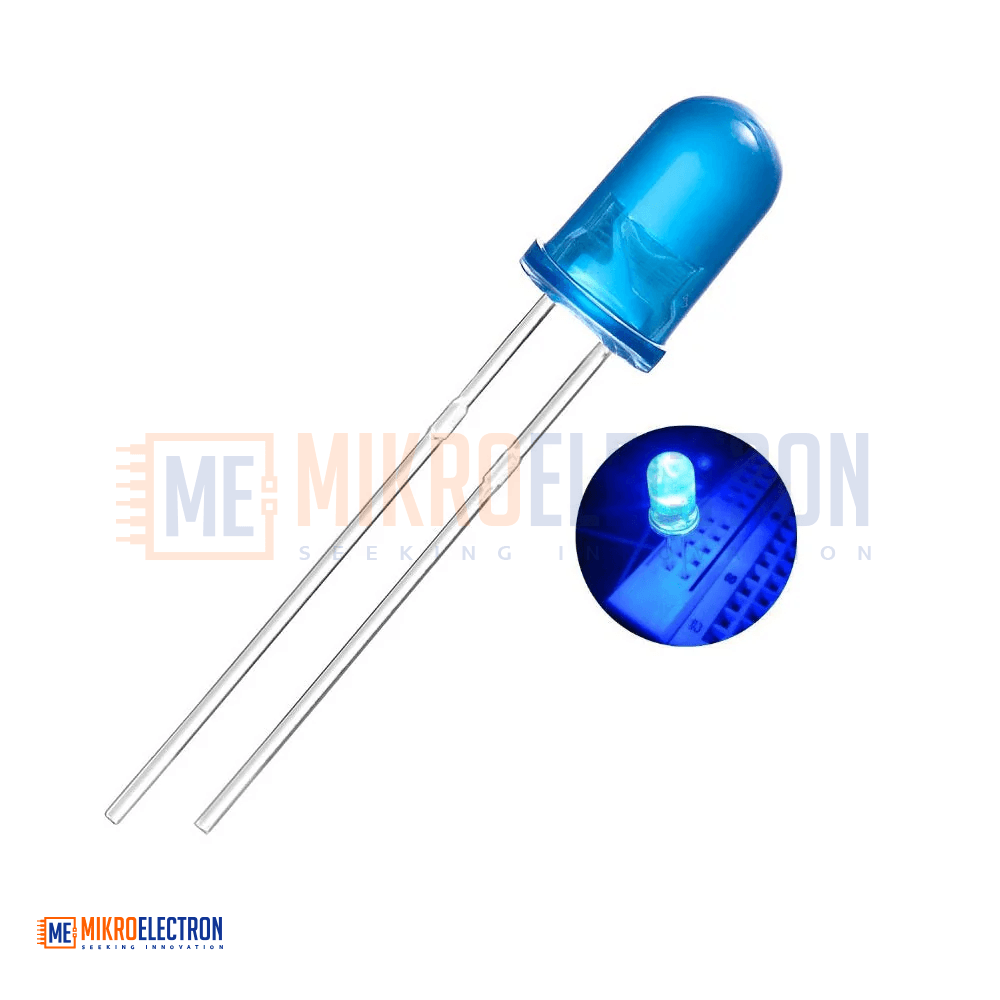
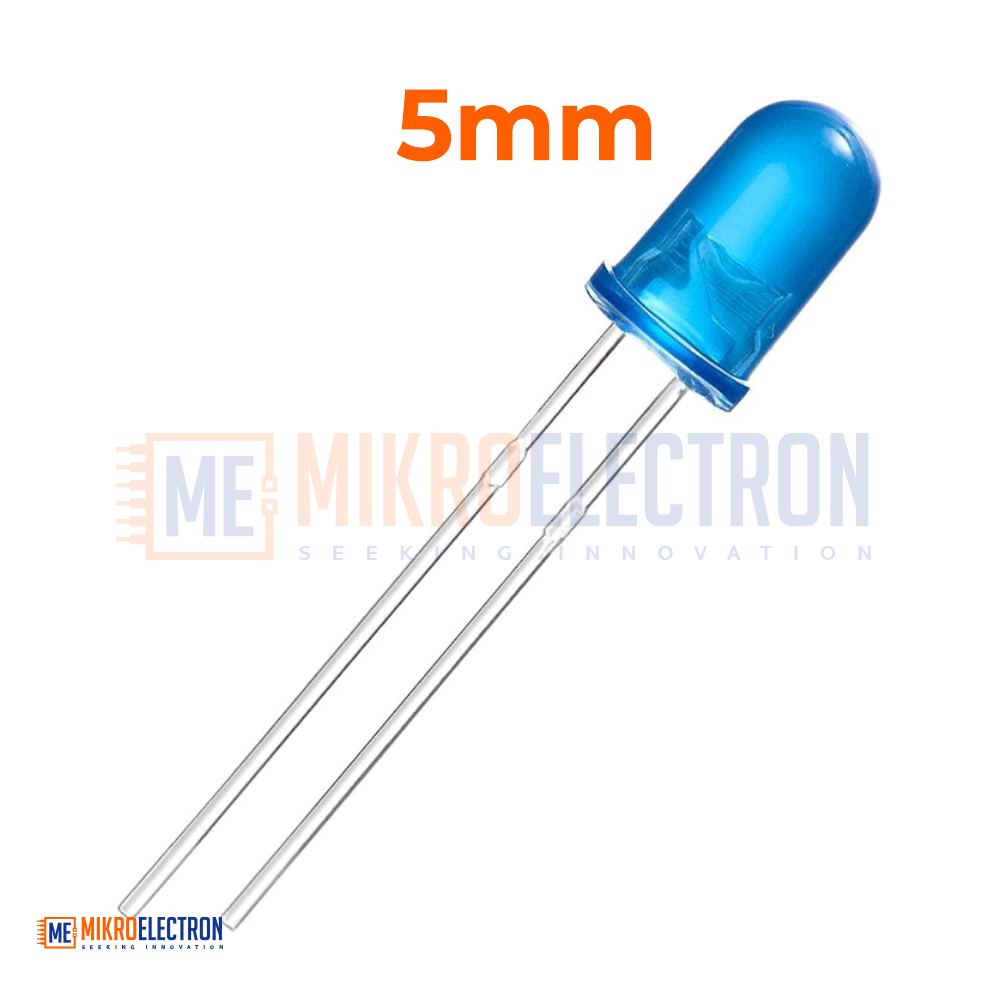
Blue led 5 mm
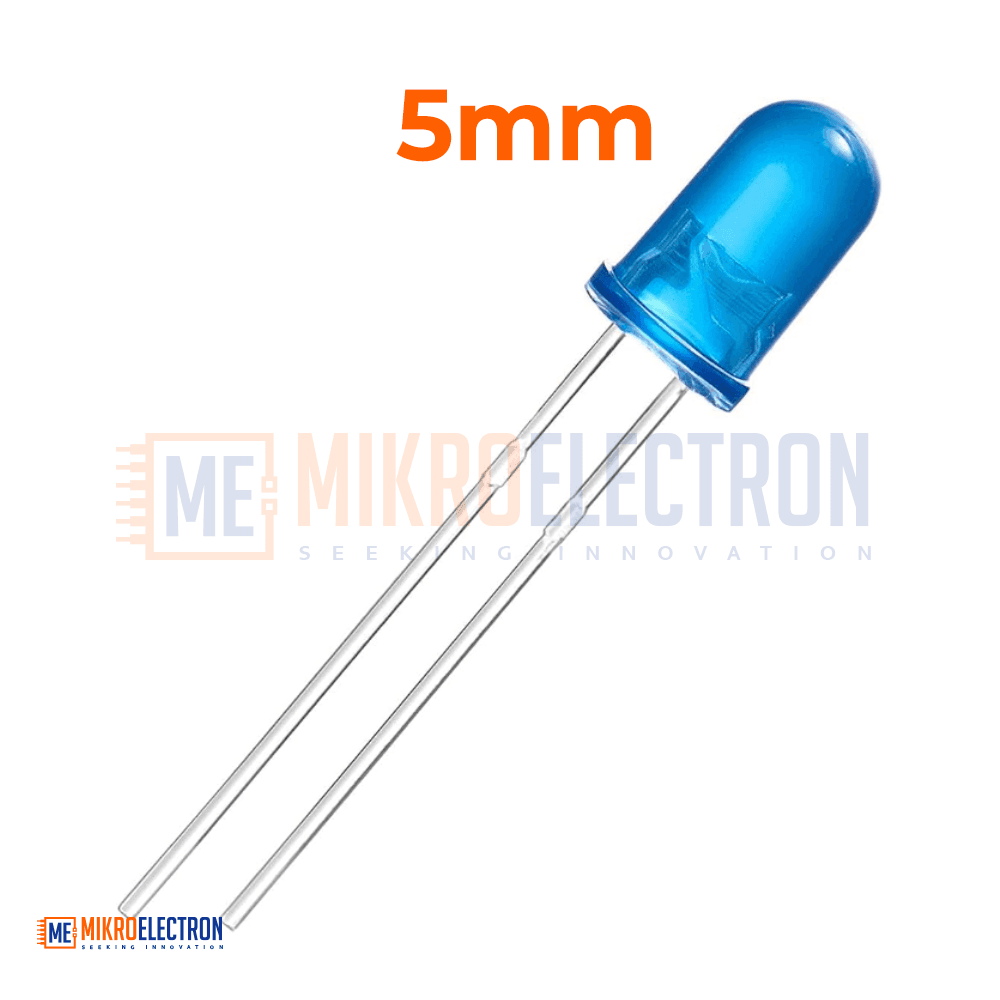
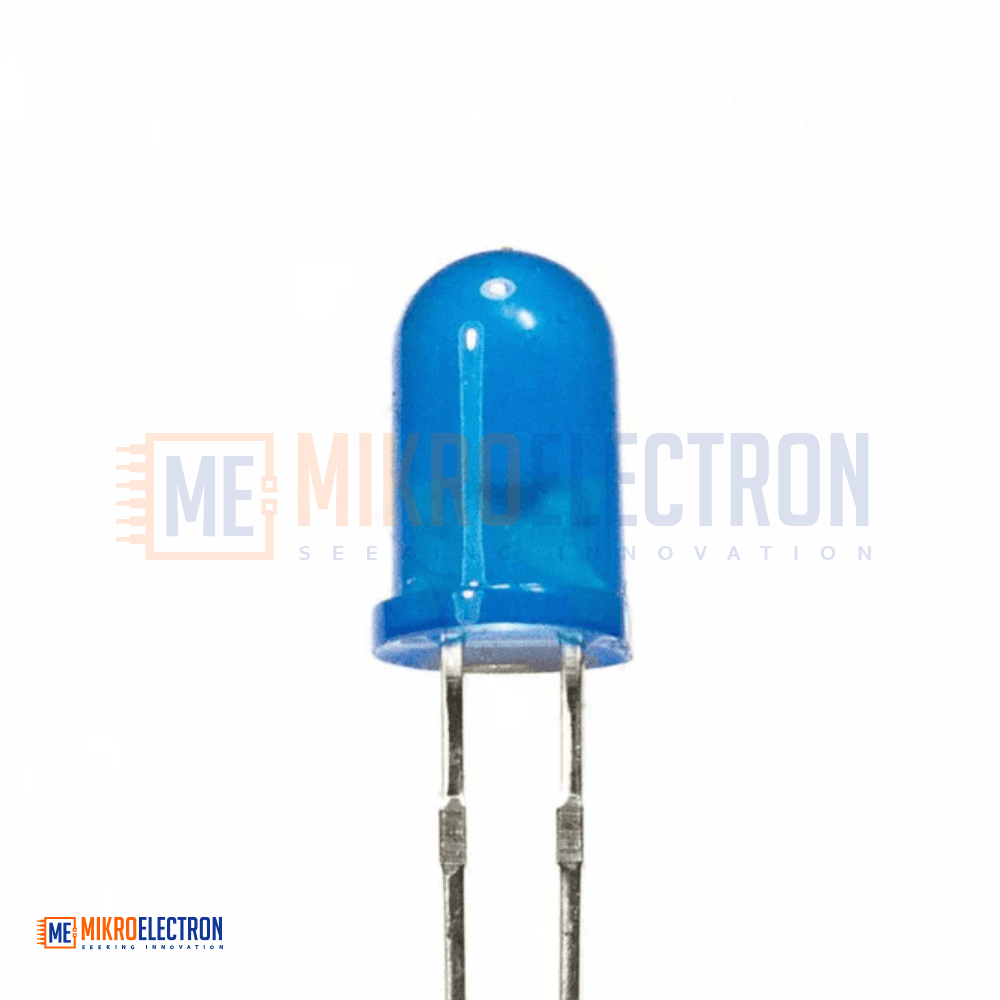
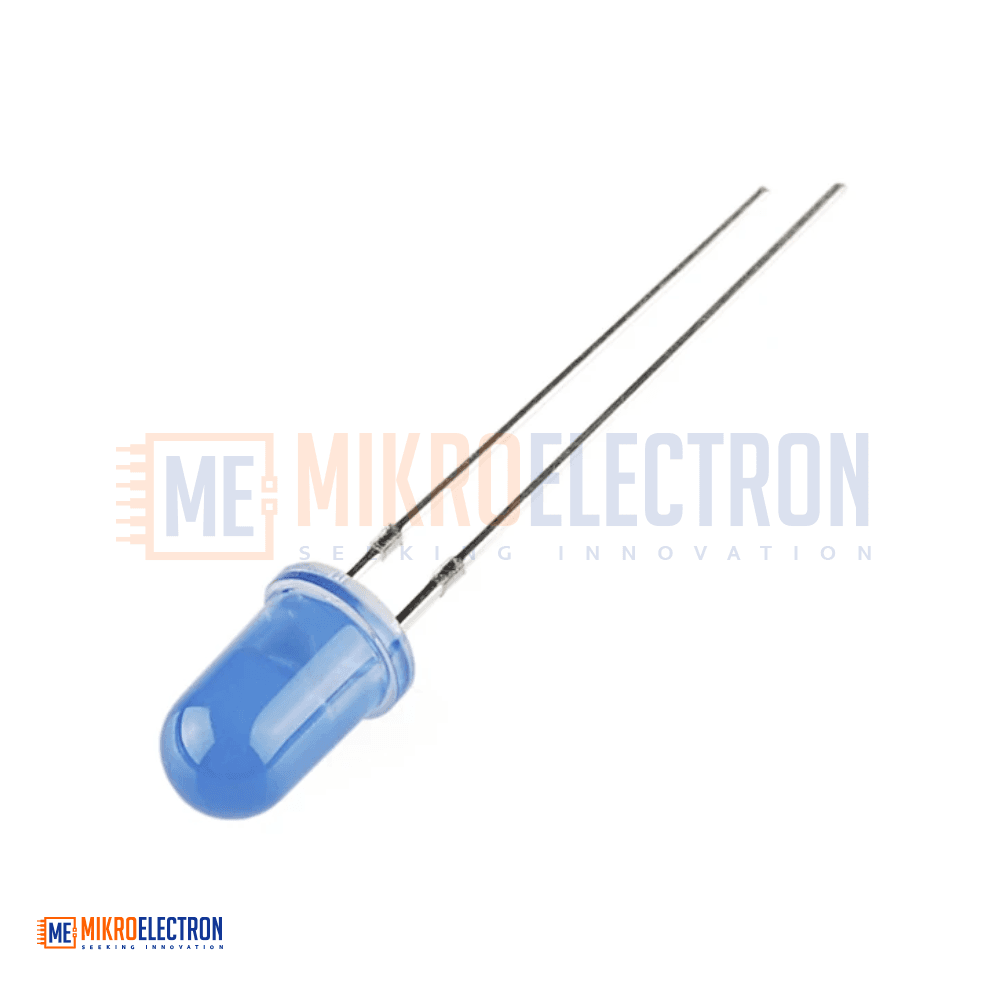
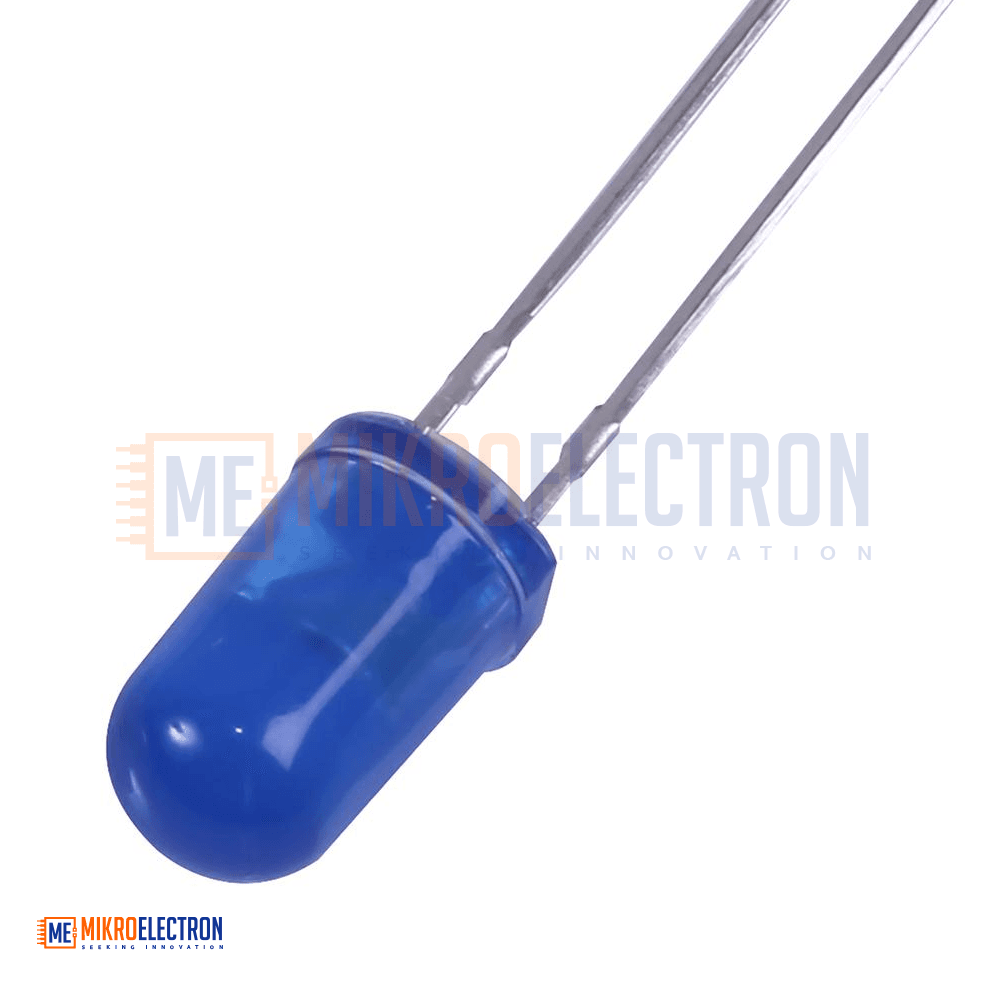
The Blue LED 5mm is a standard through-hole light-emitting diode with a diffused blue package, ideal for indicators, displays, and decorative lighting. Operating at 20mA forward current, it delivers a soft, even glow with a luminous intensity of up to 15mcd. The short lead is the cathode (negative) and the long lead is the anode (positive). Compatible with Arduino, Raspberry Pi, breadboards, and PCB designs, it is perfect for DIY electronics, prototyping, and educational projects.
ليد أزرق 5 ملم هو ثنائي باعث للضوء بتصميم تقليدي عبر الفتحات (Through-Hole) بغلاف أزرق ناشر للضوء، مثالي للمؤشرات والشاشات والإضاءة الزخرفية. يعمل عند تيار أمامي 20 ملي أمبير ويقدم توهجًا ناعمًا ومتساويًا بشدة إضاءة تصل إلى 15 ميلي كانديلا. الطرف القصير هو الكاثود (السالب) والطرف الطويل هو الأنود (الموجب). متوافق مع Arduino وRaspberry Pi ولوحات التجارب وتصاميم PCB، ومناسب للمشاريع اليدوية والتعليمية.
The 5mm Blue LED is a classic and reliable through-hole light-emitting diode widely used in electronics for status indication, signaling, lighting effects, and educational experiments. Encased in a diffused blue plastic package, the LED produces a smooth, evenly distributed blue glow rather than a sharp focused beam, making it especially suitable for panel indicators, ambient lighting, and visible status feedback.
The LED operates with a typical forward current of 20mA, delivering a luminous intensity of up to 15mcd. As with all LEDs, polarity must be observed: the shorter lead (cathode) connects to ground or the negative side of the circuit, while the longer lead (anode) connects to the positive supply through an appropriate current-limiting resistor. For a 5V power source, a typical 220Ω – 330Ω resistor is recommended.
This LED is compatible with all standard 5mm LED holders, breadboards, and PCB footprints, making it easy to incorporate into both prototype and production designs. Its low cost, long lifespan, and low power consumption make it the go-to component for hobbyists, students, makers, and engineers alike.
Specifications
- LED Type: Standard 5mm through-hole LED
- Color: Blue
- Lens Type: Diffused (soft, even light)
- Luminous Intensity: 15 mcd (max) at 20mA
- Forward Current (IF): 20 mA (typical)
- Forward Voltage (VF): Approximately 3.0 – 3.4V
- Wavelength: Approximately 460 – 470nm (blue spectrum)
- Viewing Angle: Approximately 30° – 60° (diffused)
- Package: 5mm round through-hole
- Polarity: Short lead = Cathode (-), Long lead = Anode (+)
- Operating Temperature: -25°C to +85°C
Applications
- Status and Power Indicators on PCBs and electronic devices
- Arduino, Raspberry Pi, and Microcontroller Projects
- DIY Electronics and Hobbyist Builds
- STEM Education and electronics learning labs
- Decorative Lighting for models, dioramas, and crafts
- Front Panel Indicators for instruments and equipment
- Toys and Novelty Items with light-up features
- Automotive and Dashboard Indicators (with proper resistor)
- IoT Devices and Smart Home status displays
- Game and Arcade Machine light effects
- Signage and Display Boards in low-resolution dot-matrix designs
- Battery and Charging Indicators for portable devices
Important note: Always use a current-limiting resistor in series with the LED to prevent damage. The required resistor value depends on the supply voltage and the LED's forward voltage and current.