
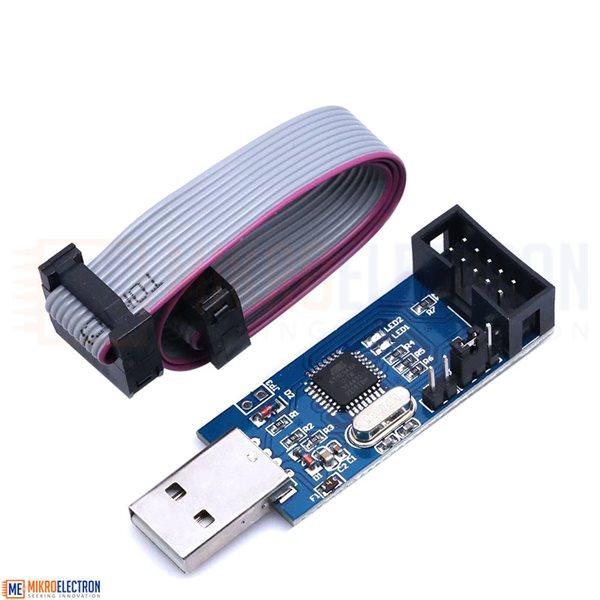
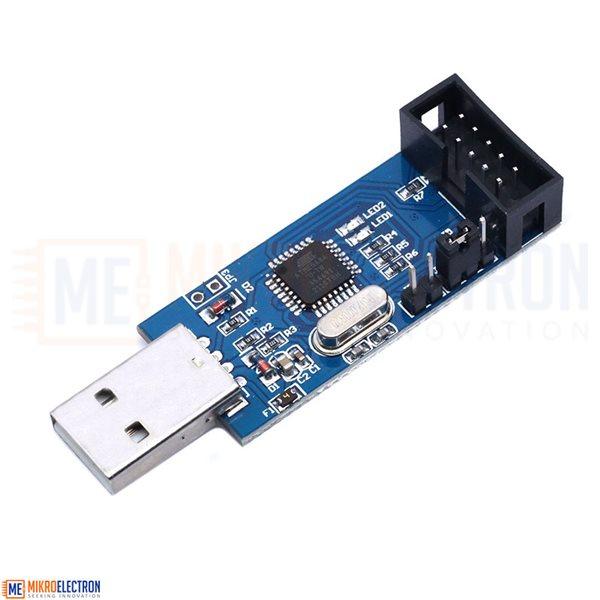
AVR Programmer USB ISP Programmer for ATMEL AVR ATMega ATTiny AVR Board ISP
The USBasp AVR Programmer is a reliable and widely-used ISP (In-System Programming) tool for flashing Atmel AVR microcontrollers including ATmega, ATtiny, AT90S, AT89S, and CAN/PWM series chips. Built around the ATmega8(L) chip with a 500mA self-recovery overcurrent protection fuse, it supports both 5V and 3.3V target boards with automatic speed adjustment for stable, error-free programming. With a standard 10-pin ISP header, plug-and-play USB connection, and broad software compatibility, it's a must-have tool for AVR developers, Arduino enthusiasts, and embedded electronics professionals.
برمجة USBasp AVR هي أداة برمجة داخل النظام (ISP) موثوقة ومستخدمة على نطاق واسع لتحميل الفيرموير على متحكمات Atmel AVR بما في ذلك شرائح ATmega وATtiny وAT90S وAT89S وسلاسل CAN/PWM. مبنية حول شريحة ATmega8(L) مع مصهر استعادة ذاتية بقوة 500 ميلي أمبير للحماية من التيار الزائد، وتدعم كلاً من 5 فولت و3.3 فولت للوحات الهدف مع ضبط تلقائي للسرعة لبرمجة مستقرة وخالية من الأخطاء. مع هيدر ISP قياسي 10 أطراف واتصال USB يعمل بسرعة، فهي أداة أساسية لـ مطوري AVR وهواة Arduino ومحترفي الإلكترونيات المدمجة.
The USBasp AVR ISP Programmer is one of the most popular and trusted tools for flashing firmware onto Atmel AVR microcontrollers. Built around the original imported ATmega8(L) chip, this programmer provides a stable and reliable USB-based In-System Programming (ISP) interface compatible with virtually the entire AVR family, from tiny 8-pin ATtiny chips to powerful ATmega2560 microcontrollers.
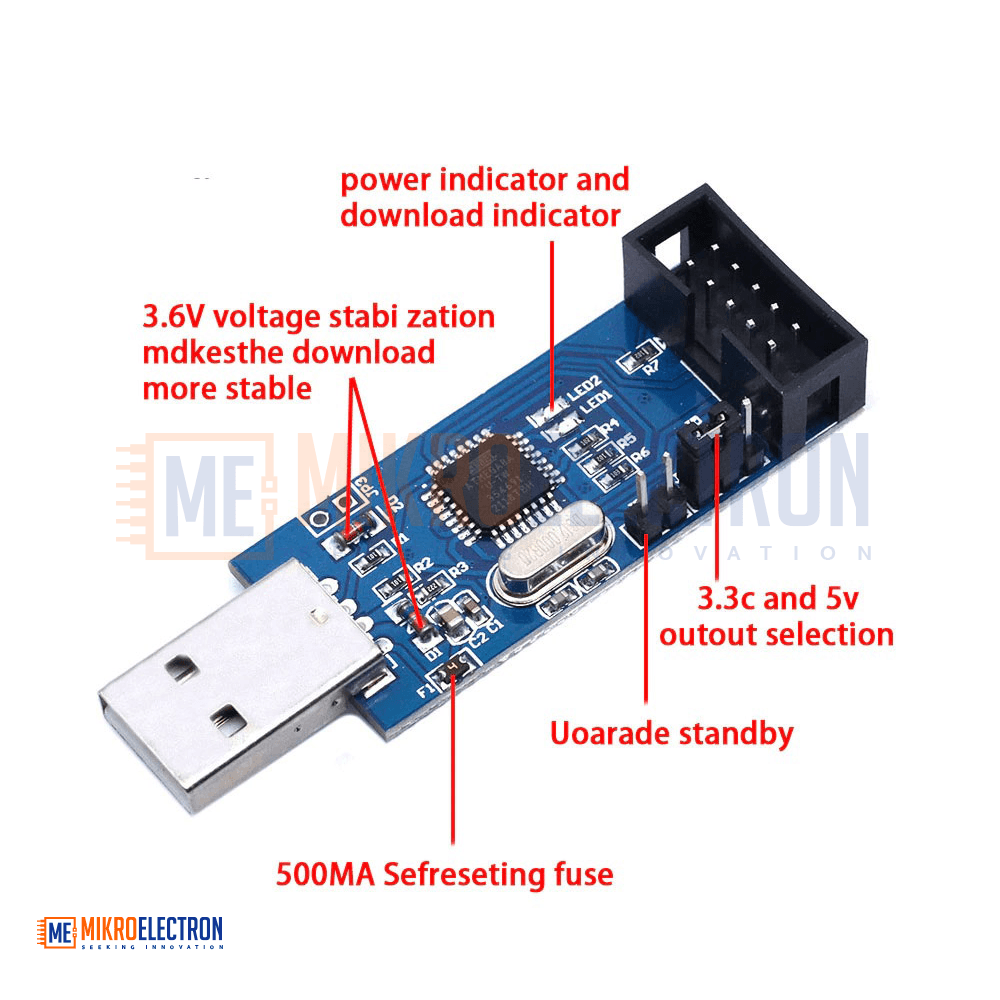
The programmer features two onboard indicator LEDs — one for power and one for programming activity — giving you instant visual feedback during operations. A 500mA self-recovery overcurrent protection fuse safeguards both your computer's USB port and the target device against accidental short circuits or excessive current draw. The 3.6V voltage stabilization design ensures stable downloads even under fluctuating power conditions.
A standout feature is the dual voltage support (5V and 3.3V), selectable via an onboard jumper, allowing you to safely program both 5V-tolerant and 3.3V-only target boards. The automatic speed adjustment feature is particularly useful — the programmer automatically detects the clock frequency of the target chip and adjusts its programming speed accordingly, eliminating the common "chip not responding" errors when working with low-frequency or slow-clocked AVRs.
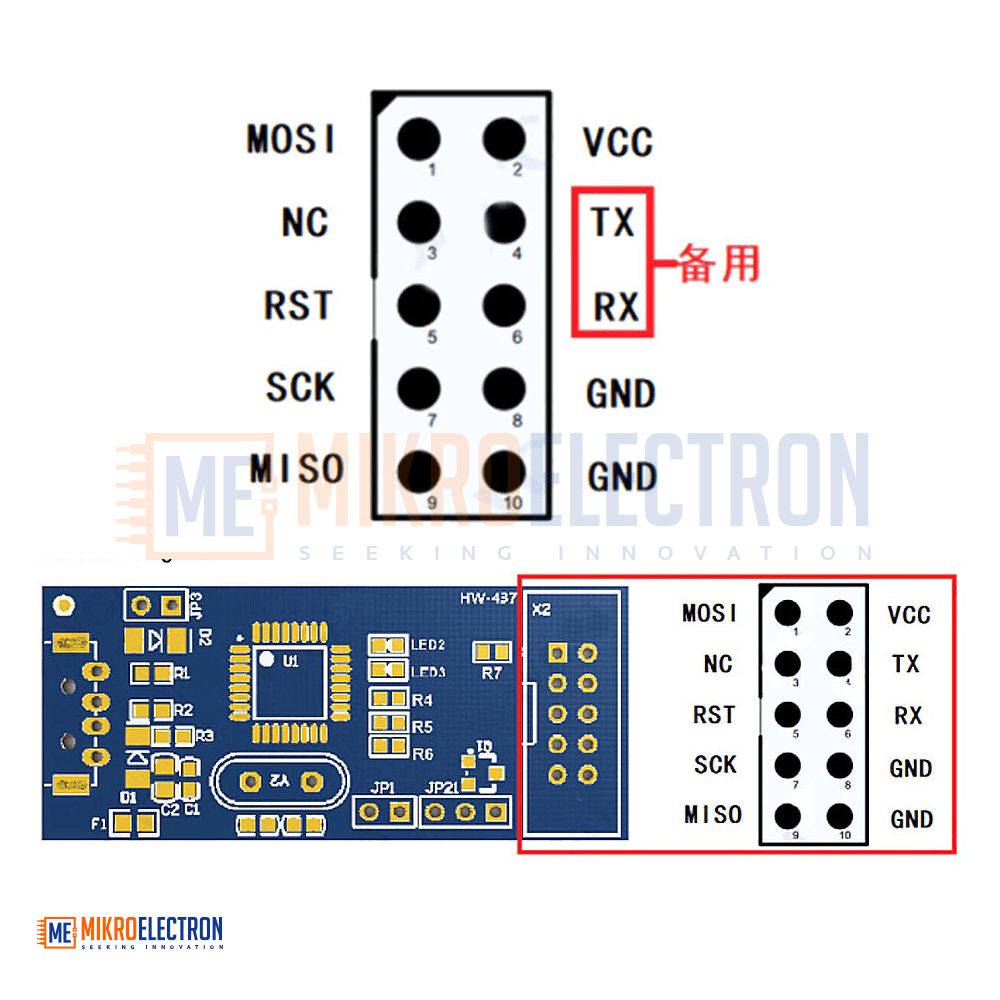
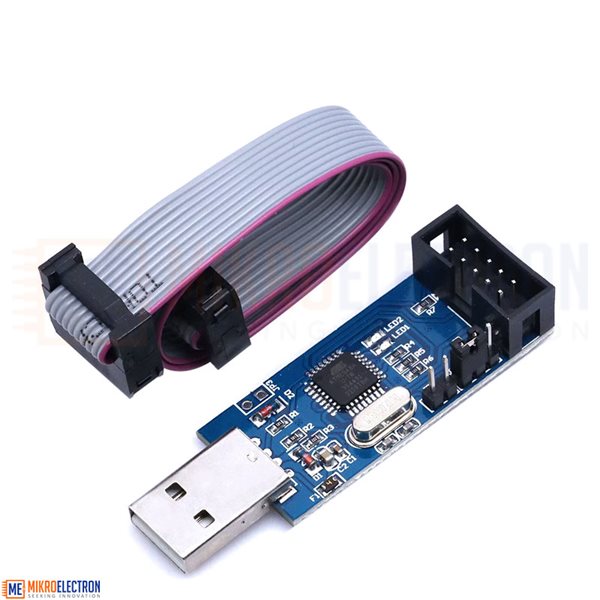
The output port follows the standard 10-pin ATMEL ISP layout with MOSI, MISO, RESET, SCK, VCC, and GND signals, ensuring compatibility with standard AVR programming cables and adapters. For users with electronics knowledge, additional TX and RX pins are available as backup pins that can be used to flash a virtual serial port firmware, turning the device into a USB-to-Serial bridge.
The programmer works seamlessly with popular software like AVRDUDE, eXtreme Burner AVR, BASCOM-AVR, AVR fighter, PROGISP 1.66/1.67/1.68/1.72, and integrates directly with the Arduino IDE for burning bootloaders to ATmega328P, ATmega2560, and other Arduino-compatible chips. It is fully supported on Windows XP, 7, 8, 8.1, 10, and 11 in both 32-bit and 64-bit versions.
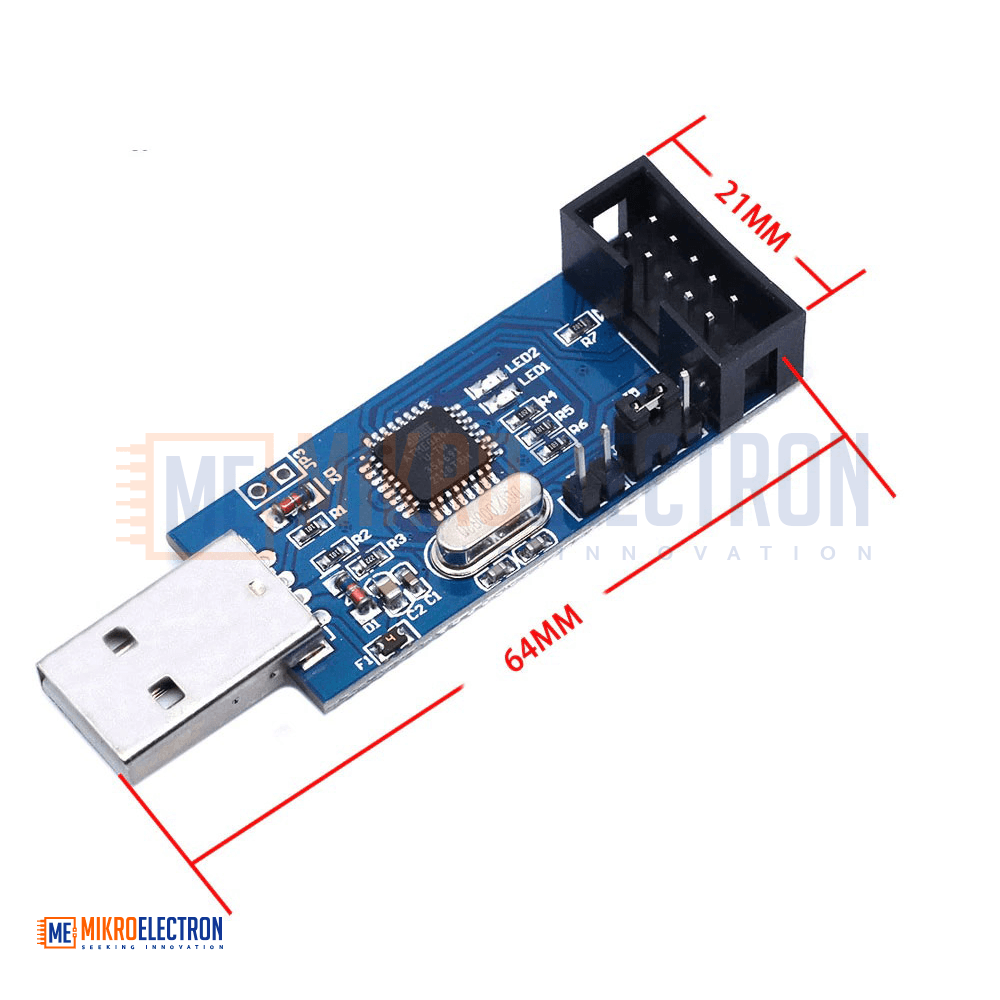
With its compact 64 × 21 mm form factor, sturdy USB-A connector, and professional-grade build quality, this USBasp programmer is the perfect tool for students learning AVR development, hobbyists building Arduino projects, and professionals working on embedded firmware.
Specifications
General
- Product Type: USB AVR ISP Programmer (USBasp)
- Onboard Chip: Original imported ATmega8(L)
- Module Dimensions: 64 mm × 21 mm
- USB Interface: USB-A male (direct plug-in)
- ISP Output: 10-pin standard ATMEL ISP header
- Pin Layout: MOSI, MISO, RESET (RST), SCK, VCC, GND (+ optional TX/RX)
Power & Protection
- Voltage Support: 5V and 3.3V (selectable via jumper)
- Overcurrent Protection: 500mA self-recovery fuse
- Voltage Stabilization: 3.6V regulator for stable downloading
- Power Source: USB (no external power required)
Indicators
- Power LED
- Download / Programming Activity LED
Programming Features
- Automatic clock speed detection and adjustment
- Automatic chip recognition for many supported devices
- Works with standard 10-pin ATMEL ISP cable
OS & Software Compatibility
- Operating Systems: Windows XP / 7 / 8 / 8.1 / 10 / 11 (32-bit and 64-bit)
- Compatible Software: AVRDUDE, AVR fighter, PROGISP 1.66 / 1.67 / 1.68 / 1.72 (1.7.2 recommended), eXtreme Burner AVR, BASCOM-AVR, Arduino IDE
Supported Chips
- 51 Series: AT89S51, AT89S52, AT89S53, AT89S8252
- ATmega Series: ATmega8, 8A, 48, 48A, 48P, 48PA, 88, 88A, 88P, 88PA, 168, 168A, 168P, 168PA, 328, 328P, 103, 128, 128P, 1280, 1281, 16, 16A, 161, 162, 163, 164, 164A, 164P, 164PA, 169, 169A, 169P, 169PA, 2560, 2561, 32, 32A, 324, 324A, 324P, 324PA, 329, 329A, 329P, 329PA, 3290, 3290A, 3290P, 64, 64A, 640, 644, 644A, 644P, 644PA, 649, 649A, 649P, 6490, 6490A, 6490P, 8515, 8535
- ATtiny Series: ATtiny12, 13, 13A, 15, 25, 26, 45, 85, 2313, 2313A
- Classic Series: AT90S1200, 2313, 2333, 2343, 4414, 4433, 4434, 8515, 8535
- CAN Series: AT90CAN128
- PWM Series: AT90PWM2, AT90PWM3
Applications
- Flashing firmware to Atmel AVR microcontrollers (ATmega, ATtiny, AT90S, AT89S series)
- Burning Arduino bootloaders onto ATmega328P, ATmega2560, ATmega32U4 chips
- Recovering bricked Arduino boards with corrupted bootloaders
- Programming custom AVR boards built from scratch by hobbyists and engineers
- Embedded systems development for industrial controllers and automation
- Educational AVR development in universities, technical schools, and STEM programs
- Programming 51-series microcontrollers (AT89S51, AT89S52, etc.) for legacy projects
- Robotics projects requiring custom firmware on AVR-based controllers
- IoT and smart home devices based on ATtiny and ATmega chips
- DIY electronics products including LED controllers, timers, and sensor hubs
- Firmware updates for AVR-powered consumer electronics and gadgets
- Production-line programming of small-batch electronic products
- Reverse engineering and analysis of AVR-based devices
- Wearable and battery-powered devices using low-power ATtiny microcontrollers
- Drones and RC vehicles with AVR-based flight or motor controllers
- Bootloader development and testing for custom embedded platforms