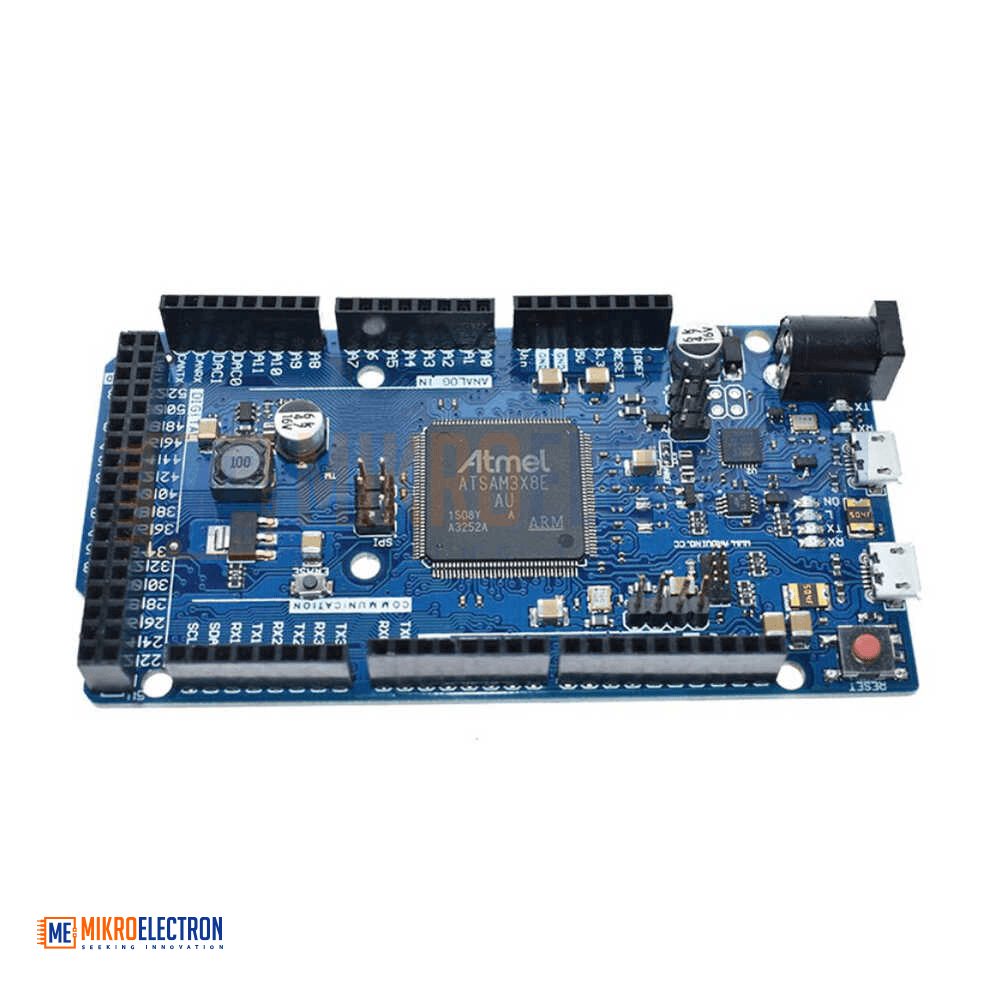
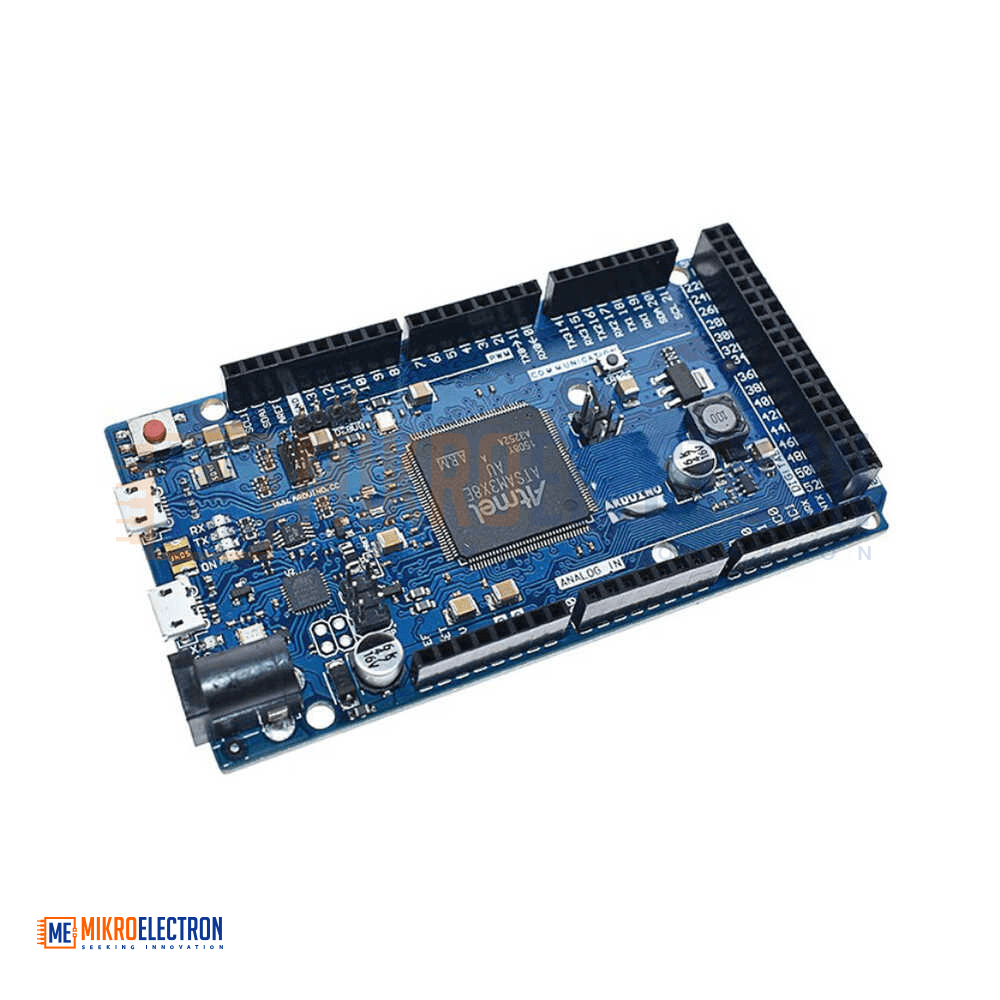
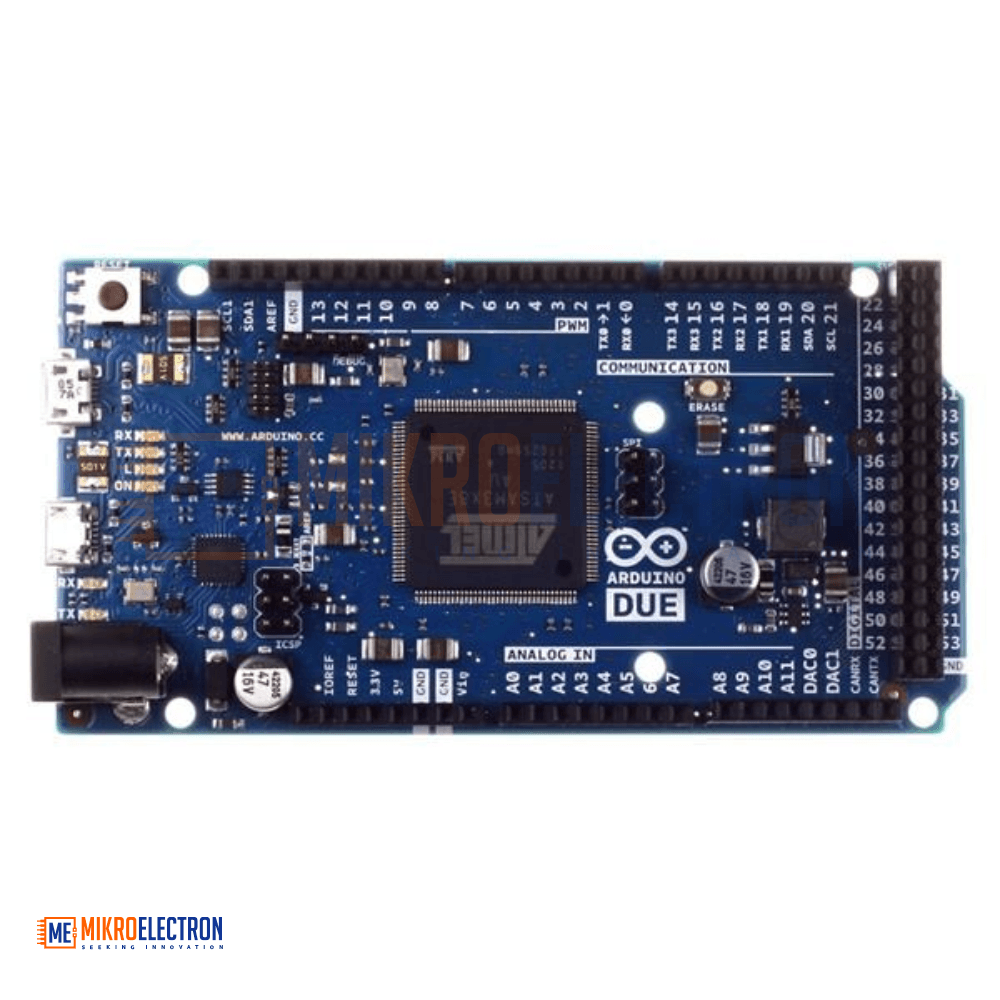
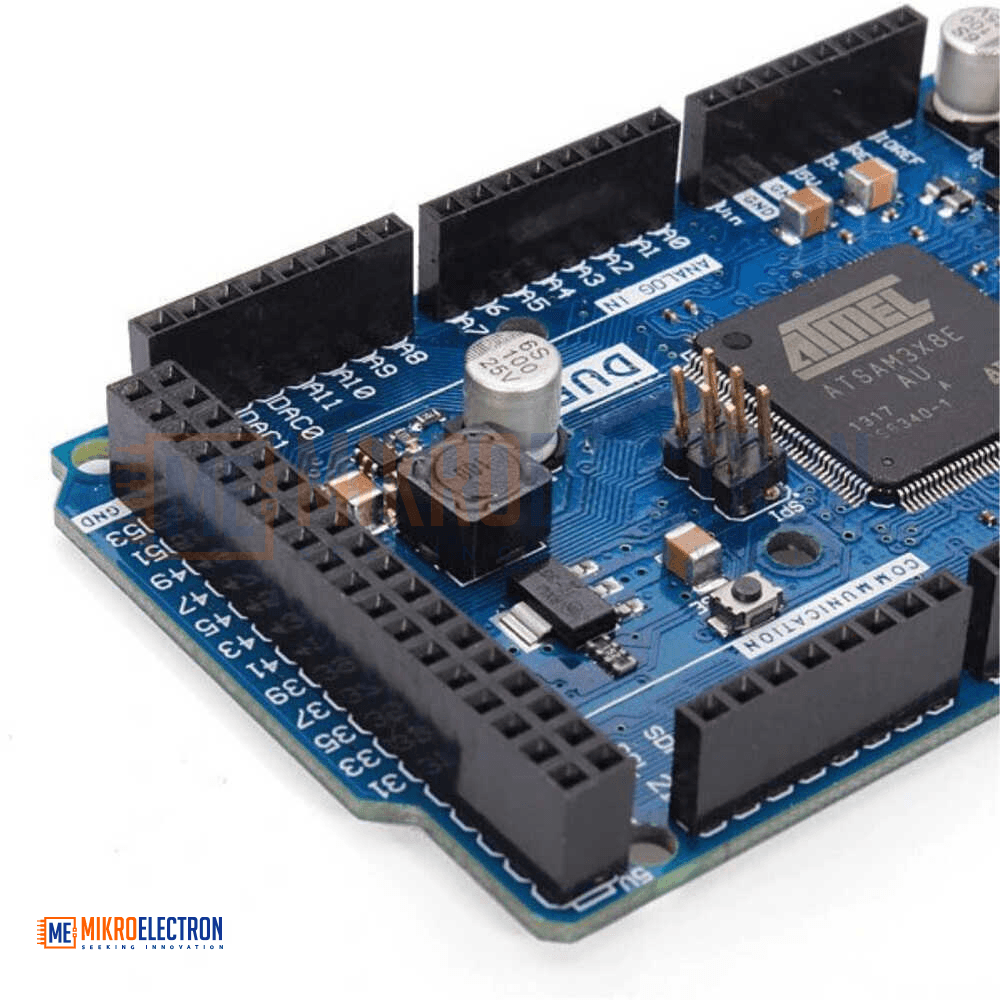
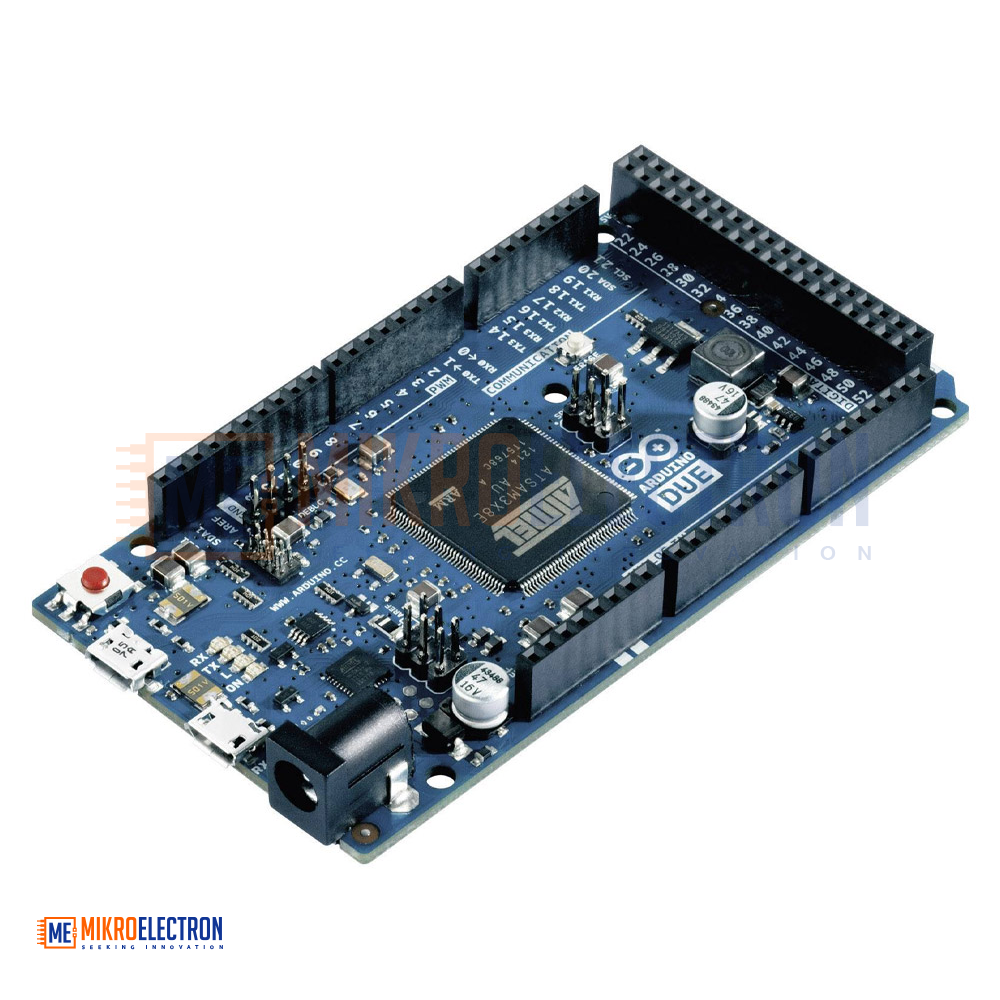
Arduino Due Microcontroller Board
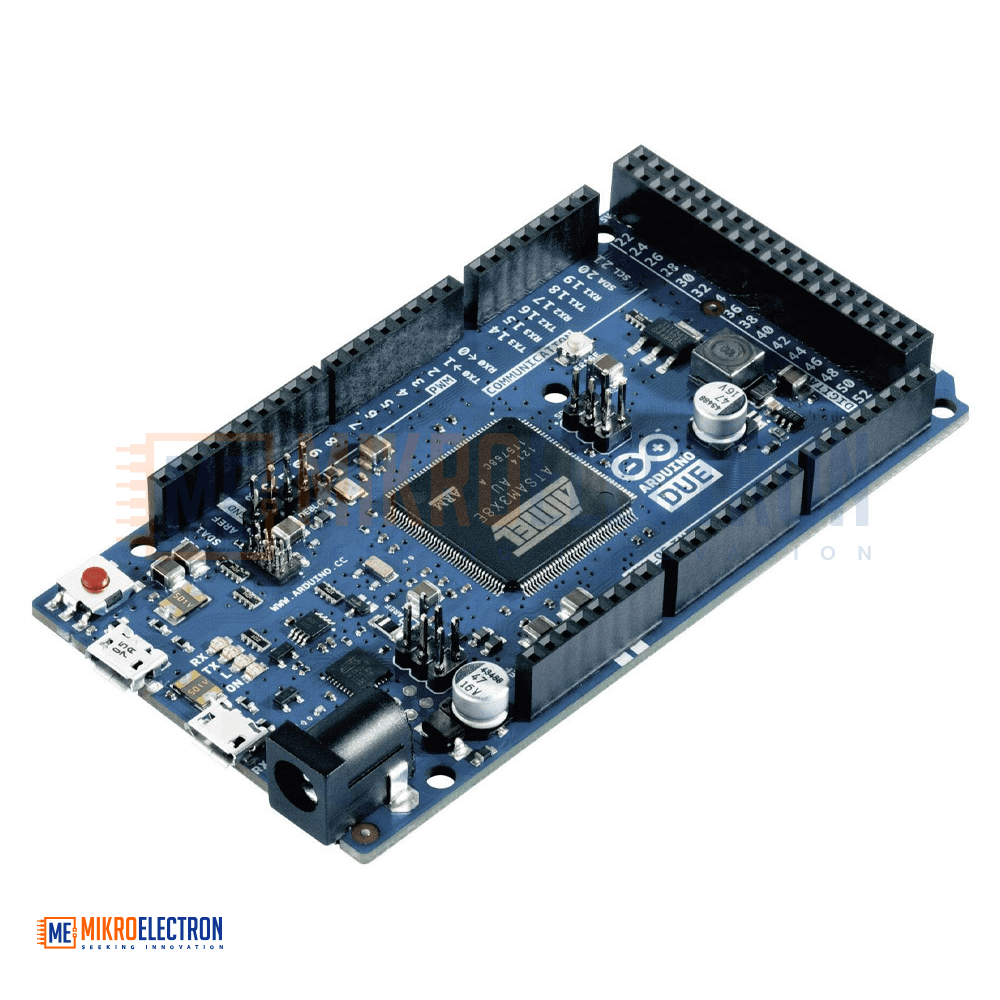
The Arduino Due is the first Arduino board based on a 32-bit ARM Cortex-M3 microcontroller (Atmel SAM3X8E) running at 84 MHz. It offers 54 digital I/O pins (12 PWM), 12 analog inputs (12-bit), 2 DAC outputs, 4 UARTs, 2 TWI, SPI, JTAG, and dual USB ports (one acting as USB Host). With 512KB Flash and 96KB SRAM, the Due is ideal for advanced projects requiring high speed and processing power.
Arduino Due هي أول لوحة أردوينو مبنية على متحكم ARM Cortex-M3 بمعمارية 32-بت (Atmel SAM3X8E) بسرعة 84 ميجاهرتز. توفر 54 منفذ رقمي (12 منها PWM)، و12 مدخلًا تناظريًا بدقة 12-بت، و2 مخرج DAC، و4 منافذ UART، و2 TWI، وSPI، وJTAG، إضافة إلى منفذي USB (أحدهما يعمل كـ USB Host). مع ذاكرة Flash بحجم 512 كيلوبايت و96 كيلوبايت SRAM، تعد Due مثالية للمشاريع المتقدمة التي تتطلب سرعة وقدرة معالجة عالية.
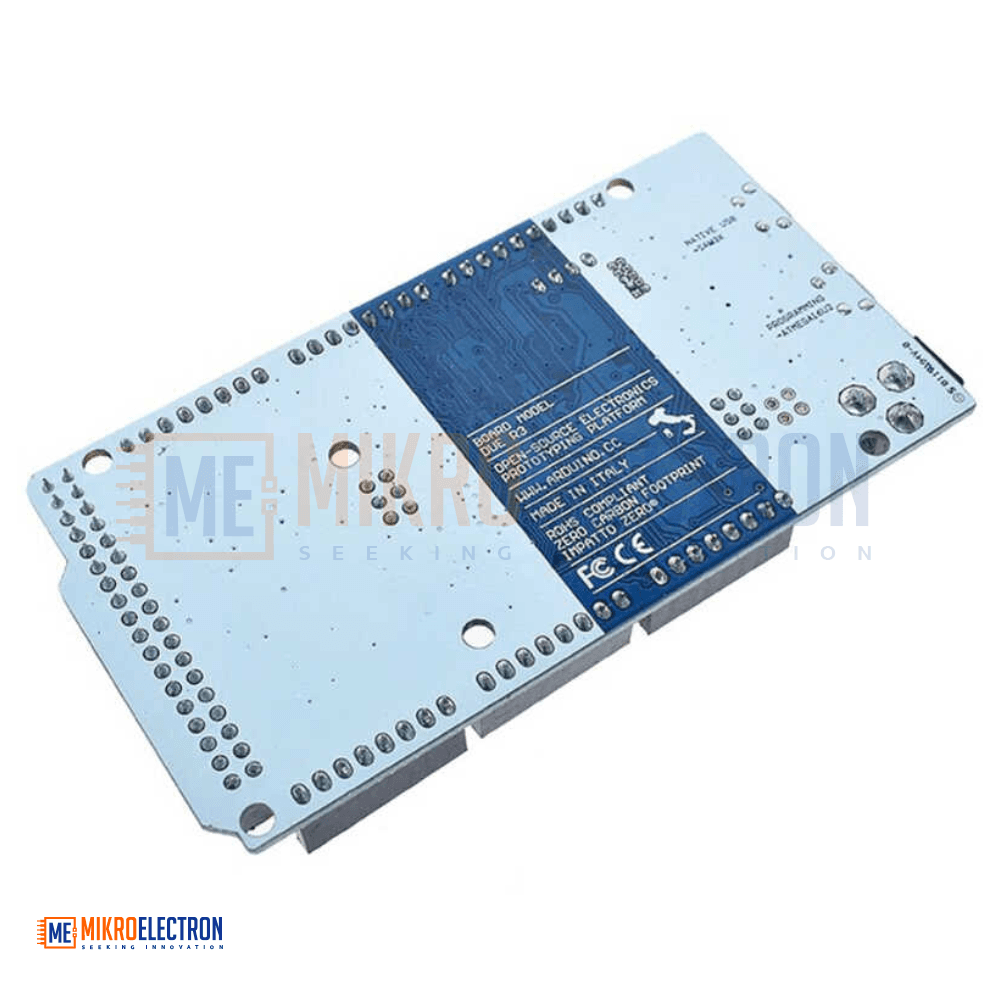
The Arduino Due is a powerful microcontroller development board built around the 32-bit Atmel SAM3X8E ARM Cortex-M3 MCU, making it the first Arduino board to use a true 32-bit ARM core processor. Compared to traditional 8-bit Arduino boards, the Due delivers a massive leap in processing speed, memory, and peripheral capabilities, while remaining fully compatible with the familiar Arduino programming environment.
The board runs at an impressive 84 MHz clock speed and includes 512 KB of Flash memory for user applications and 96 KB of SRAM (split into two banks of 64 KB and 32 KB). The DMA controller allows memory-intensive operations to be offloaded from the CPU, dramatically improving the efficiency of data-heavy tasks like signal processing and high-speed sensor sampling.
The Arduino Due features 54 digital input/output pins, of which 12 support PWM output with selectable resolution, along with 12 analog inputs offering 12-bit ADC resolution — four times more precise than standard Arduino boards. It also includes 2 DAC (Digital-to-Analog Converter) outputs for true analog signal generation, perfect for audio or waveform applications.
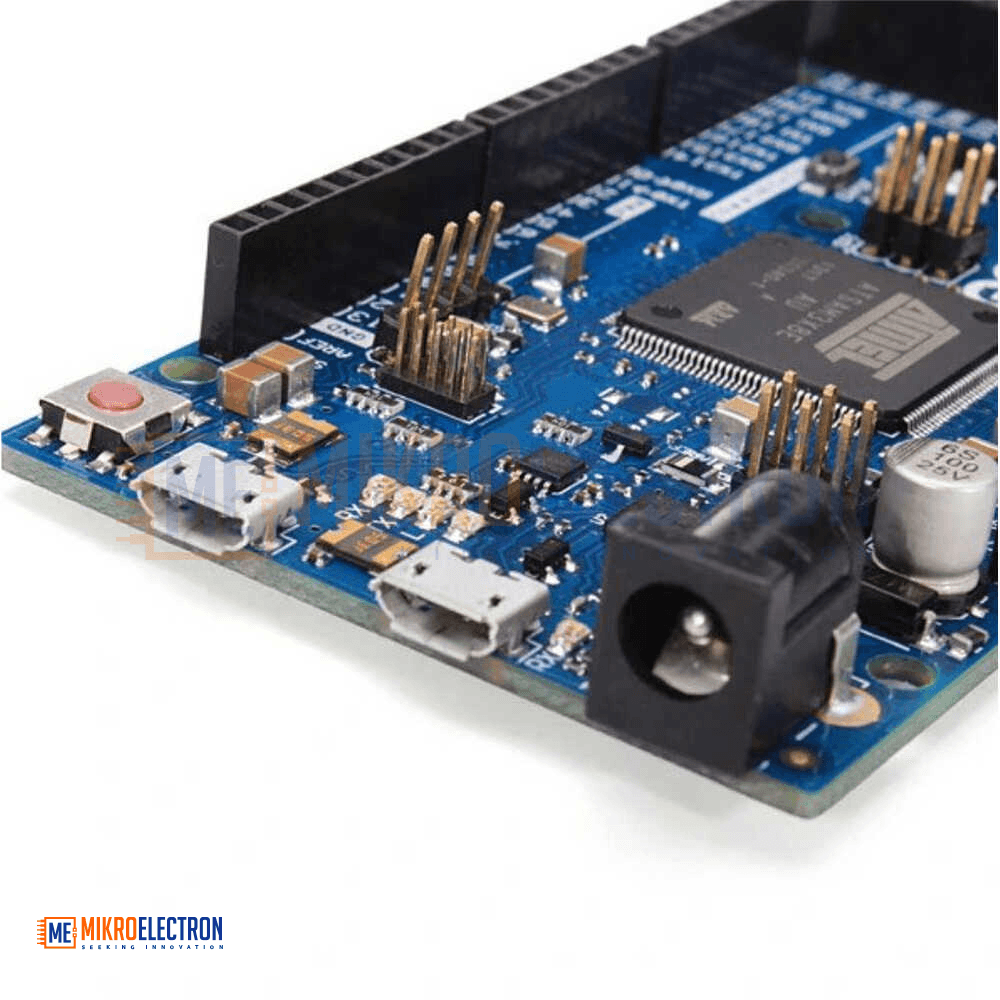
Communication options are extensive: 4 hardware UARTs, 2 TWI (I2C) interfaces, an SPI header, an ICSP header, a JTAG header for advanced debugging, and two micro USB ports — one for programming/debugging and a second USB Host port that allows the Due to connect to external peripherals such as keyboards, mice, smartphones, and USB flash drives.
Important: All I/O pins on the Arduino Due operate at 3.3V, not 5V. Applying 5V to an I/O pin may damage the board. The Due is compatible with all Arduino shields that work at 3.3V and follow the 1.0 Arduino pinout.
The board is ready to use out of the box — simply connect it to a computer via USB cable, or power it through an AC-to-DC adapter or battery to start developing.
Specifications
- Microcontroller: Atmel AT91SAM3X8E (ARM Cortex-M3)
- Core Architecture: 32-bit
- Clock Speed: 84 MHz
- Operating Voltage: 3.3V
- Recommended Input Voltage: 7 – 12V
- Input Voltage Limits: 6 – 20V
- Digital I/O Pins: 54 (12 with PWM output)
- Analog Input Pins: 12 (12-bit resolution)
- Analog Output Pins: 2 (DAC)
- UART (Serial): 4
- TWI (I2C): 2
- SPI: 1 (dedicated header)
- JTAG: 1 (dedicated header)
- USB Ports: 2 micro USB (one Programming, one USB Host)
- Flash Memory: 512 KB (all available for user applications)
- SRAM: 96 KB (two banks: 64 KB + 32 KB)
- DataFlash: 2 Mb (250 KB)
- Total DC Output Current on all I/O Lines: 130 mA
- DC Current for 3.3V Pin: 800 mA
- DC Current for 5V Pin: 800 mA
- DMA Controller: Yes
- Reset Button: Yes
- Erase Button: Yes
- ICSP Header: Yes
- Power Jack: Yes
ARM Core Benefits
- 32-bit core allows operations on 4 bytes of data within a single CPU clock cycle
- 84 MHz clock speed — multiple times faster than typical 8-bit Arduinos
- 96 KB of SRAM — significantly larger working memory
- 512 KB of Flash — much larger code storage capacity
- DMA controller offloads memory-intensive tasks from the CPU
- Native 12-bit ADC and 12-bit DAC for high-precision analog work
- USB Host capability for connecting external USB peripherals
Applications
- High-performance embedded systems and prototypes
- Digital signal processing (DSP) applications
- Audio synthesis and processing projects using the DACs
- High-resolution data acquisition with 12-bit ADCs
- Robotics and motor control systems
- CNC machines and 3D printer controllers (RepRap, RAMPS-FD)
- Drone flight controllers and UAV electronics
- Real-time control systems and industrial automation
- IoT gateways requiring more processing power
- MIDI and music controllers and instruments
- Educational projects for advanced microcontroller learning
- USB-host applications — connect keyboards, mice, phones
- Multi-sensor systems requiring fast sampling and large memory
- Image processing and machine vision prototypes