LCD16X2 with I2C
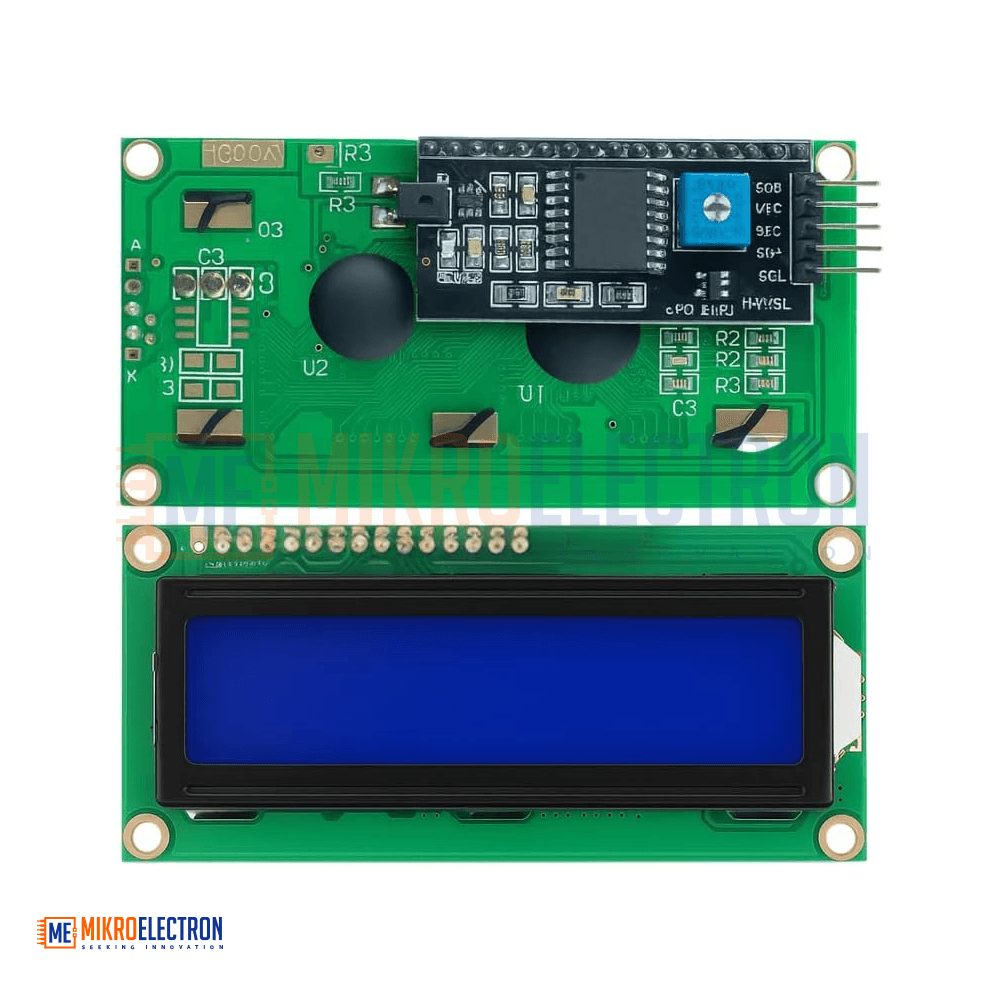
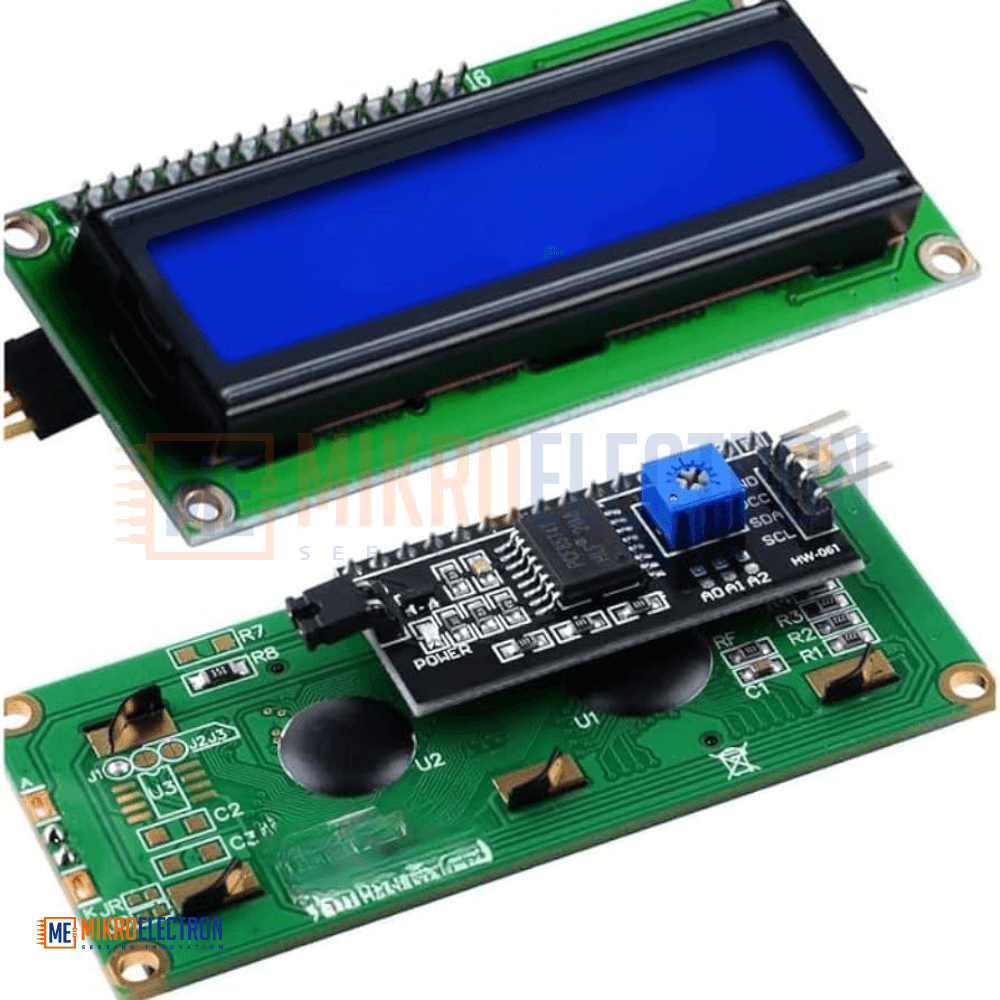
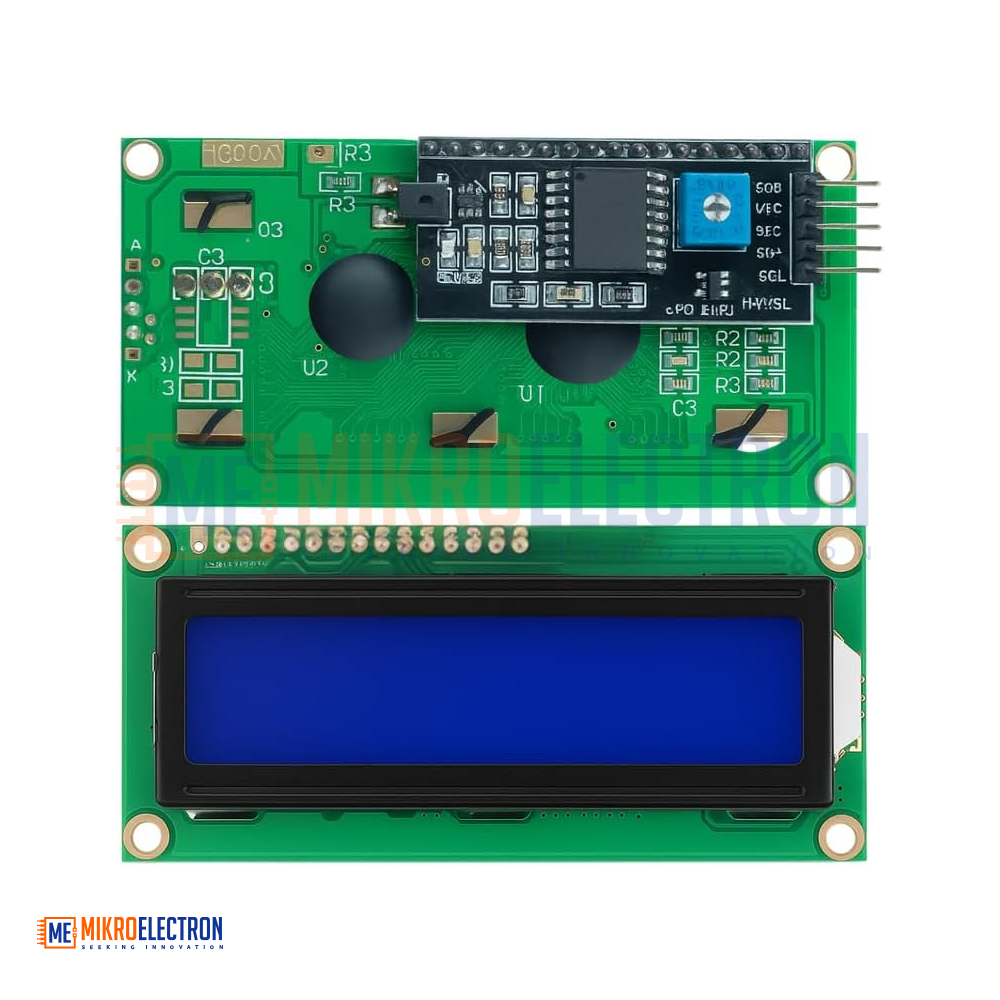
The 16×2 LCD with I2C is a popular character display module that shows 16 characters across 2 lines on a blue backlit screen with white text. Thanks to the soldered I2C backpack, it connects to your microcontroller using only 4 wires (VCC, GND, SDA, SCL) instead of 16, saving valuable I/O pins. It runs on +5V, includes a contrast adjustment potentiometer and backlight, and works seamlessly with Arduino, ESP32, and Raspberry Pi.
شاشة LCD مقاس 16×2 مع وحدة I2C هي شاشة عرض حرفية شائعة تعرض 16 حرفاً في سطرين على خلفية زرقاء مضيئة بنص أبيض. بفضل وحدة I2C الملحومة، تتصل بالمتحكم باستخدام 4 أسلاك فقط (VCC و GND و SDA و SCL) بدلاً من 16 سلكاً، مما يوفر منافذ الإدخال/الإخراج الثمينة. تعمل بجهد +5 فولت، وتتضمن مقاوم متغير لضبط التباين وإضاءة خلفية، وتتوافق بسلاسة مع Arduino و ESP32 و Raspberry Pi.
The 16×2 LCD Display with I2C Interface is one of the most widely used output displays in electronics and embedded projects. It features a classic HD44780-compatible character LCD capable of displaying 16 characters per line across 2 rows (32 characters total), with crisp white characters on a blue backlit background for excellent readability.
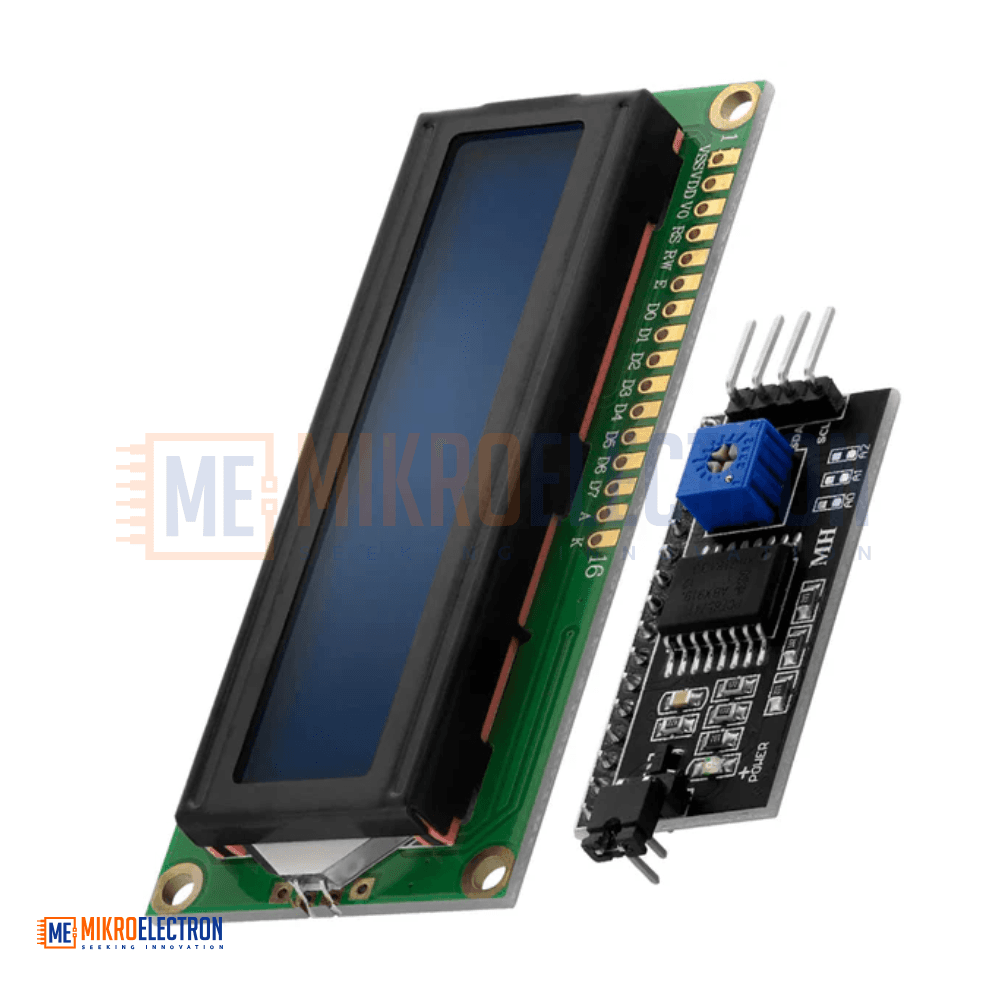
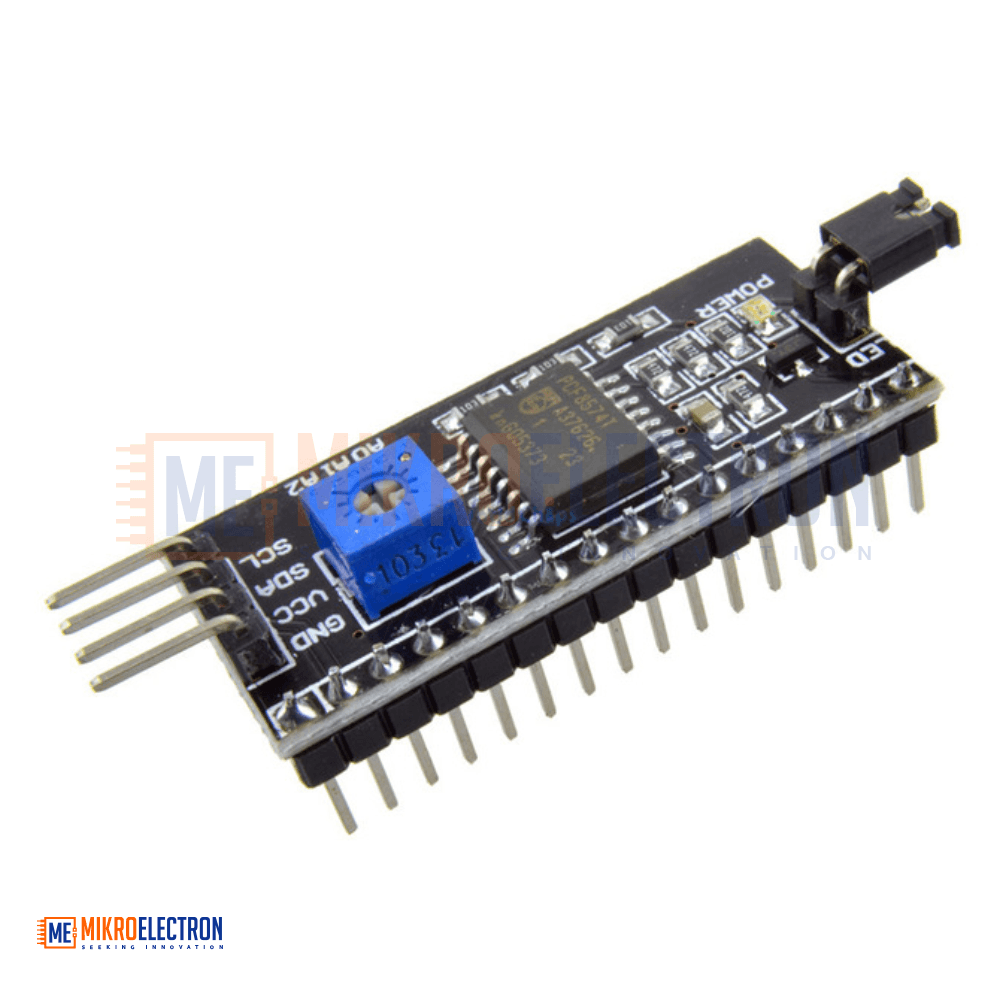
The standout feature of this module is the pre-soldered I2C "backpack" board (based on the PCF8574 I/O expander). A standard parallel LCD normally requires up to 16 connections to a microcontroller, consuming a large number of precious I/O pins. The I2C interface reduces this to just 4 wires — VCC, GND, SDA (data), and SCL (clock) — dramatically simplifying wiring and freeing up your board's pins for other components.
Because I2C is an addressable bus protocol, you can even connect multiple I2C devices (and more than one display) on the same two data lines, as long as each has a unique address. The module typically uses a default address of 0x27 or 0x3F, which can often be changed using the solderable address jumpers (A0, A1, A2) on the backpack.
The board runs on a simple +5V supply and includes an on-board potentiometer for contrast adjustment, plus a backlight that can be controlled or switched off via a jumper. It works effortlessly with popular platforms like Arduino (using the LiquidCrystal_I2C library), ESP8266, ESP32, Raspberry Pi, STM32, and PIC microcontrollers.
This makes it the perfect choice for displaying sensor readings, menus, status messages, clocks, counters, and user interfaces in countless DIY and professional projects.
Important notes:
- I2C requires pull-up resistors on the SDA and SCL lines; these are usually already included on the backpack module.
- If the screen shows blank or only boxes, adjust the contrast potentiometer and verify the correct I2C address in your code (use an I2C scanner sketch to find it).
Pin Configuration (I2C Module)
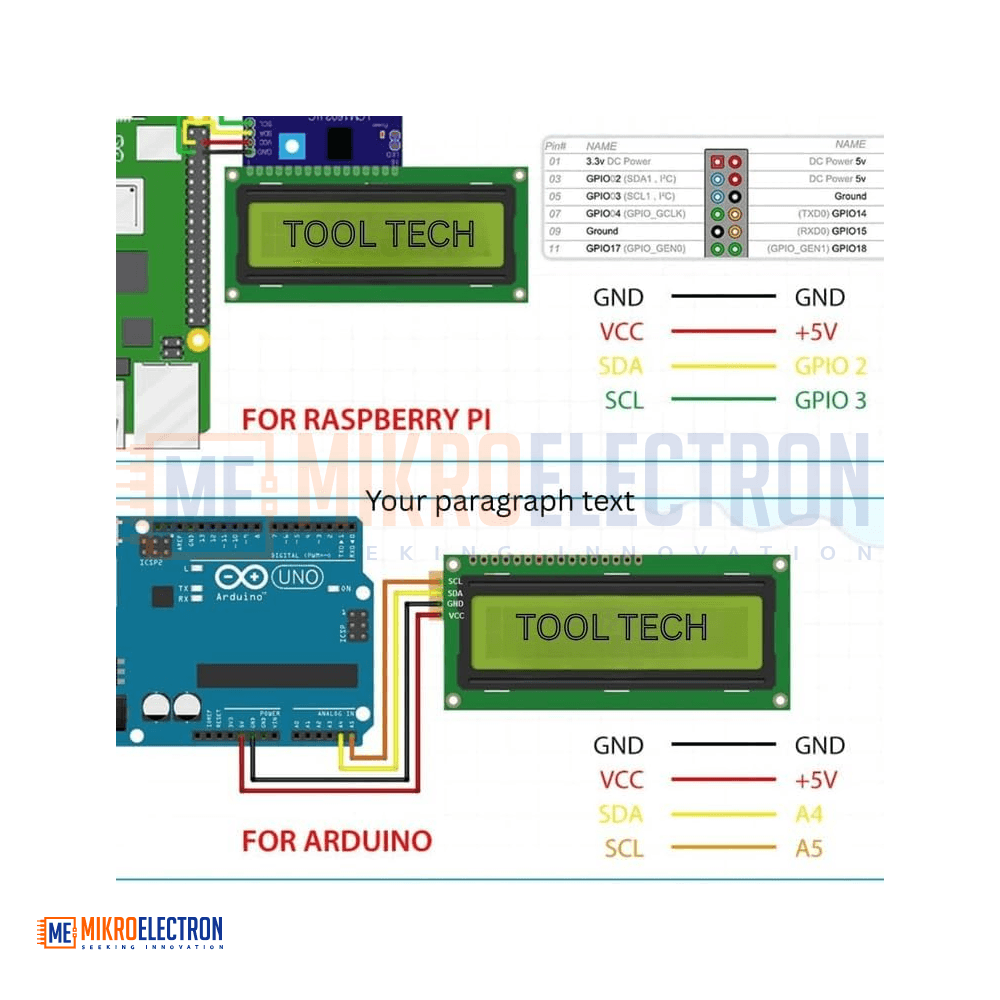
The I2C backpack reduces the connection to 4 pins:
- GND: Ground
- VCC: Power input (+5V)
- SDA: I2C serial data line
- SCL: I2C serial clock line
Specifications
- Display Type: Character LCD, 16 characters × 2 lines
- Controller: HD44780 compatible
- I2C Expander Chip: PCF8574
- Backlight Color: Blue (white characters)
- Supply Voltage: +5V DC
- Interface: I2C (2-wire) via backpack → 4 pins total
- Default I2C Address: 0x27 (or 0x3F; adjustable via A0/A1/A2 jumpers)
- Contrast Adjustment: On-board potentiometer
- Backlight Control: Jumper-selectable
- Character Size: 5×8 dot matrix per character
- Pull-up Resistors: Included on module
- Operating Current: ~20–40mA (with backlight)
- Compatibility: Arduino, ESP32, ESP8266, Raspberry Pi, STM32, PIC
Why Use I2C?
A standard parallel LCD needs many pins to operate. The I2C interface offers major advantages:
- Only 4 wires instead of up to 16
- Saves microcontroller I/O pins for sensors and other modules
- Easy daisy-chaining of multiple I2C devices on the same bus
- Simpler, cleaner wiring and faster prototyping
- Addressable — multiple displays/devices supported
Applications
- Sensor data display (temperature, humidity, distance, etc.)
- Arduino, ESP32, and Raspberry Pi projects
- Menu and user interface systems
- Digital clocks and timers
- Counters and tally displays
- Voltmeters, ammeters, and measurement tools
- Home automation status panels
- Robotics control displays
- IoT device status output
- DIY weather stations
- Educational and learning kits
- Industrial control prototypes