
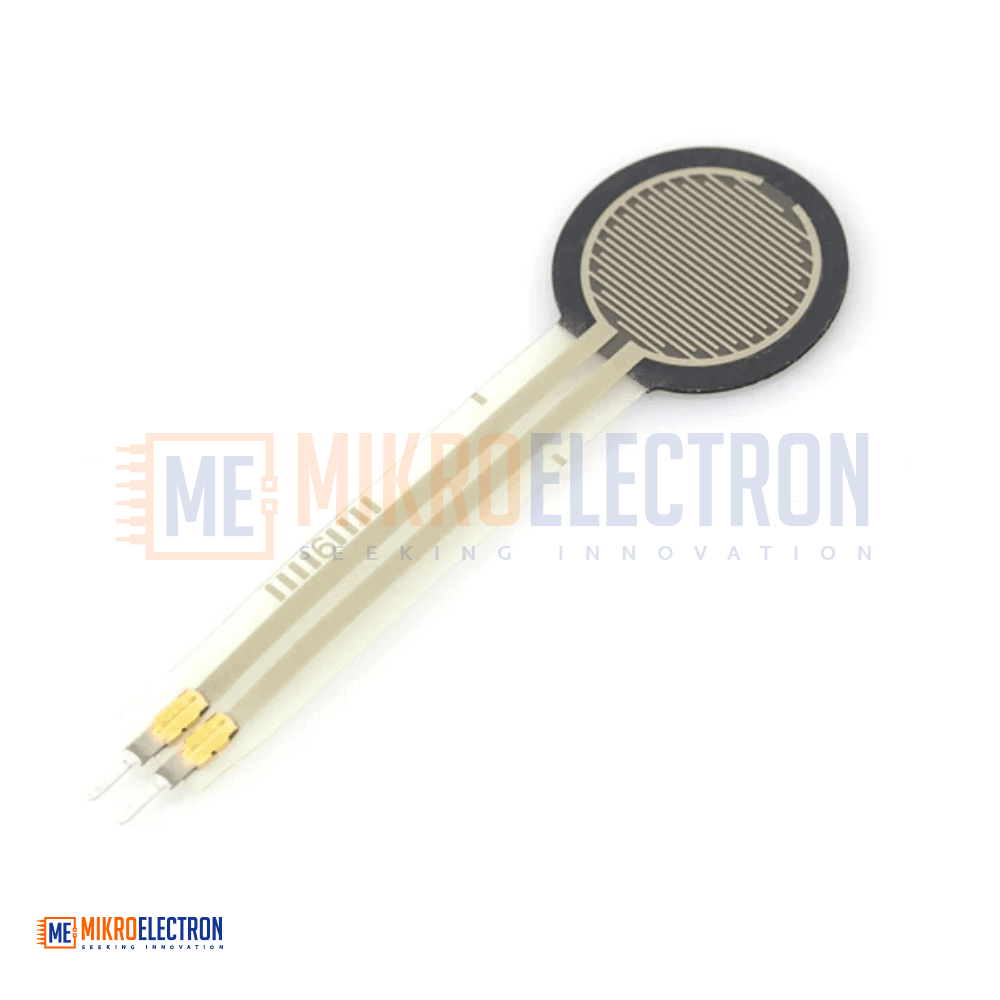
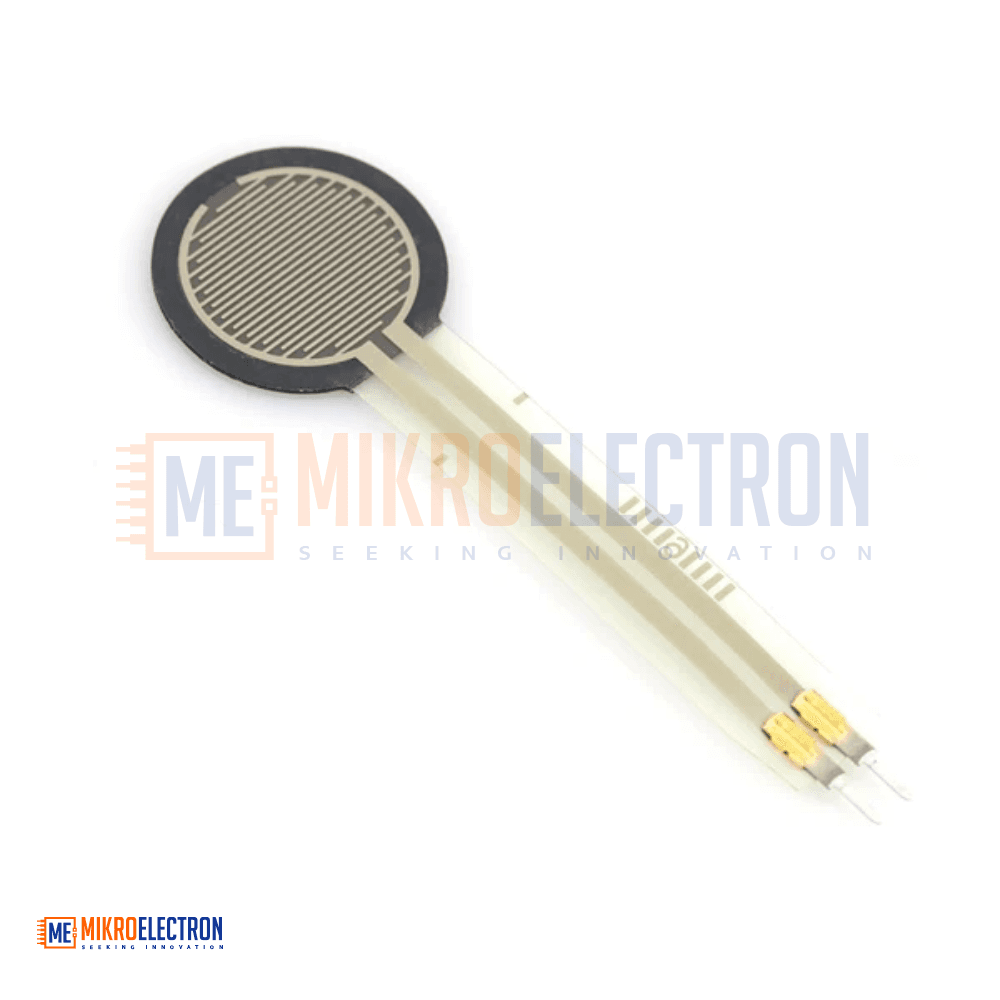

Force Sensitive Resistor 0.5"
The 0.5" Force Sensitive Resistor (FSR) is a thin, flexible sensor that changes resistance based on applied pressure. With a 0.5-inch round sensing area, it detects force anywhere from 100 g to 10 kg — the harder the press, the lower the resistance. Featuring breadboard-friendly 0.1" pitch pins and a peel-and-stick rubber backing for easy mounting, it's perfect for Arduino, Raspberry Pi, and DIY projects involving touch detection, squeeze sensing, pressure mats, musical instruments, and interactive electronics.
مقاومة حساسة للضغط (FSR) قياس 0.5 إنش هي مستشعر مرن ورقيق يغيّر مقاومته حسب الضغط المطبّق عليه. تحتوي على مساحة استشعار دائرية بقطر 0.5 إنش وتستشعر القوى من 100 غم حتى 10 كغم — كلما زاد الضغط قلّت المقاومة. تتميز بأطراف بفاصل 0.1 إنش متوافقة مع لوحة التجارب، وظهر لاصق مطاطي لسهولة التثبيت. مثالية لمشاريع Arduino وRaspberry Pi وتطبيقات الضغط واللمس.
The 0.5" Force Sensitive Resistor (FSR) is one of the most popular and versatile pressure-sensing components in the maker and electronics community. Its operating principle is simple but powerful: as more pressure is applied to the sensing area, the internal resistance of the sensor decreases. By reading this changing resistance with a microcontroller (typically through a voltage divider), you can detect a wide range of touch and force interactions in your projects.
The sensor features a round 0.5-inch (12.7 mm) diameter sensing area, making it well-suited for fingertip-sized inputs. When no pressure is applied, the FSR's resistance is greater than 1 MΩ — essentially an open circuit. As force is applied, the resistance drops dramatically, allowing it to detect forces from approximately 100 grams up to 10 kilograms.
Two pins extend from the bottom of the sensor with a standard 0.1" (2.54 mm) pitch, making it breadboard-friendly and easy to integrate with Arduino, Raspberry Pi, ESP32, and other microcontroller platforms. On the back of the sensing area, a convenient peel-and-stick rubber backing lets you mount the FSR cleanly to almost any flat surface.
While FSRs are excellent for detecting whether pressure is being applied and roughly how much, they are not precision force sensors. They're ideal for projects that need to know "is the user pressing this?" or "are they squeezing harder now?" but they are not suitable for use as an accurate digital scale. For precision weight measurement, a load cell with an HX711 amplifier would be a better choice.
This sensor's combination of low cost, simple interfacing, thin profile, and reliable operation has made it a favorite for interactive electronics, wearable projects, musical instruments, robotics, and countless prototyping applications.
Specifications
- Sensor Type: Force Sensitive Resistor (FSR) — variable resistance with applied force
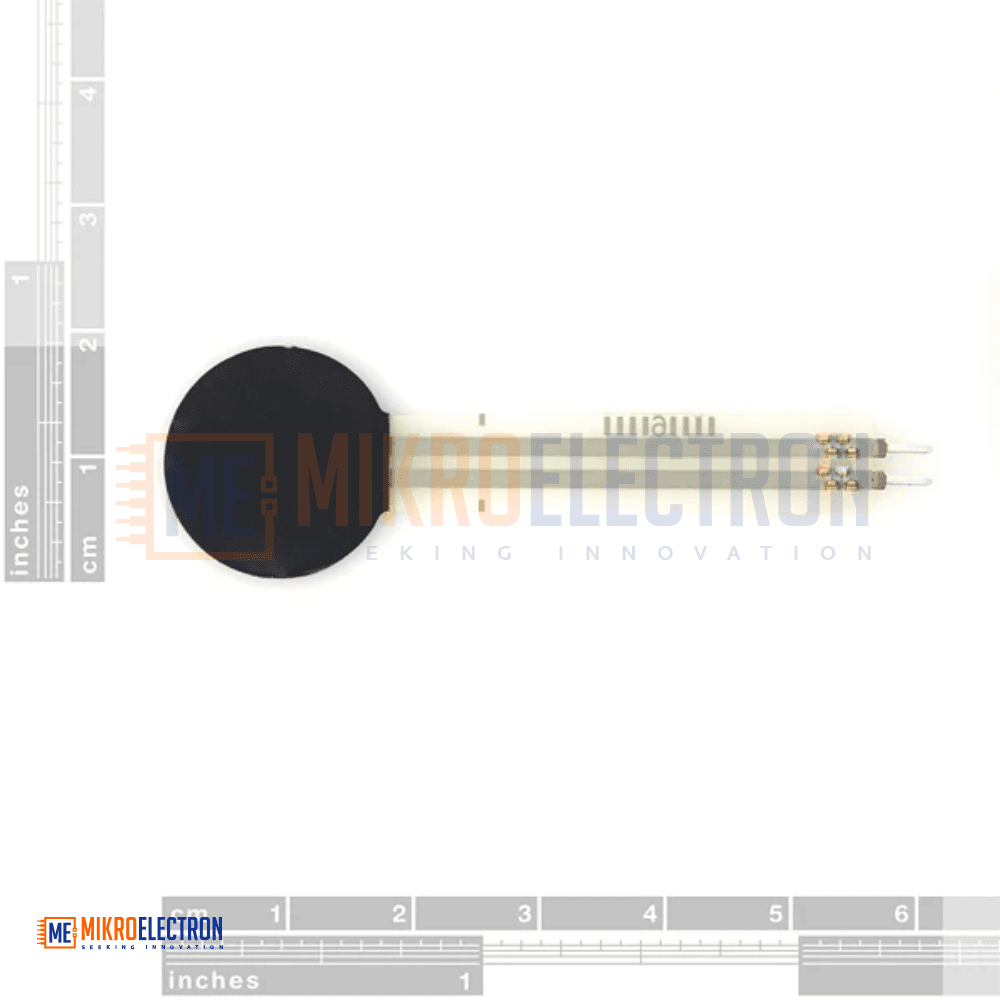
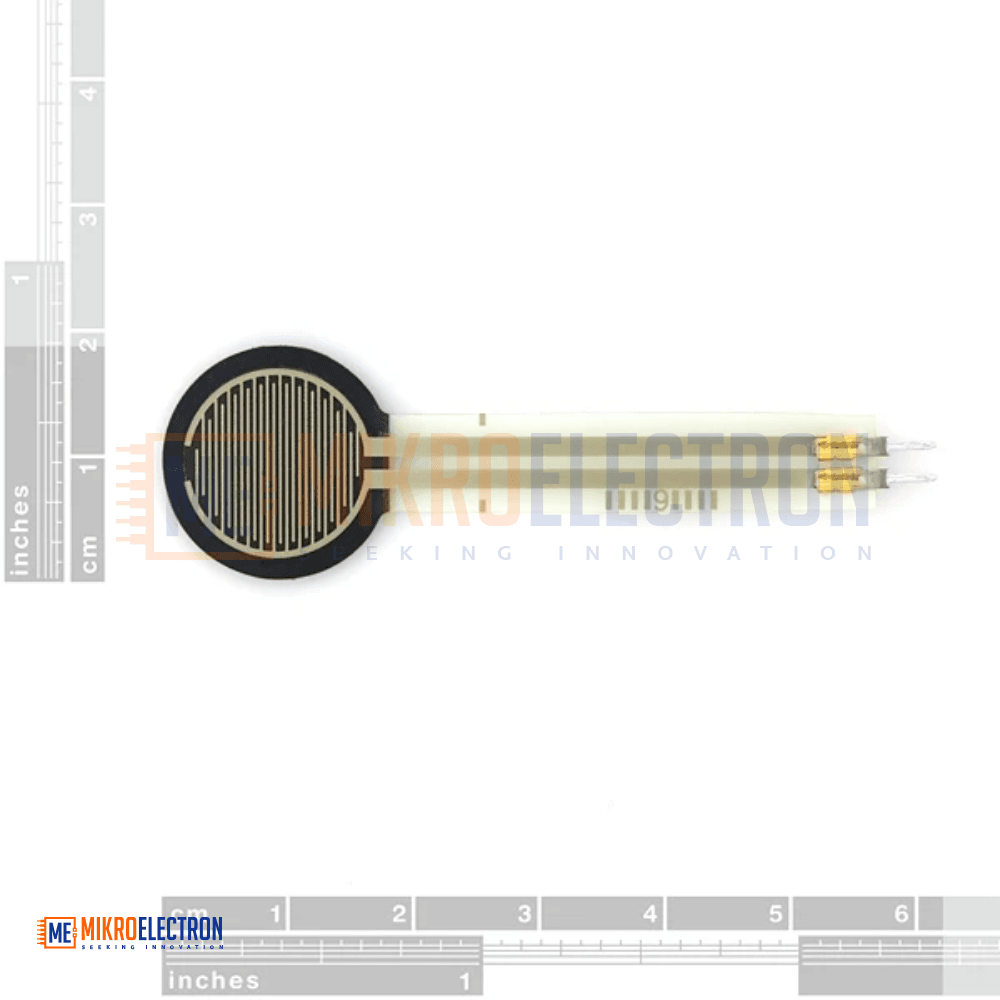
- Sensing Area Diameter: 0.5 inches (12.7 mm) — round
- Force Sensitivity Range: 100 g to 10 kg
- Resistance at Rest (no force): Greater than 1 MΩ
- Resistance Under Force: Decreases as pressure increases
- Overall Length: 2.375 inches (60.3 mm)
- Overall Width: 0.75 inches (19 mm)
- Pin Pitch: 0.1 inch (2.54 mm) — breadboard-compatible
- Number of Pins: 2
- Mounting: Peel-and-stick rubber backing included
- Thickness: Ultra-thin, flexible profile
- Operating Voltage: Compatible with 3.3V and 5V systems (via voltage divider)
- Output Type: Analog (variable resistance)
How It Works
The FSR functions as a variable resistor controlled by force. To use it with a microcontroller, you typically connect it in a simple voltage divider circuit with a fixed resistor (usually 10 kΩ). As force is applied:
- No pressure → Resistance > 1 MΩ → Output voltage near supply rail (or ground, depending on circuit orientation)
- Light pressure → Resistance drops to tens of kΩ → Output voltage changes proportionally
- Heavy pressure → Resistance drops to a few hundred ohms → Output voltage swings strongly
You then read the output voltage using an analog input pin (ADC) on your Arduino, Raspberry Pi (via ADC), or other microcontroller.
Applications
- Touch & Squeeze Detection – Detect when an object or surface is being pressed
- Interactive Art Installations – Pressure-responsive lights, sound, and motion
- Musical Instruments – Build velocity-sensitive electronic drum pads, MIDI controllers
- Robotics – Add tactile sensing to robot grippers and fingers
- Wearable Electronics – Pressure-sensitive clothing, smart shoes, gesture devices
- Game Controllers – Custom analog buttons and pressure-responsive inputs
- Smart Furniture – Detect when someone sits or places objects
- Floor Mats & Sensors – Footstep detection, intrusion alerts
- Stress Balls & Toys – Squeeze-activated interactive toys
- Prosthetics & Assistive Tech – Feedback sensors for adaptive devices
- Industrial Prototyping – Quick pressure-sensing solutions for development boards
- Educational Projects – Teach analog input concepts with Arduino and Raspberry Pi