
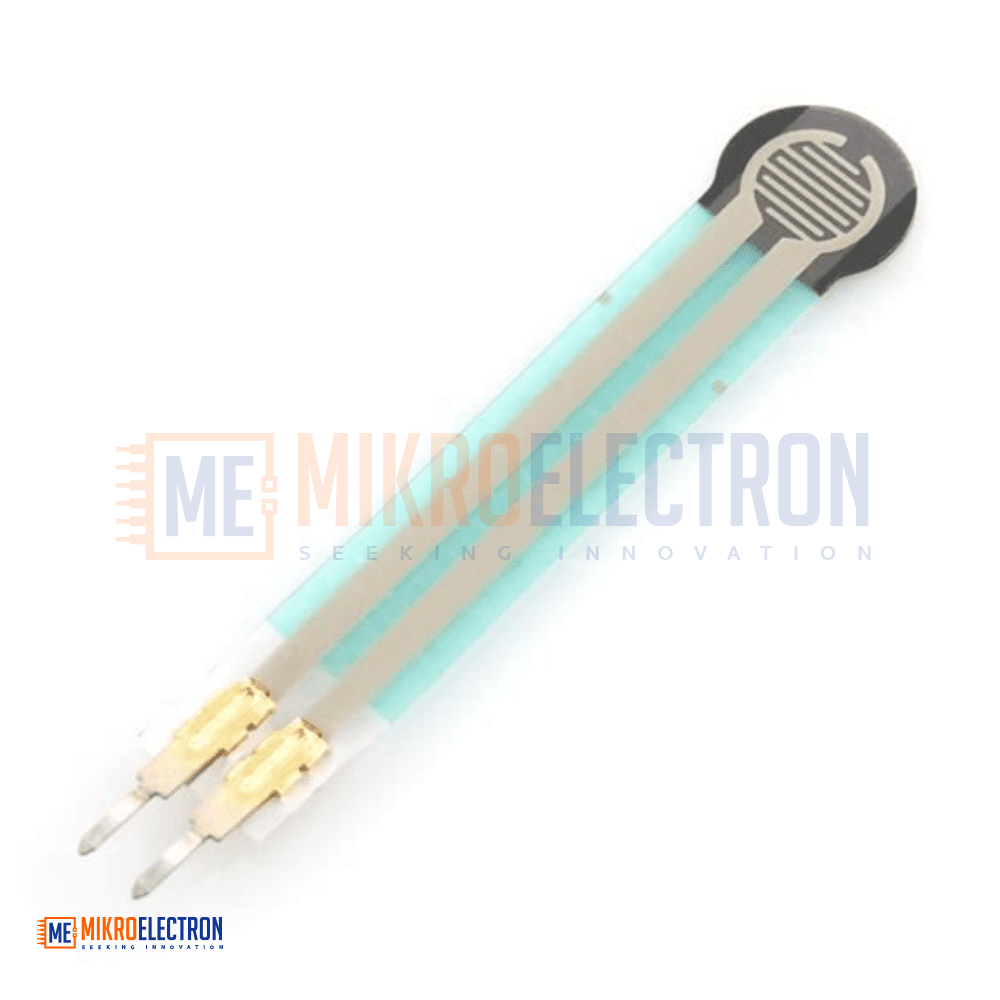
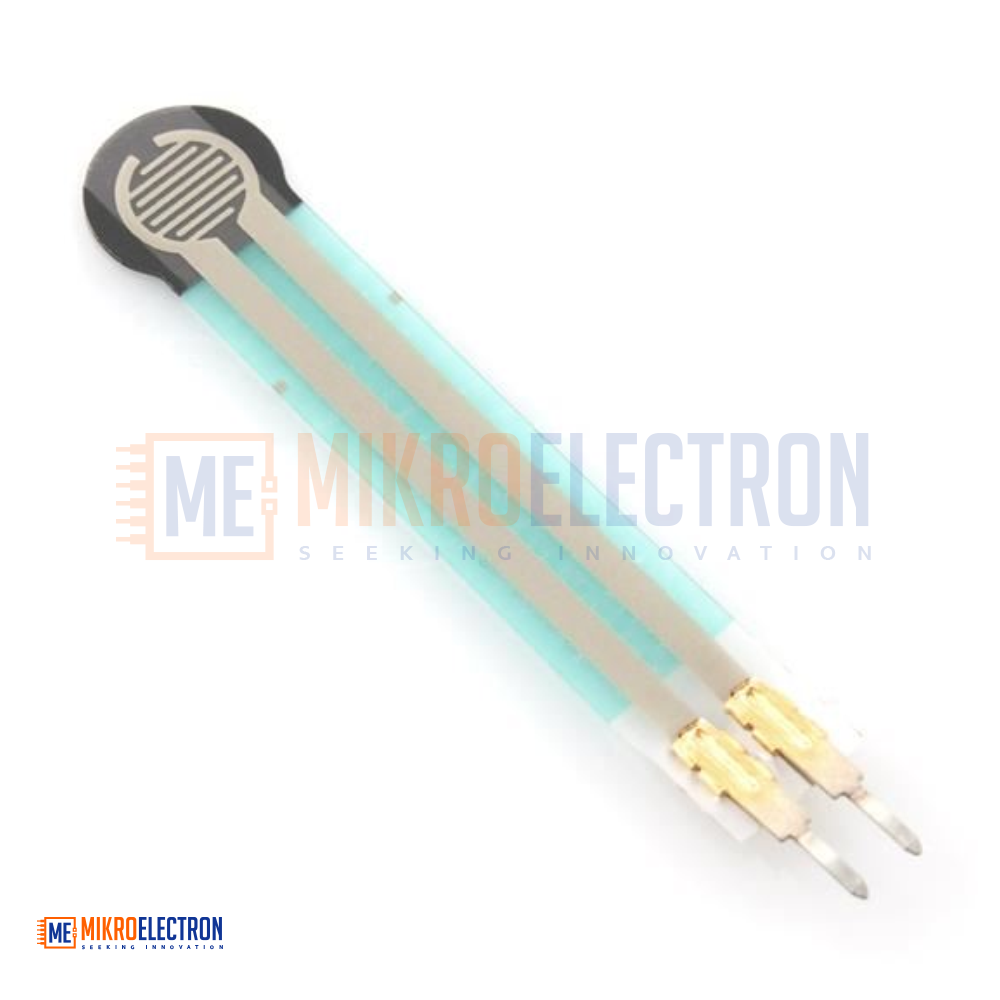
Force Sensitive Resistor - Small
The Small Force Sensitive Resistor (FSR) from Interlink Electronics is a compact pressure sensor with a tiny 0.16" (4 mm) diameter sensing area, perfect for fingertip and small-object detection. Its resistance decreases as pressure increases — from over 1 MΩ at rest down to about 2.5 kΩ at full pressure. With an actuation force as low as 2 grams and a sensitivity range of 0.1N to 10N, it's ideal for robotics, Arduino projects, musical instruments, wearables, and pressure-sensitive interfaces. Breadboard-friendly with 0.1" pitch pins.
مقاومة حساسة للضغط (FSR) الصغيرة من Interlink Electronics هي حساس ضغط مدمج بمساحة استشعار صغيرة قطرها 0.16 إنش (4 مم)، مثالية للاستشعار باللمس وللأجسام الصغيرة. تقل مقاومتها مع زيادة الضغط — من أكثر من 1 ميجا أوم في حالة الراحة إلى نحو 2.5 كيلو أوم عند الضغط الكامل. تستجيب لقوة منخفضة تصل إلى 2 غرام وضمن نطاق 0.1 إلى 10 نيوتن. مثالية للروبوتات ومشاريع Arduino والآلات الموسيقية والأجهزة القابلة للارتداء. متوافقة مع لوحة التجارب.
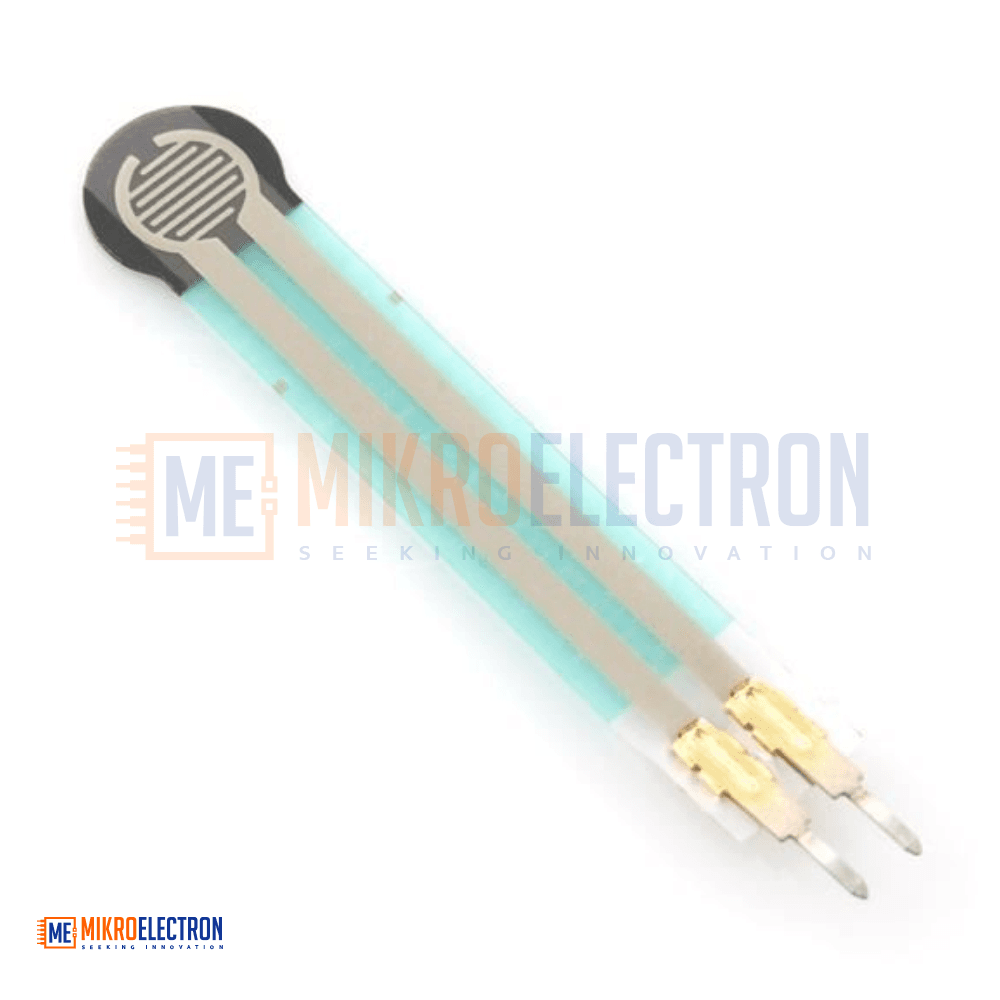
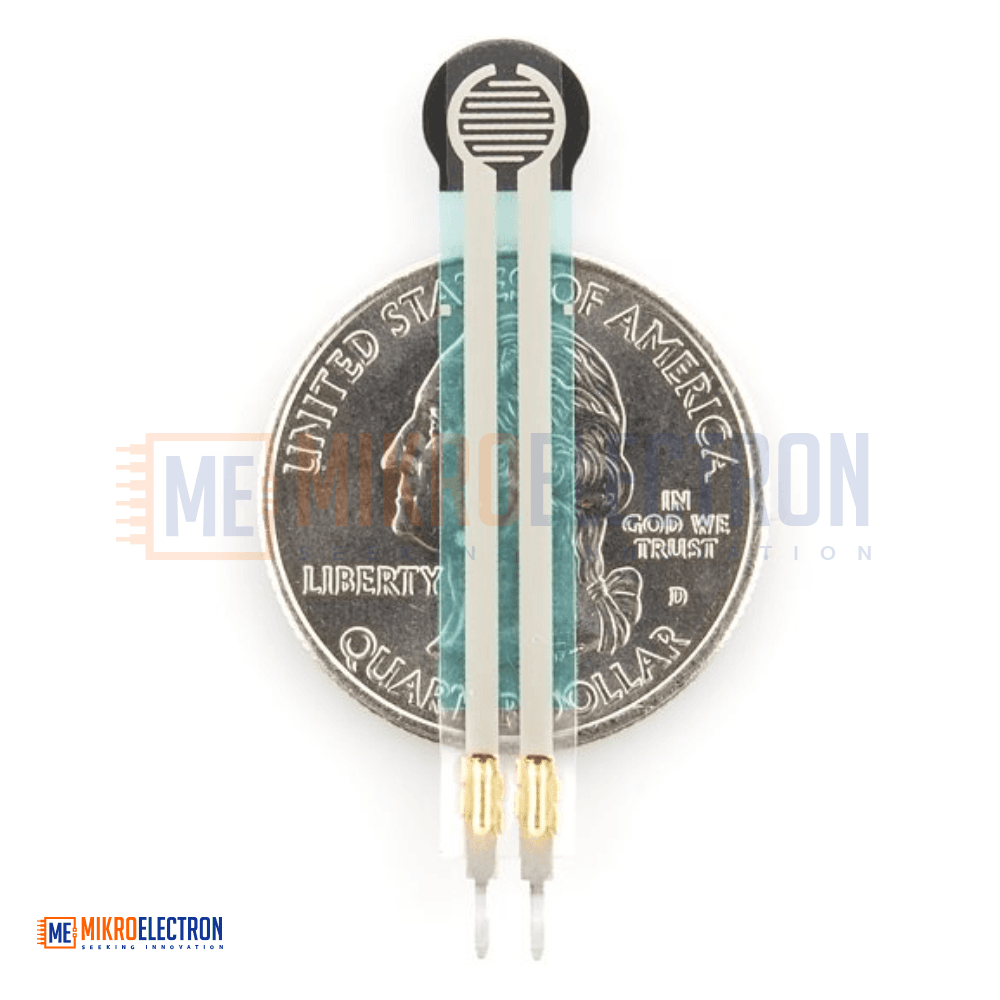
The Small Force Sensitive Resistor (FSR) is a precision pressure sensor manufactured by Interlink Electronics, the original inventor of FSR technology. Designed for applications that require detecting and measuring pressure or force in a compact form factor, this sensor features a tiny 0.16-inch (4 mm) diameter active sensing area — perfect for fingertip touch, small object detection, and tightly packed electronics.
The sensor operates on a simple but powerful principle: its electrical resistance changes inversely with applied pressure. The harder the force, the lower the resistance.
- No pressure applied: Resistance is greater than 1 MΩ (essentially open circuit)
- Light pressure (2 grams or more): Resistance begins to drop noticeably
- Moderate pressure: Resistance decreases to tens of kΩ
- Full pressure (around 10N): Resistance falls to approximately 2.5 kΩ
By using the sensor as part of a simple voltage divider circuit with a fixed resistor (typically 10 kΩ), you can read the changing resistance as an analog voltage on a microcontroller's ADC pin. This makes the FSR easy to integrate with Arduino, Raspberry Pi, ESP32, STM32, and any other platform with analog input capability.
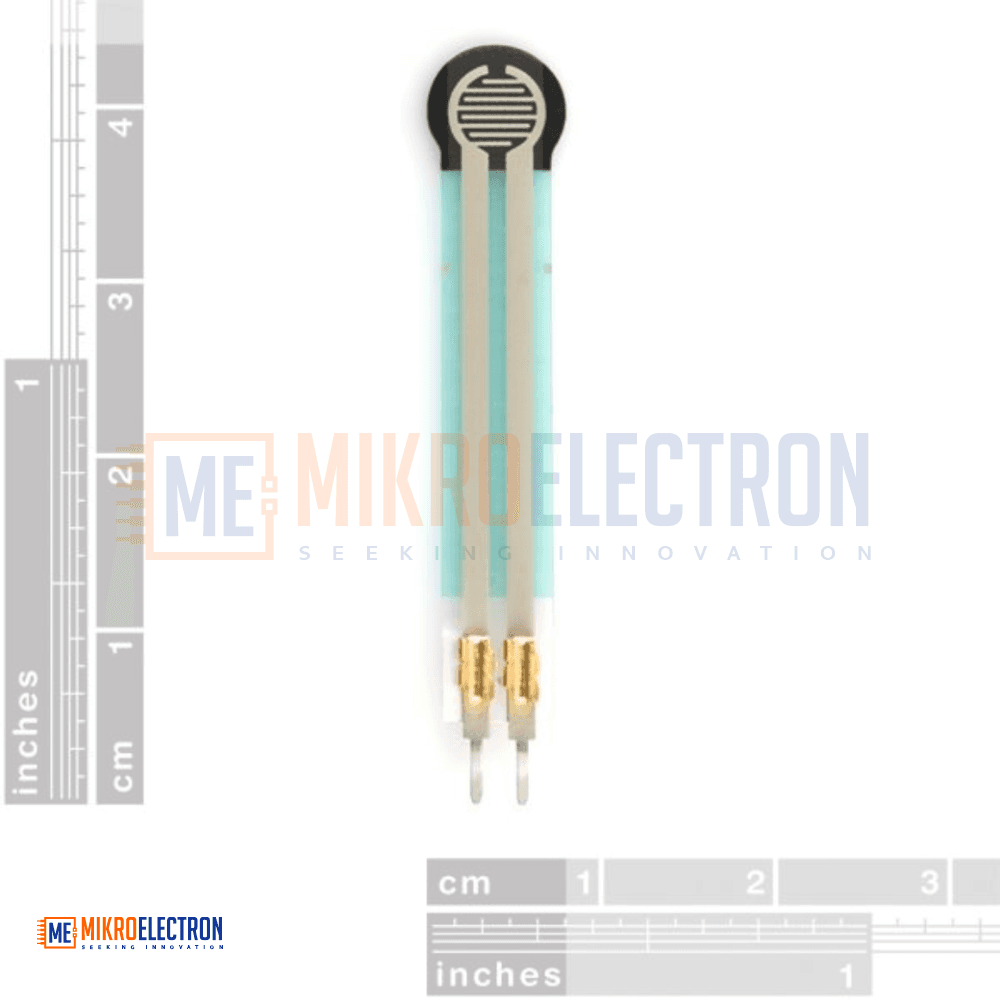
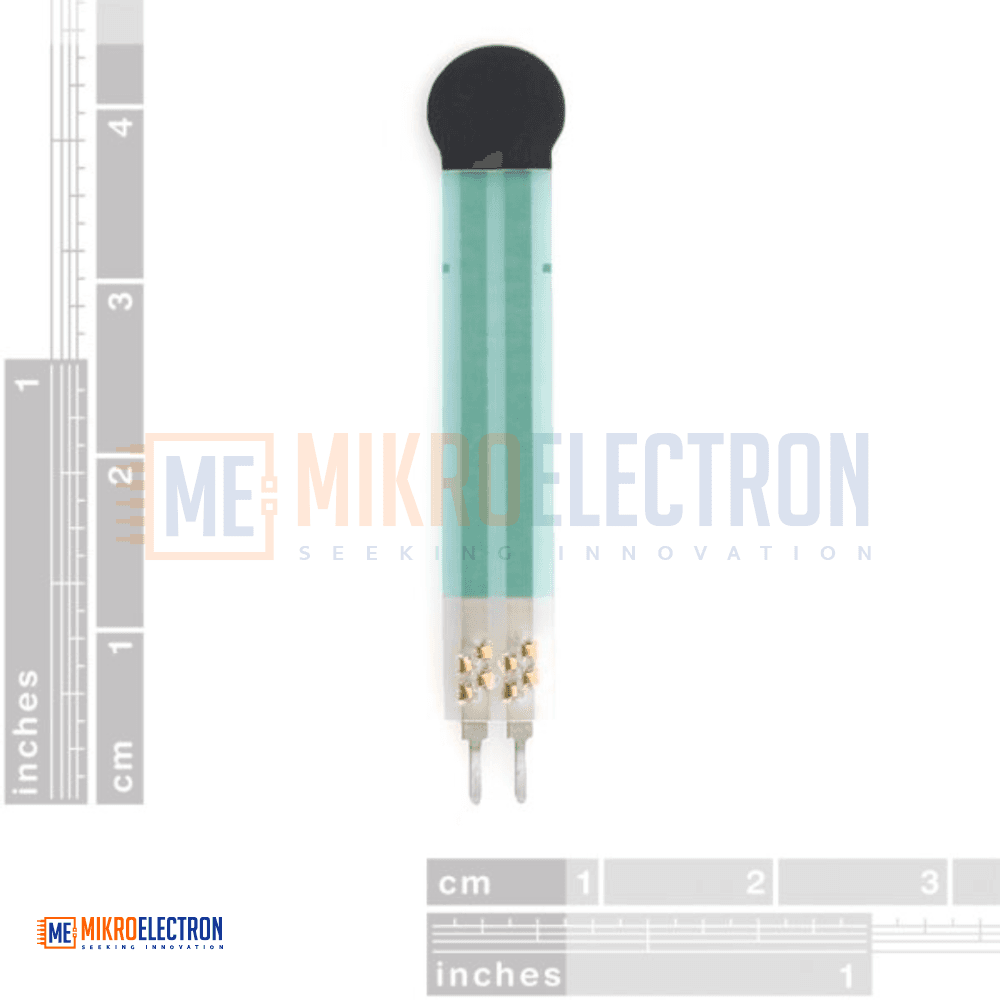
The sensor is incredibly thin and flexible, fitting easily behind buttons, fabrics, foam padding, and inside compact enclosures. Two pins extend from the bottom with a standard 0.1-inch (2.54 mm) pitch, making it directly compatible with breadboards and standard prototyping connectors.
The small form factor and high sensitivity make this FSR particularly well-suited to applications where you need to detect gentle touches, light squeezes, or fingertip-level pressure in a discreet package.
Important Note: FSRs are excellent for detecting whether pressure is applied and roughly how much, but they are not precision force sensors. They are ideal for "is it being pressed?" or "is it being squeezed harder now?" applications, but not for use as an accurate digital scale. For precision weight measurement, a load cell with an HX711 amplifier is the recommended solution.
Specifications
- Manufacturer: Interlink Electronics
- Sensor Type: Force Sensitive Resistor (FSR) — Polymer Thick Film
- Sensing Area Diameter: 0.16 inches (4 mm) — round
- Actuation Force: As low as 2 grams
- Force Sensitivity Range: 0.1 N to 10 N
- Resistance at Rest (no force): Greater than 1 MΩ
- Resistance at Full Pressure: Approximately 2.5 kΩ
- Overall Length: 1.75 inches (44.5 mm)
- Overall Width: 0.28 inches (7.1 mm)
- Sensing Area Width: 0.3 inches (active region)
- Pin Pitch: 0.1 inch (2.54 mm) — breadboard-compatible
- Number of Pins: 2
- Profile: Ultra-thin and flexible
- Operating Voltage: Compatible with 3.3V and 5V systems (via voltage divider)
- Output Type: Analog (variable resistance)
How It Works
The FSR acts as a variable resistor controlled by pressure. To read the sensor with a microcontroller, connect it in a voltage divider circuit:
- Connect one FSR pin to 5V (or 3.3V)
- Connect the other FSR pin to an analog input pin (e.g., A0) and through a fixed resistor (typically 10 kΩ) to GND
- Read the analog input — the voltage rises as pressure increases
This simple circuit converts the FSR's resistance changes into a voltage that your microcontroller can read directly via its ADC (analog-to-digital converter).
Applications
- Robotics – Grip force sensing, robotic fingertips, tactile feedback
- Touch & Squeeze Detection – Pressure-responsive surfaces and switches
- Musical Instruments – Velocity-sensitive drum pads, MIDI controllers, electronic pianos
- Interactive Art Installations – Pressure-triggered lights, sound, and motion effects
- Wearable Electronics – Smart gloves, fitness wearables, gesture-detecting clothing
- Prosthetics & Assistive Technology – Tactile feedback for adaptive devices
- Pressure-Sensitive Buttons – Variable-input controls beyond simple on/off
- Game Controllers – Analog buttons and pressure-responsive game inputs
- Smart Toys – Squeezable interactive plush toys and educational devices
- Stress Ball Sensors – Build interactive squeeze-toy projects
- Hidden Switches – Pressure-activated triggers behind fabrics, panels, or paint
- Foot & Footstep Detection – Insole sensors, intrusion mats
- DIY Electronics Projects – Arduino, Raspberry Pi, ESP32 maker builds
- Educational Use – Teach analog sensing, ADC, and voltage divider concepts