
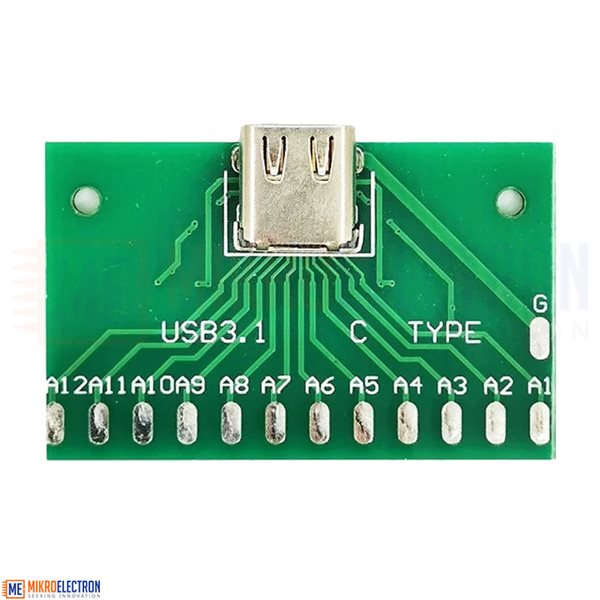
USB 3.1 Type-C Connector Breakout Board
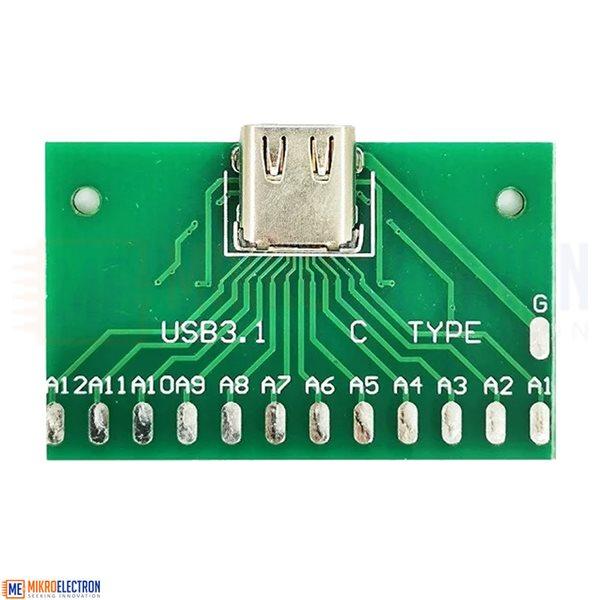
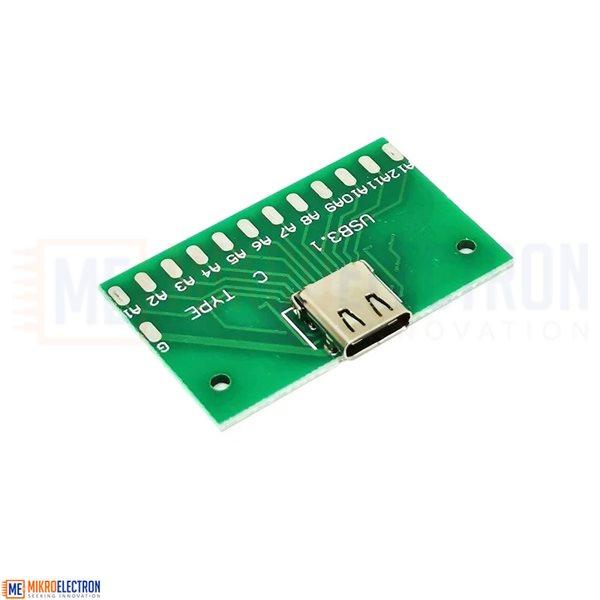
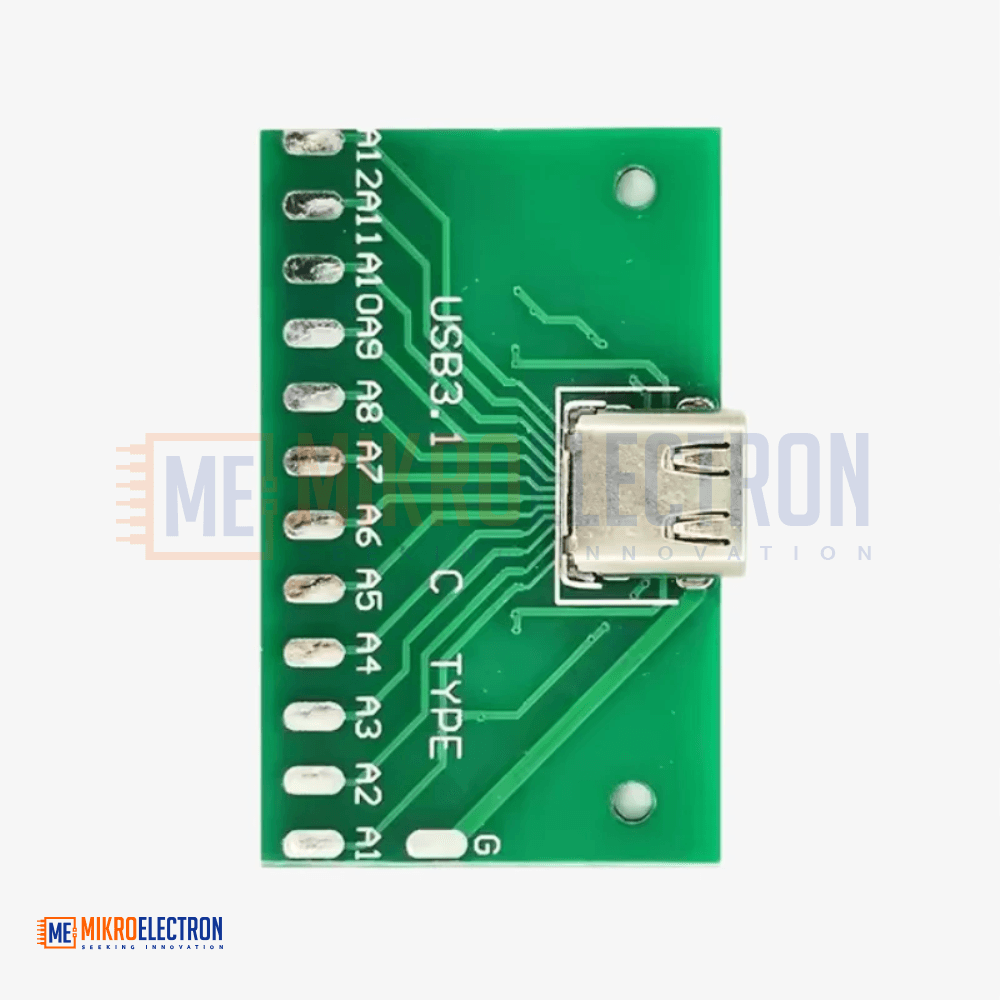
The USB 3.1 Type-C Connector Breakout Board provides easy access to a USB Type-C receptacle by breaking out its power, USB 3.1 data, configuration (CC), and sideband pins to a 0.1″ pitch compatible with perfboards, solderless breadboards, and standard 0.1″ connectors. It features on-board CC pull-down resistors, making it ideal for power-sinking applications. The reversible Type-C connector supports both host and device roles, and enables negotiation of higher power delivery up to 20 V / 5 A.
لوحة توسعة موصل USB 3.1 من نوع Type-C توفّر وصولاً سهلاً إلى مقبس USB Type-C عبر إخراج دبابيس الطاقة وبيانات USB 3.1 ودبابيس التهيئة (CC) والدبابيس الجانبية إلى تباعد قياسي 0.1 إنش متوافق مع ألواح التجارب ولوحات البروتوبورد والموصلات القياسية. تحتوي على مقاومات سحب لأسفل (CC pull-down) مدمجة تجعلها مثاليّة لتطبيقات استقبال الطاقة. الموصل قابل للعكس ويدعم دورَي المضيف والجهاز، ويسمح بالتفاوض على طاقة تصل إلى 20 فولت و5 أمبير.
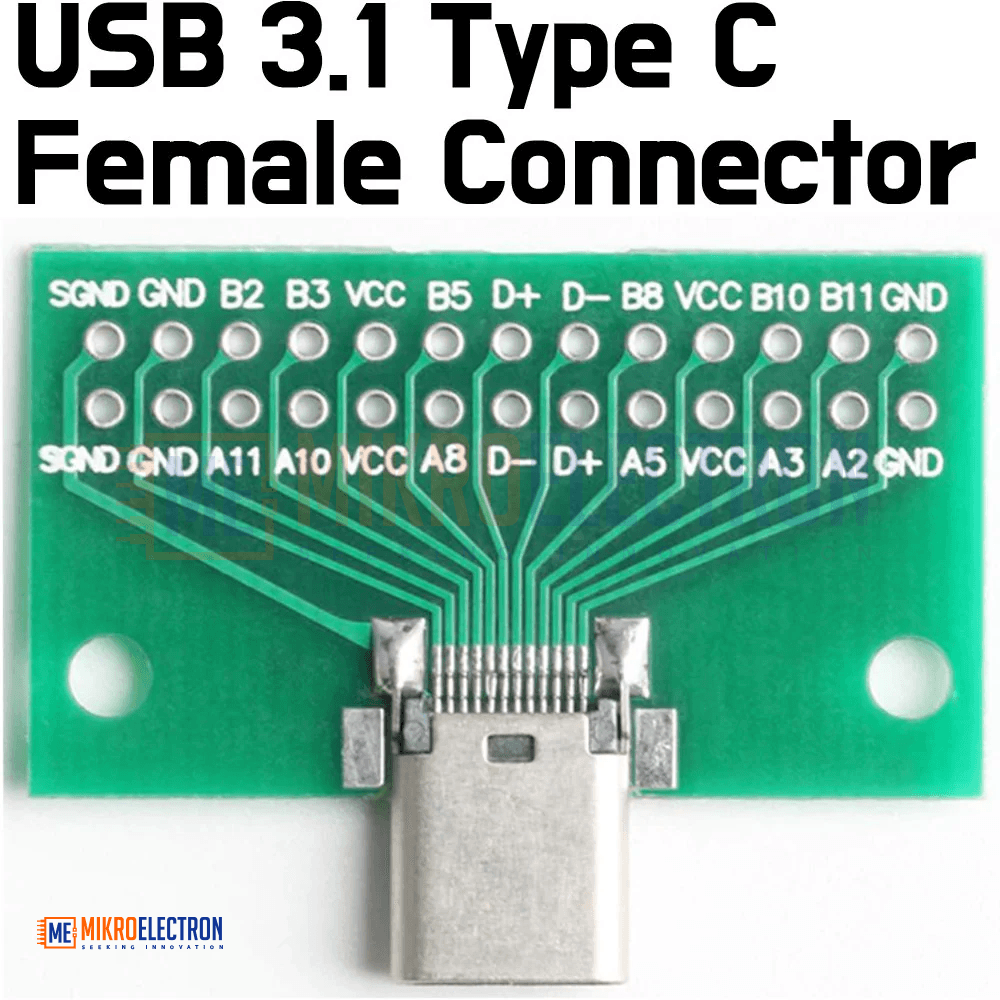
The USB 3.1 Type-C Connector Breakout Board is a compact adapter designed to make the modern USB Type-C receptacle accessible for prototyping, testing, and custom electronic designs. It breaks out all the important signals of the connector — including VBUS power, GND, USB 2.0 D+/D− lines, USB 3.1 SuperSpeed differential pairs (TX/RX), Configuration Channel (CC1/CC2) pins, and the Sideband Use (SBU1/SBU2) pins — to a standard 0.1″ (2.54 mm) header spacing.
The USB Type-C connector is designed to supersede a wide range of legacy USB connectors. It is fully reversible, meaning either end of a cable can be plugged into a receptacle with either side up. It supports both USB host and USB device roles, and enables the negotiation of increased power delivery (up to 20 V and 5 A) as well as alternate modes that repurpose the interface wires for other protocols such as DisplayPort, Thunderbolt, or HDMI.
The board integrates the required 5.1 kΩ CC pull-down resistors, so it can be directly connected to a USB Type-C power source (such as a USB-PD charger or a Type-C host port) to draw power in a power-sinking (device/sink) configuration without any additional circuitry. Because the pins are exposed on a standard 0.1″ pitch, the board can be inserted directly into a solderless breadboard or soldered into a perfboard, making it ideal for experimentation and integration with microcontrollers, development boards, and custom PCBs.
Specifications
| Parameter | Value |
|---|---|
| Connector Type | USB 3.1 Type-C Receptacle (female) |
| Data Standard | USB 3.1 (SuperSpeed) / USB 2.0 compatible |
| Maximum Voltage (VBUS) | Up to 20 V (via USB Power Delivery) |
| Maximum Current | Up to 5 A (with proper cable and source) |
| Pin Pitch (Breakout) | 0.1″ (2.54 mm) |
| CC Pull-Down Resistors | Integrated (5.1 kΩ, sink/device role) |
| Broken-Out Signals | VBUS, GND, D+, D−, TX1±, RX1±, TX2±, RX2±, CC1, CC2, SBU1, SBU2 |
| Connector Orientation | Reversible (flip-capable) |
| Board Compatibility | Perfboards, breadboards, 0.1″ headers |
| Mounting | Through-hole solder pads |
Applications
- Prototyping USB Type-C devices on breadboards or perfboards
- Developing USB-PD (Power Delivery) sink circuits for battery chargers and DC power taps
- Testing and evaluating USB 3.1 SuperSpeed signals during hardware development
- Adding a USB Type-C power input to microcontroller projects (Arduino, ESP32, Raspberry Pi, STM32, etc.)
- Building DIY charging cables, adapters, and pass-through boards
- Educational demonstrations of the USB Type-C standard, CC configuration, and PD negotiation
- Interfacing with Type-C alternate modes such as DisplayPort or audio accessory mode
- Reverse engineering and signal probing of Type-C connections