
Thermoacoustic Stirling Engine power generation Model A
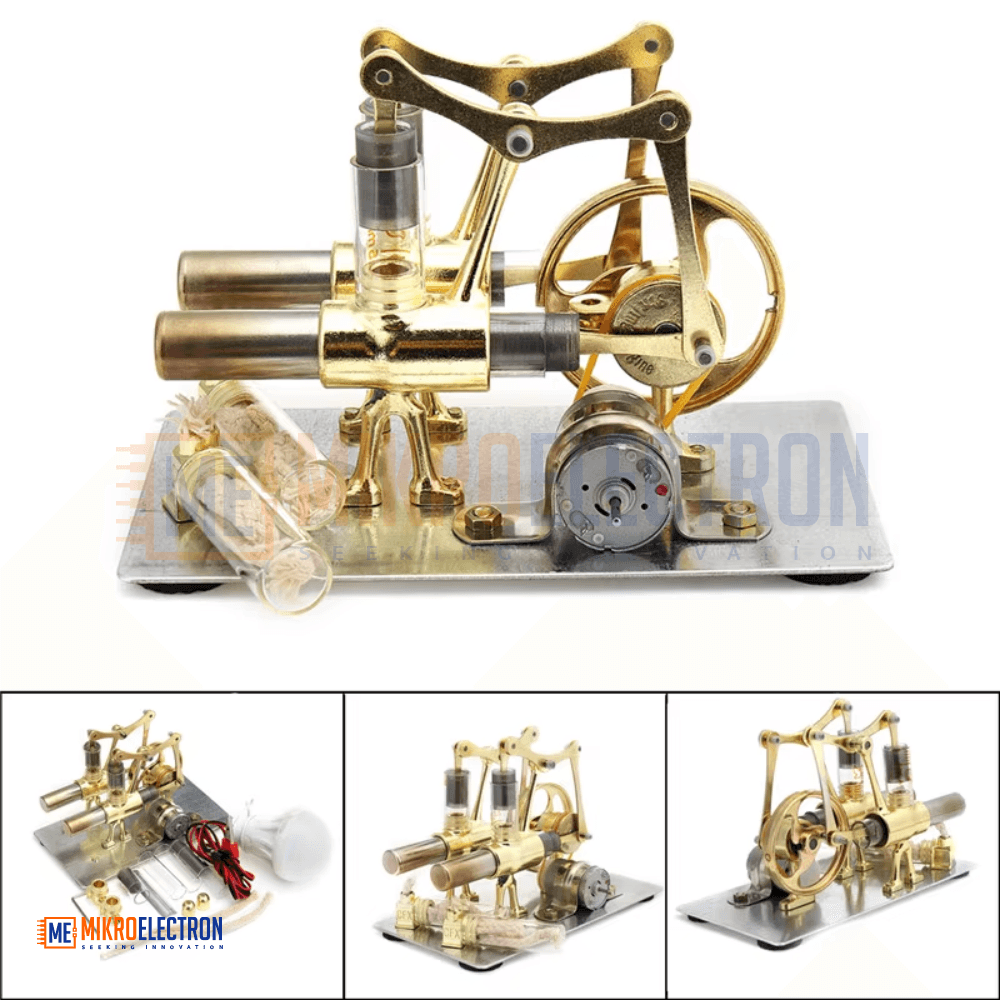
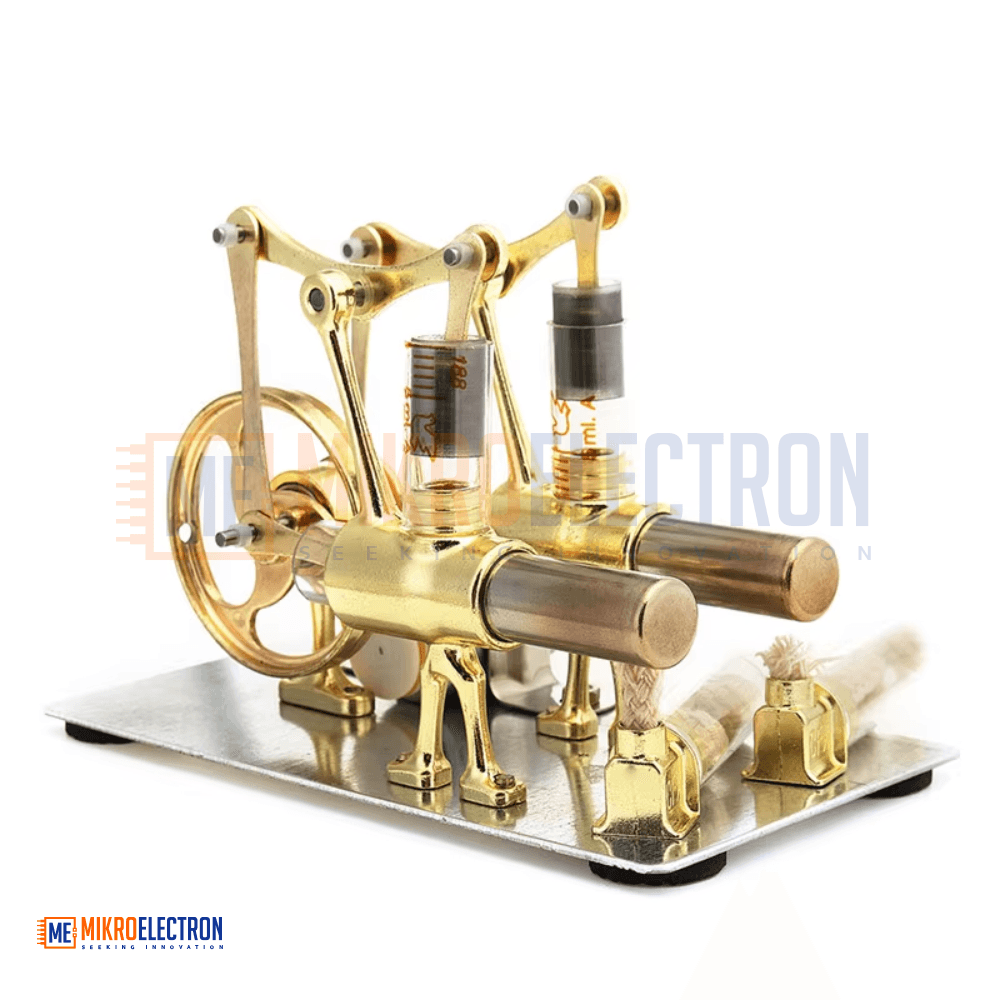
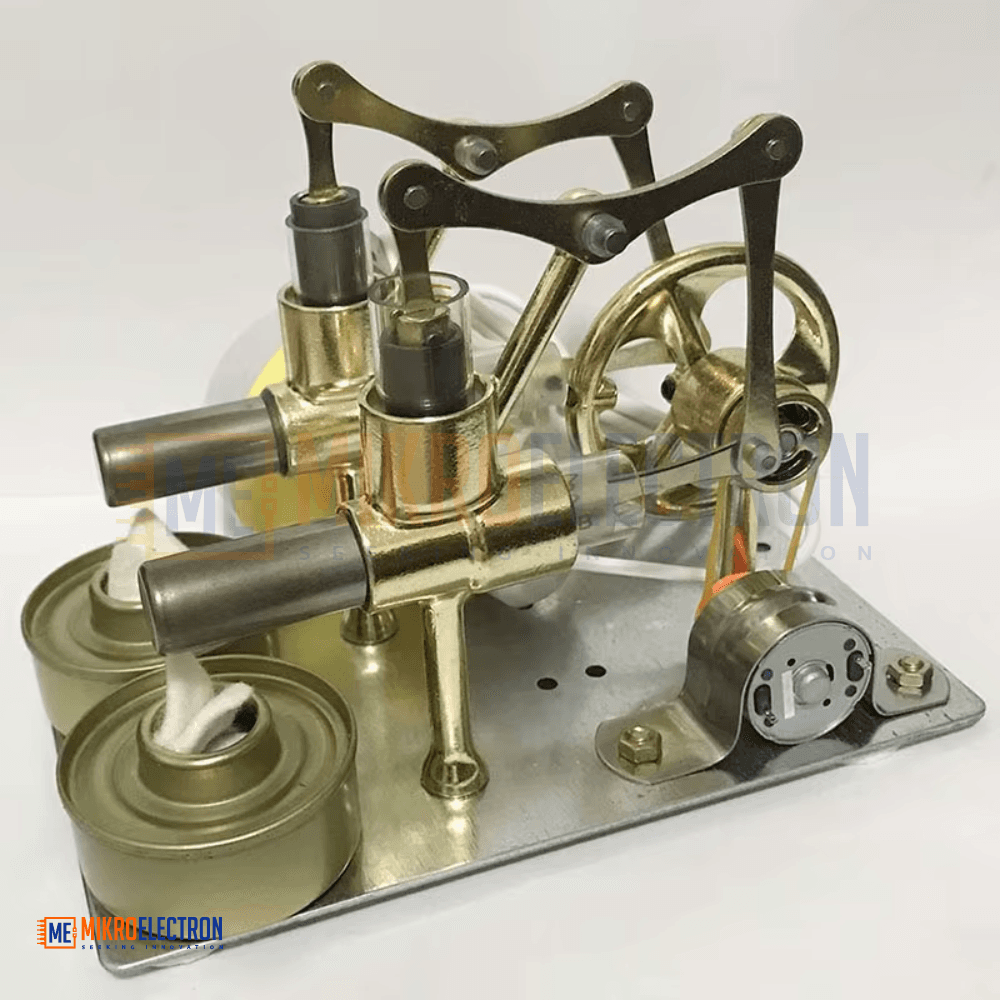
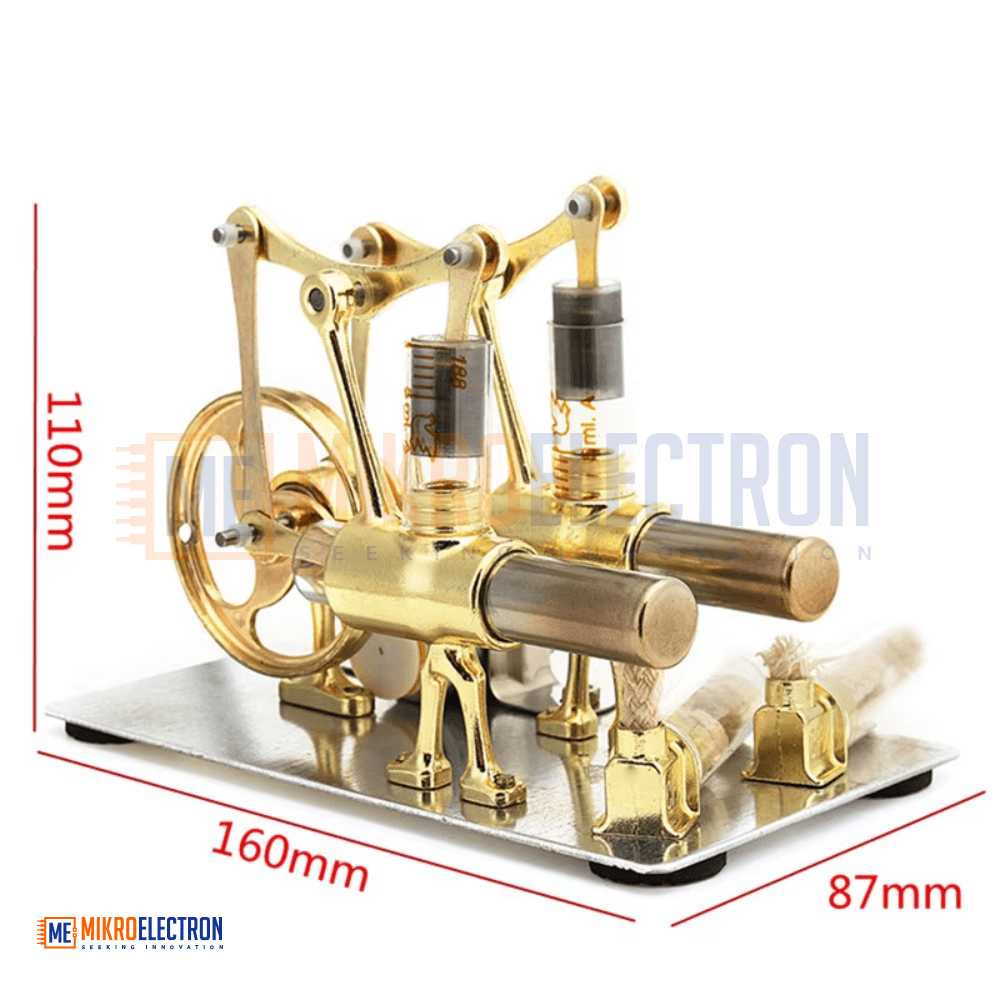
The Thermoacoustic Stirling Engine Power Generation Model A is a fully functional double-cylinder Stirling engine designed for educational demonstrations, STEM learning, and physics experiments. Built from premium aluminum alloy and glass, this miniature model converts heat energy from an alcohol lamp into mechanical motion and then into electrical energy, capable of powering an included LED bulb. It vividly demonstrates principles of thermodynamics, aerodynamics, and power generation. Compact at 160 × 87 × 110 mm, it's ideal for classroom teaching, science fair projects, and hands-on learning for students aged 12 and above, cultivating genuine interest in physics and engineering.
نموذج محرك ستيرلينغ الحراري الصوتي لتوليد الطاقة (Model A) هو محرك ستيرلينغ ثنائي الأسطوانات كامل الوظائف مصمم للـ العروض التعليمية وتعلم STEM والتجارب الفيزيائية. مصنوع من سبيكة ألومنيوم عالية الجودة وزجاج، يحول هذا النموذج المصغر الطاقة الحرارية من مصباح كحول إلى حركة ميكانيكية ثم إلى طاقة كهربائية، قادر على تشغيل مصباح LED مرفق. يوضح بشكل مرئي مبادئ الديناميكا الحرارية والديناميكا الهوائية وتوليد الطاقة. بأبعاد مدمجة 160 × 87 × 110 ملم، فهو مثالي للتدريس الصفي ومشاريع المعارض العلمية والتعلم العملي للطلاب من عمر 12 عاماً فأكثر، ويعزز الاهتمام الحقيقي بالفيزياء والهندسة.
The Thermoacoustic Stirling Engine Power Generation Model A is a beautifully crafted double-cylinder Stirling engine that combines precision engineering, educational value, and hands-on scientific discovery in a single desktop-sized model. This working miniature engine demonstrates one of the most elegant thermodynamic cycles ever invented — the Stirling cycle — first patented by Scottish inventor Robert Stirling in 1816.
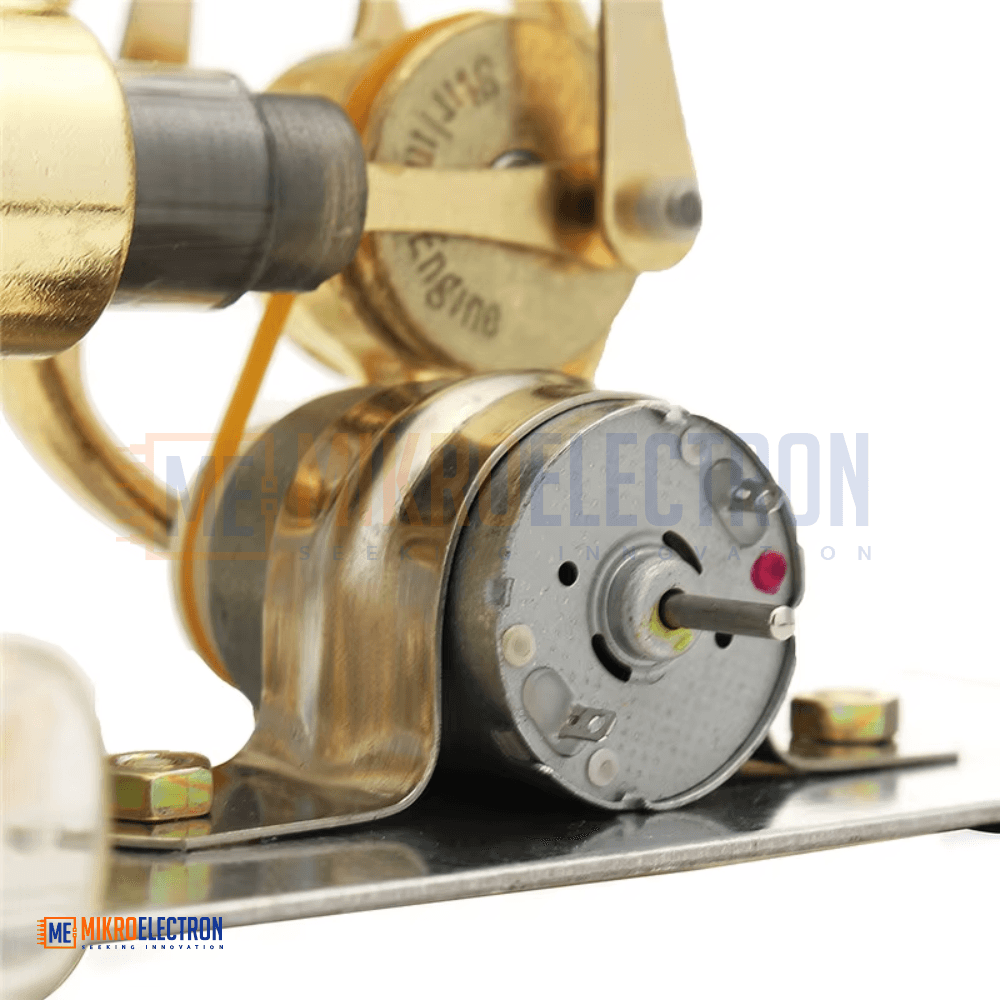
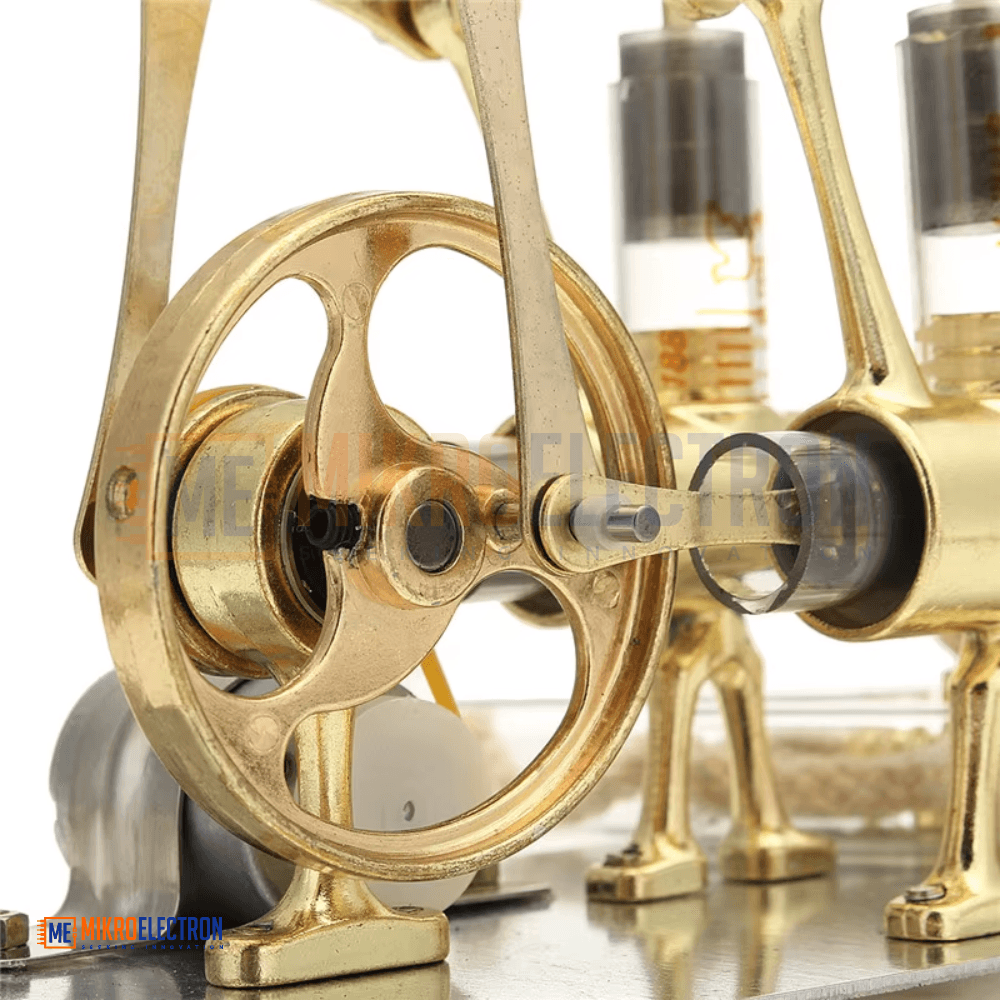
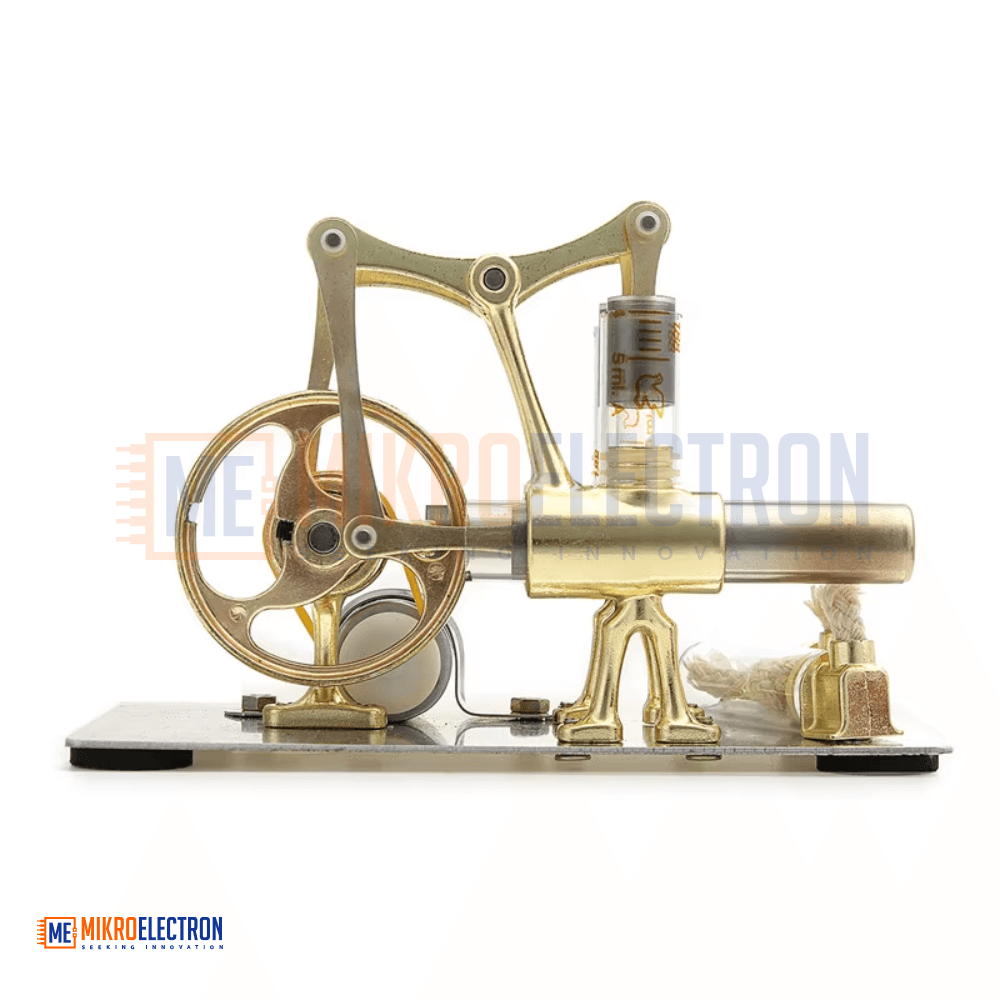
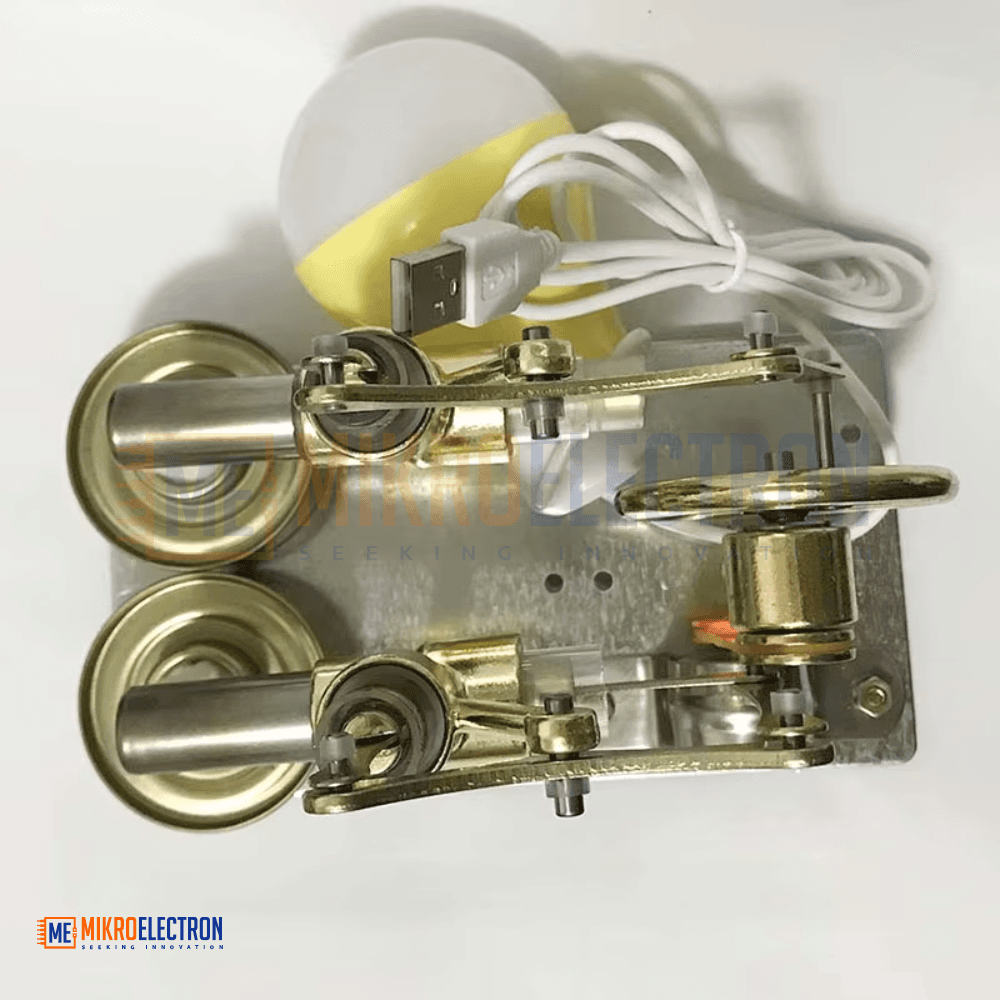
The model operates on the principle of a closed-cycle external combustion engine, in which heat from an alcohol lamp causes air (or another working gas) inside a sealed cylinder to expand and contract cyclically. This alternating expansion and compression drives the pistons, which in turn rotate the flywheel through a connecting rod mechanism. The rotating flywheel is coupled to a small DC generator, which produces enough electrical power to illuminate the included LED bulb, providing a stunning visual demonstration of the conversion of heat energy → mechanical energy → electrical energy.
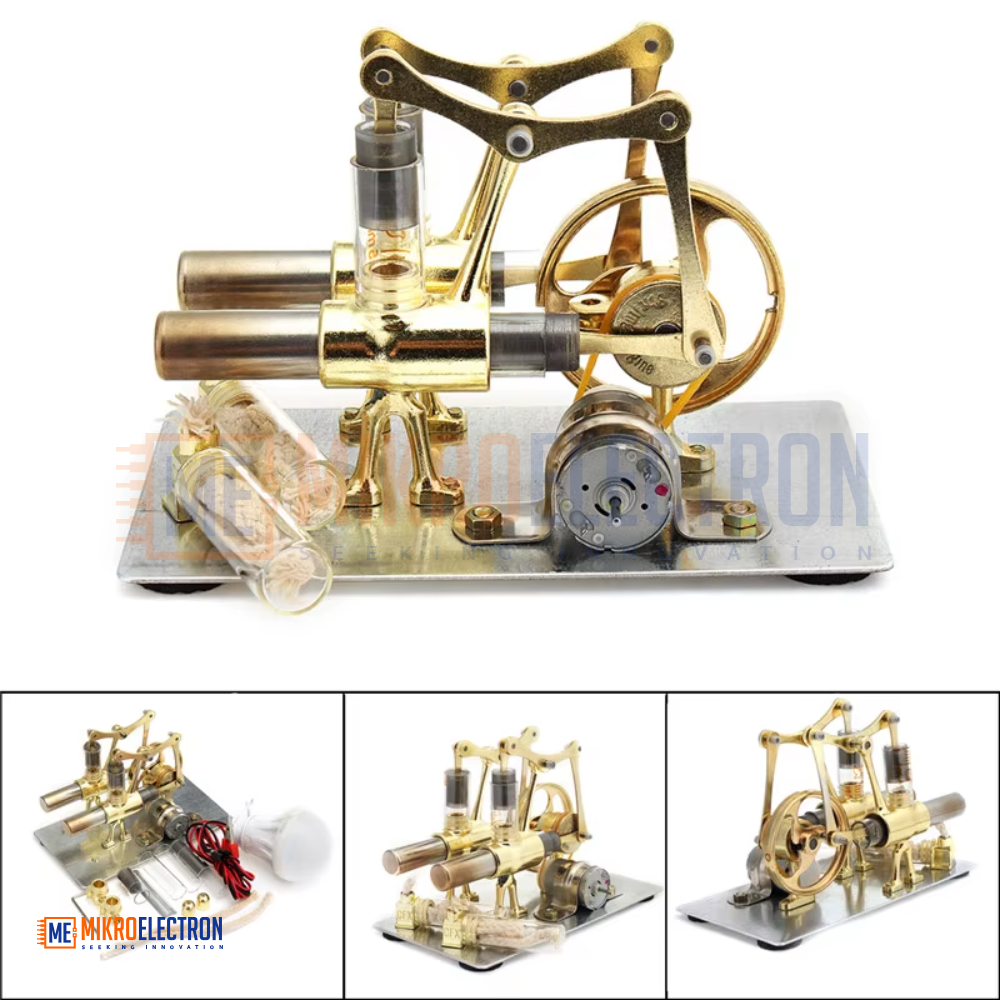
Constructed from high-quality aluminum alloy with glass cylinders for maximum visibility of the internal moving parts, this model showcases the beauty of mechanical engineering. The transparent cylinders allow observers to see the pistons in motion, the flywheel spinning, and the entire thermodynamic cycle unfolding in real time — making it an incredibly effective teaching tool for schools, universities, science museums, and home learning.
The kit is designed for assembly and experimentation, encouraging students to engage directly with the engine, understand its components, and learn through observation. It vividly demonstrates key physics concepts including thermodynamics, aerodynamics, conservation of energy, mechanical linkages, electromagnetic induction, and the fundamentals of power generation.
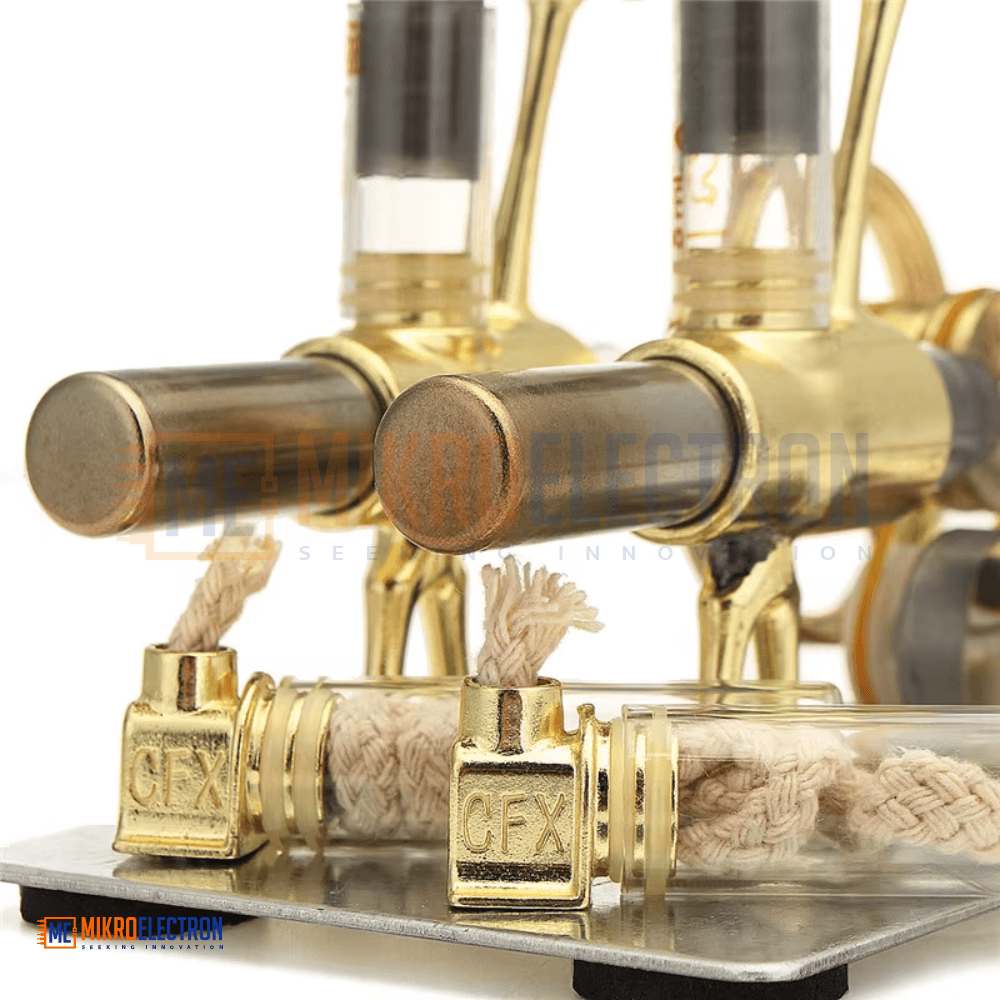
To operate, users fill the included alcohol lamp with 95% purity alcohol (anhydrous industrial alcohol is preferred), position it beneath the heating cylinder, and ignite it. After approximately 2 minutes of preheating, a gentle spin of the flywheel starts the engine, which then continues to run autonomously as long as heat is supplied. The generator output can be connected directly to the included LED, which lights up as the engine spins.
This model is not just a toy — it is a genuine working scientific instrument that brings abstract physics concepts to life. It's ideal for cultivating a lifelong interest in science and engineering in young learners, while also serving as an impressive desktop display or collector's item for adults.
Specifications
| Parameter | Value |
|---|---|
| Product Name | Double Cylinder Stirling Engine Model A |
| Type | Thermoacoustic Stirling Engine with power generation |
| Configuration | Double cylinder (2-cylinder) |
| Material | Aluminum alloy + Glass cylinders |
| Color | Silver / Gold |
| Overall Dimensions | 160 × 87 × 110 mm |
| Heat Source | Alcohol lamp (included) |
| Recommended Fuel | 95% purity alcohol (anhydrous preferred) |
| Fuel Reservoir Fill Level | Less than two-thirds of the lamp |
| Preheating Time | Approximately 2 minutes |
| Output | Small DC generator with LED bulb included |
| Power Generation | Sufficient to light the included LED |
| Assembly Required | Yes — user assembly and setup |
| Cylinder Type | Sealed transparent glass |
| Recommended Age | 12 years and above |
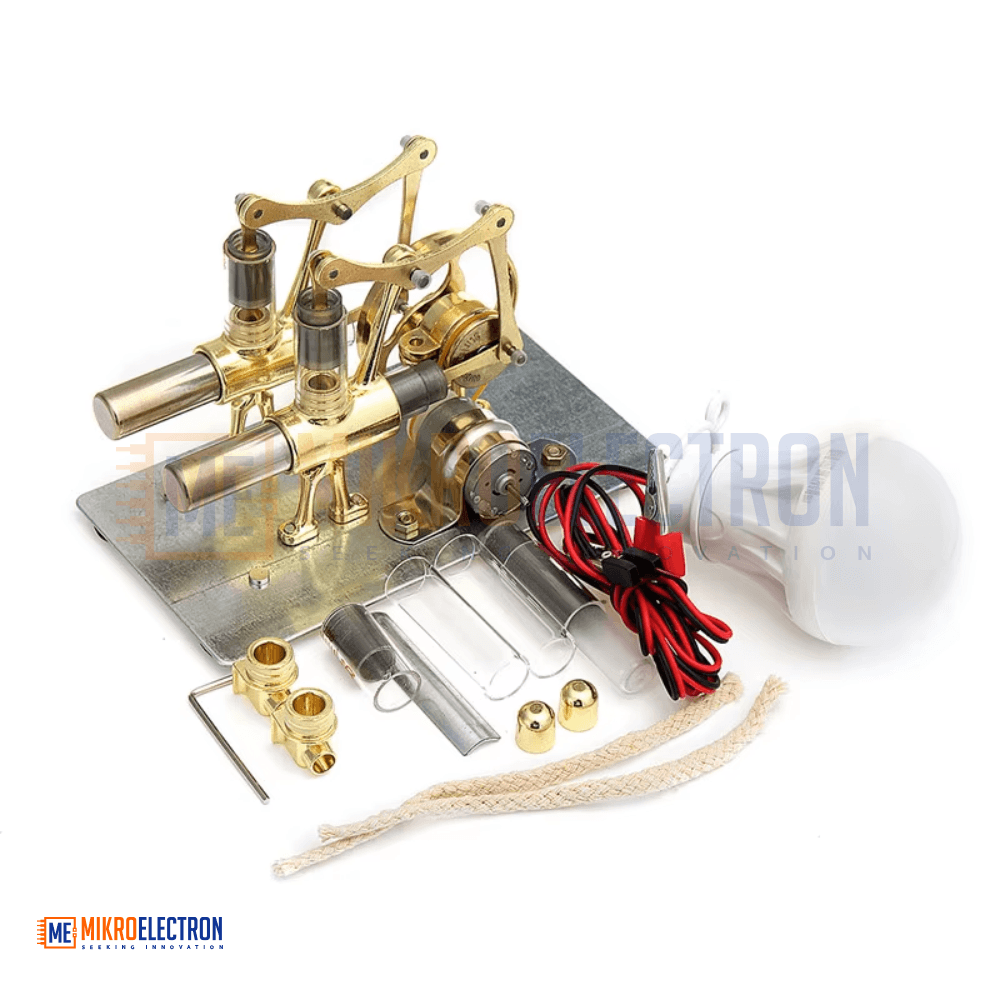
| Included Accessories | Engine base, cylinders, flywheel, alcohol lamp, LED, wires, wicks, tools |
| Applications | Educational, demonstration, decorative |
Safety Notes:
- Recommended for ages 12 and above with adult supervision
- Do not touch the engine during operation — hot components and moving parts
- Do not overtighten the cylinder nuts — glass may break
- Keep the alcohol lamp wick away from the glass cylinders
- Never force the piston connecting rod at the front end — it may break
- If steam accumulates excessively, the engine will stop — allow it to cool before restarting
Applications
- Physics education — thermodynamics and heat engines
- STEM classroom demonstrations at schools and universities
- Science fair projects and student research
- Home learning and hands-on experimentation
- Educational toys for children over 12 years old
- Science museum exhibits and displays
- Teaching aids for aerodynamics and mechanical engineering
- Desktop display and collector's item
- Demonstrations of energy conversion — heat to mechanical to electrical
- Introduction to power generation principles
- Learning about flywheel dynamics and connecting rod mechanisms
- Engineering appreciation for students and hobbyists
- Gift for science enthusiasts, engineers, and inventors
- Homeschool science curriculum support
- STEAM (Science, Technology, Engineering, Arts, Math) education