
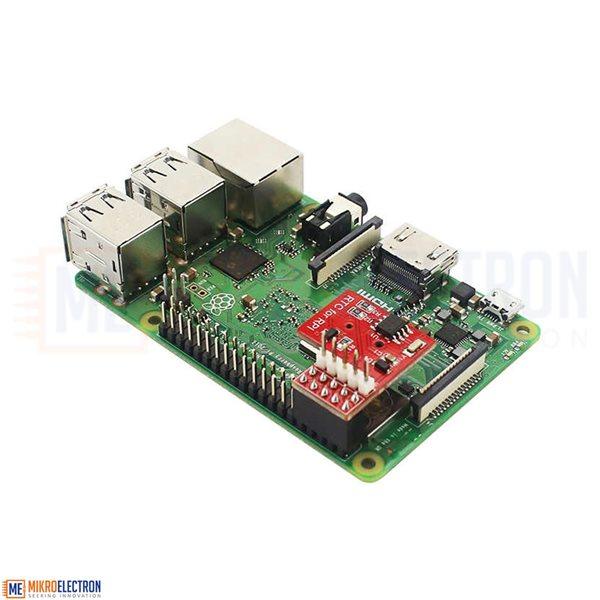
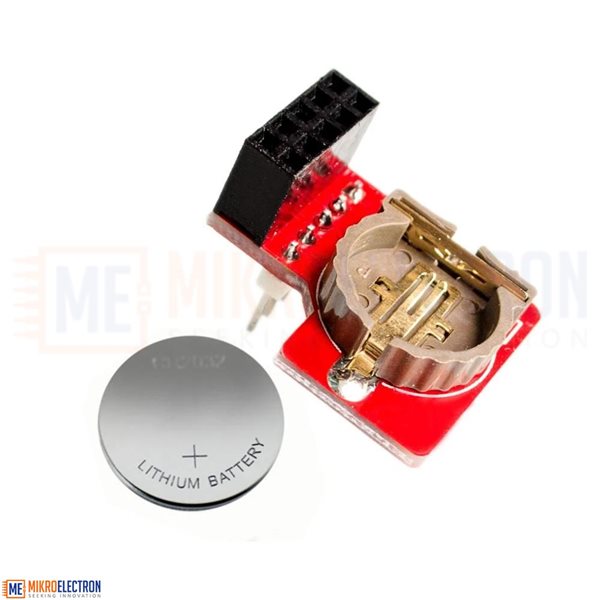
DS1307 Raspberry Pi RTC Real Time Clock Module Replaceable Battery IIC I2C Serial Port (Without Battery)
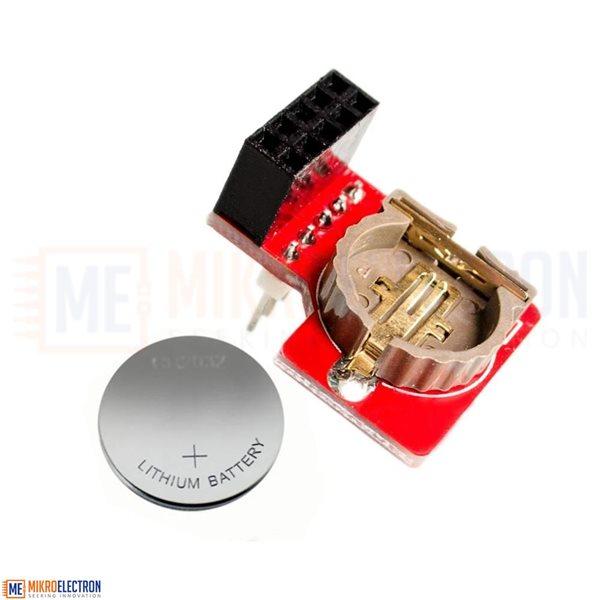
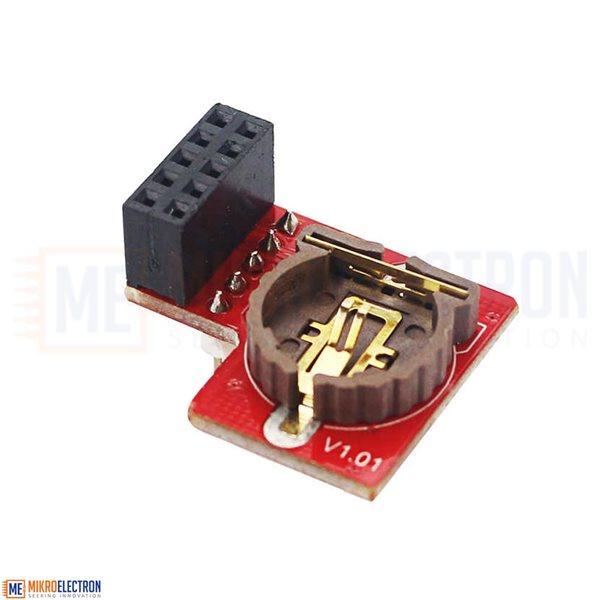
DS1307 RTC Module for Raspberry Pi is a real-time clock board that keeps accurate time even when the Raspberry Pi is powered off. Built around the Maxim DS1307 chip, it communicates with the Raspberry Pi over the I2C bus at address 0x68, making integration straightforward. The module supports a replaceable CR1220 button cell battery (not included) to maintain timekeeping during power loss. With ±2ppm precision and compatibility across Raspberry Pi B, A+, B+, 2 Model B, and 3 Model B, this module is ideal for projects requiring reliable date and time tracking, such as data logging, scheduling, and embedded automation systems.
وحدة الساعة الفعلية DS1307 لراسبيري باي هي لوحة ساعة فعلية تحافظ على الوقت الدقيق حتى عند انقطاع التغذية الكهربائية عن جهاز راسبيري باي. تعتمد هذه الوحدة على شريحة Maxim DS1307، وتتصل بجهاز راسبيري باي عبر ناقل I2C على العنوان 0x68، مما يجعل دمجها أمراً سهلاً. تدعم الوحدة بطارية قرصية قابلة للاستبدال من نوع CR1220 (غير مرفقة) للحفاظ على عمل الساعة عند فقدان الطاقة. وبدقة تصل إلى ±2 جزء في المليون، وتوافق مع إصدارات راسبيري باي B وA+ وB+ و2 Model B و3 Model B، تُعد هذه الوحدة مثالية للمشاريع التي تتطلب تتبعاً موثوقاً للتاريخ والوقت، مثل تسجيل البيانات والجدولة الزمنية وأنظمة التحكم الآلي المدمجة.
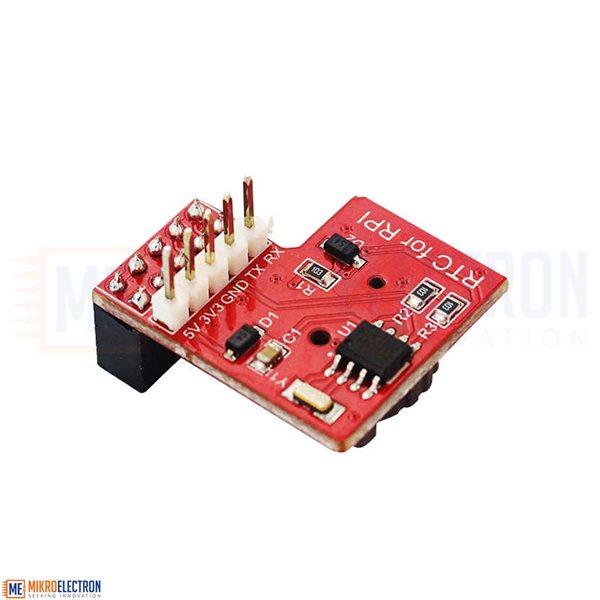
This RTC (Real Time Clock) module is purpose-built for the Raspberry Pi family of single-board computers. At its core sits the Maxim DS1307 chip, a low-power clock IC that tracks seconds, minutes, hours, day of the week, date, month, and year, automatically adjusting for months with fewer than 31 days and including leap-year compensation. The module communicates with the Raspberry Pi through the I2C (IIC) bus, a simple two-wire serial protocol, which keeps wiring minimal while allowing the Pi's GPIO pins to remain free for other peripherals.
One of the standout features of this module is its serial port for online debugging via TTL, which gives developers a convenient way to monitor and troubleshoot the clock circuit directly, independent of the I2C connection. The board also includes a socket for a CR1220 button-cell battery (sold separately), which keeps the clock running accurately even when the Raspberry Pi itself is completely powered down — a key advantage for applications where consistent timekeeping across reboots or power cycles is essential.
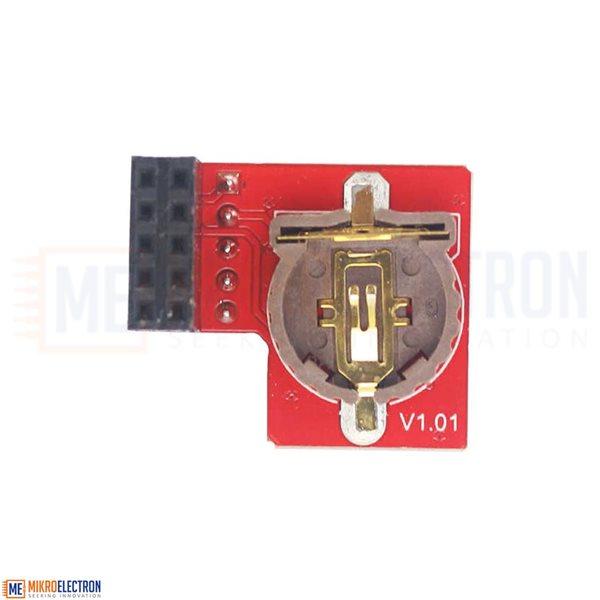
Designed with broad hardware compatibility in mind, this module works across multiple generations of Raspberry Pi boards, including the original Model B, A+, B+, 2 Model B, and 3 Model B, connecting via a standard 2x5 pin, 2.54mm pitch header.
Specifications
| Parameter | Detail |
|---|---|
| RTC Chip | DS1307 (Maxim) |
| Battery Model | CR1220 button cell (not included) |
| Operating Voltage | 5V |
| I2C Address | 0x68 |
| Clock Precision | ±2ppm (at 0°C–40°C) |
| Time Units Tracked | Second, Minute, Date, Week, Month, Year |
| Operating Temperature Range | -10°C to +85°C |
| Compatible Devices | Raspberry Pi B, A+, B+, 2 Model B, 3 Model B |
| Interface Connector | 2x5 pin, 2.54mm pitch header |
| Communication Protocol | I2C (IIC) Serial |
| Debug Interface | TTL Serial Port |
Applications
This module is well suited for data logging systems that require accurate timestamps for recorded sensor readings, in projects like weather stations or environmental monitors. It also fits home automation and IoT devices, where scheduled tasks (such as lighting or irrigation control) depend on a dependable clock source independent of network time. Additionally, it is useful in embedded control systems such as security systems, attendance trackers, and data acquisition units, as well as in educational and prototyping projects where students or makers want to learn I2C communication and real-time clock integration with the Raspberry Pi.