
Ambient Light Sensor - VEML7700 (Qwiic)
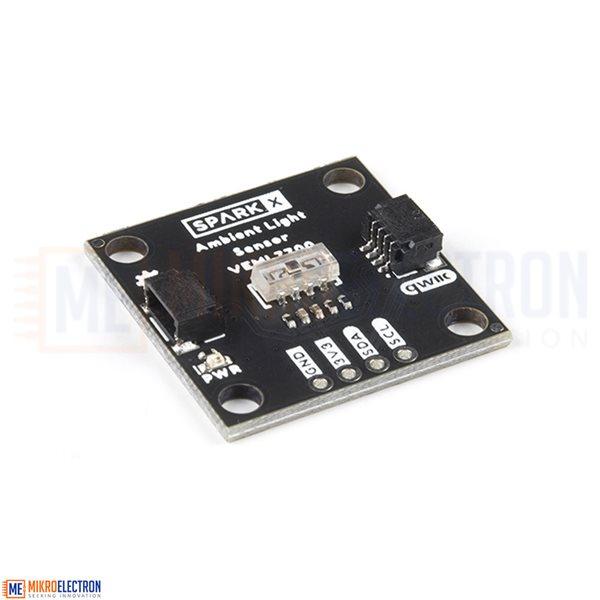
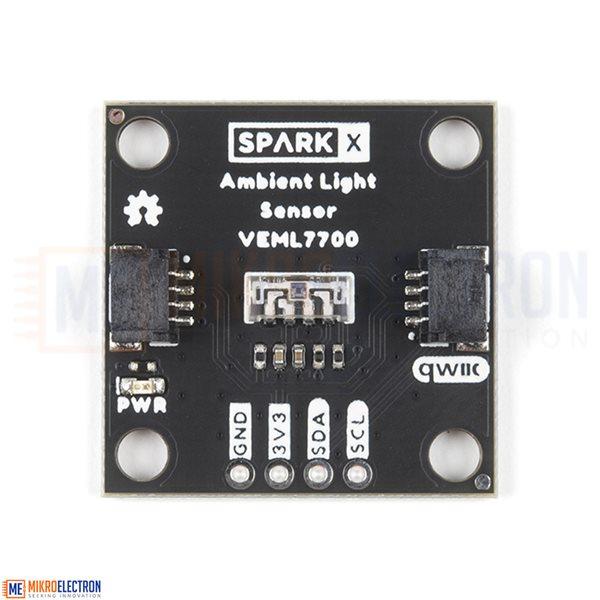
The SparkFun Ambient Light Sensor – VEML7700 (Qwiic) is a high-accuracy, 16-bit digital ambient light sensor that measures illuminance directly in lux, from 0 lx up to ~167,000 lx, with resolution as fine as 0.005 lx/count. Featuring Filtron™ human-eye response, O-Trim™ tolerance trimming, flicker noise rejection, and temperature compensation, it provides reliable readings in any lighting condition. The board uses the Qwiic I²C interface for solderless connection and is ideal for smart lighting, displays, IoT, and environmental monitoring projects.
مستشعر الإضاءة المحيطة SparkFun – VEML7700 (Qwiic) هو مستشعر إضاءة رقمي عالي الدقة بدقة 16 بت يقيس شدة الإضاءة مباشرة بوحدة اللوكس (lx)، بنطاق يمتد من 0 لوكس وحتى نحو 167,000 لوكس، وبدقة تصل إلى 0.005 لوكس لكل عدّة. يعتمد على تقنيات Filtron™ المحاكية لاستجابة العين البشرية، وO-Trim™ للحد من التشتت، إضافة إلى رفض ضوضاء الوميض والتعويض الحراري. مزوّد بواجهة Qwiic I²C لتوصيل سهل بدون لحام، وهو مثالي لـأنظمة الإضاءة الذكية، الشاشات، إنترنت الأشياء، والمراقبة البيئية.
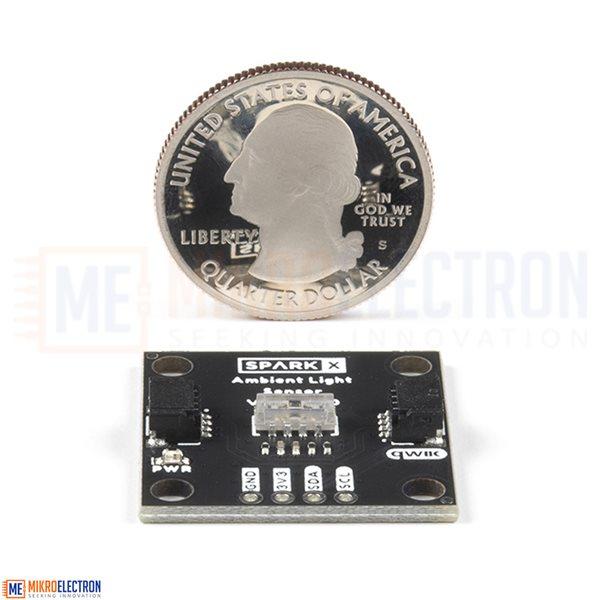
The SparkFun VEML7700 Ambient Light Sensor Breakout is a precision, digital lux meter on a chip, designed to replace traditional analog photoresistors and photodiodes with a fully calibrated, microcontroller-friendly solution. The heart of the board is Vishay's VEML7700, a tiny 16-bit resolution ambient light sensor that integrates a high-sensitivity photodiode, a low-noise amplifier, and an A/D converter into a single miniature 6.8 × 3.0 × 2.5 mm package — and reports light intensity directly over I²C.
What makes the VEML7700 stand out is its Filtron™ optical filter technology, which gives the sensor a spectral response very close to that of the human eye. This means that the lux readings genuinely reflect how bright a scene appears to a person — not just raw photon counts. Combined with O-Trim™ factory trimming that keeps output tolerance within ±10%, the sensor provides accurate, consistent results between units without requiring custom calibration.
The sensor's 16-bit dynamic range lets it measure everything from near-total darkness (0 lx) to bright direct sunlight (~167,000 lx) with a resolution as fine as 0.005 lx/count, making it suitable for both indoor and outdoor applications. Built-in 100 Hz and 120 Hz flicker rejection filters out interference from mains-driven fluorescent and LED lighting, while excellent temperature compensation keeps readings stable across operating conditions.
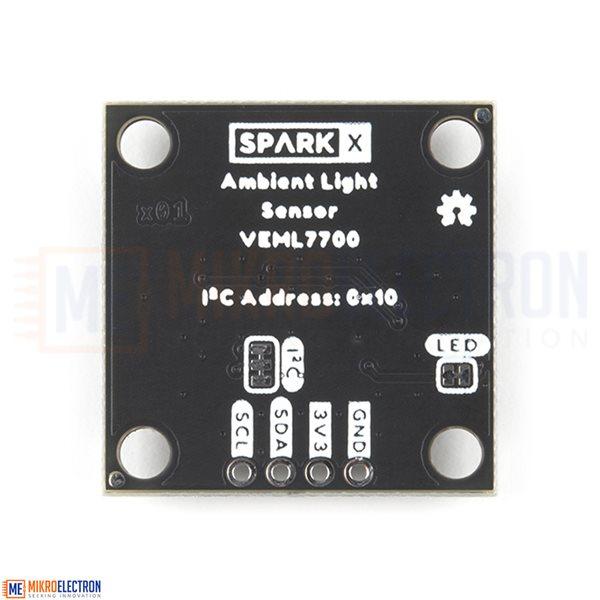
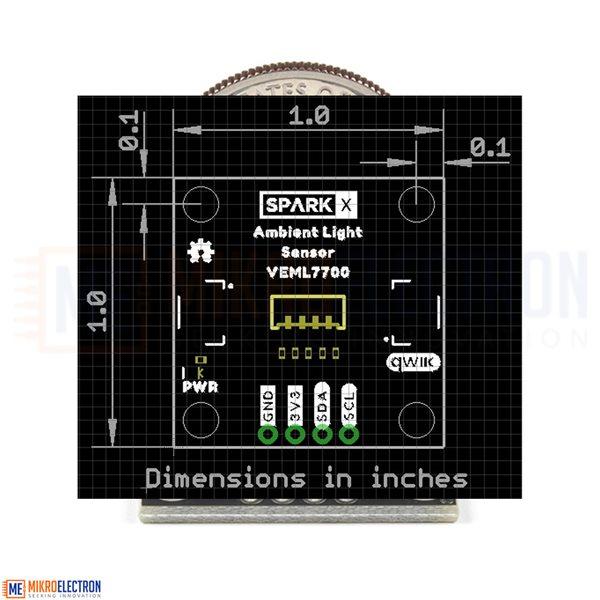
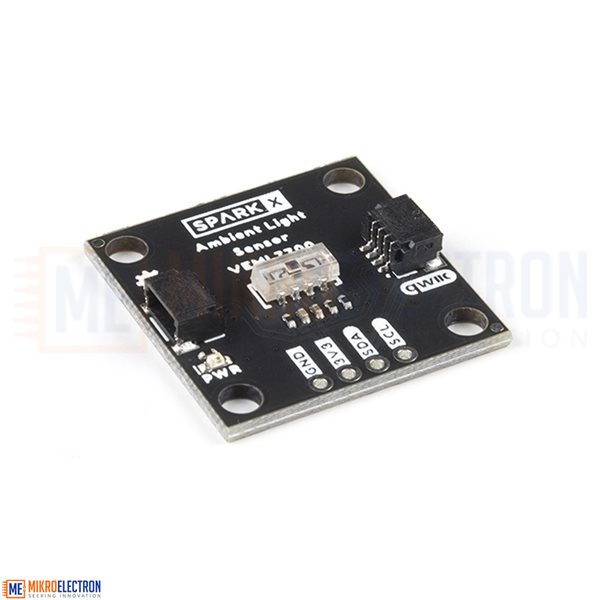
The board is part of SparkFun's Qwiic ecosystem, with two Qwiic connectors, I²C breakout pins, configurable pull-up resistors, and a configurable power LED. SparkFun provides a dedicated Arduino library that automatically converts raw sensor readings into lux values, handling gain and integration-time compensation in the background.
Specifications
- Sensor IC: Vishay VEML7700
- Output: Direct lux (lx) reading over I²C
- Resolution: 16-bit (down to 0.005 lx/count)
- Measurement Range: 0 lx to ~167,000 lx
- Spectral Response: Close to the human eye (Filtron™ technology)
- Output Tolerance: ≤ ±10% (O-Trim™ factory trimming)
- Flicker Rejection: 100 Hz and 120 Hz (mains lighting compensation)
- Temperature Compensation: Built-in
- Interrupt Outputs: High and low threshold windows with interrupt flag
- Power Modes: Active and software shutdown mode
- Supply Voltage: 3.3V (typical), 2.5V (min), 3.6V (max)
- Typical Current Draw:
- Shutdown: 0.5 µA
- Refresh time 4100 ms: 2 µA
- Refresh time 100 ms: 45 µA
- Interface: I²C (Qwiic)
- I²C Address: 0x10 (unshifted)
- Connectors: 2 × Qwiic + I²C breakout pins
- Pull-up Resistors: Configurable (cuttable jumper)
- Power LED: Configurable (cuttable jumper)
- Library Support: Official SparkFun VEML7700 Arduino Library
Applications
- Automatic display brightness control (phones, tablets, LCD panels, e-paper)
- Smart lighting systems that dim or adjust based on ambient conditions
- Smart home and IoT environmental sensors
- Photography light meters and exposure helpers
- Greenhouse and plant-growing light monitoring
- Solar tracker and PV-system performance studies
- Weather stations and outdoor environment monitoring
- Office and classroom lighting optimization (energy saving)
- Industrial work-safety ambient-light monitoring
- Wearable devices and outdoor activity sensors
- Astronomy and night-sky brightness studies
- STEM and university physics / electronics labs
- Aquarium and terrarium lighting control