
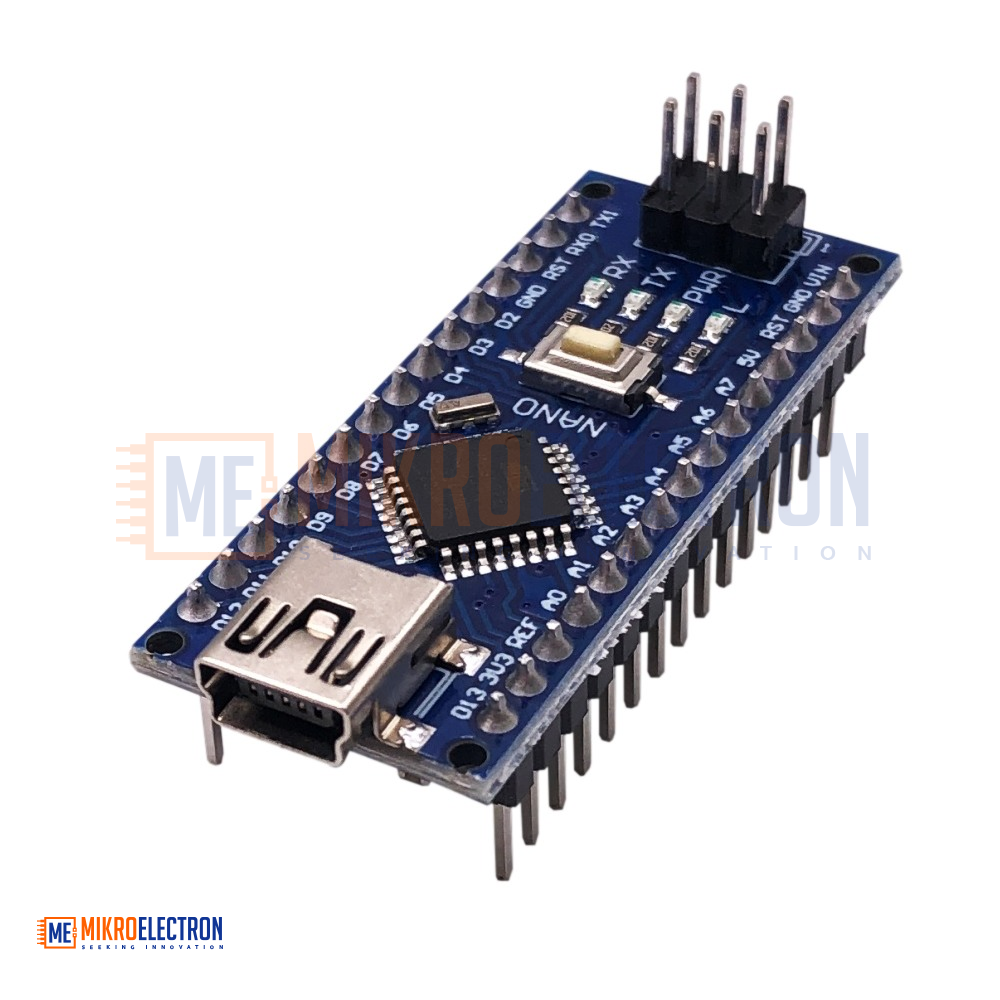
ARDUINO NANO V3.O Copy class B
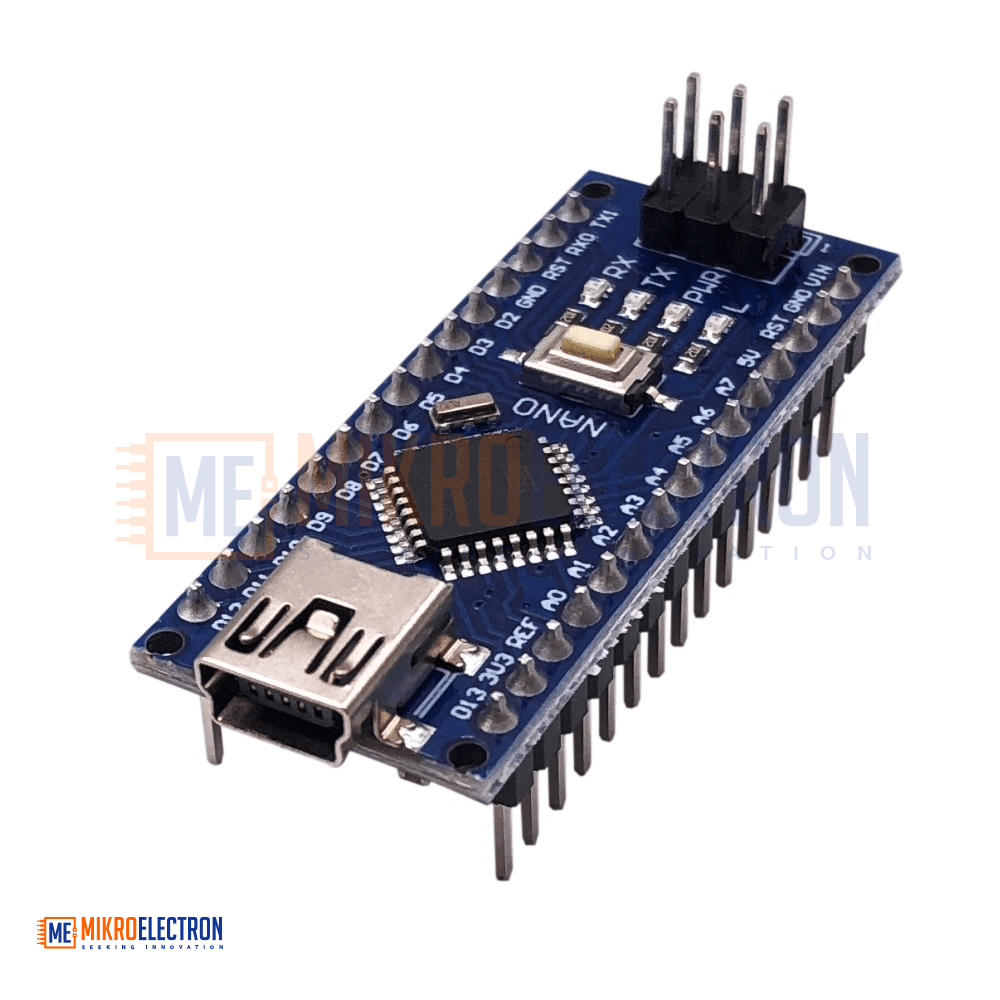
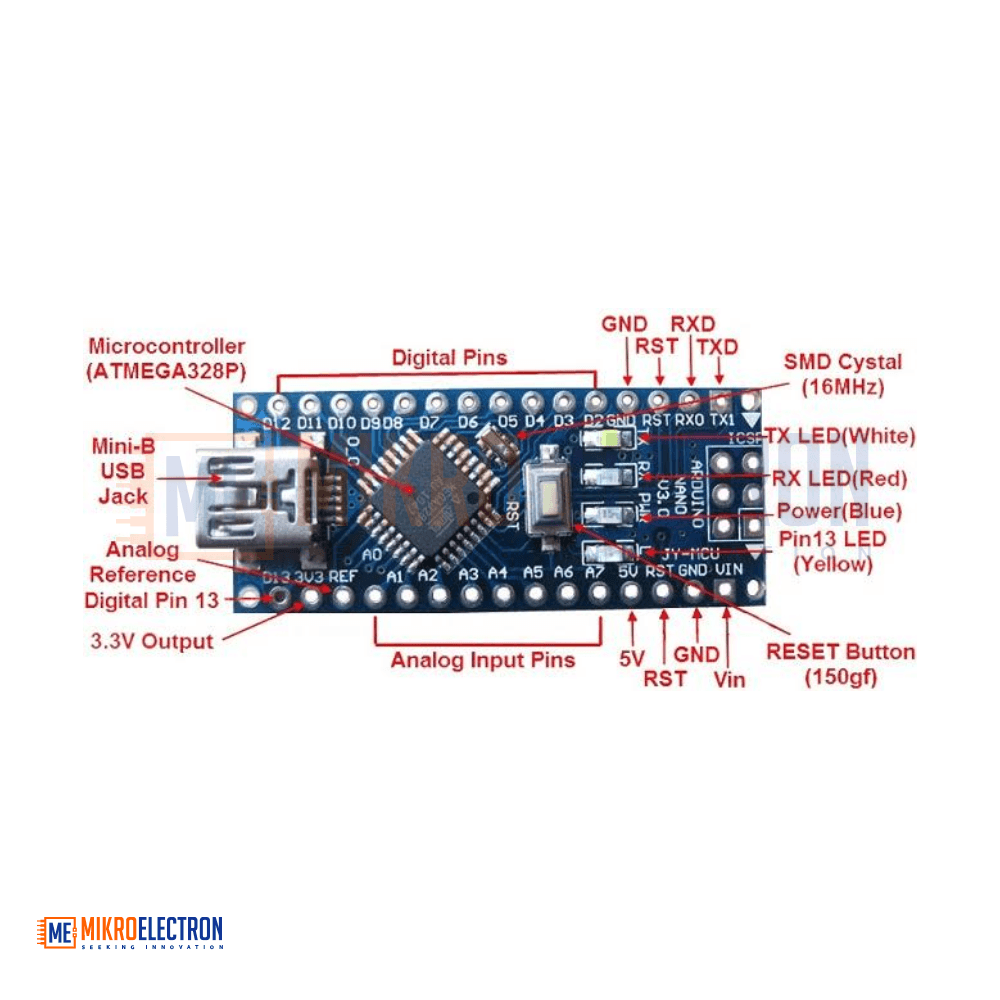
Arduino Nano V3.0 Copy Class B is a compact and powerful microcontroller development board based on the ATmega328P processor. It provides the same functionality as the Arduino Uno in a much smaller form factor, making it ideal for embedded systems, robotics, automation, and portable electronic projects. With 14 digital I/O pins, 8 analog inputs, PWM outputs, and a 16 MHz clock speed, the board supports a wide range of sensors, modules, and peripherals. Its breadboard-friendly design and compatibility with the Arduino IDE make it an excellent choice for students, makers, and professional developers.
Arduino Nano V3.0 Copy Class B هي لوحة تطوير إلكترونية صغيرة الحجم تعتمد على المتحكم الدقيق ATmega328P. توفر نفس إمكانيات لوحة Arduino Uno تقريبًا ولكن بحجم أصغر، مما يجعلها مناسبة للمشاريع المدمجة، والروبوتات، وأنظمة التحكم والأتمتة. تحتوي على 14 منفذ إدخال وإخراج رقمي و8 مداخل تناظرية مع دعم مخارج PWM وسرعة تشغيل تبلغ 16 ميجاهرتز. يتميز تصميمها بسهولة التركيب على اللوحات التجريبية وتوافقها الكامل مع بيئة Arduino IDE، مما يجعلها خيارًا ممتازًا للطلاب والهواة والمطورين في مختلف التطبيقات الإلكترونية.
Arduino Nano V3.0 Copy Class B is a miniature microcontroller board designed around the reliable ATmega328P microcontroller. Despite its small size, it delivers the full functionality required for a wide range of electronics and embedded development projects.
The board operates at 5V logic level and runs at a clock frequency of 16 MHz, providing stable and efficient performance for sensor interfacing, motor control, data acquisition, and communication tasks. Its compact dimensions make it ideal for projects where space is limited, including robotics, wearable electronics, portable devices, and custom control systems.
The Nano features 14 digital input/output pins, including 6 PWM outputs, and 8 analog input channels, allowing easy connection to sensors, displays, motors, relays, and communication modules. The board includes 32 KB of Flash memory, 2 KB SRAM, and 1 KB EEPROM, providing sufficient resources for most Arduino-based applications.
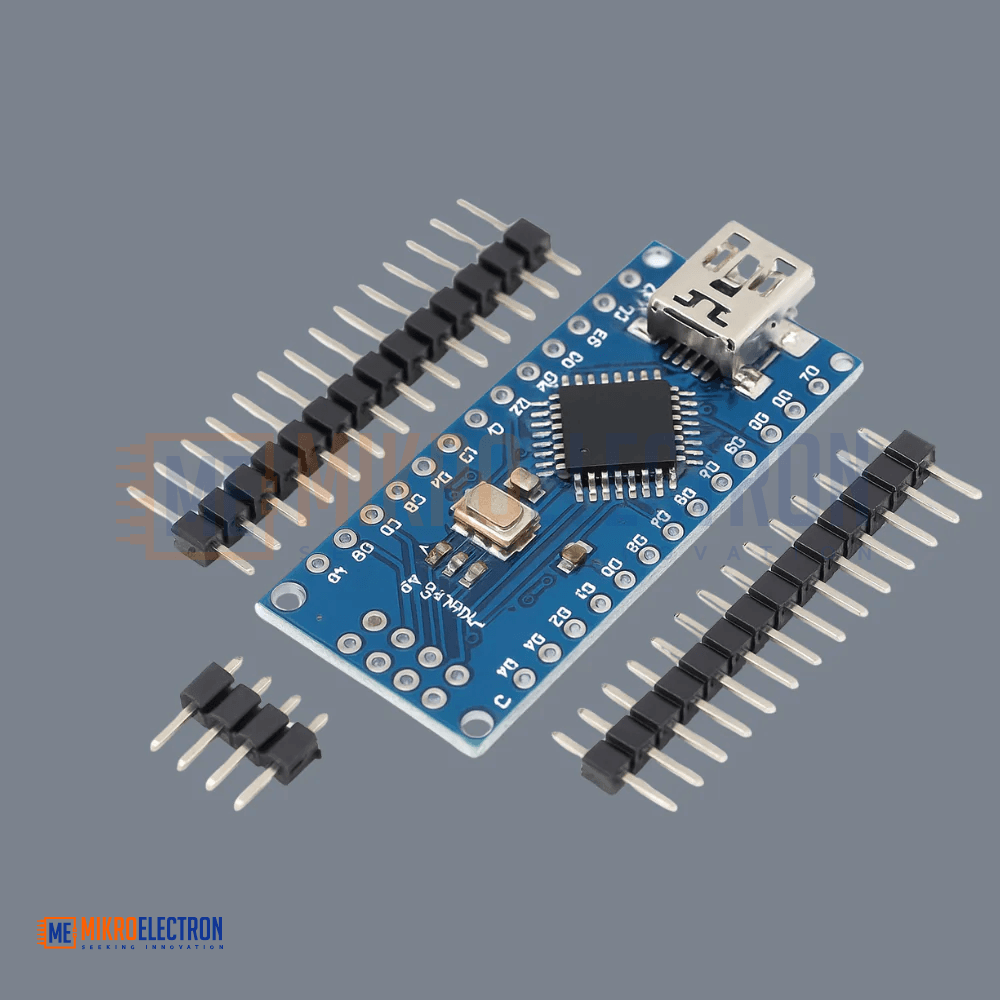
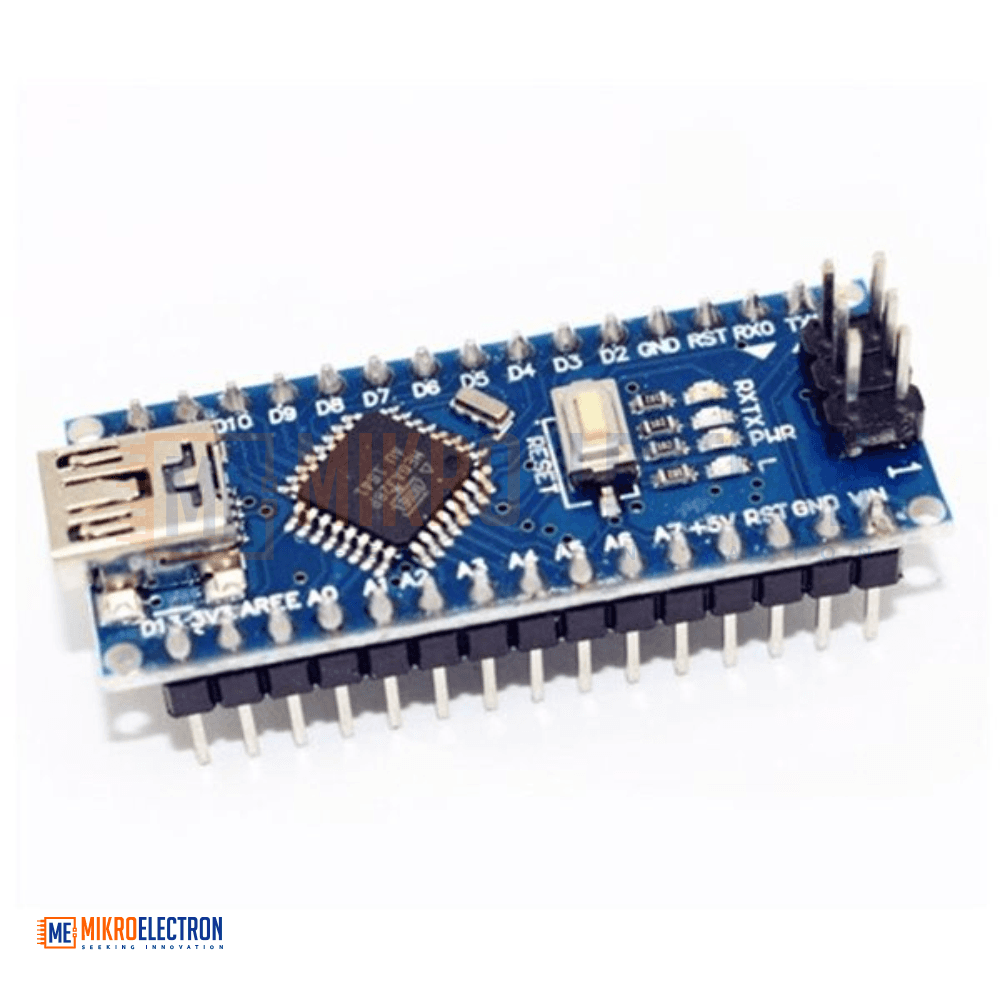
Compatible with the Arduino IDE, the Nano can be programmed using the same libraries and examples available for other Arduino boards. Its breadboard-friendly layout enables quick prototyping and simplifies the development process for both beginners and experienced engineers.
Specifications
Microcontroller
- ATmega328P
Operating Voltage
- 5V Logic Level
Input Voltage
- Recommended: 7V – 12V
- Limits: 6V – 20V
Digital I/O
- 14 Digital Input/Output Pins
- 6 PWM Output Pins
Analog Inputs
- 8 Analog Input Pins
Current
- DC Current per I/O Pin: 40 mA
Memory
- Flash Memory: 32 KB
- 2 KB used by bootloader
- SRAM: 2 KB
- EEPROM: 1 KB
Clock Speed
- 16 MHz
Dimensions
- Width: 0.73 inches (18.5 mm)
- Length: 1.70 inches (43.2 mm)
Programming
- Compatible with Arduino IDE
- Supports Arduino libraries and shields through external connections
Applications
- Embedded systems development
- Robotics projects
- Home automation systems
- Sensor monitoring applications
- Internet of Things (IoT) prototypes
- Data logging systems
- Motor and servo control
- Educational electronics projects
- Portable electronic devices
- Wearable technology projects
- LED lighting control systems
- Smart agriculture applications
- Industrial monitoring systems
- Custom control panels
- DIY electronics and maker projects