

Arduino Nano V3.0 Prototype Sensor Shield
Out Of Stock
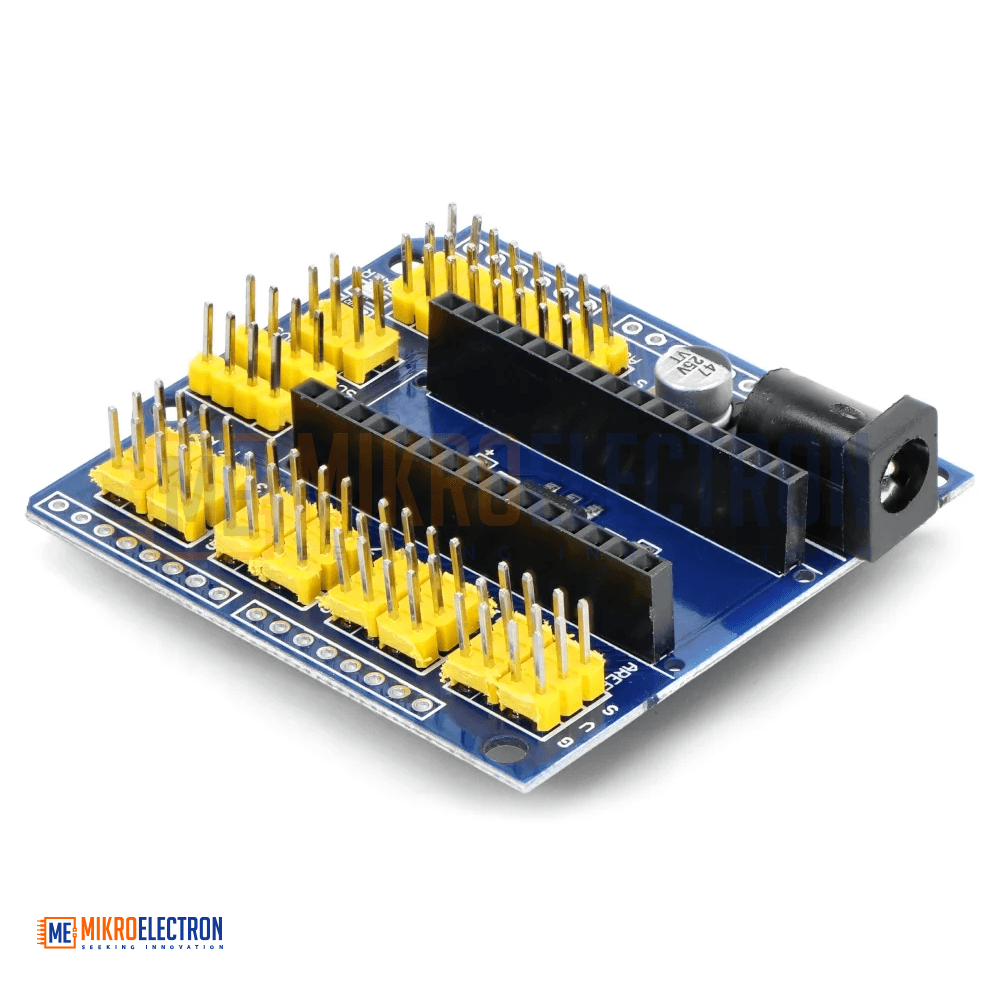
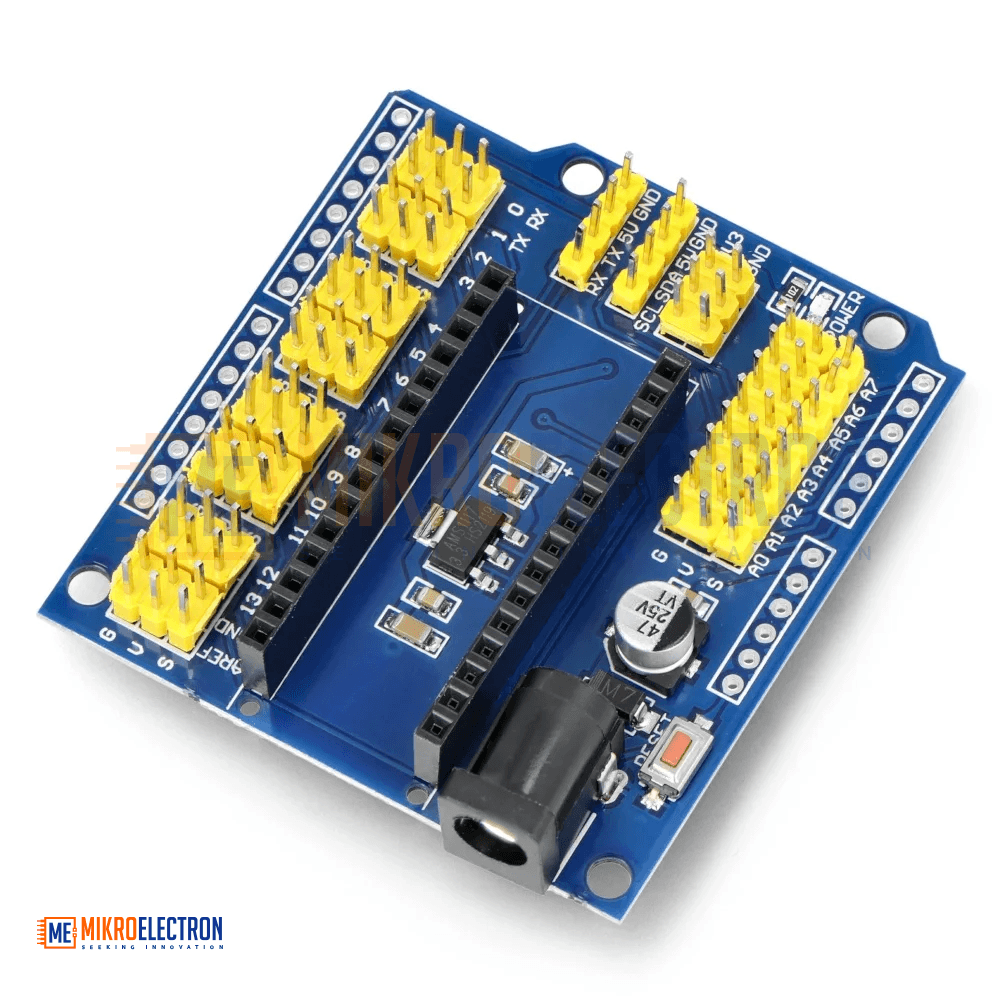
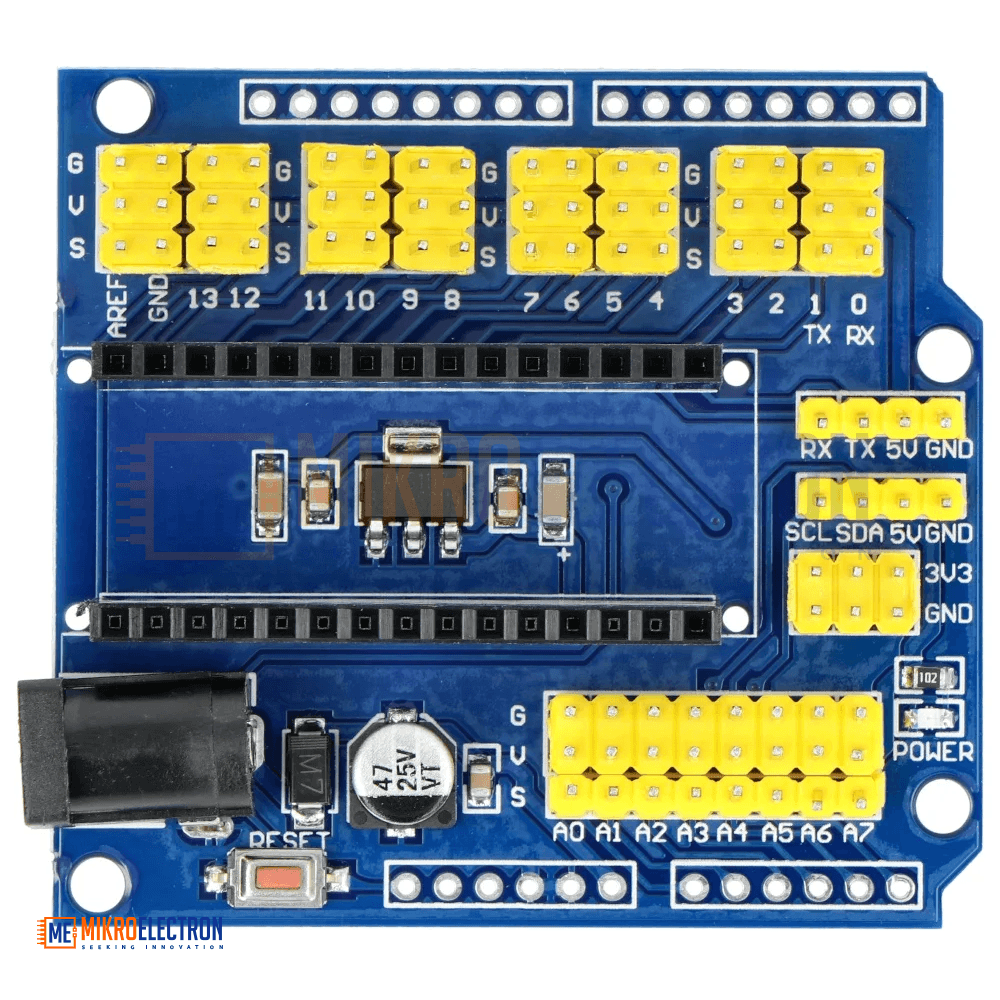
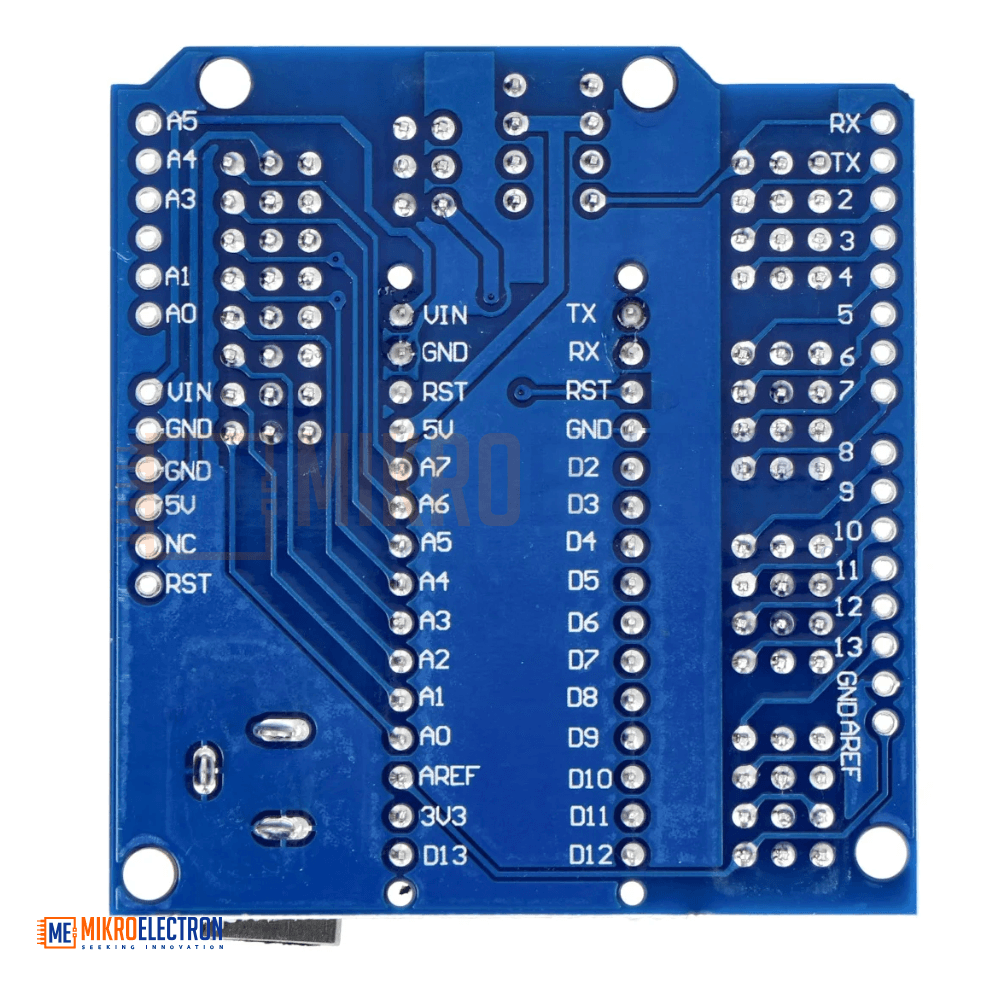
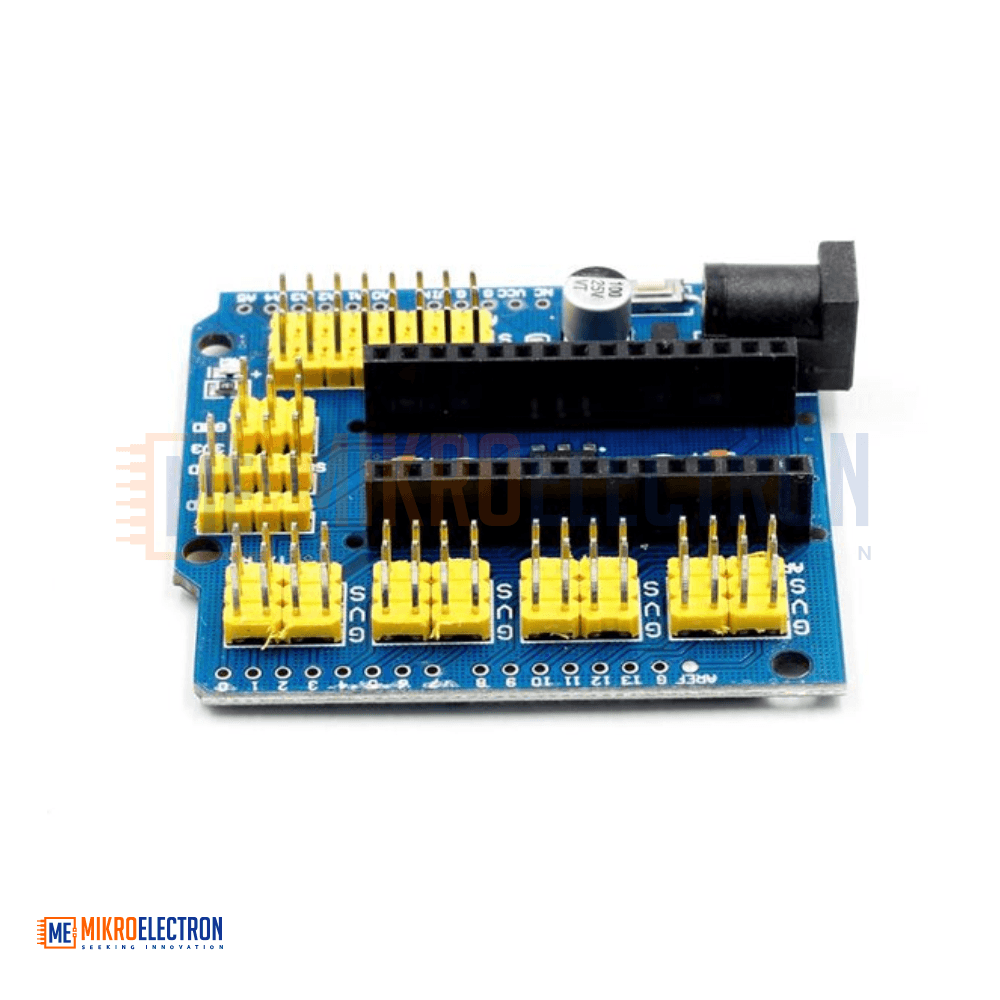
The Arduino Nano V3.0 Sensor Shield is an I/O expansion board that plugs directly onto the Arduino Nano and breaks every pin out into convenient 3-pin headers (Signal, VCC, GND). It supports digital and analog I/O, I2C, and SPI connections, includes a reset button and power LED, and lets you connect sensors, servos, and modules without breadboards or soldering — perfect for prototyping, education, and IoT projects.
شيلد التوسعة Arduino Nano V3.0 للحساسات هو لوحة توسعة تركّب مباشرة فوق لوحة Arduino Nano، وتوزّع جميع الأطراف على هيدرات ثلاثية المسامير (إشارة، 5 فولت، أرضي). يدعم الشيلد مداخل ومخارج رقمية وتناظرية، بالإضافة إلى منافذ I2C وSPI، ويحتوي على زر إعادة تشغيل ومؤشر LED للتشغيل، مما يتيح توصيل الحساسات والسيرفو والوحدات بسهولة دون الحاجة إلى لوحة تجارب أو لحام، وهو مثالي لمشاريع التعليم، النماذج الأولية، وإنترنت الأشياء.
The Arduino Nano V3.0 Sensor Shield is one of the most practical accessories you can pair with a Nano board. It plugs the Nano directly into a pin-aligned socket and re-exposes every I/O pin as a clean, color-coded 3-pin header carrying Signal, VCC (5V), and GND. This is the same connector style used by the vast majority of hobbyist sensors, servos, and modules, which means you can plug components straight in with standard female-to-female jumper wires — no breadboard, no soldering, and no messy power rails.
Beyond the basic GPIO breakout, the shield also brings out dedicated I2C (SDA/SCL) and SPI (MOSI/MISO/SCK/CS) headers, making it well-suited for working with OLED displays, RTC modules, EEPROM, NRF24L01 radios, MPU6050 IMUs, and other communication-heavy peripherals. A reset button is mirrored on the shield for convenience when the Nano is buried inside a project, and a power LED gives a clear indication that the board is energized.
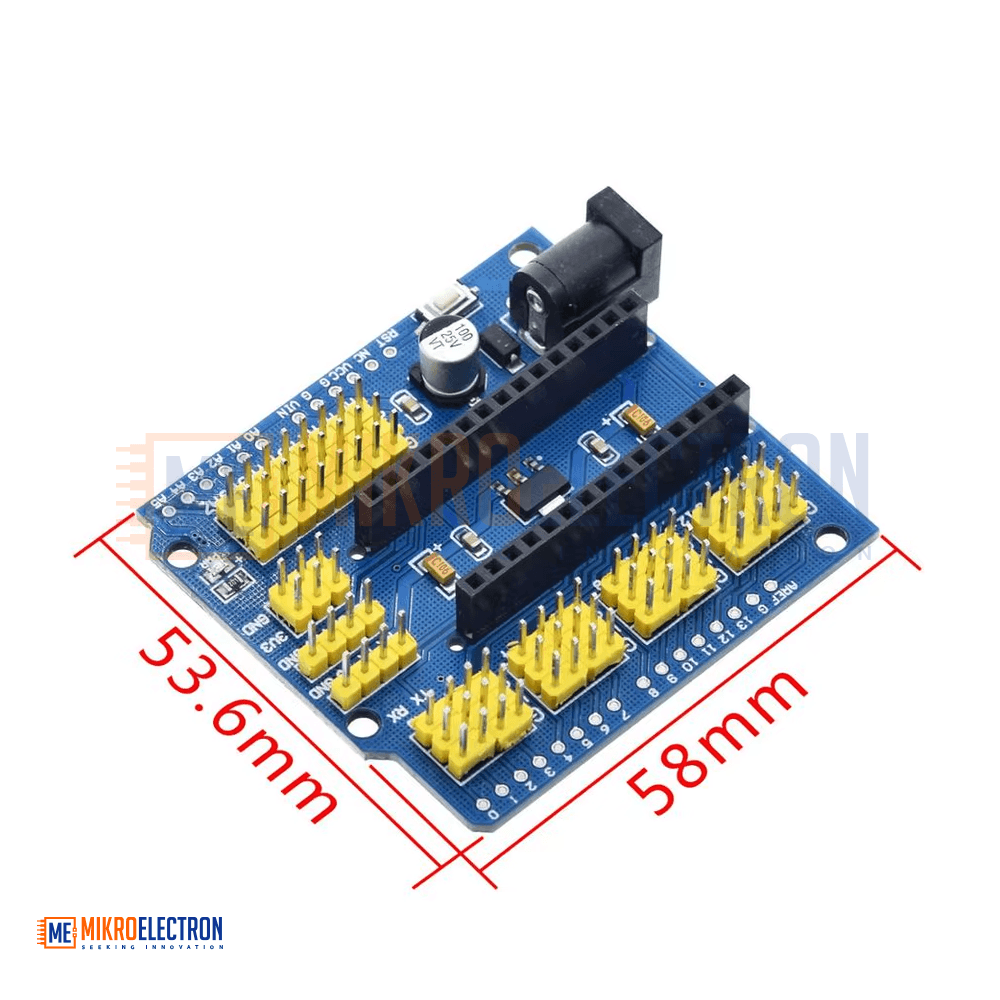
The compact 56 × 54 mm footprint fits easily inside small enclosures, while still leaving room to stack multiple sensors around a robot, weather station, or IoT prototype. Whether you're a student building your first project, a hobbyist prototyping a robot, or a professional mocking up a sensor cluster before designing a custom PCB, this shield dramatically cuts down the wiring time.
Specifications
- Compatibility: Arduino Nano V3.0 (and pin-compatible clones)
- Pin breakout: 3-pin headers (Signal / VCC / GND) for each I/O
- Digital I/O: All Nano digital pins exposed
- Analog inputs: All Nano analog pins exposed
- Communication interfaces: I2C (SDA/SCL), SPI (MOSI/MISO/SCK/CS), Serial (TX/RX)
- Operating voltage: 5V (regulated)
- Indicators: Power LED
- Controls: Onboard reset button
- Dimensions: 56 mm (L) × 54 mm (W)
- Mounting: Female socket for Nano + pin headers for sensors
Applications
- Sensor-based prototyping — temperature, humidity, gas, light, sound, motion, and similar modules
- Robotics projects — driving servos, reading IR sensors, ultrasonic distance modules (HC-SR04), and line-followers
- IoT and smart-home builds — combined with ESP-based or Bluetooth modules via Serial
- Educational kits and STEM classrooms — fast, solder-free connections for students
- Wearables and small enclosed projects — thanks to its compact footprint
- Rapid PoC and demos — quickly mock up a circuit before committing to a custom PCB