
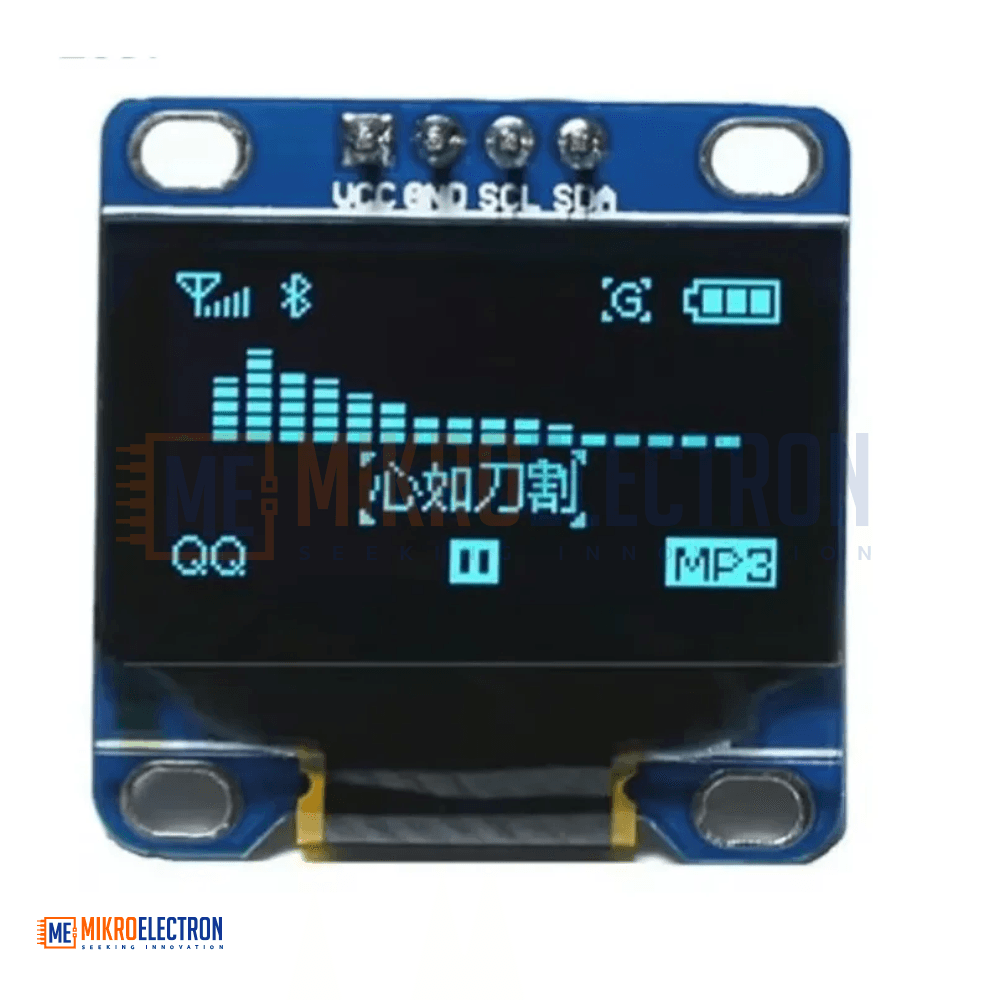
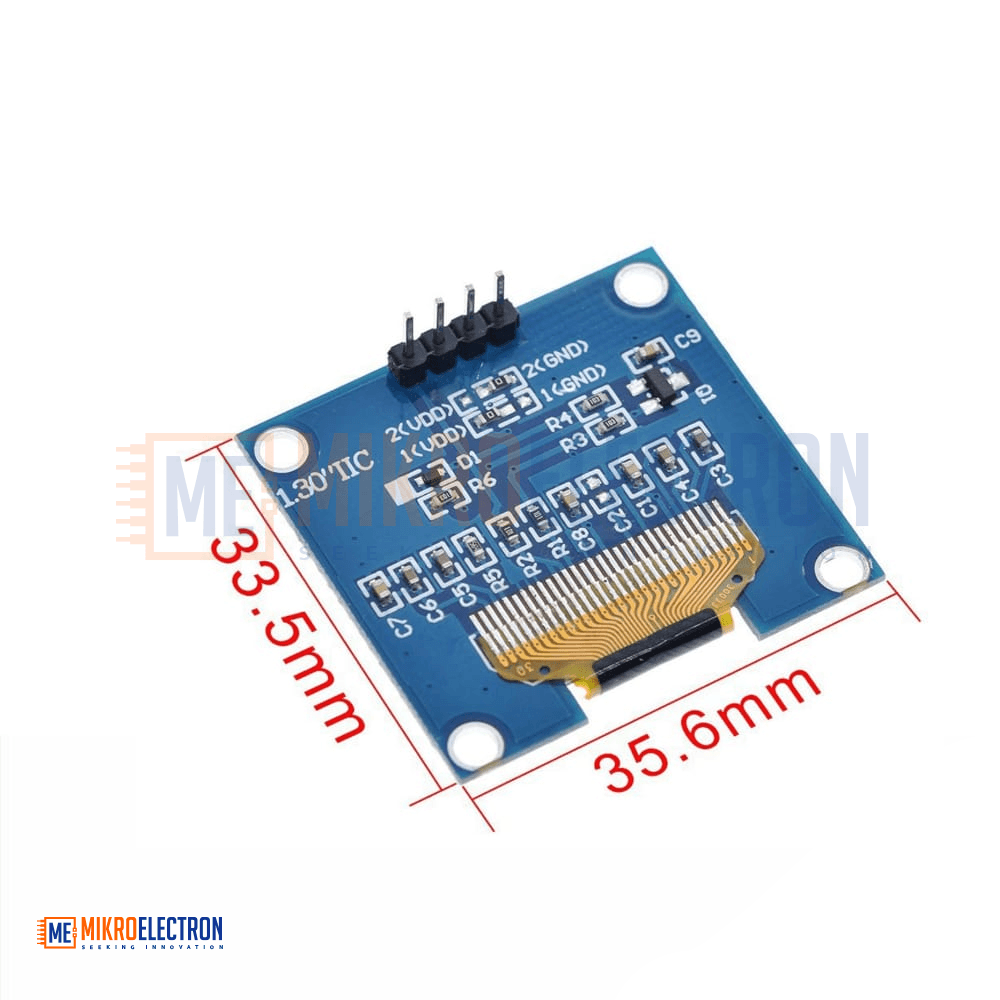
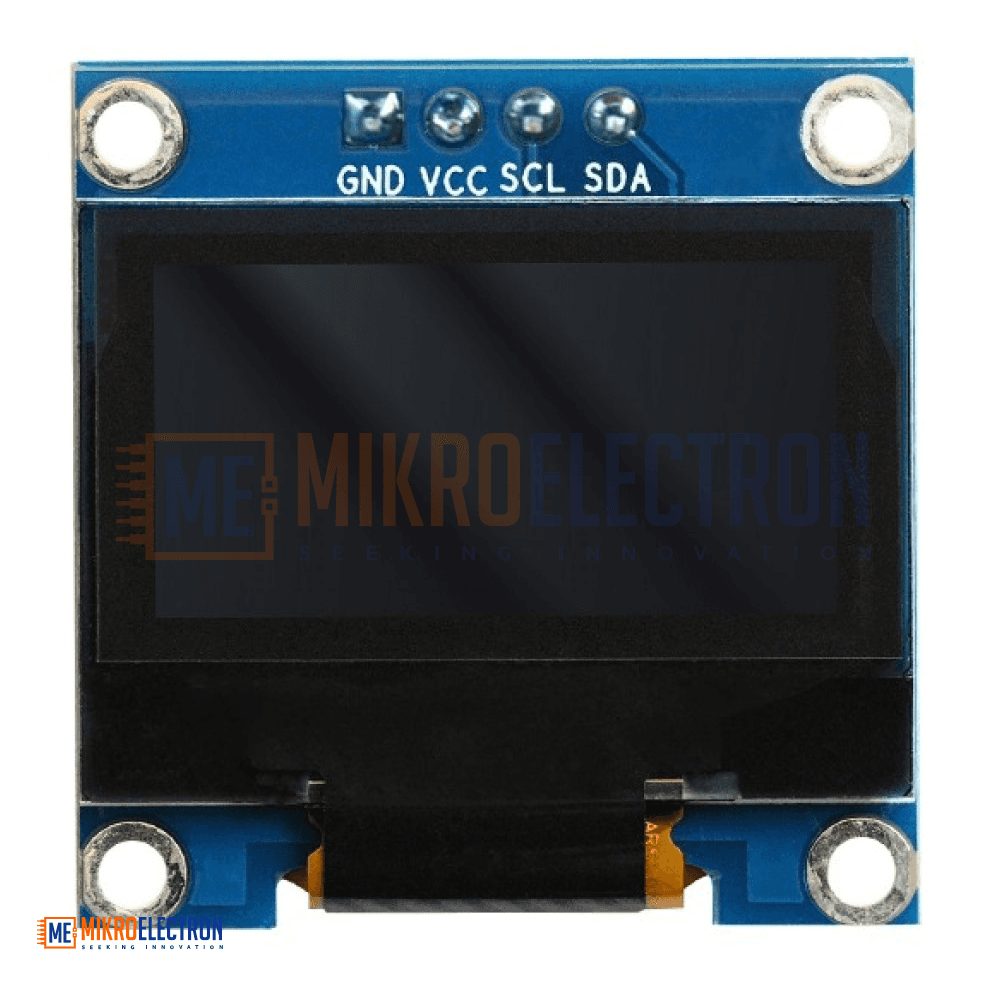
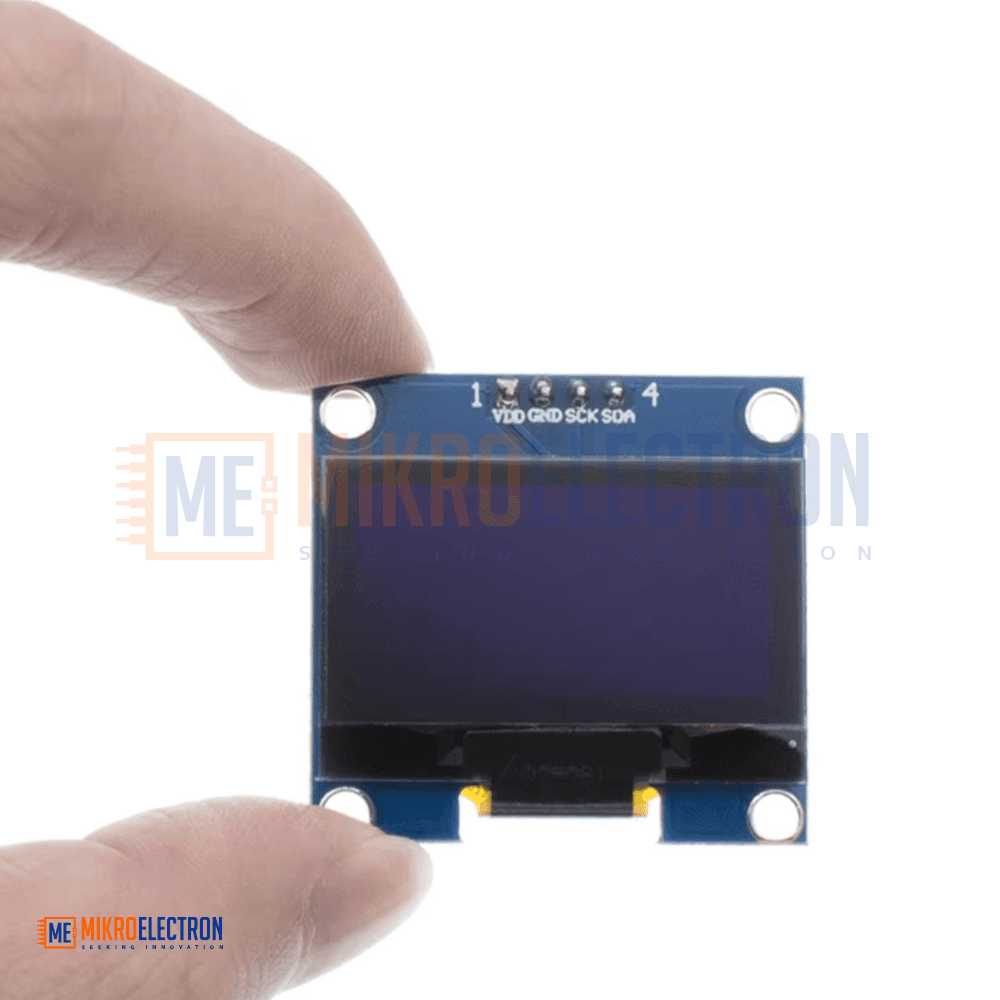
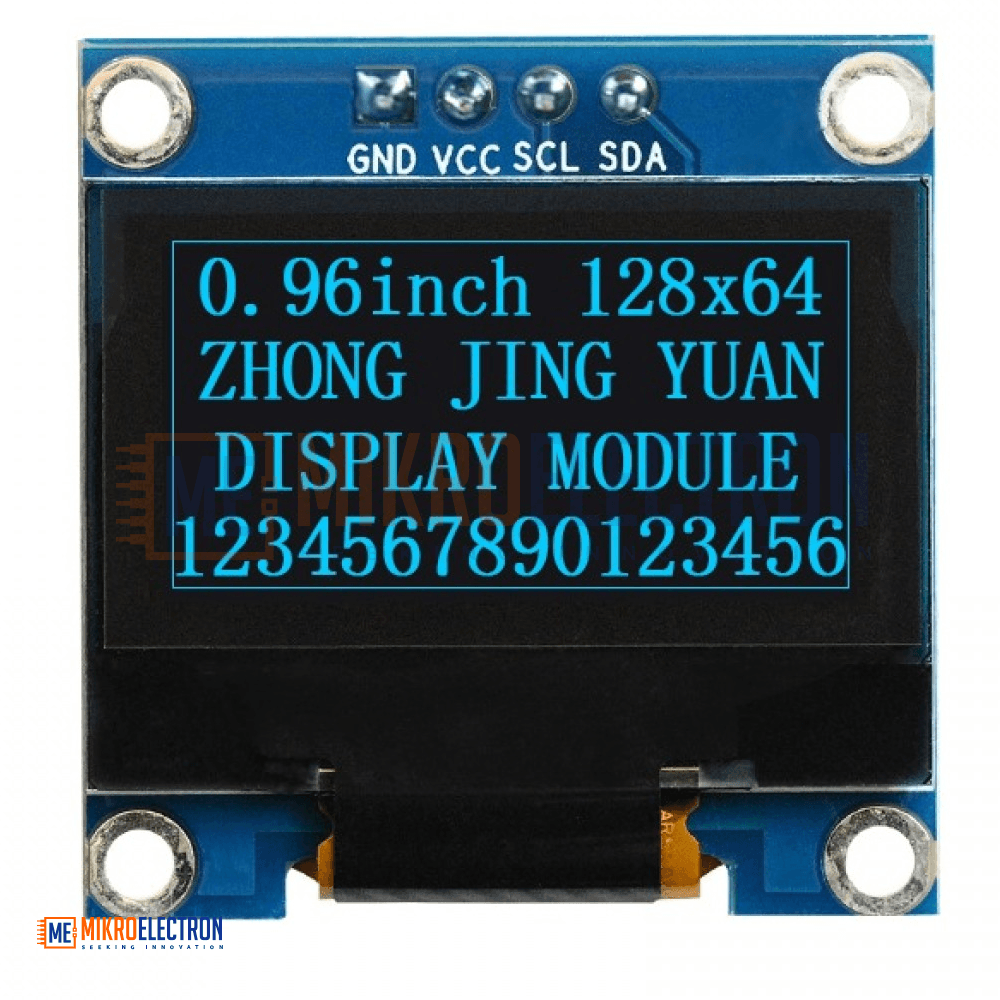
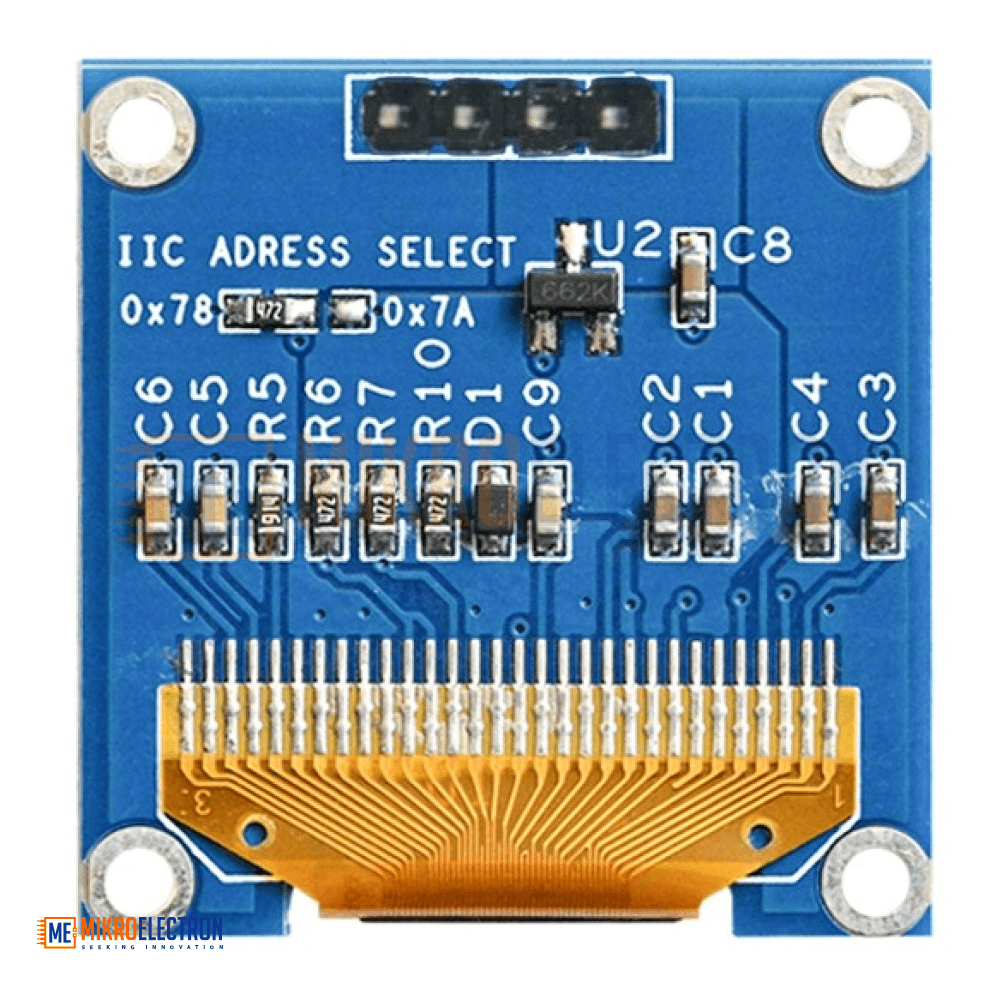
128x64 OLED 0.96 inch Display Module (4-pin) (Blue)
The 128x64 OLED 0.96 inch Display Module is a compact, self-illuminating screen built on SSD1306 driver IC technology, offering crisp blue pixels without a backlight. With a wide 3.3V–5V operating range and I2C communication using only two I/O pins, it integrates effortlessly with Arduino, Raspberry Pi, and ESP boards. Its slim profile, 160°+ viewing angle, and low power consumption make it ideal for wearables, IoT devices, and embedded projects requiring clear visual feedback.
شاشة OLED مقاس 0.96 إنش بدقة 128×64 بكسل (4 أطراف – أزرق) هي شاشة عرض مدمجة ذاتية الإضاءة تعتمد على شريحة التحكم SSD1306، توفر بكسلات زرقاء واضحة دون الحاجة إلى إضاءة خلفية. تعمل بجهد واسع 3.3 إلى 5 فولت وتتواصل عبر بروتوكول I2C باستخدام منفذين فقط، مما يجعلها متوافقة بسهولة مع Arduino وRaspberry Pi وESP. تصميمها النحيف وزاوية رؤيتها التي تتجاوز 160 درجة يجعلانها مثالية للمشاريع المدمجة وأجهزة إنترنت الأشياء.
The 0.96 inch OLED Display Module is a high-contrast, self-emitting screen designed for embedded electronics projects where clarity, low power consumption, and compact size are essential. Unlike traditional TFT-LCD displays, OLED technology eliminates the need for a backlight because each pixel generates its own light, resulting in deeper blacks, sharper contrast, and wider viewing angles approaching 180 degrees.
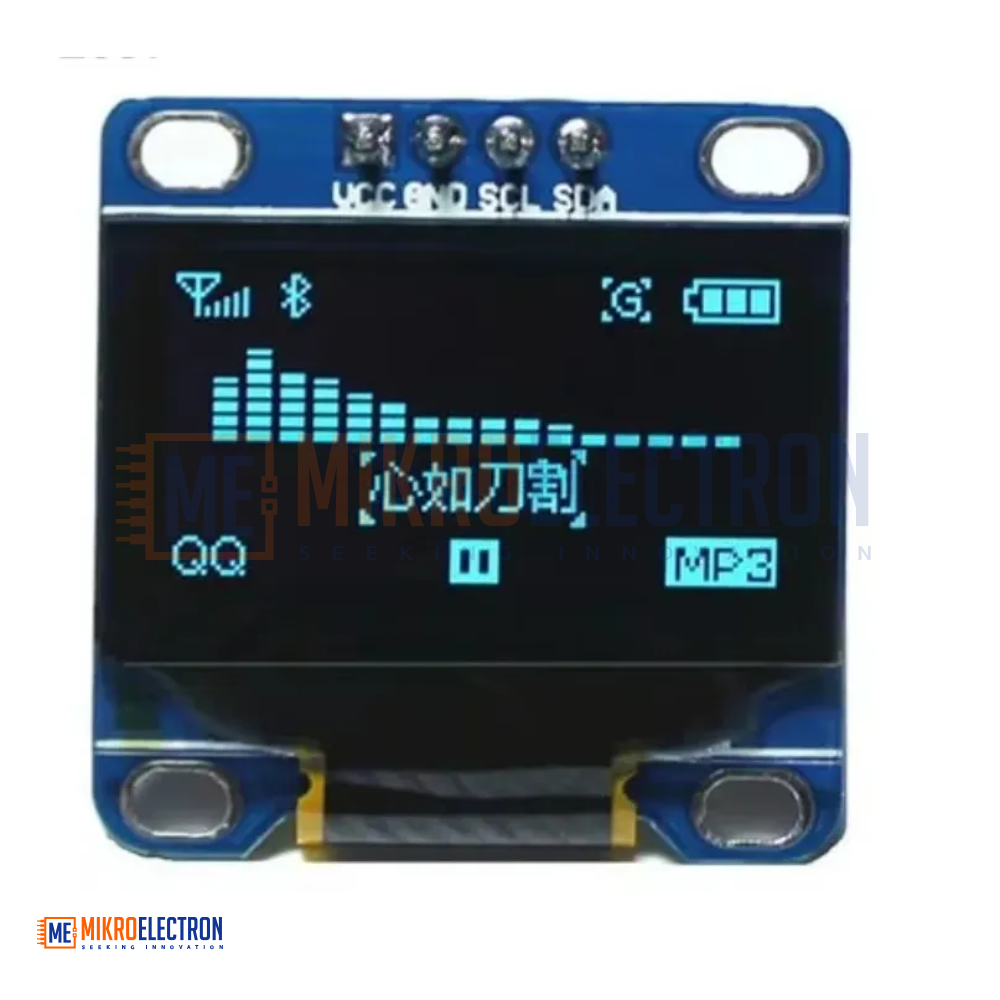
This module is powered by the widely supported SSD1306 driver IC, which is fully compatible with popular libraries such as Adafruit GFX, Adafruit SSD1306, and U8g2 for Arduino, as well as Luma.OLED for Raspberry Pi. The display features a 128×64 pixel resolution rendered in a vivid blue color, suitable for displaying text, icons, sensor readings, graphs, animations, and simple bitmap graphics.
Communication is handled via the I2C (IIC) protocol, requiring only two data lines (SDA and SCL) plus power and ground. This drastically reduces wiring complexity and frees up GPIO pins on your microcontroller. The display is constructed as an ultra-thin panel (less than 2 mm) and consumes minimal current, making it perfectly suited for battery-powered devices, wearables, and portable instruments.
With an operating temperature range from -40°C to 85°C, the module performs reliably in industrial environments, outdoor projects, and harsh conditions where other display technologies may fail.
Specifications
- Display Type: OLED (Organic Light-Emitting Diode)
- Resolution: 128 × 64 pixels
- Screen Size: 0.96 inch
- Color: Blue (monochrome)
- Driver IC: SSD1306
- Communication Protocol: I2C (IIC)
- Interface Pins: 4 pins (VCC, GND, SCL, SDA)
- Operating Voltage: 3.3V – 5V DC
- Viewing Angle: Greater than 160°
- Operating Temperature: -40°C to +85°C
- Panel Thickness: Less than 2 mm
- Power Consumption: Very low (varies with pixels illuminated)
- Default I2C Address: 0x3C (typical, may also be 0x3D)
Applications
- Arduino & microcontroller projects for displaying sensor data, menus, and status messages
- IoT devices requiring a compact user interface for ESP32, ESP8266, or similar boards
- Wearable electronics such as smartwatches, fitness trackers, and DIY gadgets
- Portable measurement instruments including multimeters, oscilloscope add-ons, and data loggers
- Home automation panels for showing temperature, humidity, and device states
- Robotics for displaying telemetry, debug information, or robot expressions
- Educational and prototyping purposes in STEM and electronics learning kits
- Battery-powered devices where low power consumption is critical
- Industrial monitoring systems thanks to the wide operating temperature range
- Game consoles and retro DIY handhelds for displaying graphics and animations