
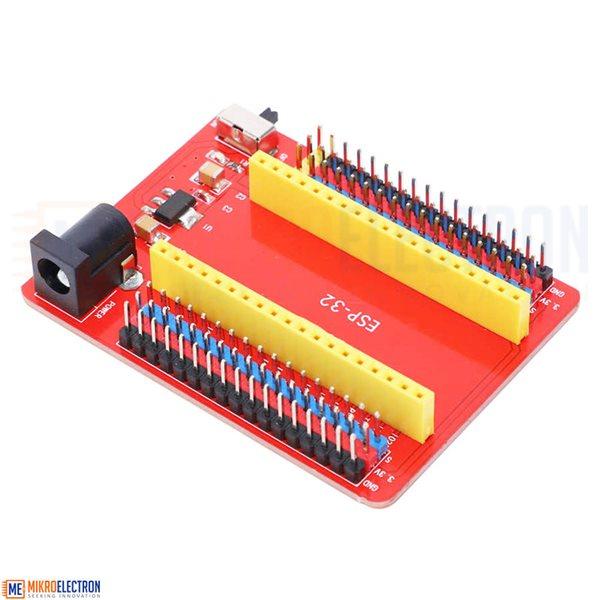
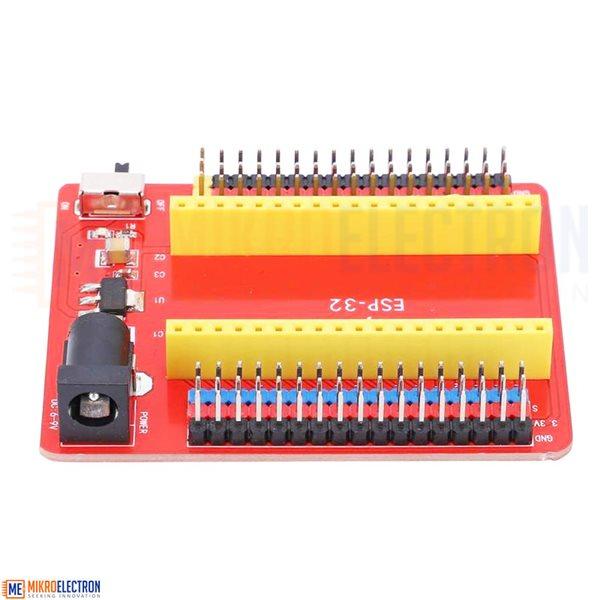
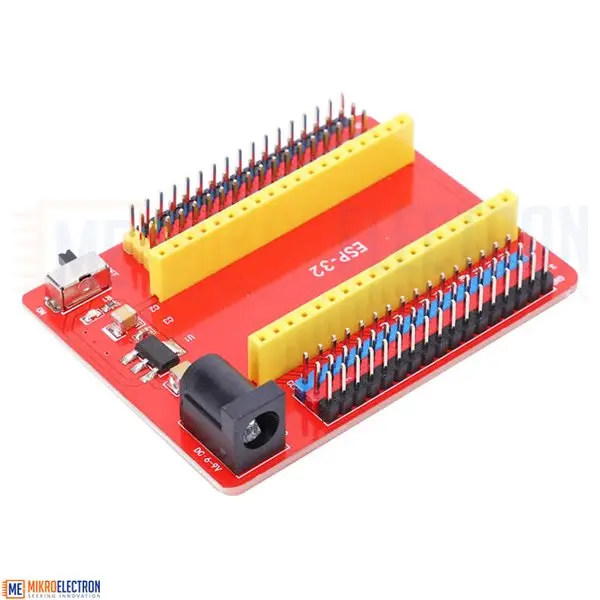
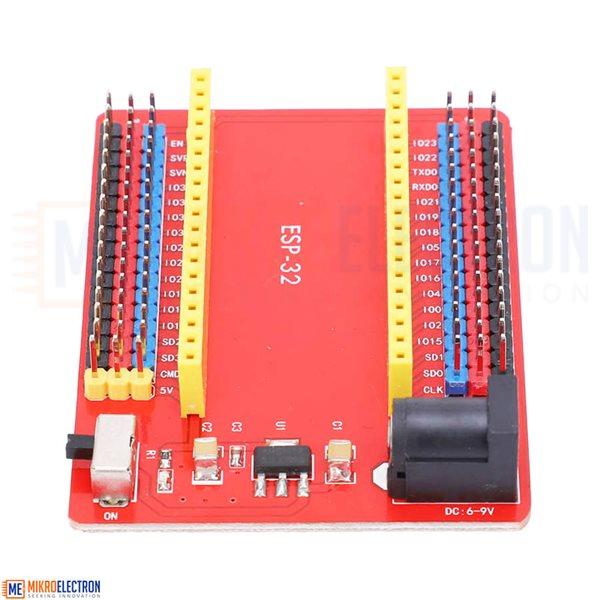
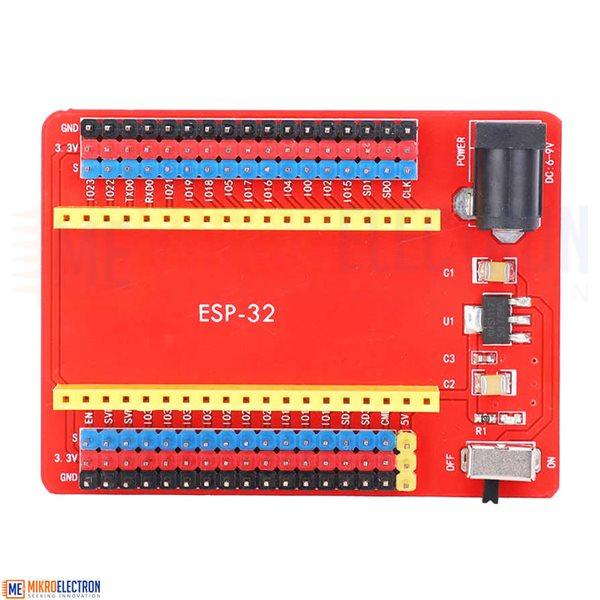
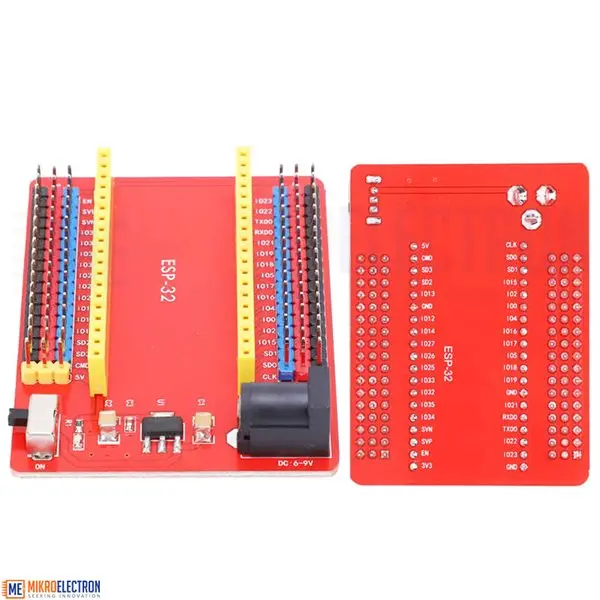
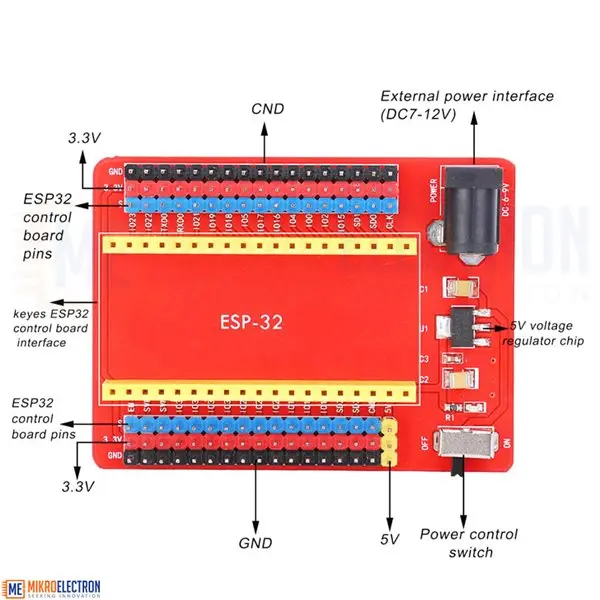
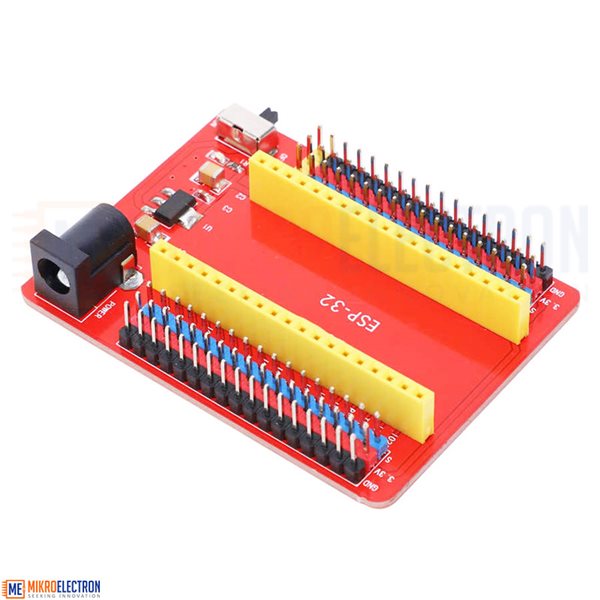
ESP32 Development Expansion Board Module
The ESP32 Development Expansion Board Module is a breakout and prototyping platform built around the powerful ESP32-WROOM-32 module, featuring integrated Wi-Fi (802.11 b/g/n) and Bluetooth 4.2 BR/EDR + BLE. It uses the reliable CP2102-GMR USB-to-serial chip for easy programming and includes a power dial switch and standard breakout headers on both sides for quick access to all GPIOs. Powered by DC 7–12V, it draws only 60mA and operates from -25°C to 65°C. Ideal for IoT projects, smart home devices, sensor networks, robotics, and educational STEM workshops for students, engineers, and DIY enthusiasts.
لوحة التطوير والتوسيع ESP32 هي منصة لتطوير ومشاريع النماذج مبنية على وحدة ESP32-WROOM-32 القوية، وتحتوي على Wi-Fi (802.11 b/g/n) وBluetooth 4.2 BR/EDR + BLE مدمجة. تستخدم شريحة CP2102-GMR USB-to-Serial الموثوقة لتسهيل عملية البرمجة، وتحتوي على مفتاح تشغيل ورؤوس دبابيس على كلا الجانبين للوصول السريع لجميع منافذ GPIO. تعمل بجهد 7–12 فولت DC وتستهلك 60 مللي أمبير فقط، وتعمل في درجات حرارة من -25 إلى 65 درجة مئوية. مثالية لمشاريع IoT، البيوت الذكية، شبكات الحساسات، الروبوتات، والمشاريع التعليمية.
The ESP32 Development Expansion Board Module is a feature-rich breakout board designed to make the ESP32-WROOM-32 microcontroller more accessible for prototyping, learning, and small-scale product development. By combining the ESP32 module with a DC power input, on-board USB-to-serial converter, power switch, and neatly labeled breakout headers, this board turns the ESP32 into a plug-and-play development platform suitable for everyone from beginners to professional engineers.
At the heart of the board is the Espressif ESP32-WROOM-32 module, which integrates a dual-core 32-bit Xtensa LX6 processor, 520 KB SRAM, 4 MB Flash, and a complete Wi-Fi + Bluetooth radio subsystem. This gives you access to Wi-Fi 802.11 b/g/n at up to 150 Mbps in the 2.4–2.5 GHz band, along with Wi-Fi modes including Station, SoftAP, SoftAP + Station, and P2P. The Bluetooth 4.2 BR/EDR + BLE stack supports both classic and low-energy Bluetooth, making it ideal for wearable, beacon, and mobile-connected projects.
Programming and debugging are handled through the on-board Silicon Labs CP2102-GMR USB-to-Serial bridge, which provides stable, driver-compatible communication with Windows, macOS, and Linux — no additional programmer needed. Simply connect a USB cable, open the Arduino IDE, ESP-IDF, PlatformIO, or MicroPython environment, and start uploading code.
The board's DC 7–12V input accepts any common 9V or 12V wall adapter or battery pack, and includes on-board voltage regulation to power the ESP32 module reliably. A dial power switch lets you cut power without unplugging the USB cable — a small but appreciated feature during development sessions. Dual-sided pin headers expose every GPIO, power rail, and communication interface (I2C, SPI, UART, ADC, DAC, PWM, Touch), so you can plug the board directly into a breadboard or wire it into a larger project.
The industrial-grade operating temperature range (-25°C to 65°C) and high-quality PCB construction make this board robust enough for prototype-to-product workflows, while its low 60mA idle current keeps power consumption reasonable for battery-operated IoT nodes.
Specifications
| Parameter | Value |
|---|---|
| Board Type | ESP32 Development Expansion Board |
| Microcontroller Module | ESP32-WROOM-32 |
| Processor | Dual-core 32-bit Xtensa LX6 |
| USB-Serial Chip | CP2102-GMR |
| Input Voltage | DC 7–12V |
| Working Current | 60 mA |
| Maximum Power | 0.3 W |
| Operating Temperature | -25°C to +65°C |
| Wi-Fi Standard | 802.11 b/g/n/e/i |
| Wi-Fi Speed | Up to 150 Mbps (802.11n) |
| Wi-Fi Frequency | 2.4 GHz – 2.5 GHz |
| Wi-Fi Modes | Station / SoftAP / SoftAP+Station / P2P |
| Bluetooth | v4.2 BR/EDR + BLE |
| PCB Material | High-quality FR-4 |
| Power Switch | On-board dial switch |
| Headers | Dual-sided standard 2.54mm headers |
| Programming Interface | USB (Micro-B) via CP2102 |
| Compatible IDEs | Arduino IDE, ESP-IDF, PlatformIO, MicroPython |
Applications
- IoT prototyping and development
- Smart home devices — switches, sensors, controllers
- Wireless sensor networks for agriculture and industry
- Home automation gateways and hubs
- Bluetooth Low-Energy (BLE) beacons and wearables
- Robotics and mobile robots with Wi-Fi/BLE remote control
- DIY weather stations and environmental monitors
- Educational STEM projects for schools and universities
- Camera and audio streaming projects (with ESP32-CAM style peripherals)
- Voice-controlled assistants using cloud APIs
- Energy monitoring and smart-metering systems
- Wearable and fitness-tracker prototypes
- Industrial control with MQTT and Modbus
- Mesh networking with ESP-MESH or Wi-Fi mesh
- Cloud-connected devices integrating with AWS IoT, Google Cloud, Azure, Blynk
- CNC and 3D printer add-ons for wireless control