
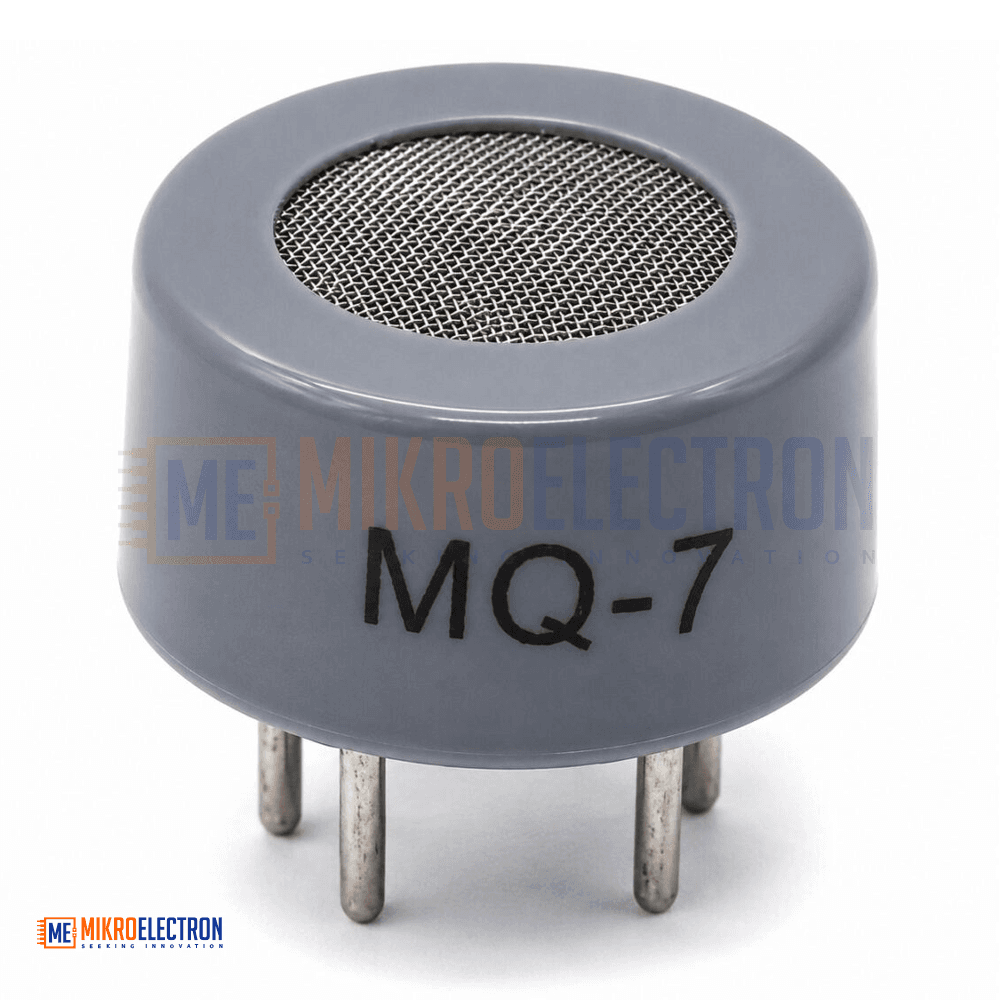
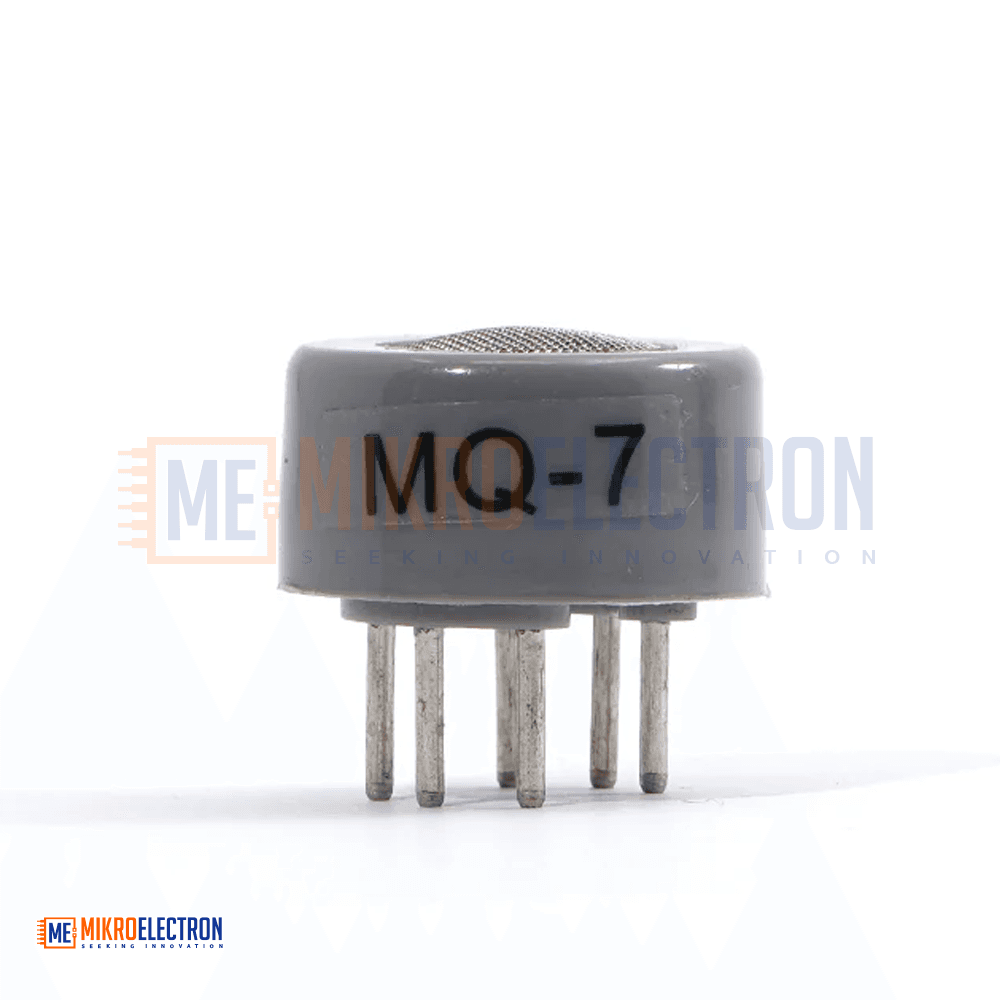
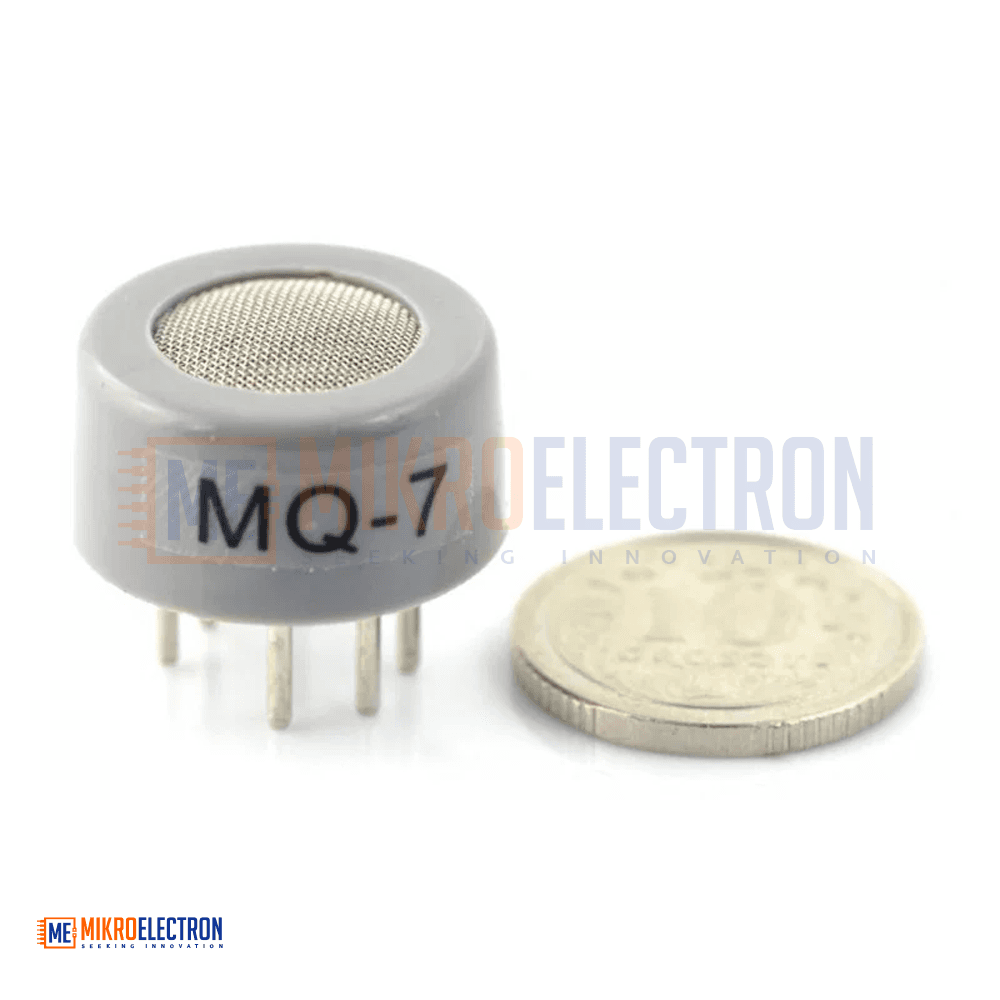
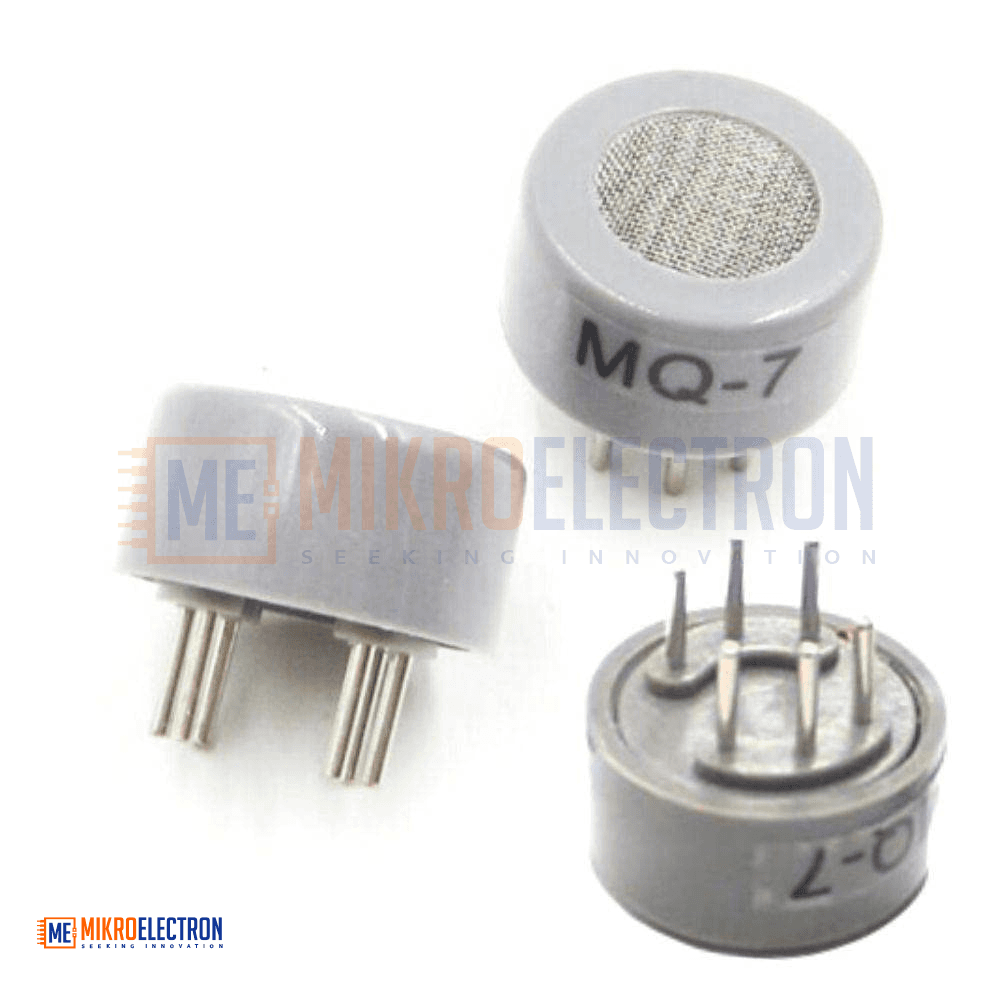
Carbon Monoxide Sensor - MQ-7
The MQ-7 Carbon Monoxide Sensor is a low-cost semiconductor gas sensor designed for detecting carbon monoxide (CO) in air. Using a tin dioxide (SnO2) sensing element, it changes resistance when exposed to CO, which can be converted into a measurable voltage signal. The sensor uses a distinctive cycling heater voltage (alternating high and low phases) essential for accurate sensing and recovery. With a detection range of 20-2000ppm, it's ideal for Arduino, ESP32, Raspberry Pi projects, CO detector prototypes, and educational experiments. Important: This is an experimental/prototyping sensor, not a certified life-safety CO alarm device.
مستشعر أول أكسيد الكربون MQ-7 هو مستشعر غاز شبه موصل منخفض التكلفة مصمم للكشف عن أول أكسيد الكربون (CO) في الهواء. باستخدام عنصر استشعار من ثاني أكسيد القصدير (SnO2)، تتغير مقاومته عند التعرض لغاز CO، ويمكن تحويل هذا التغيير إلى إشارة جهد قابلة للقياس. يستخدم المستشعر جهد تسخين دوري مميز (يتناوب بين مرحلتين عالية ومنخفضة) وهو ضروري للاستشعار الدقيق والاستعادة. بنطاق كشف يتراوح بين 20-2000 جزء في المليون، فهو مثالي لمشاريع الأردوينو وESP32 وراسبيري باي، ونماذج كاشفات أول أكسيد الكربون، والتجارب التعليمية. ملاحظة هامة: هذا مستشعر تجريبي/للنماذج الأولية، وليس جهاز إنذار CO معتمد لحماية الحياة.
The MQ-7 Carbon Monoxide Sensor is a semiconductor-type gas sensor engineered for detecting the presence and concentration of carbon monoxide (CO) in the surrounding air. It is widely used in hobbyist electronics, Arduino and ESP32 projects, educational demonstrations, and as a component in DIY CO detector prototypes.
At the core of the sensor is a tin dioxide (SnO2) sensing layer, a material known for changing its electrical resistance when exposed to certain gases. As carbon monoxide concentration increases in the surrounding air, the sensor's resistance changes proportionally. This resistance shift can be converted into a usable analog voltage signal with the addition of a simple external load resistor circuit.
A defining characteristic of the MQ-7, which distinguishes it from many other sensors in the MQ series, is its use of a cycling heater voltage. Rather than operating at a constant heater voltage, the MQ-7 alternates between:
- High heater phase: 5V for approximately 60 seconds
- Low heater phase: 1.4V for approximately 90 seconds
This heating cycle is critical to accurate carbon monoxide detection and sensor recovery between readings. Circuit designers and firmware developers must account for this cycle—typically using a transistor, MOSFET, or dedicated driver circuit—to properly control the heater and read the sensor output at the correct point in the cycle.
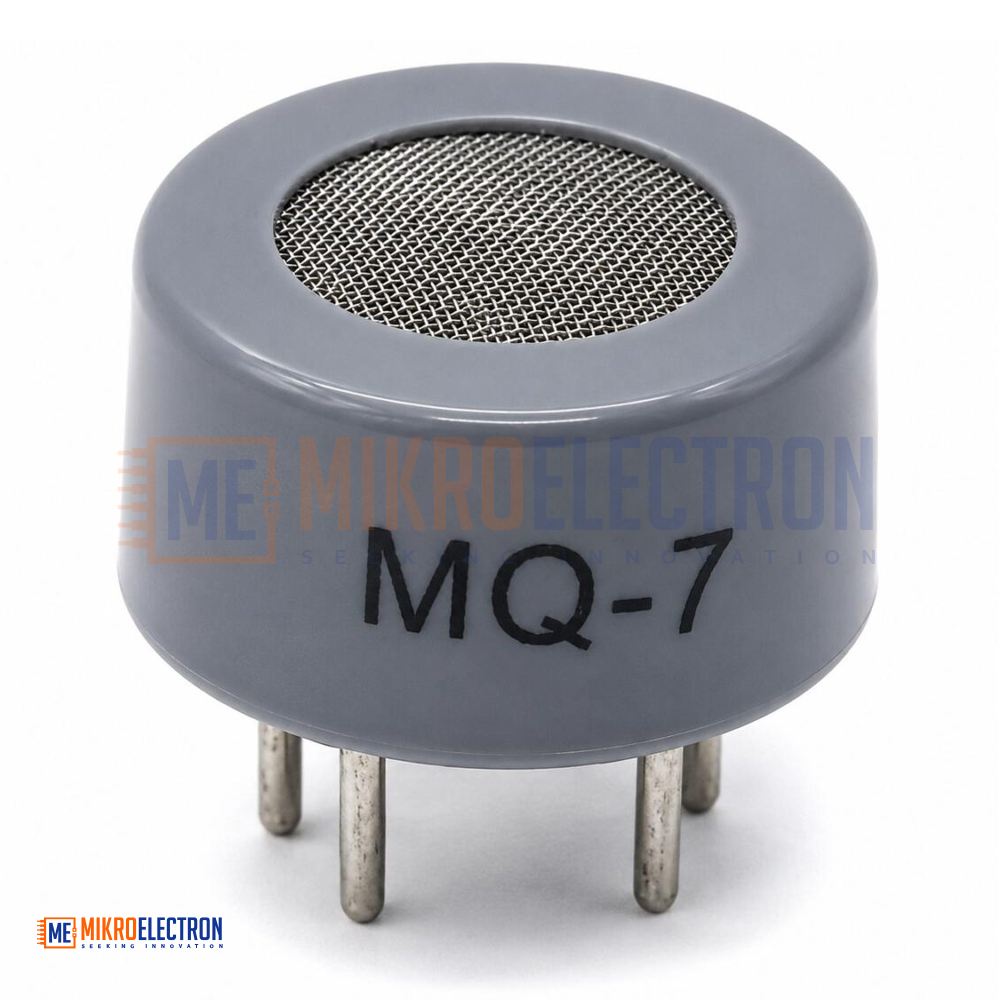
Sensor Construction: The sensing element has 6 pins total—four dedicated to signal sensing and two for the heater circuit. Internally, the sensor uses a gold electrode, platinum electrode lines, a Ni-Cr alloy heater coil, an Al2O3 ceramic tube, and a stainless steel gauze protective mesh, all mounted on a Bakelite base.
Preheating and Calibration: For stable and reliable readings, the MQ-7 requires a long initial preheat period of no less than 48 hours. Readings taken immediately after power-up are likely to drift and should not be considered calibrated. For accurate concentration measurements, calibration against a known CO concentration is required, with the datasheet recommending calibration near 200ppm CO.
Environmental Sensitivity: Readings can be affected by temperature, humidity, oxygen concentration, airflow, sensor age, and prior gas exposure, so these factors should be considered when interpreting sensor data or setting alarm thresholds.
Handling Precautions: The sensor must be protected from silicone vapors, corrosive gases (H2S, SOx, Cl2, HCl), alkali materials, salt spray, moisture, condensation, and physical shock, all of which can permanently damage or degrade sensor sensitivity.
Important Safety Disclaimer: The MQ-7 is intended strictly for electronics projects, prototyping, education, and experimental carbon monoxide detection. It is not a certified carbon monoxide alarm, workplace safety device, automotive safety device, or life-safety instrument. For any application requiring certified CO protection (home, vehicle, workplace, or code-required), a properly certified carbon monoxide alarm must be used instead. Carbon monoxide is a dangerous and potentially deadly gas.
Specifications
| Specification | Value |
|---|---|
| Sensor Type | Semiconductor gas sensor |
| Gas-Sensitive Material | Tin dioxide (SnO2) |
| Target Gas | Carbon monoxide (CO) |
| Typical Detection Range | 20 - 2000 ppm CO |
| Circuit Voltage | 5V ± 0.1V AC or DC |
| Heater Voltage (High Phase) | 5V ± 0.1V AC or DC |
| Heater Voltage (Low Phase) | 1.4V ± 0.1V AC or DC |
| High Heater Time | 60 ± 1 seconds |
| Low Heater Time | 90 ± 1 seconds |
| Heater Resistance | 33Ω ± 5% (room temperature) |
| Heater Power Consumption | ~350 mW |
| Recommended Load Resistor | ~10kΩ (adjustable 5kΩ-47kΩ) |
| Operating Temperature | -20°C to 50°C |
| Storage Temperature | -20°C to 50°C |
| Relative Humidity | Less than 95% RH |
| Recommended Preheat Time | No less than 48 hours |
| Typical Service Life | Up to 5 years (suitable conditions) |
| Number of Pins | 6 (4 signal + 2 heater) |
| Sensing Layer | SnO2 |
| Electrode Material | Gold |
| Electrode Line | Platinum |
| Heater Coil | Ni-Cr alloy |
| Ceramic Tube | Al2O3 |
| Protective Mesh | Stainless steel gauze |
| Base Material | Bakelite |
Applications
- Arduino, ESP32, and Raspberry Pi CO-sensing projects
- Carbon monoxide detector prototypes
- Educational gas sensor demonstrations
- Automotive air-quality and exhaust-related experiments
- DIY alarm and monitoring systems
- Analog sensor and comparator-based alarm circuits
- Portable gas detector prototypes