
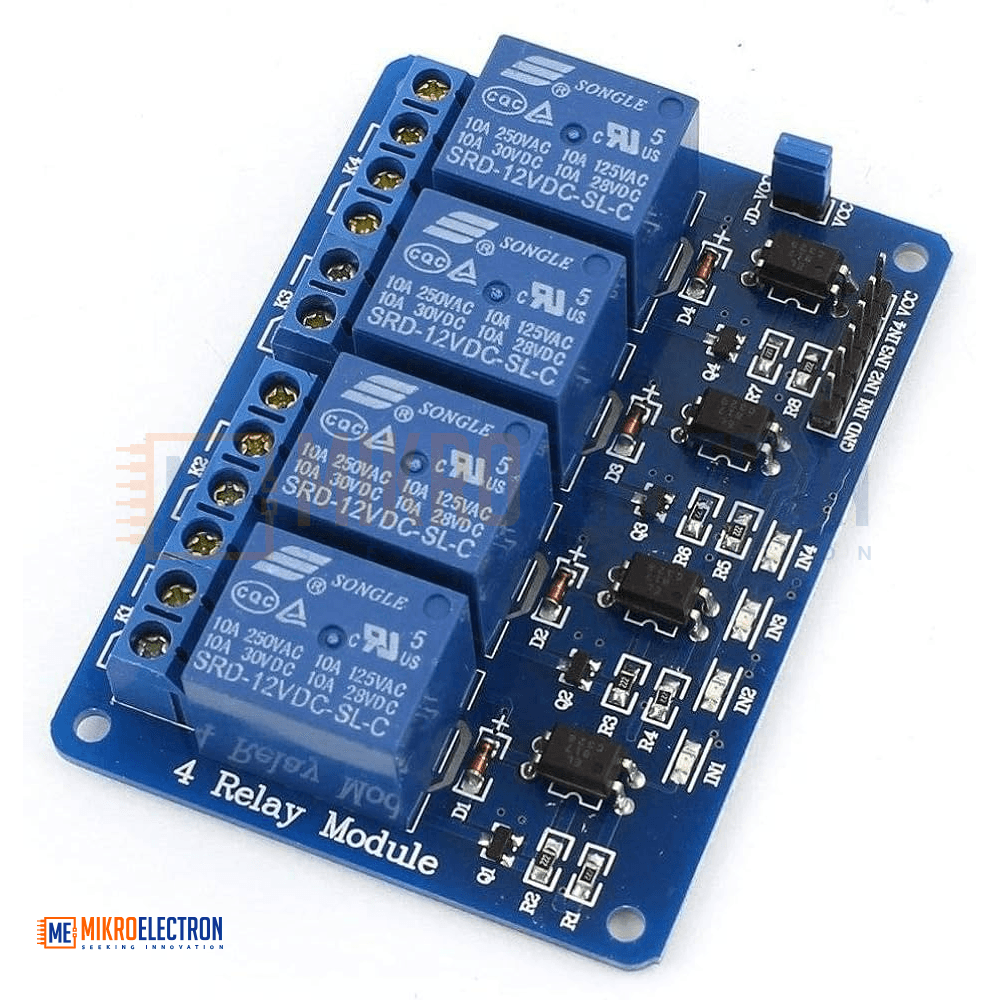
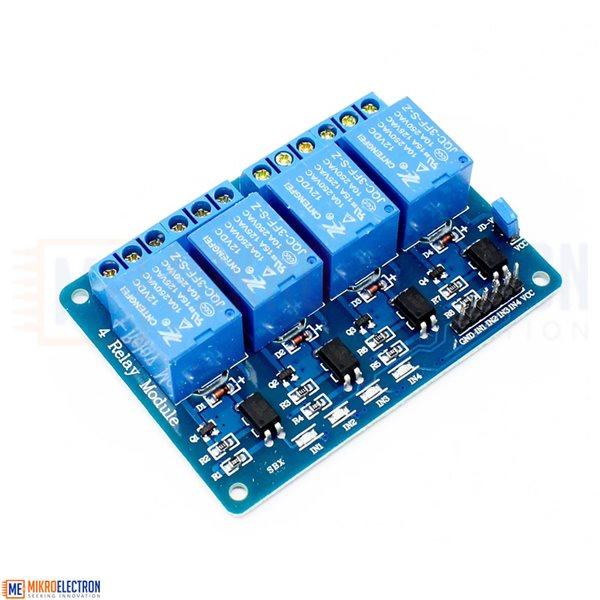
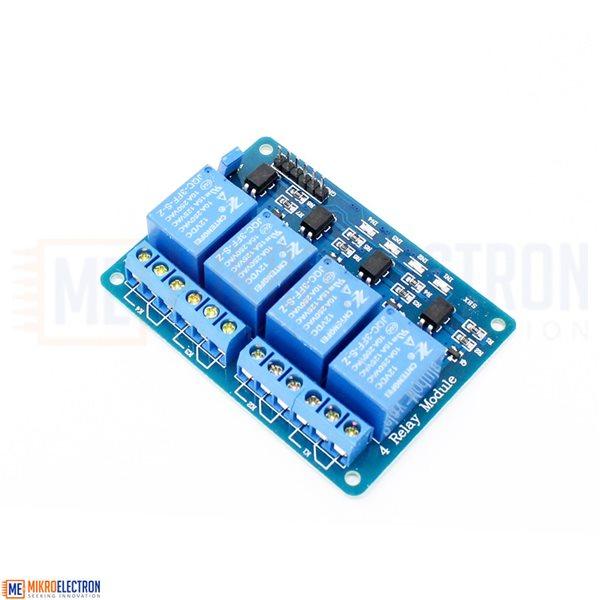
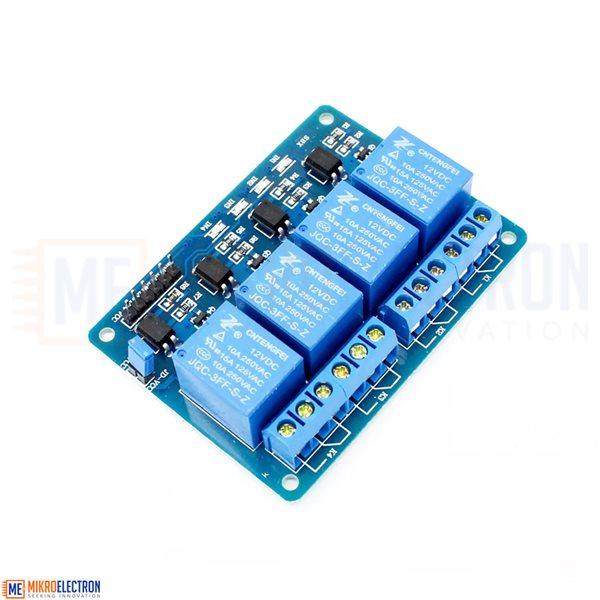
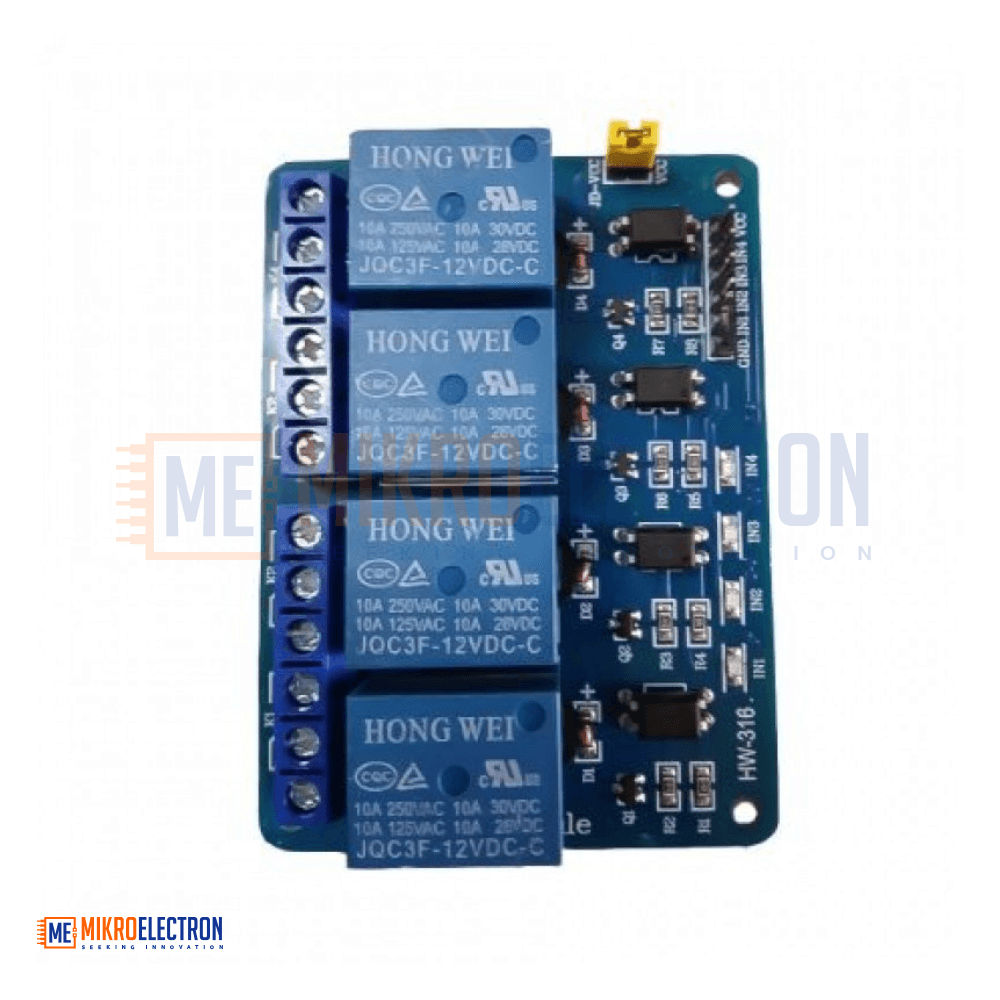
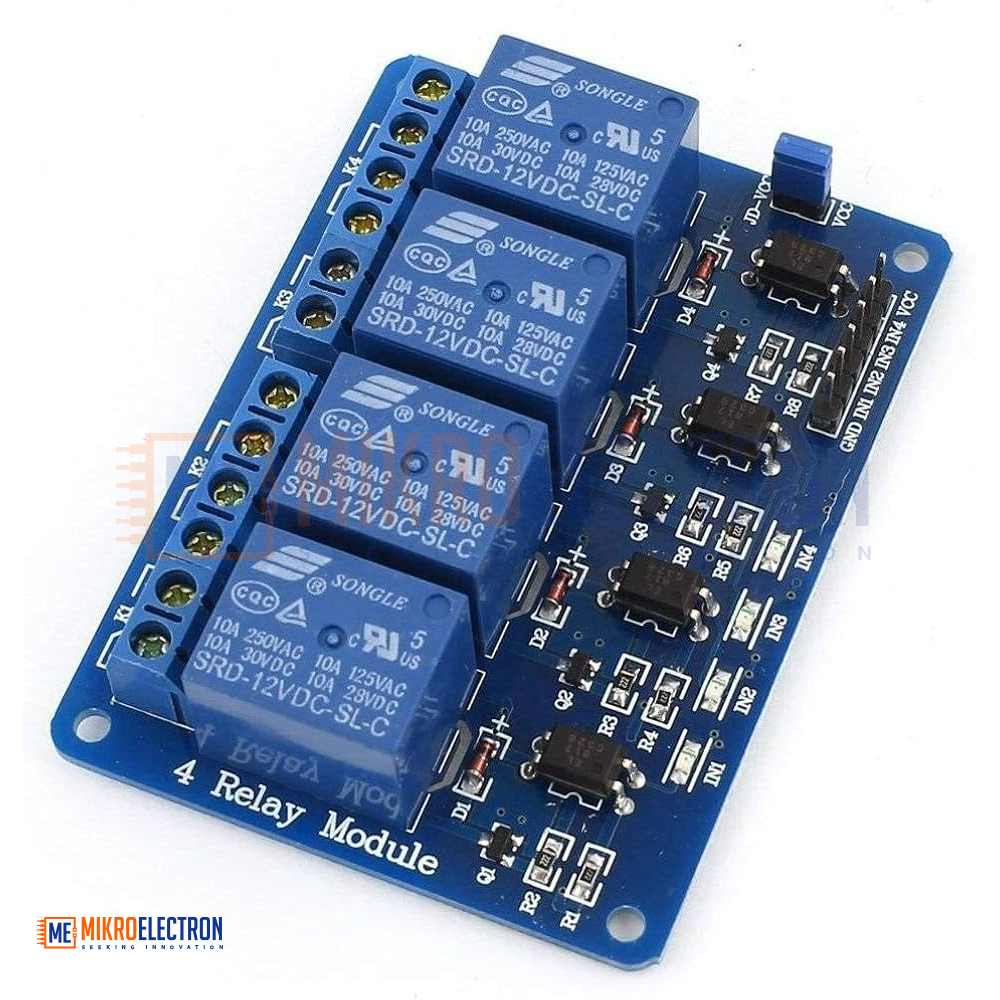
4 Channel 12V Relay Module with Light Coupling
The 4 Channel 12V Relay Module with Optocoupler Isolation is a reliable switching module designed for controlling high-voltage AC or DC loads using low-voltage microcontrollers. It features four independent relays, each rated at 10A 250VAC or 10A 30VDC, with optocoupler isolation to protect sensitive control circuits from electrical interference. The module supports both high-level and low-level triggering, includes LED status indicators, screw terminals for easy wiring, and mounting holes for convenient installation. It is widely compatible with Arduino, AVR, PIC, ARM, and other microcontroller platforms.
تُعد وحدة الريليه 4 قنوات بجهد 12 فولت مع العزل الضوئي (Optocoupler) وحدة تحكم موثوقة مصممة للتحكم بالأحمال ذات الجهد العالي AC أو DC باستخدام متحكمات دقيقة منخفضة الجهد. تحتوي على أربعة ريليهات مستقلة، كل منها قادر على تحمل 10 أمبير عند 250VAC أو 10 أمبير عند 30VDC، مع عزل ضوئي لحماية دوائر التحكم الحساسة من التداخلات الكهربائية. تدعم الوحدة كلاً من التحفيز بالمستوى المرتفع والمنخفض، وتحتوي على مؤشرات LED، وأطراف توصيل لولبية لتسهيل التوصيل، بالإضافة إلى فتحات تثبيت لسهولة التركيب. وهي متوافقة مع Arduino وAVR وPIC وARM وغيرها من المتحكمات الدقيقة.
The 4 Channel 12V Relay Module with Optocoupler Isolation is an industrial-grade relay board designed to interface low-voltage control systems with high-voltage or high-current loads. The module incorporates four independent electromechanical relays, allowing simultaneous control of multiple devices such as motors, lights, fans, solenoids, and home appliances.
A key feature of this module is its optocoupler isolation, which electrically separates the control side from the relay switching side. This isolation improves system safety, reduces noise coupling, and protects microcontrollers from voltage spikes and electromagnetic interference.
The module uses a double-sided FR-4 PCB manufactured with SMT technology, ensuring high reliability and long service life. Each relay channel provides Normally Open (NO), Normally Closed (NC), and Common (COM) contacts accessible through high-quality screw terminals for convenient wiring.
The module supports both high-level and low-level triggering, making it compatible with a wide range of microcontrollers including Arduino, AVR, PIC, ARM, and other embedded development boards. LED indicators display the power and relay status, while integrated freewheeling diodes protect the driving circuits from inductive voltage spikes.
Specifications
| Parameter | Value |
|---|---|
| Product Name | 4 Channel Relay Module |
| Operating Voltage | 12V DC |
| Number of Channels | 4 |
| Relay Type | Electromechanical Relay |
| Isolation Method | Optocoupler (Light Coupling) |
| Relay Contact Rating | 10A @ 250VAC |
| DC Contact Rating | 10A @ 30VDC |
| Trigger Type | High-Level or Low-Level Trigger |
| Output Contacts | COM, NO, NC |
| PCB Material | Double-Sided FR-4 |
| Status Indicators | Power LED and Relay LEDs |
| Protection | Freewheeling Diode |
| Terminal Type | KF301 Screw Terminal |
| Mounting Method | PCB Mount with Mounting Holes |
| Compatible Controllers | Arduino, AVR, PIC, ARM, STM32, ESP32 |
High-Level and Low-Level Triggering
High-Level Trigger
The relay is activated when the input signal is at a high voltage level (logic HIGH). When the trigger pin receives a positive voltage relative to GND, the corresponding relay turns ON.
Low-Level Trigger
The relay is activated when the input signal is at a low voltage level (logic LOW). When the trigger pin is pulled to 0V (GND), the corresponding relay turns ON.
This flexibility allows the module to interface easily with different types of microcontrollers and logic circuits.
Applications
- Home automation systems
- Arduino and microcontroller projects
- Industrial automation
- Remote switching systems
- Motor and pump control
- Lighting control systems
- Fan and solenoid control
- Smart agriculture systems
- Security and alarm systems
- IoT and embedded applications
- AC and DC load switching
- Robotics and automation projects