
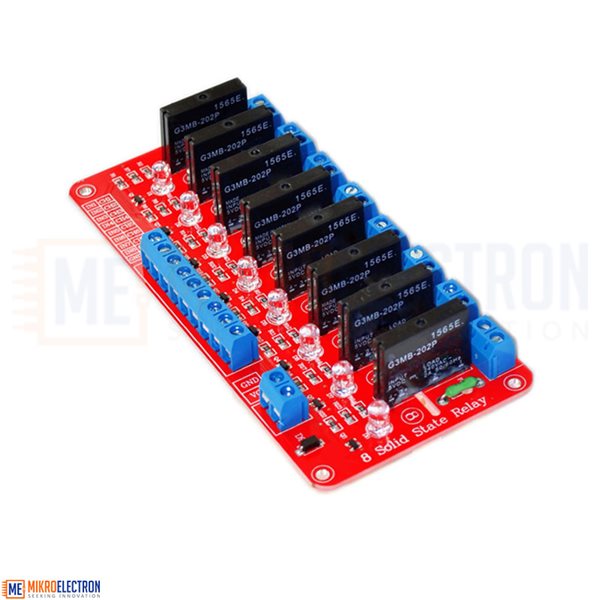
Solid State Relay Module 5v 8-Channel High Level Trigger
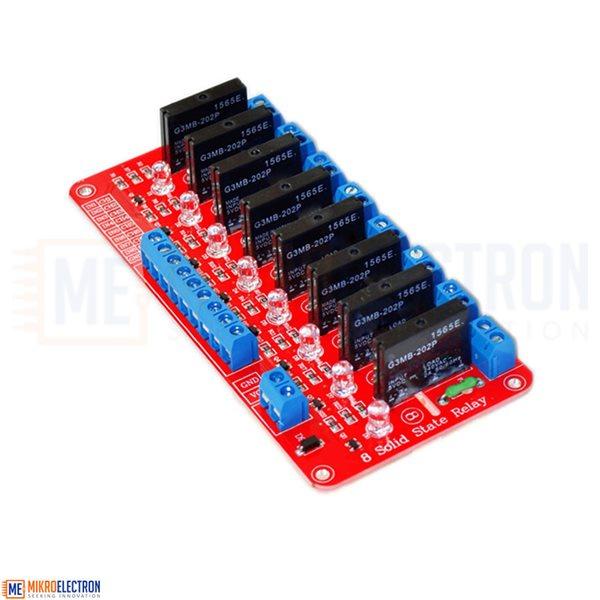
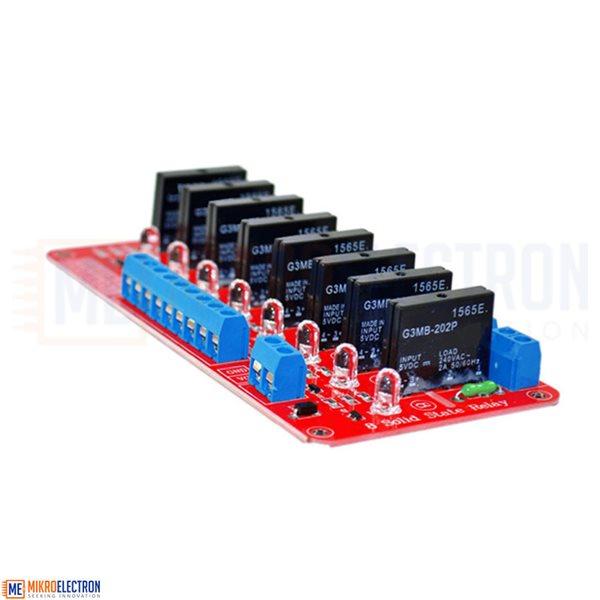
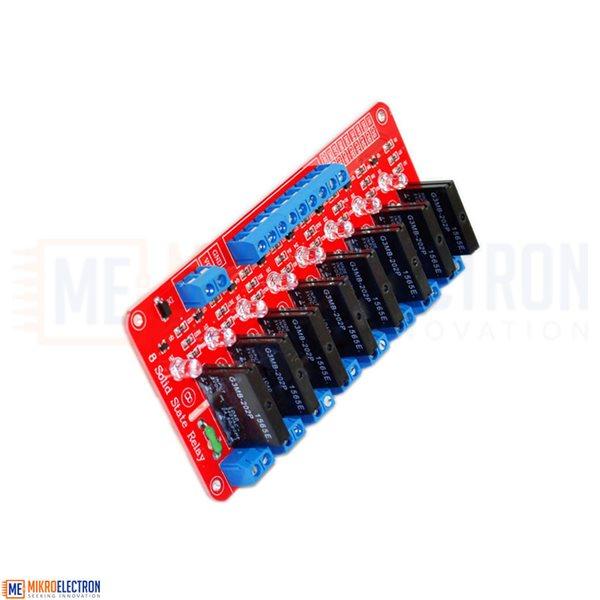
The 5V 8-Channel Solid State Relay Module is a compact and reliable switching interface designed for controlling multiple electrical loads from digital control systems. It features 8 independent Solid State Relay channels with contactless electronic switching, providing fast operation, long service life, and reduced interference compared with traditional electromagnetic relays. The module operates from a 5V DC power supply and supports TTL-level control signals. Its convenient 2.54mm pin headers and blue KF301 screw terminals simplify wiring and connection, making it suitable for PLC systems, Arduino and Microcontroller projects, home automation, industrial control, and electronic applications.
وحدة Solid State Relay Module ذات 8 قنوات وبجهد 5V هي واجهة تحكم مدمجة وموثوقة مصممة للتحكم بعدة أحمال كهربائية من خلال أنظمة التحكم الرقمية. تحتوي على 8 قنوات مستقلة من Solid State Relay وتوفر عملية Switching إلكترونية بدون تلامس، مما يساعد على تحقيق سرعة استجابة عالية وعمر تشغيل طويل وتقليل التأثيرات الخارجية مقارنةً بالـ Electromagnetic Relay التقليدي. تعمل الوحدة بجهد 5V DC وتدعم إشارات تحكم بمستويات TTL. كما تتميز بمنافذ 2.54mm Pin Headers وأطراف KF301 Screw Terminals لتسهيل التوصيل، وهي مناسبة لتطبيقات PLC وArduino وMicrocontroller والأتمتة المنزلية والتحكم الصناعي.
The 5V 8-Channel Solid State Relay Module is designed for multi-channel electronic switching and control applications. With eight independent relay channels, it allows multiple circuits or electrical loads to be controlled through a single compact interface.
Unlike traditional electromagnetic relays, a Solid State Relay (SSR) uses solid-state electronic components for contactless switching. This design provides fast switching, long service life, high reliability, and reduced mechanical wear, making it suitable for applications that require frequent switching.
The module is powered by a 5V DC supply with approximately 160mA input current and provides digital control through its channel input terminals. The supplied specifications indicate that the module is available with different trigger configurations, with the default configuration specified as low-level trigger in the provided information. The control input operates within a 0–5V range, with the stated switching thresholds depending on the selected trigger configuration.
The module includes 2.54mm pin spacing and blue KF301 screw terminals, providing convenient connections for control wiring. It is suitable for integration with PLC controllers, Arduino boards, Microcontrollers, home automation systems, industrial electronic equipment, and educational projects.
The module is rated for switching loads up to 240VAC / 2A, according to the supplied product information.
Important: Working with 240VAC mains voltage can be hazardous. AC load wiring should be performed by a qualified person using appropriate electrical protection and installation practices.
Specifications
| Specification | Details |
|---|---|
| Product Type | 8-Channel Solid State Relay Module |
| Relay Type | Solid State Relay |
| Number of Channels | 8 |
| Supply Voltage | 5V DC |
| Input Current | Approx. 160mA |
| Trigger Type | High-Level / Low-Level configuration |
| Default Trigger | Low-Level, according to supplied specifications |
| Low-Level Range | 0–2.5V |
| High-Level Range | 3.3–5V / 3.5–5V stated in supplied specifications |
| Trigger Current | Approx. 2mA |
| Static Current | 0mA |
| Maximum Load Rating | 2A |
| Maximum AC Voltage | 240VAC |
| Pin Spacing | 2.54mm |
| Terminal Type | KF301 Screw Terminals |
| Module Dimensions | 103 × 53 × 21mm |
| Package Dimensions | 110 × 55 × 25mm |
| Weight | 70g |
Trigger Logic
The module supports digital trigger control, with the supplied specifications describing both high-level and low-level triggering.
High-Level Trigger
A relay is activated when a suitable positive voltage is applied between the signal input terminal and the negative supply. The relay switches when the input reaches the required trigger voltage.
Low-Level Trigger
A relay is activated when the signal input is connected to 0V or a sufficiently low voltage relative to the positive supply. According to the supplied specifications, the low-level trigger range is approximately 0–2.5V.
Supplied Trigger Specification
- 0–2.5V: Low-level state
- 3.3–5V / 3.5–5V: High-level state
- Trigger Current: Approximately 2mA
- Supply: 5V DC
Note: The provided source contains conflicting descriptions regarding whether the supplied version is high-level or low-level triggered. The specifications state that the default configuration is low-level trigger, while the product title indicates High-Level Trigger. Verify the actual trigger configuration and PCB labeling of the specific module before installation.
Applications
- PLC Control Systems
- Industrial Automation
- Home Automation
- Smart Home Control
- Arduino Projects
- Microcontroller-Based Systems
- IoT Control Systems
- AC Lighting Control
- Electrical Load Switching
- Industrial Electronic Equipment
- Educational and Laboratory Projects
- Embedded Control Systems