
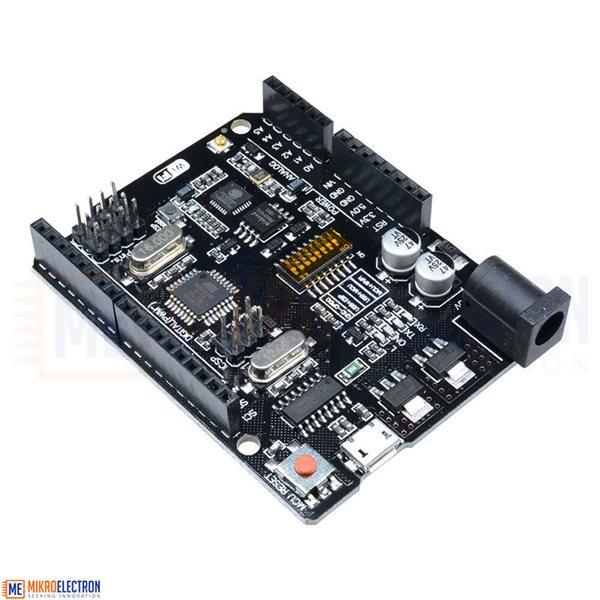
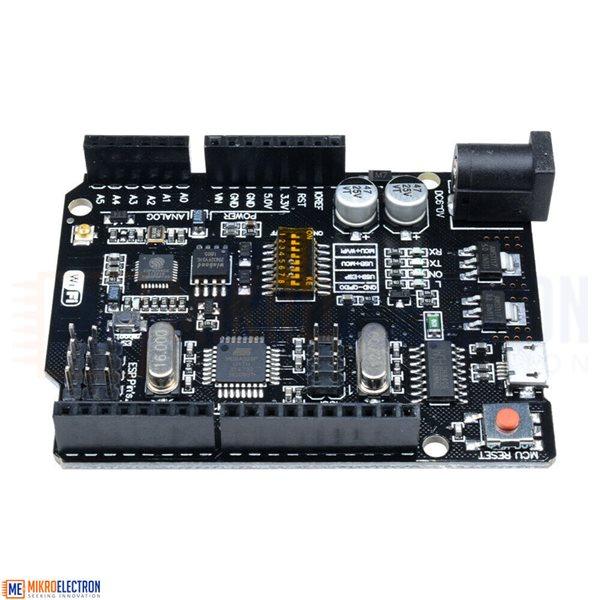
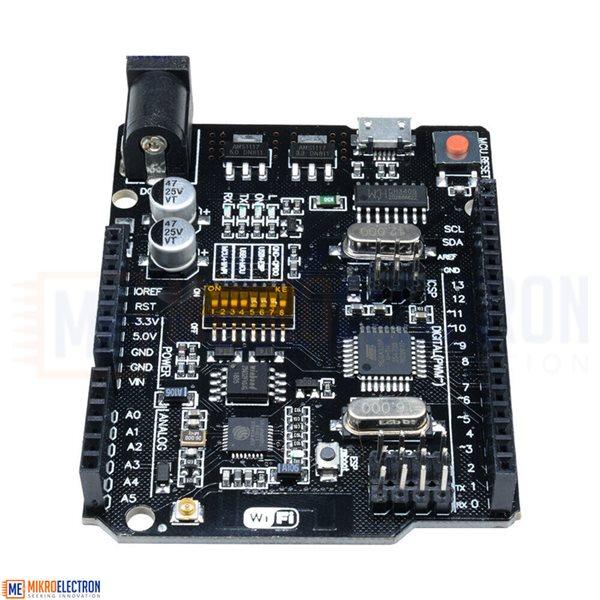
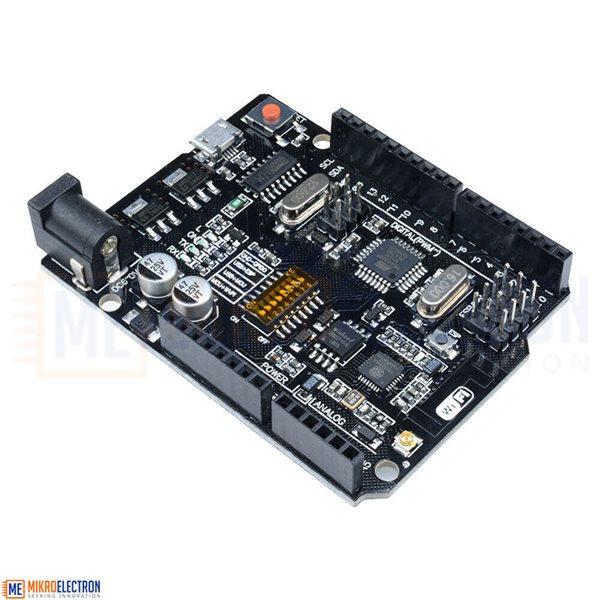
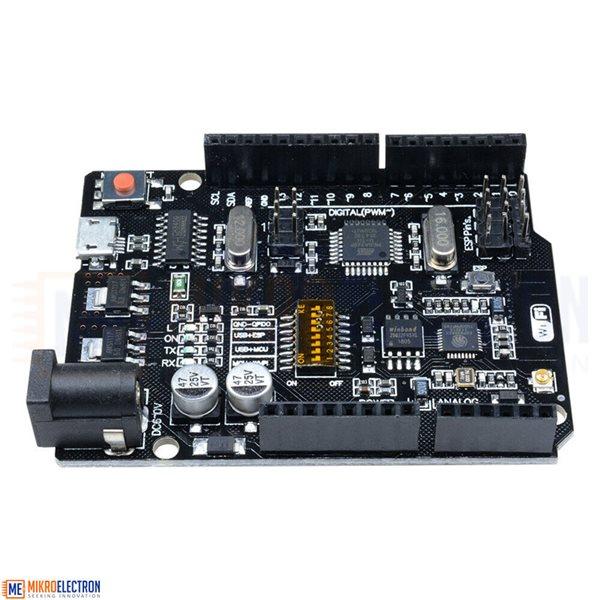
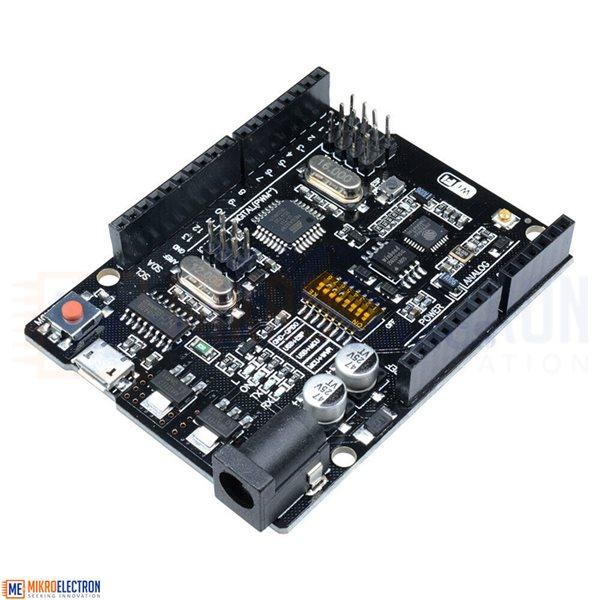
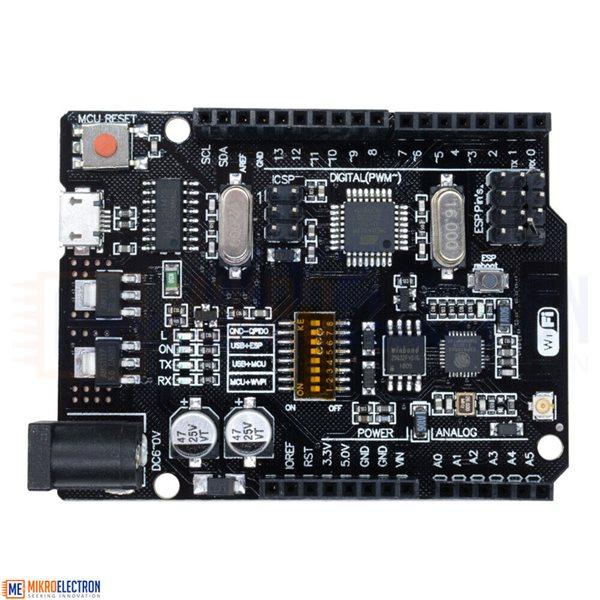
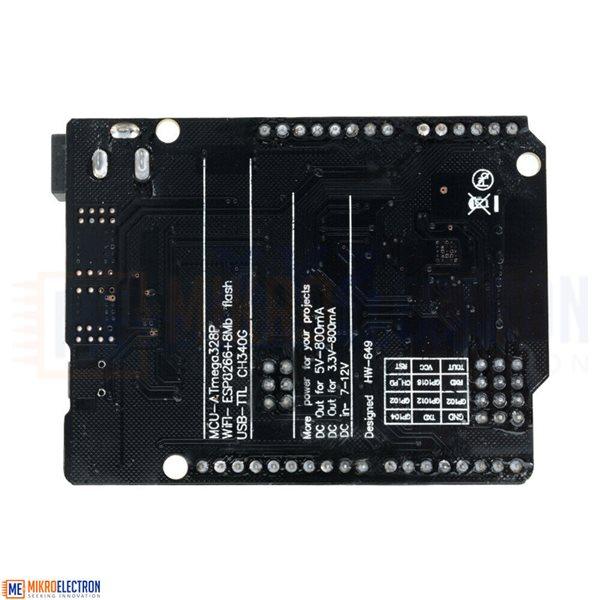
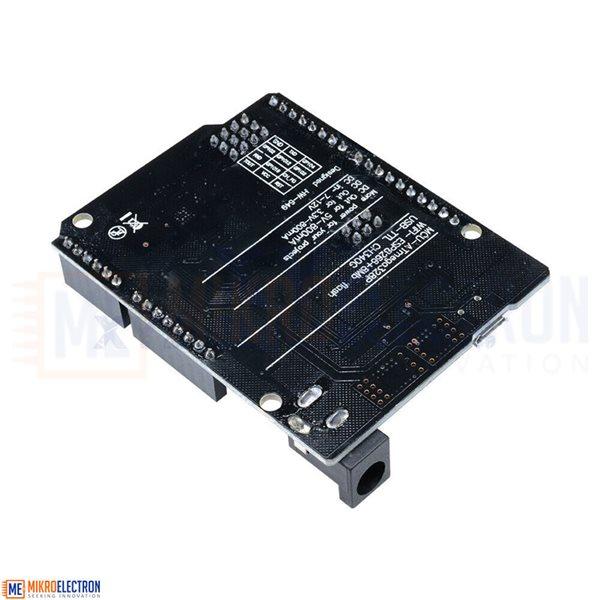
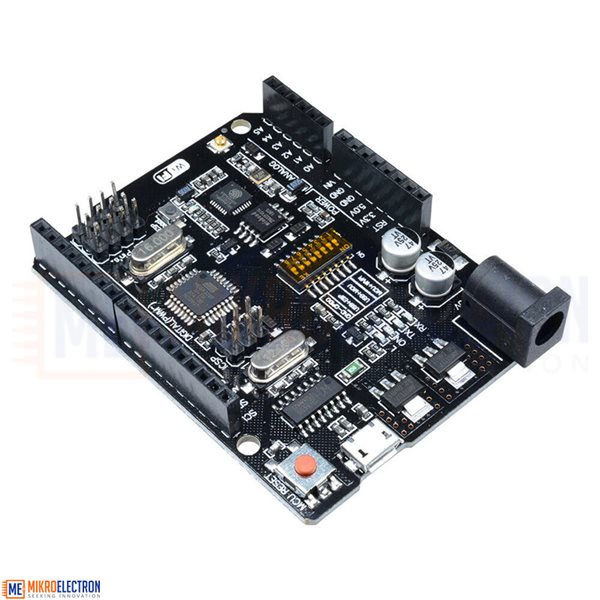
Wi-Fi R3 ATmega328P + ESP8266 (32Mb memory) USB-TTL CH340G For Arduino UNO NodeMCU
Table DIP-switch: UNO + WiFi R3 ATmega328P+ESP8266 32Mb flash USB-TTL CH340G Micro-USB Connection DIP 1 2 3 4 5 6 7 ATmega328<->ESP8266 ON ON OFF OFF OFF OFF OFF USB <->...
Table DIP-switch: UNO + WiFi R3 ATmega328P+ESP8266 32Mb flash USB-TTL CH340G Micro-USB
|
Connection |
DIP |
||||||
|
1 |
2 |
3 |
4 |
5 |
6 |
7 |
|
|
ATmega328<->ESP8266 |
ON |
ON |
OFF |
OFF |
OFF |
OFF |
OFF |
|
USB <->ATmega328 |
OFF |
OFF |
ON |
ON |
OFF |
OFF |
OFF |
|
USB<->ESP8266 (Update firmware or sketch) |
OFF |
OFF |
OFF |
OFF |
ON |
ON |
ON |
|
USB<->ESP8266 (communication) |
OFF |
OFF |
OFF |
OFF |
ON |
ON |
OFF |
|
All independent |
OFF |
OFF |
OFF |
OFF |
OFF |
OFF |
OFF |
Arduino Uno:
The Uno is a microcontroller board based on the ATmega328P. It has 14 digital input/output pins (of which 6 can be used as PWM outputs), 6 analogue inputs, a 16 MHz quartz crystal, a USB connection, a power jack, an ICSP header and a reset button. It contains everything needed to support the microcontroller; simply connect it to a computer with a USB cable or power it with an AC-to-DC adapter or battery to get started. You can tinker with your UNO without worrying too much about doing something wrong, in the worst-case scenario you can replace the chip for a few dollars and start over again.
ESP8266 Wifi Module:
ESP8266 is a highly integrated chip designed for the needs of a new connected world. It offers a complete and self-contained Wi-Fi networking solution, allowing it to either host the application or to offload all Wi-Fi networking functions from another application processor.
ESP8266 has powerful on-board processing and storage capabilities that allow it to be integrated with the sensors and other application-specific devices through its GPIOs with minimal development up-front and minimal loading during runtime. Its high degree of on-chip integration allows for minimal external circuitry, and the entire solution, including the front-end module, is designed to occupy minimal PCB area.