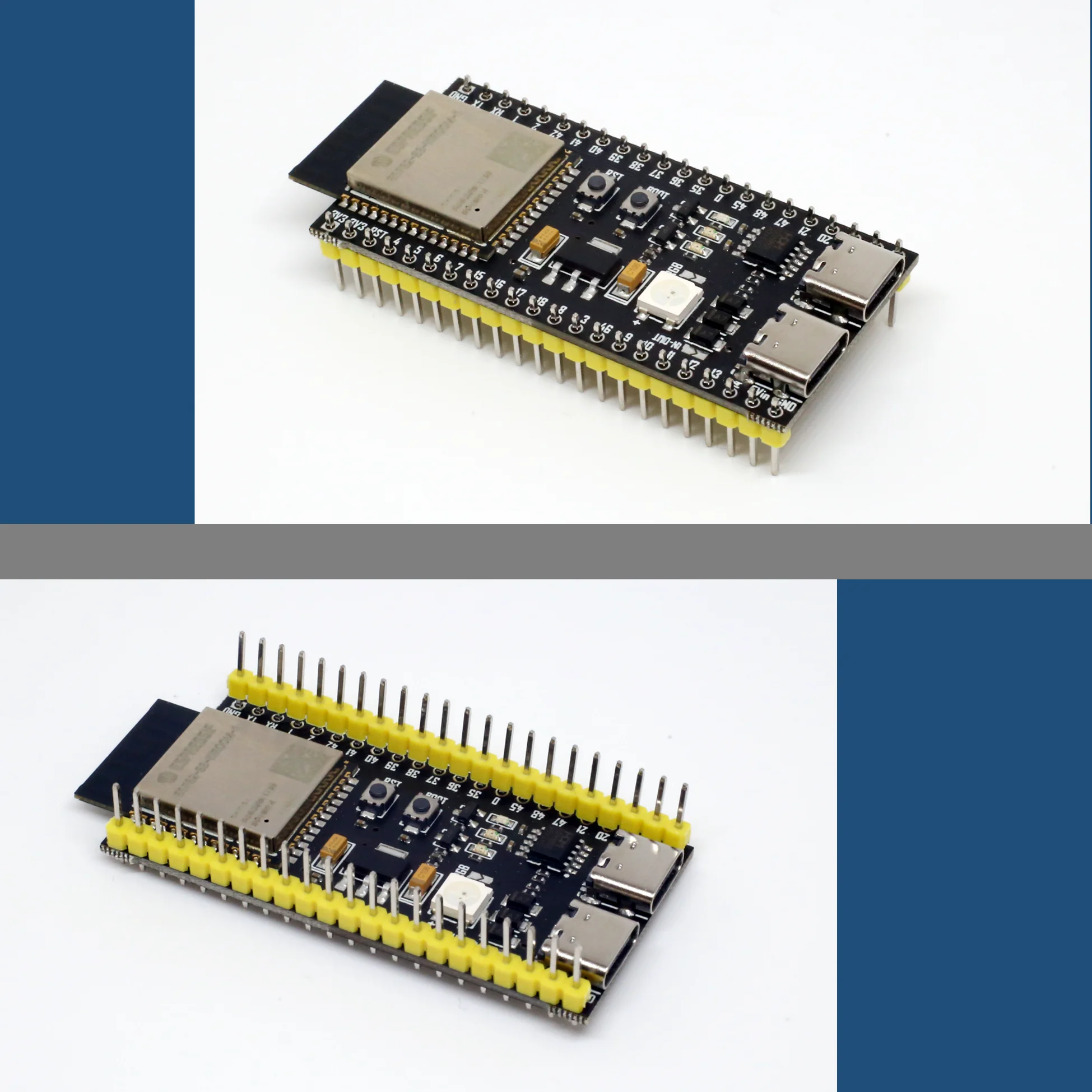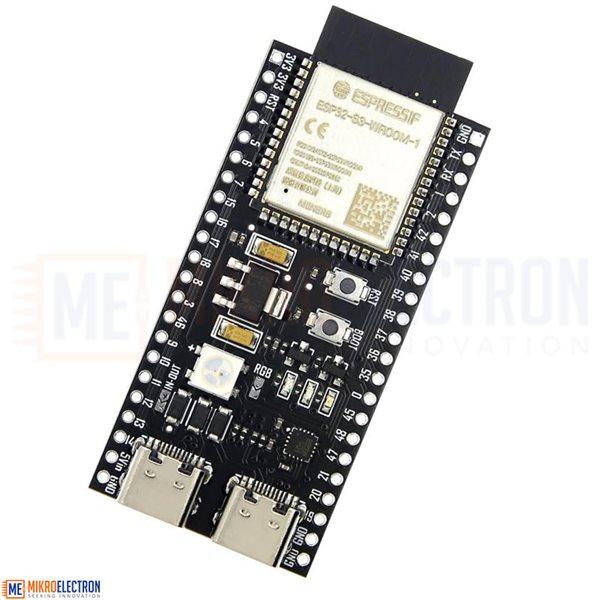
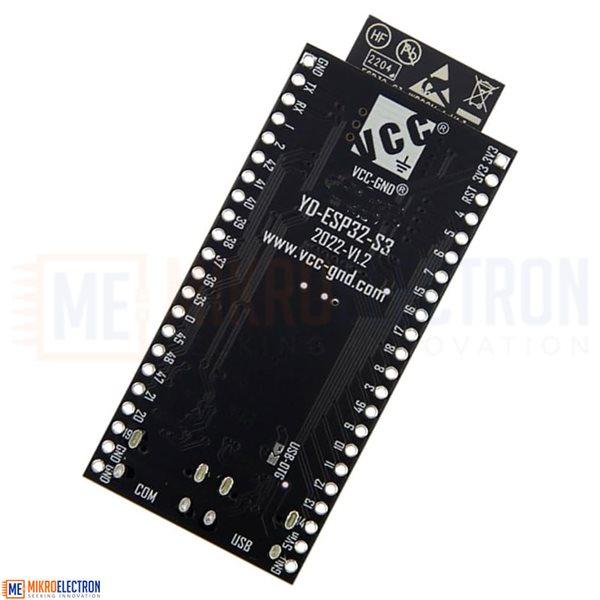
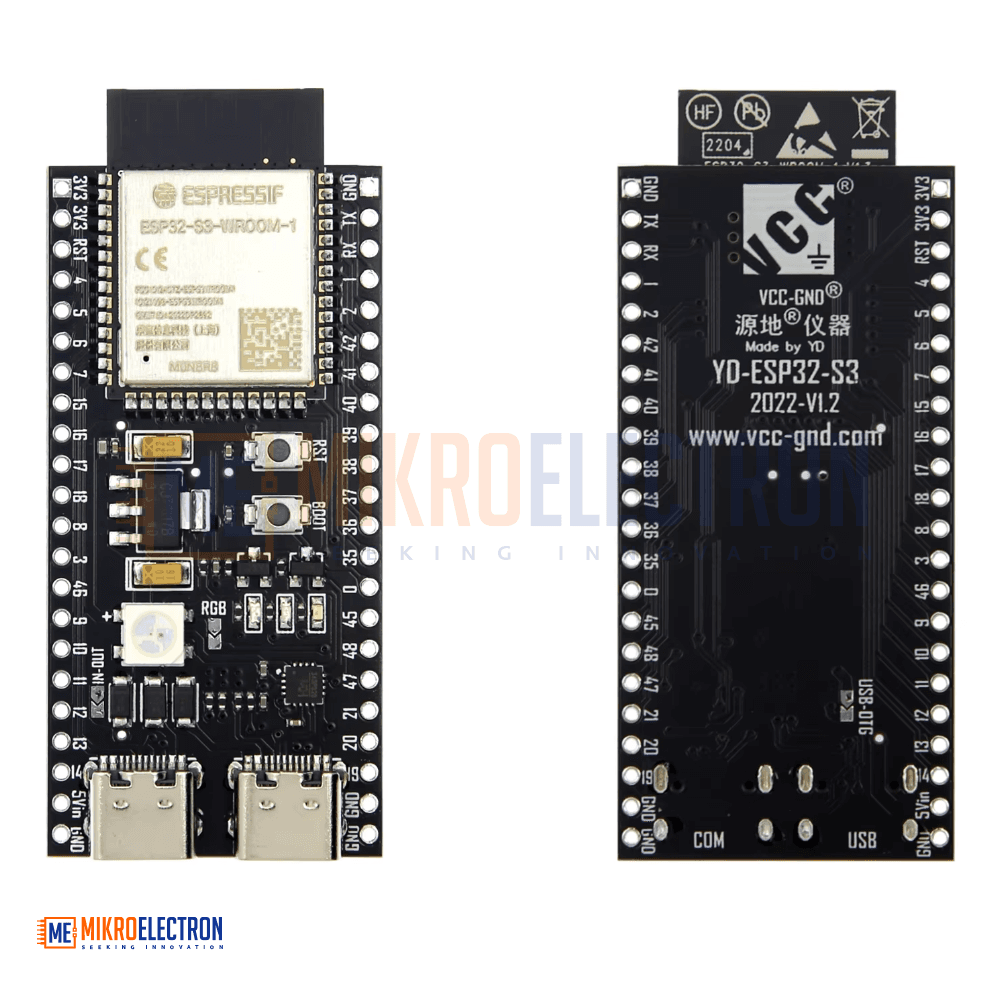
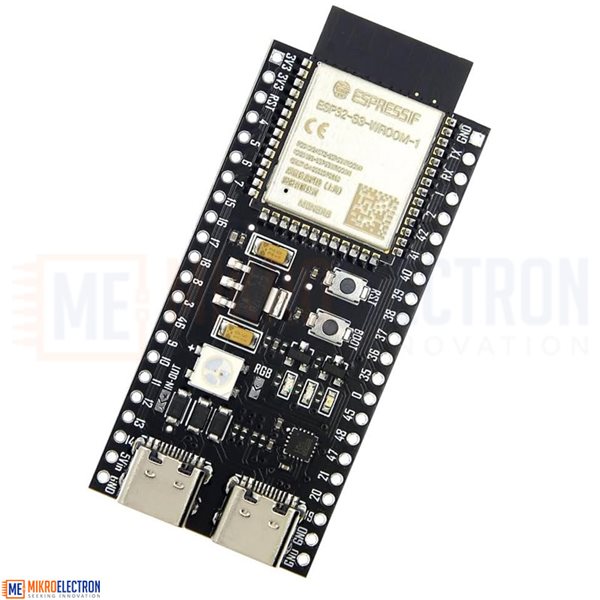
ESP32-S3 core board ESP32S3 (N16R8) 2.4 GHz Wi-Fi and Bluetooth 5 (LE)
ESP32-S3 N16R8 Development Board is a powerful wireless microcontroller platform designed for advanced IoT, embedded, AI, and automation projects. Featuring a dual-core Xtensa® LX7 processor running up to 240 MHz, 16 MB Flash, and 8 MB PSRAM, it delivers exceptional performance for memory-intensive applications. The board supports 2.4 GHz Wi-Fi and Bluetooth 5 Low Energy (LE) connectivity, enabling seamless wireless communication. With native USB support, extensive GPIO options, AI acceleration instructions, and ultra-low power operation, the ESP32-S3 N16R8 is ideal for smart devices, edge AI systems, industrial control, and modern embedded development.
لوحة التطوير ESP32-S3 N16R8 هي منصة متقدمة للمتحكمات الدقيقة اللاسلكية مصممة لتطبيقات إنترنت الأشياء والأنظمة المدمجة والذكاء الاصطناعي والأتمتة. تحتوي على معالج ثنائي النواة Xtensa® LX7 بسرعة تصل إلى 240 ميجاهرتز مع ذاكرة فلاش 16 ميجابايت وذاكرة PSRAM بسعة 8 ميجابايت لتوفير أداء قوي للتطبيقات التي تتطلب موارد كبيرة. تدعم اللوحة اتصال Wi-Fi بتردد 2.4 جيجاهرتز وBluetooth 5 LE، بالإضافة إلى منفذ USB مدمج ومجموعة كبيرة من واجهات الإدخال والإخراج. تعتبر خيارًا مثاليًا للمشاريع الذكية، وأنظمة الذكاء الاصطناعي الطرفية، والتحكم الصناعي، وتطوير الأنظمة المدمجة الحديثة.
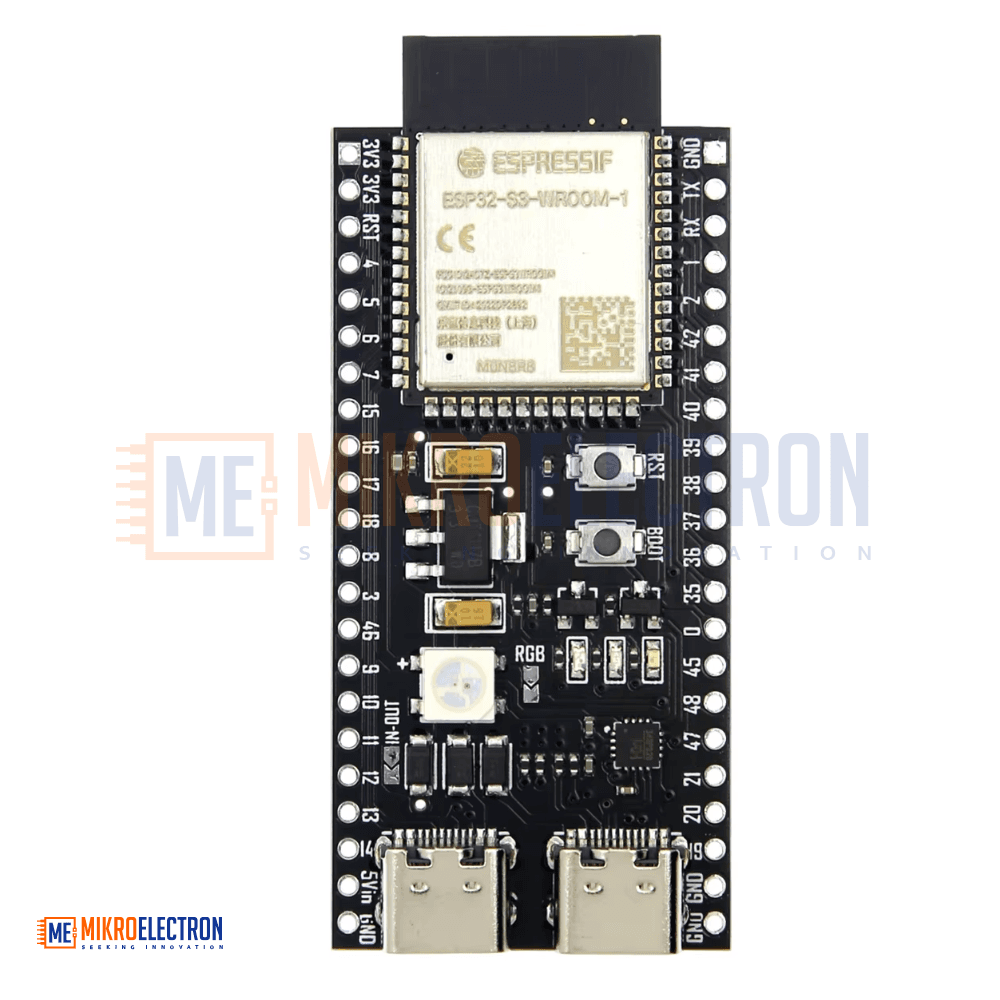
The ESP32-S3 N16R8 Development Board is a high-performance wireless development platform based on the advanced ESP32-S3-WROOM-1 module. Designed for next-generation IoT, AI, automation, and embedded applications, it combines powerful processing capabilities, large memory capacity, and extensive connectivity options in a compact development board.
Powered by a dual-core Xtensa® 32-bit LX7 processor operating at up to 240 MHz, the board provides excellent computational performance for multitasking, signal processing, graphical user interfaces, and AI applications. The integrated 16 MB SPI Flash and 8 MB Octal SPI PSRAM offer abundant storage and memory resources for complex firmware, large data buffers, machine learning models, and advanced user interfaces.
The ESP32-S3 includes built-in 2.4 GHz Wi-Fi and Bluetooth 5 Low Energy (LE) connectivity, allowing reliable wireless communication for smart devices, cloud-connected systems, and mobile applications. Native USB support enables programming, debugging, and USB device functionality without requiring external USB-to-serial converters.
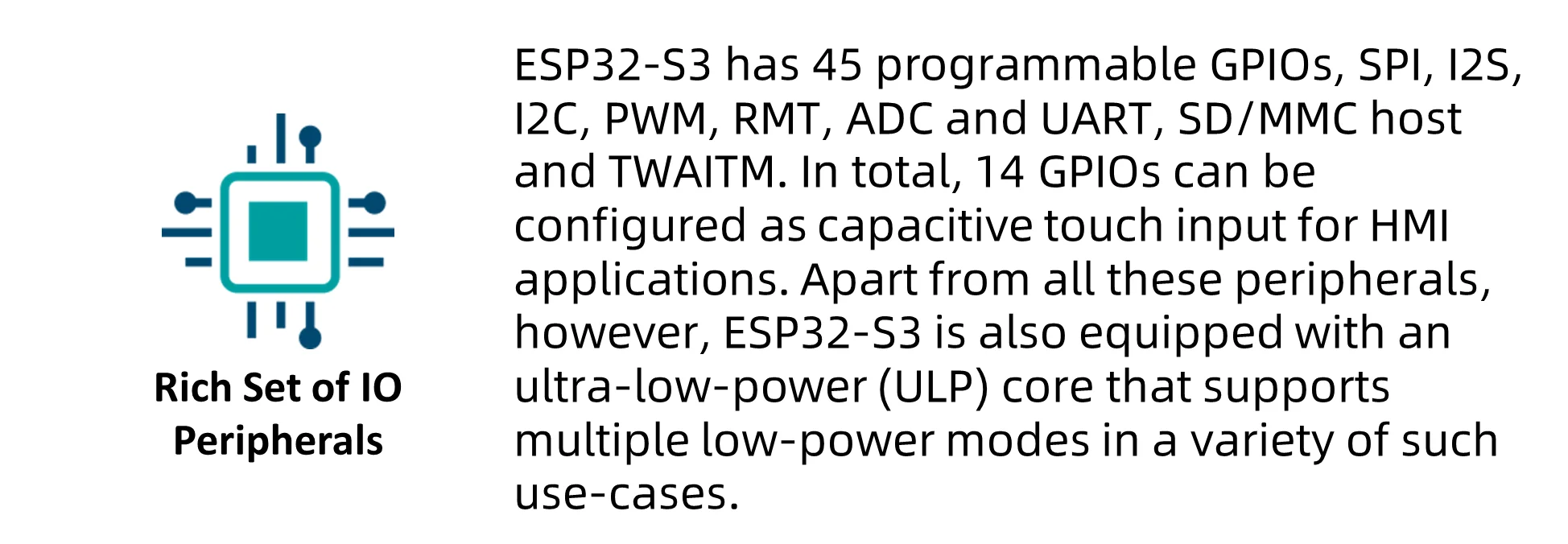
The board supports a wide range of interfaces including GPIO, SPI, I2C, I2S, UART, PWM, ADC, SD/MMC, TWAI (CAN-compatible), and USB, making it suitable for a broad range of electronic projects. Additionally, dedicated vector instructions accelerate machine learning and signal-processing workloads, enabling efficient edge AI implementations.
Its robust industrial-grade design supports operating temperatures from –40°C to +125°C, ensuring reliable performance in demanding environments.
Specifications
| Parameter | Value |
|---|---|
| Module | ESP32-S3-WROOM-1-N16R8 |
| Processor | Dual-Core Xtensa® 32-bit LX7 |
| CPU Speed | Up to 240 MHz |
| ROM | 384 KB |
| SRAM | 512 KB |
| Flash Memory | 16 MB SPI Flash |
| PSRAM | 8 MB Octal SPI PSRAM |
| Wireless Connectivity | 2.4 GHz Wi-Fi (802.11 b/g/n) |
| Bluetooth | Bluetooth 5 LE |
| GPIO Pins | Up to 45 GPIOs |
| ADC | Dual 12-bit SAR ADC |
| USB | Native USB Serial/JTAG (USB-C) |
| Logic Voltage | 3.3V |
| Power Input | 5V via USB-C |
| External Memory Support | Up to 16 MB |
| Operating Temperature | –40°C to +125°C |
Interfaces
- GPIO
- SPI
- I2C
- I2S
- UART
- PWM
- ADC
- RMT
- SD/MMC Host
- TWAI (CAN Compatible)
- USB Serial/JTAG
- Capacitive Touch Interface
- Ethernet Interface Support
Applications
- Smart home controllers and gateways.
- Home Assistant and ESPHome systems.
- Industrial automation and monitoring.
- Human Machine Interface (HMI) panels.
- Touchscreen control systems.
- Edge AI and machine learning devices.
- Image recognition and object detection.
- Audio streaming and internet radio projects.
- IoT sensor networks.
- Data logging systems.
- Robotics and autonomous platforms.
- Wearable electronics.
- Smart agriculture solutions.
- USB HID devices such as keyboards and mice.
- Remote monitoring and telemetry systems.
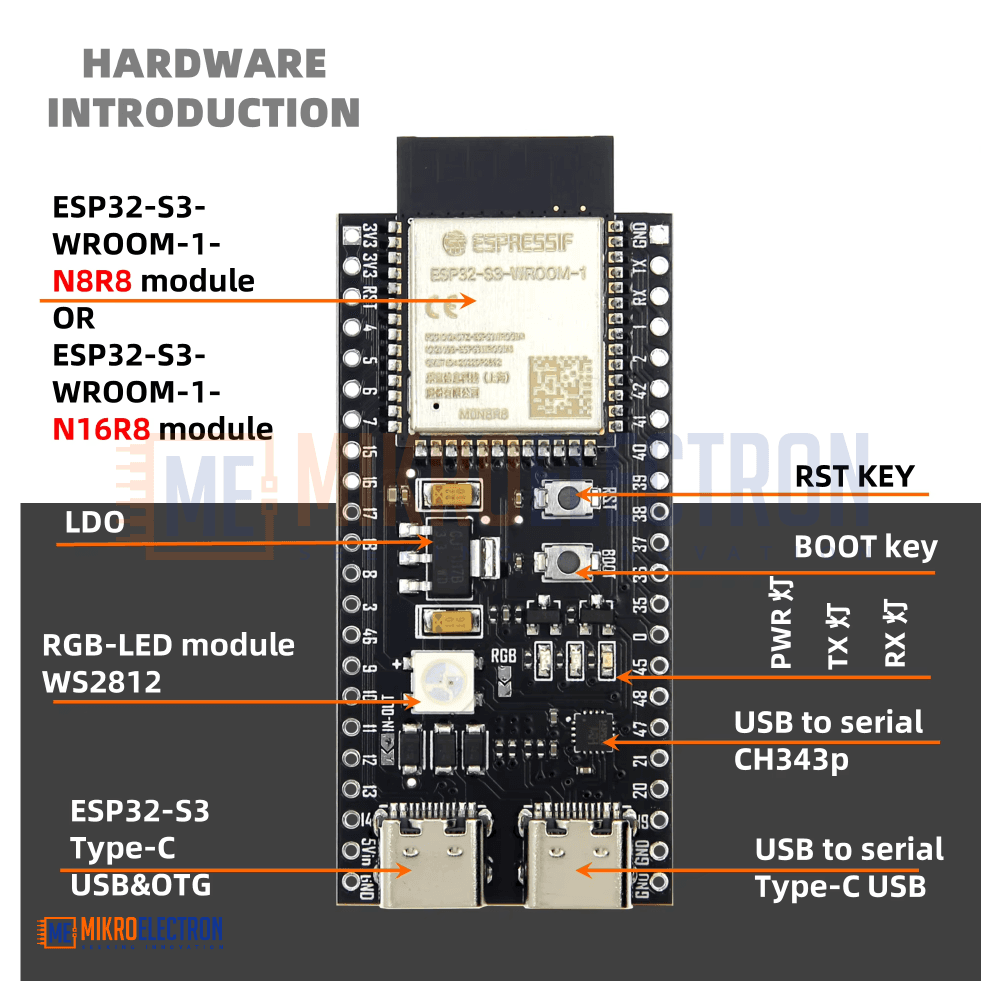
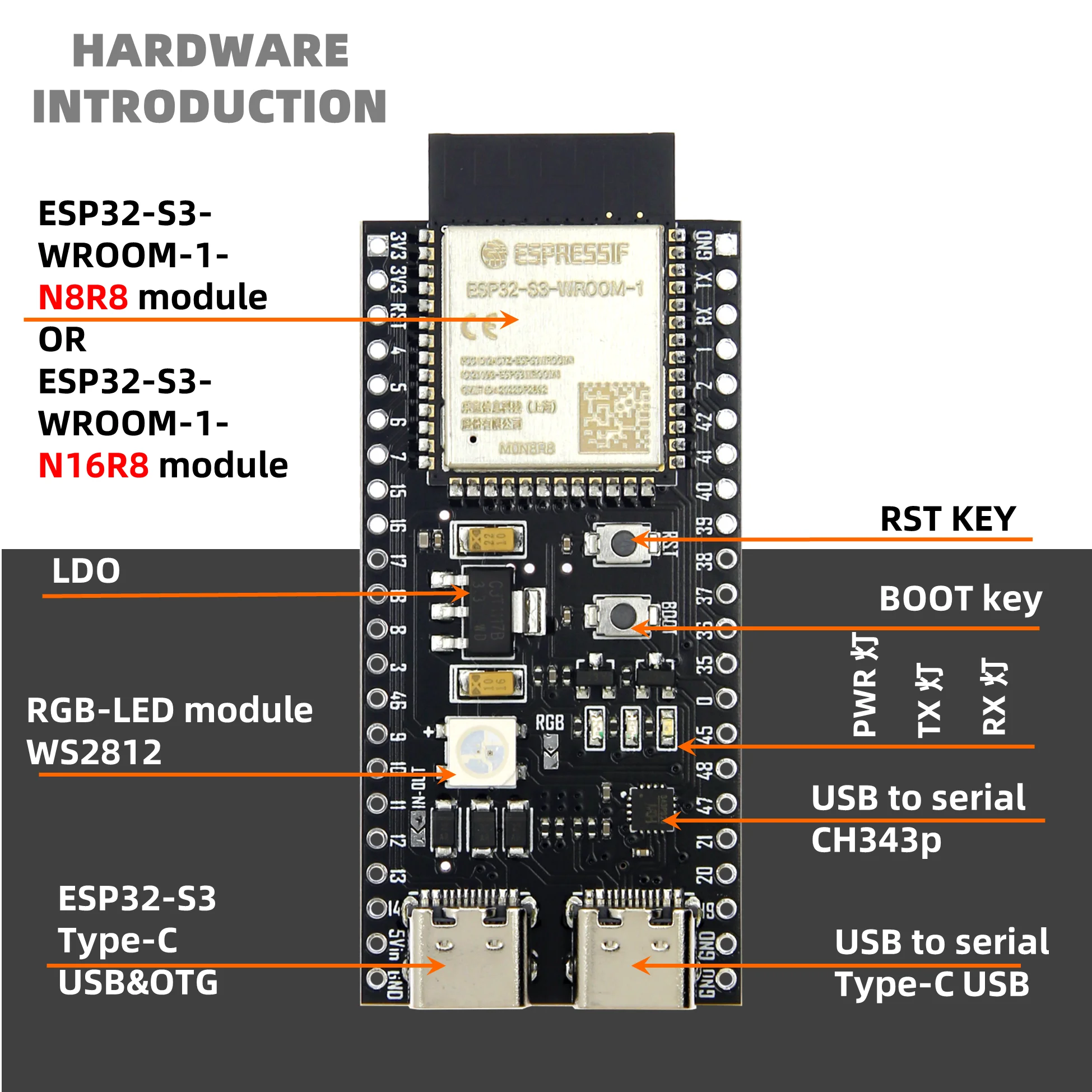
AI IOT/Dual Type-C USB/W2812B RGB/ESP32-WHO/CH343P
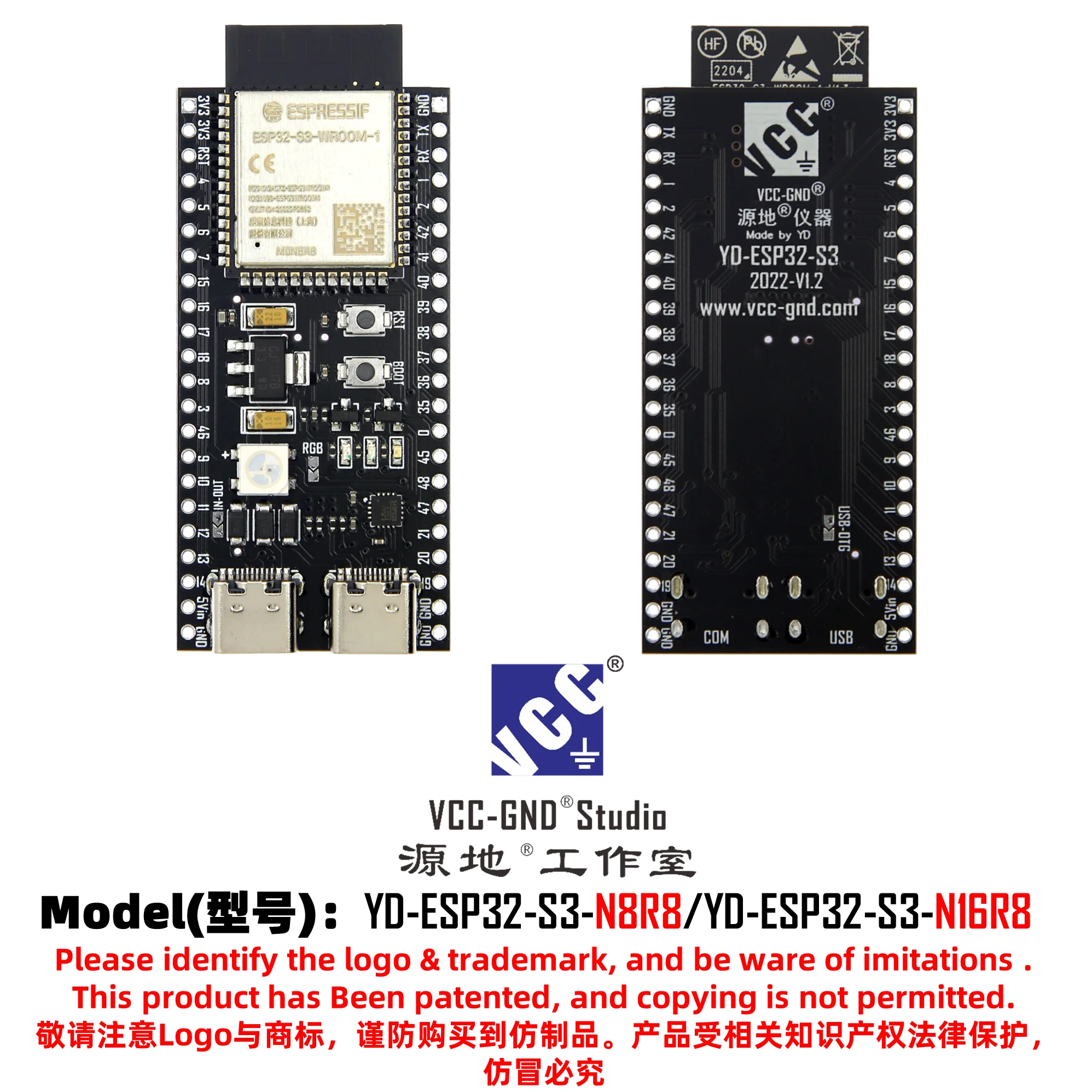
About ESP32-S3 Hardware relationships
The core board YD-ESP32-S3 Is provided by Espressif
The original ESP32-S3-WROOM-1-N8R8 module orESP32-S3-WROOM-1-N16R8 module ensures a stable and excellent user experience.
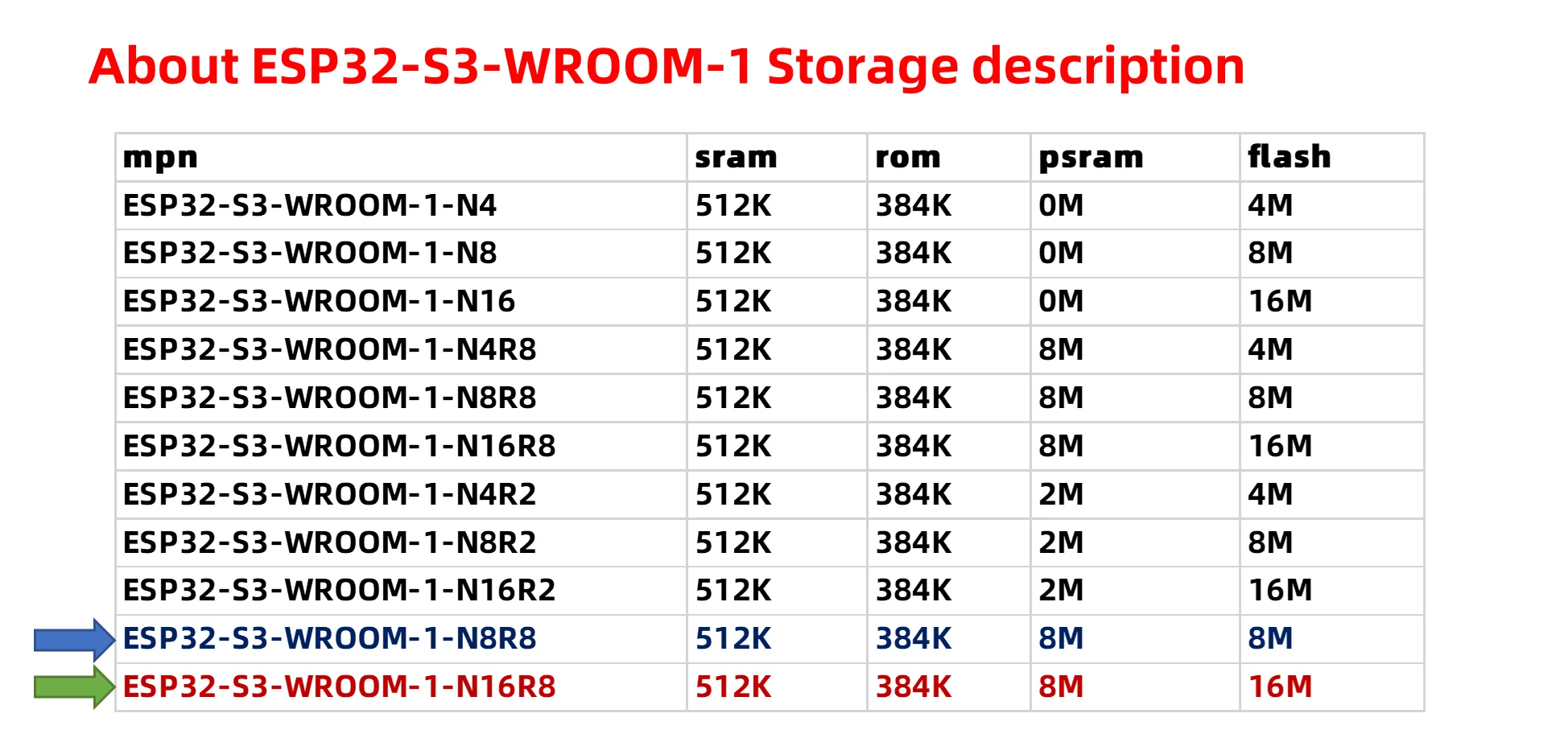 About ESP32-S3 hardware resources
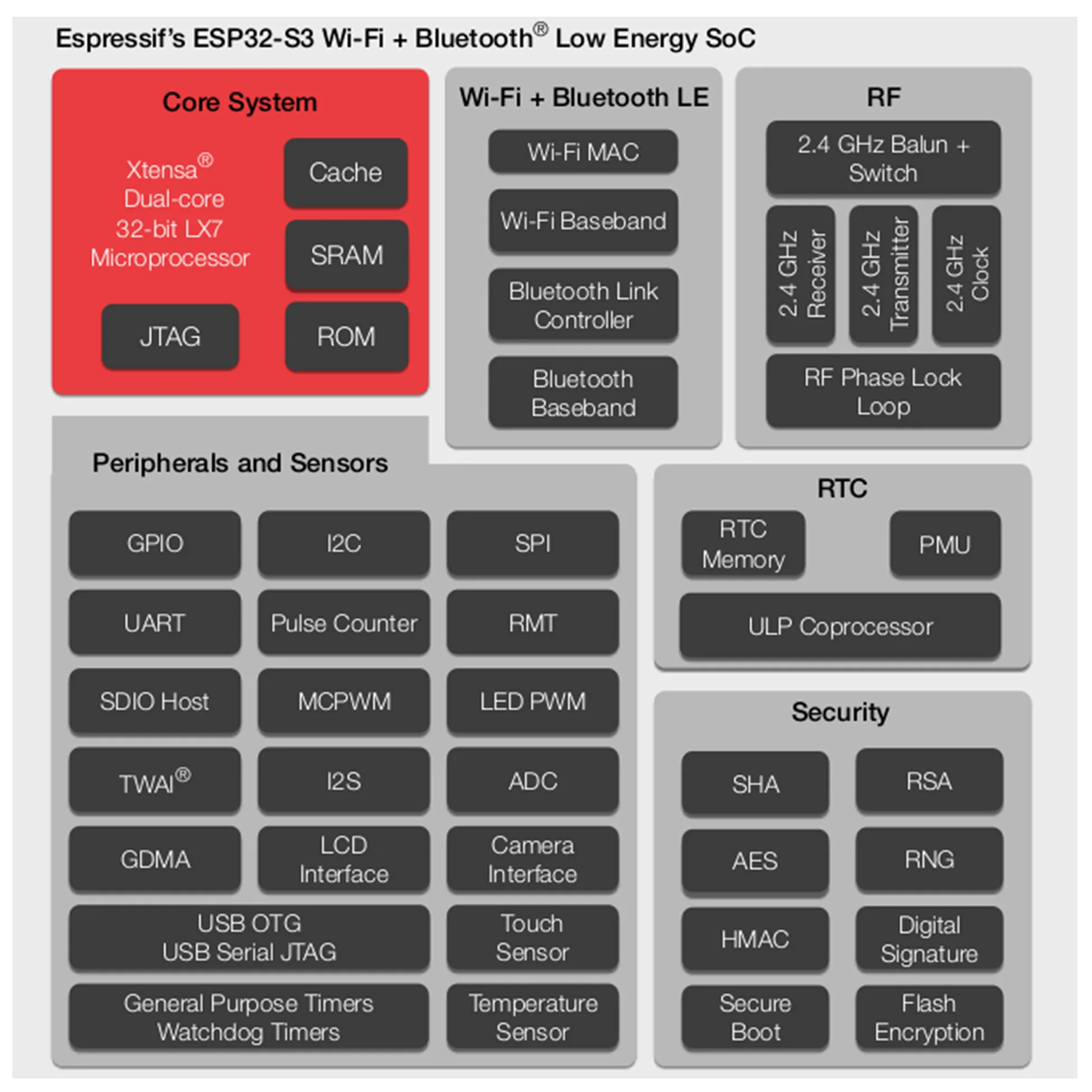
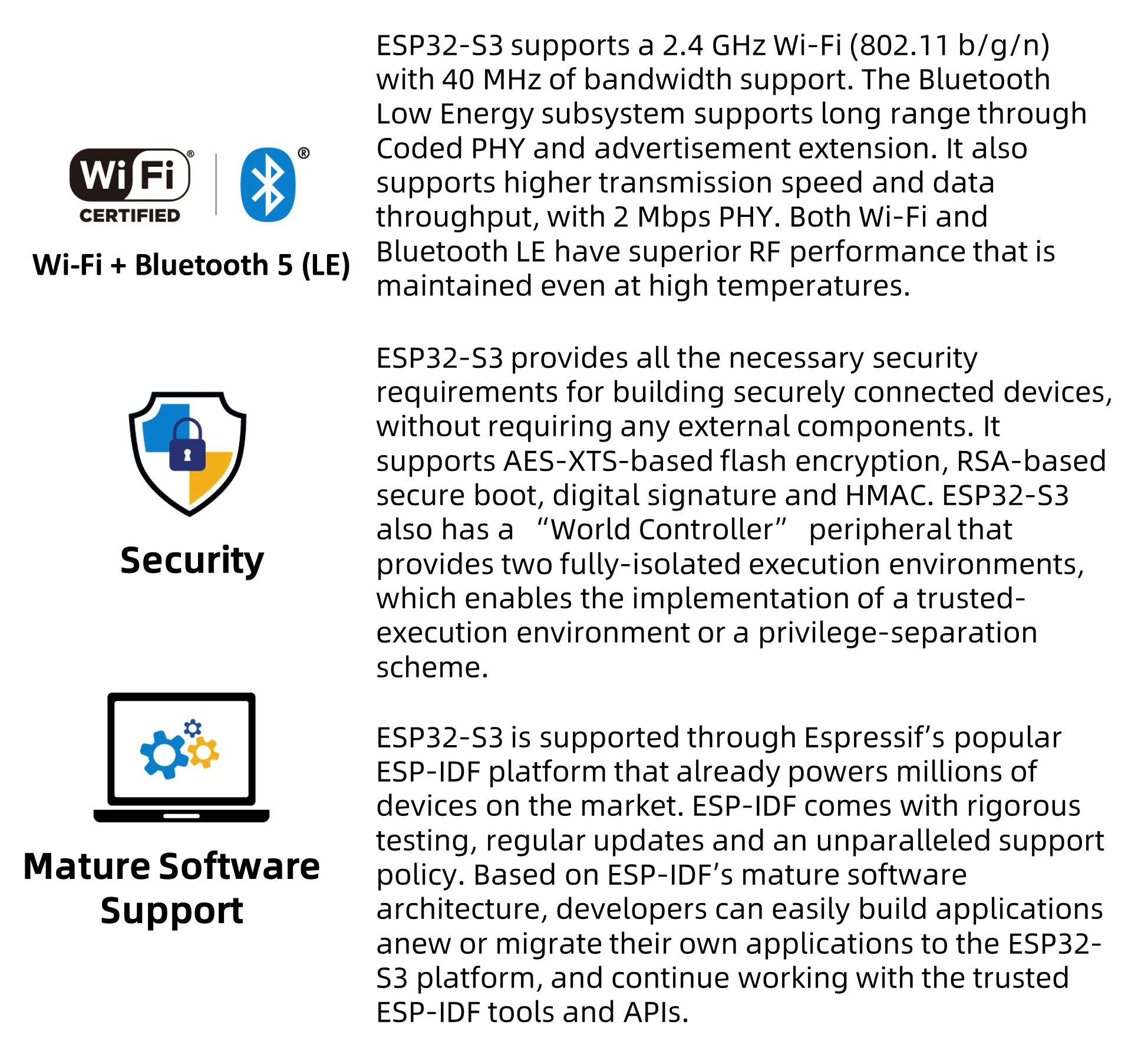
ESP32-S3 is a low-power MCU-based SoC that supports 2.4 GHz Wi-Fi and Bluetooth® Low Energy (Bluetooth LE).
ESP32-S3 has a complete Wi-Fi subsystem and a Bluetooth LE subsystem, State-of-the-art power and RF performance. S3 provides a rich set of peripheral interfaces, and supports ultra-low-powerapplications. Different security features allow the device to meet stringent security requirements.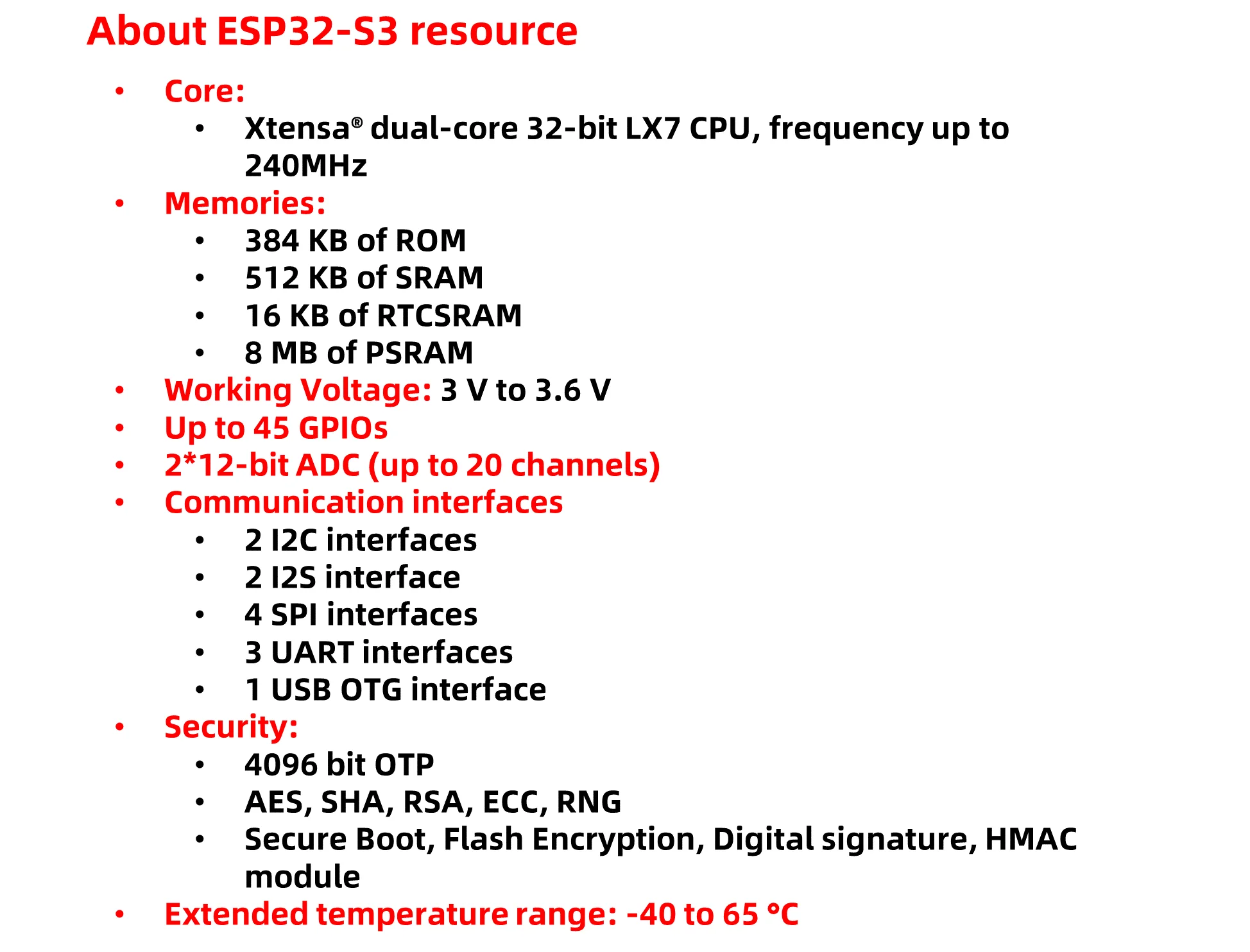


Instructions for using the USB cable
The on-board USB port of the YD-ESP32-S3 core board is the Type-C interface.It can communicate with the computer and provide power.
The cable can be used: USB Type A to Type-C cable or CC cable
Note the distinction between the commonly used USB A port to Type-C cable that can only be charged, which cannot be used for communication between YD-ESP32-S3 and the host.
 About ESP32-C3 programming
 ESP32-S3 IDF programming
The ESP-IDF, Espressif IoT Development Framework, provides toolchain, API, components and workflows to develop applications for ESP32-S3 using Windows, Linux and macOS operating systems.

ESP32-S3 Micropython programming
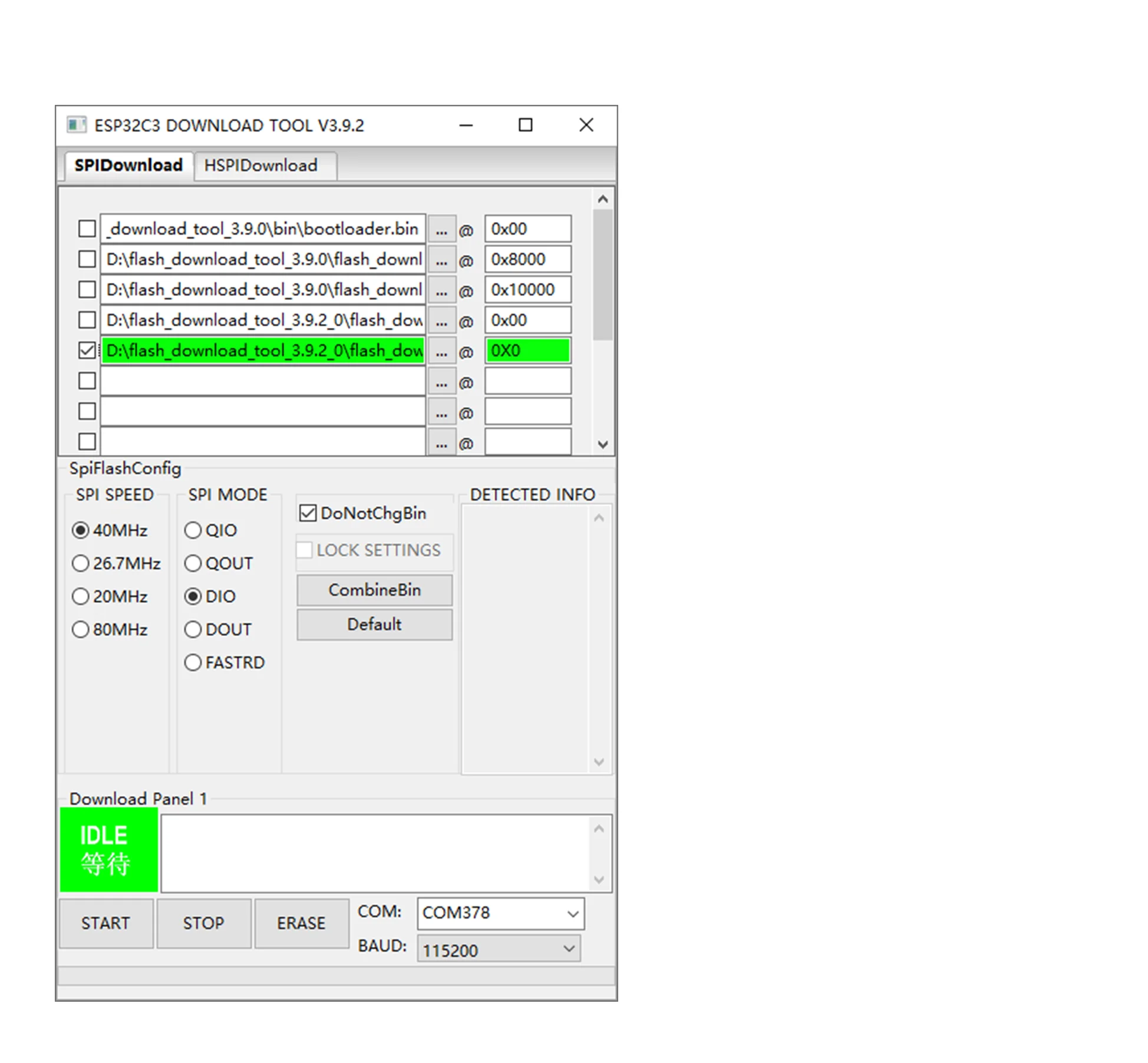
 ESP32-S3 Downloarloard